 Bellingham Siding
 Lynden sits inland from Bellingham Bay but still lives under the same weather system that shapes exterior work across Whatcom County: long stretches of damp, overcast days, driving rain that comes in sideways off the water, and a moss and mildew season that can run from fall through spring. Add in the area's mix of older farmhouses, mid-century ranch homes, and newer construction on former agricultural land, and you get a wide range of siding conditions — from decades-old wood lap siding that's finally failing to newer vinyl that's chalking and gapping years ahead of schedule. Whatever the starting point, the exterior has to hold up to a wet climate for the long haul, not just look good on installation day.
We're a Bellingham-based exterior contractor that works throughout Whatcom County, including Lynden and the surrounding rural and residential areas. We install siding, roofing, windows, and decks, and we bring the same local knowledge to every job: what this climate actually does to a house over ten, twenty, thirty years, and what it takes to build an exterior that doesn't need constant attention to stay ahead of it.
What Lynden's Climate Does to a Home's Exterior
Lynden gets less direct salt spray than homes right on Bellingham Bay, but the broader Whatcom County weather pattern still applies: persistent moisture, moderate temperatures that rarely dry things out fast, and a growing season for moss, algae, and mildew that's longer than most homeowners realize. A few specific issues we see repeatedly on Lynden-area homes:
- Moss and algae growth on north-facing walls, under eaves, and anywhere siding stays shaded and damp for extended periods.
- Paint failure and peeling on older wood or engineered wood siding, especially where caulking has cracked and let moisture behind the surface.
- Swelling and delamination in wood-based or composite products that weren't rated for consistent moisture exposure.
- Vinyl warping and fading from temperature swings and UV exposure over years of Pacific Northwest weather cycles.
- Trim and corner rot where water collects and doesn't get a chance to fully dry between rain events.
None of this means Lynden is a uniquely harsh place to build — it means the exterior materials and installation details matter more here than they would in a drier climate. A product or installation method that performs fine in Eastern Washington or the Southwest can fail faster in Whatcom County simply because it doesn't dry out between storms.
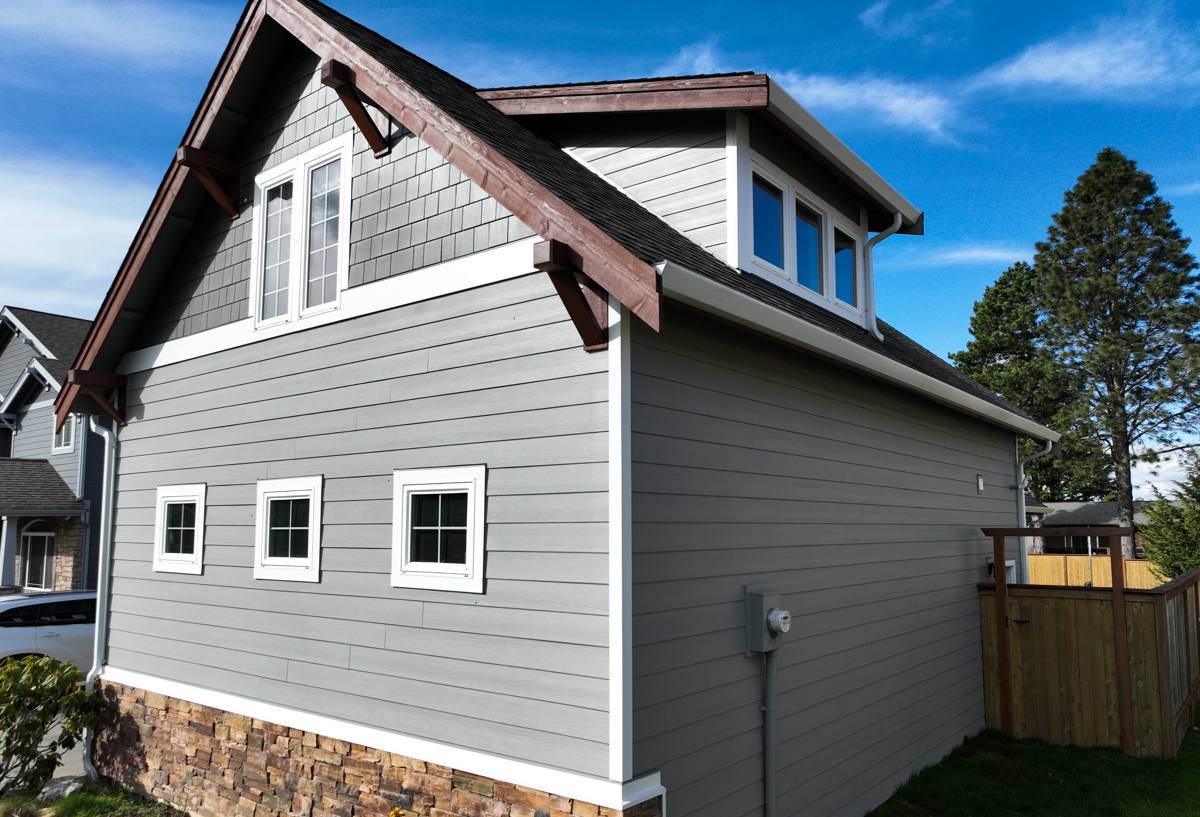
Why We Install Only James Hardie Fiber Cement Siding
We made a deliberate decision to install one siding system on every home we side: James Hardie fiber cement. We don't install vinyl, LP SmartSide, Cemplank, Allura, primed spruce, or cedar. That's not a marketing position — it's a practical one, built around what actually holds up in this climate over decades rather than years.
Each of those alternative products has real strengths, and we're upfront about that. Vinyl is inexpensive and low-maintenance in the sense that it doesn't need painting. Cedar has a natural look that some homeowners specifically want. Engineered wood products like LP SmartSide are lighter and easier to install than fiber cement. But each also comes with trade-offs that show up specifically in a wet, moss-prone climate like Whatcom County's:
- Vinyl expands and contracts with temperature swings, can crack in cold snaps, and fades unevenly over time — and it can't be repainted to refresh its appearance without specialized products.
- Wood-based engineered siding (LP SmartSide, Cemplank, Allura, primed spruce) uses wood fiber or wood strand cores that are vulnerable to moisture intrusion at cut edges, seams, and fastener penetrations if caulking and paint aren't maintained on a strict schedule.
- Cedar is a genuinely attractive natural material, but it requires ongoing staining or sealing, and in a climate this damp it's more prone to moss growth, cupping, and rot if that maintenance schedule slips even a year or two.
James Hardie fiber cement is made from cement, sand, and cellulose fiber — it doesn't have a wood core to swell, rot, or feed moss the way organic materials can. It's non-combustible, which matters for wildfire-adjacent insurance considerations even here on the wet side of the state, and it holds paint and factory finish far longer than wood or wood-composite products. It's also heavier and more labor-intensive to install correctly, which is part of why not every contractor works with it — but for a home that's going to sit under Whatcom County weather for decades, we think it's the right trade-off.
The James Hardie System We Install
James Hardie makes climate-specific product lines, and for this region we work with their HZ5 line, engineered for cold, wet Pacific Northwest and northern-tier conditions. The system includes lap siding, vertical panel siding, and trim, and it comes with ColorPlus Technology — a factory-applied finish baked onto the board before it ever reaches the job site.
Why factory finish matters here
A field-painted product only performs as well as the paint job and the maintenance schedule behind it. ColorPlus finish is cured under controlled conditions, resists fading and chipping better than most field-applied paint, and comes backed by its own finish warranty separate from the substrate warranty on the board itself. In a climate where paint failure is one of the most common exterior complaints we see, that factory-applied durability is a meaningful difference.
Warranty structure
James Hardie backs their fiber cement products with a lengthy limited transferable warranty on the siding substrate, plus a separate finish warranty on ColorPlus color. Transferability matters to resale-minded homeowners — if you sell the home, the remaining warranty term can pass to the next owner, which is a detail buyers and their inspectors do ask about.
Comparing Siding Options for a Whatcom County Home
| Factor | Vinyl | Wood/Engineered Wood | James Hardie Fiber Cement |
|---|---|---|---|
| Moisture resistance | Good if sealed properly; can trap moisture behind panels | Vulnerable at cut edges/seams without diligent maintenance | Strong — non-organic core, engineered for wet climates |
| Moss/algae resistance | Moderate; surface growth on shaded walls | Lower; organic material can support growth | Higher; can still be cleaned but doesn't feed growth structurally |
| Maintenance | Low, but limited repaint options | Regular painting/staining and caulk inspection required | Low; factory finish holds color for years |
| Fire rating | Combustible | Combustible | Non-combustible |
| Typical lifespan | 20-30 years, variable | 15-25 years with strict maintenance | 30-50+ years with proper installation |
| Upfront cost | Lower | Moderate | Moderate to higher |
Upfront cost is real and worth weighing honestly — Hardie siding typically costs more to install than vinyl and can be comparable to or higher than engineered wood products, largely because of the labor and cutting equipment involved. We think the lifespan and reduced maintenance burden make it the better long-term value for this climate, but it's a decision every homeowner should make with clear information, not pressure.
Roofing, Windows, and Decks in Lynden's Climate
Siding rarely fails in isolation — it's usually one piece of an exterior envelope that's under the same moisture pressure everywhere else. We handle the full exterior for that reason:
Roofing
A roof that's shedding moss, holding standing moisture, or has failing flashing will eventually push water down into siding, trim, and fascia. We assess roof condition as part of any siding project because the two systems protect each other.
Windows
Old or poorly flashed window openings are one of the most common sources of hidden moisture intrusion behind siding. When we replace siding around existing windows, we pay close attention to flashing and sealing at those transitions — it's often where problems start.
Decks
Exterior decks in this climate face the same wet-dry cycling and moss pressure as siding. Materials and fastening details matter just as much here, and a deck attached to the house needs proper flashing where it meets the siding to avoid creating a moisture trap.
What a Siding Project Looks Like
Every home is different, but a typical fiber cement siding project follows a consistent sequence:
- On-site assessment — checking existing siding, sheathing condition, window and door flashing, and any moisture damage that needs addressing before new siding goes on.
- Removal of old siding and inspection of the wall assembly underneath, including weather barrier and any rot repair needed.
- Installation of weather-resistive barrier and flashing details at every penetration, window, and door.
- Installation of James Hardie lap or panel siding to manufacturer specifications, including proper fastening, clearances, and joint treatment.
- Trim and finish work, including corners, fascia, and any transitions to roofing or deck structures.
- Final walkthrough to confirm the work and go over warranty documentation.
What to Ask Before Hiring a Siding Contractor
Whatcom County has plenty of contractors who'll put up siding — not all of them are equally careful about the details that determine whether it lasts. A few things worth asking before you hire anyone:
- Are they a certified or specifically trained installer for the product they're proposing?
- Will they inspect and repair sheathing and flashing issues before covering them up, or just side over existing problems?
- What's their approach to window and door flashing during a siding replacement?
- Do they carry proper licensing and insurance for work in Washington State?
- Can they explain, in plain terms, why they recommend the specific product they're proposing for your home?
A contractor who can't answer those clearly, or who pushes a single product without explaining the trade-offs, is worth a second look before you sign anything.
Why a Local Crew Matters
Whatcom County's weather isn't uniform even within a few miles — a home closer to the water deals with more direct salt exposure, while inland homes in and around Lynden deal more with sustained dampness, shaded moss growth, and seasonal rain volume. A crew that works this region regularly knows those differences and builds for them, rather than applying a generic installation approach that might be fine somewhere drier. We're based in Bellingham and work throughout the county, which means the crew showing up at your home has actually dealt with Whatcom County's weather on other jobs nearby — not just read about it.
If you're weighing a siding, roofing, window, or deck project on a Lynden-area home, we're happy to take a look and walk through what we're seeing and why we'd recommend a given approach. Reach out for a free, no-pressure estimate using the form below.