 Bellingham Siding
 Living on Lake Whatcom: What Sudden Valley Homes Are Up Against
Sudden Valley sits in one of the more distinctive microclimates in Whatcom County. Being tucked against Lake Whatcom means homes here deal with a level of ambient moisture that inland Bellingham neighborhoods don't see as much of. Morning fog off the lake, heavy tree cover on many lots, and a rainy season that runs long even by Pacific Northwest standards all add up to exterior surfaces that stay damp longer than they do in drier, more open parts of the county. That combination is exactly what accelerates wear on siding, trim, roofing, and anything wood-adjacent on the exterior of a house.
None of this is unusual or alarming — it's just the reality of building and maintaining a home in a lake community in Western Washington. But it does mean the exterior products and installation details that work fine on a sunny, open lot in a drier part of the state don't always hold up the same way here. A contractor who's actually worked on homes around the lake understands that difference before the first estimate is written.
Moss, Mildew, and North-Facing Walls
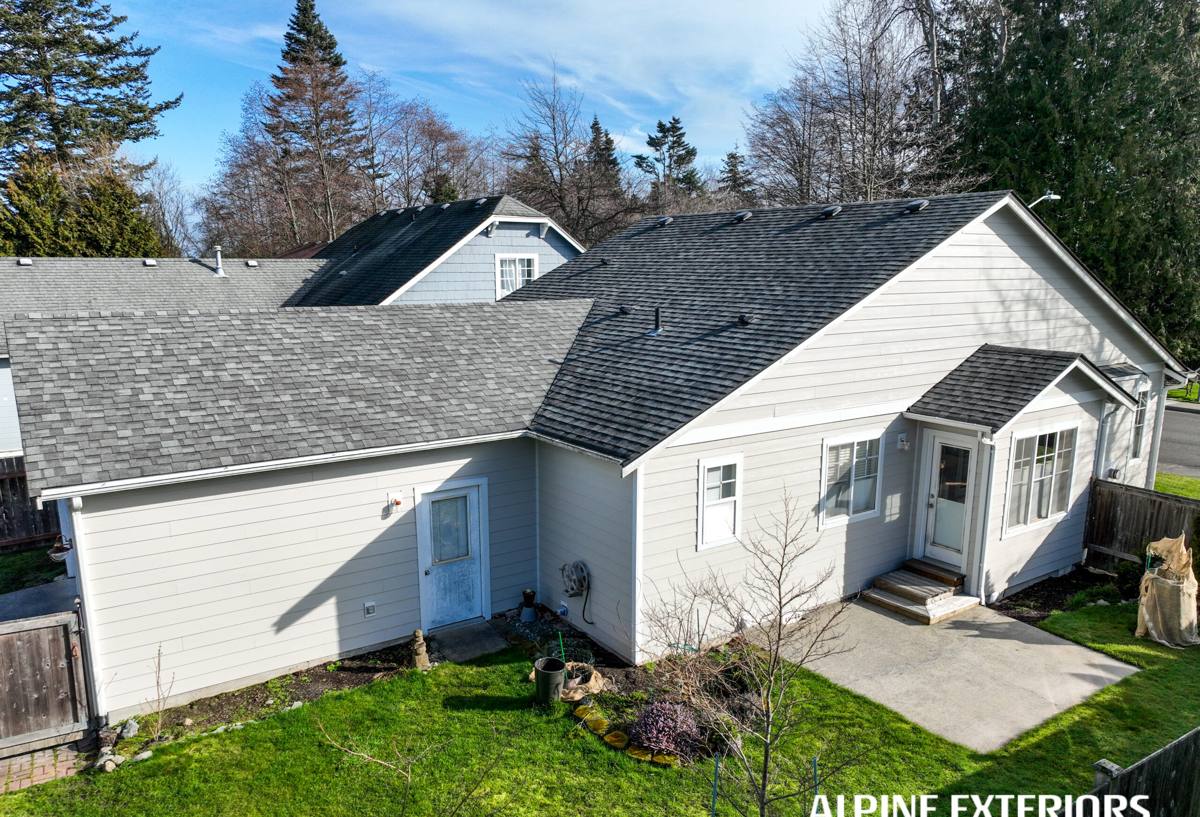
Moss season in Whatcom County isn't a single season — it's most of the year. Shaded, north-facing walls and anything under heavy tree canopy stay wet enough, long enough, for moss and algae to get a foothold on siding, roofing, and even decking. In Sudden Valley, where mature trees and lake-facing shade are part of what makes the community appealing, that moisture exposure is more constant than in a treeless subdivision closer to town.
Why This Matters for Siding Choice
Some siding materials handle sustained moisture and biological growth far better than others. Wood-based products — including engineered wood siding and traditional cedar — rely on their finish and edge sealing to keep moisture out. Once that finish is compromised by years of moss, mildew, and standing dampness, water can get into the substrate itself, and that's where real damage starts: swelling, delamination, soft spots, and eventually rot. Fiber cement doesn't have that vulnerability, because the core material itself isn't wood — moss and mildew can grow on any exterior surface, but they can't eat into fiber cement the way they can compromise a wood-based product's structure.
Driving Rain and Wind-Driven Moisture
Whatcom County gets its share of driving, wind-pushed rain, especially during fall and winter storm systems that move through off the Strait of Georgia and Puget Sound. On a lake-adjacent property like Sudden Valley, wind can also funnel across open water and hit homes at angles that push rain up under laps, around trim, and into seams that would stay dry on a more sheltered lot.
This is a flashing and detailing problem as much as it's a material problem. Even the best siding on the market will fail early if the flashing, house wrap, window and door integration, and caulking details underneath it aren't done correctly. We pay close attention to those details on every Sudden Valley project — not because the siding needs it in perfect conditions, but because driving rain finds every shortcut eventually.
Salt Air's Reach Into Whatcom County
Bellingham Bay and the broader Puget Sound corridor put a measurable amount of salt-laden air into the regional weather pattern, and it travels further inland than most homeowners assume — especially when it rides in on the same storm systems that bring the heavy rain. Salt air is hard on unprotected metal: fasteners, flashing, hardware, and lower-grade trim components can corrode faster in a coastal-influenced climate than they would in a drier inland region. It's one more reason we spec corrosion-resistant fasteners and flashing on every job, regardless of how close a given home sits to the water.
Siding, Roofing, Windows, and Decks Working Together
A home's exterior is one connected system, not a collection of separate products. Siding that's installed without coordinating flashing at the roofline will leak. Windows installed without proper integration into the siding plane will let water in around the frame no matter how good the window itself is. Decks attached to a house without correct ledger flashing are one of the most common sources of hidden rot we find in older homes.
We handle siding, roofing, windows, and decks as a coordinated scope specifically because of this. On a property in a moisture-heavy setting like Sudden Valley, gaps between trades — one crew doing the roof, another doing siding, a third doing windows, with no one accountable for how the pieces meet — are where water problems start. When one crew handles the whole envelope, those transition points get built right the first time.
Why We Install Only James Hardie Fiber Cement
We made a decision as a company to install James Hardie fiber cement siding exclusively — not LP SmartSide, not vinyl, not Cemplank or Allura, not primed spruce or cedar. That's not a marketing position; it's a standard we hold because of what we've seen these products do over time in exactly the kind of damp, shaded, moss-prone conditions common around Lake Whatcom.
| Material | Behavior in Sustained Moisture | Maintenance Burden |
|---|---|---|
| James Hardie fiber cement | Non-combustible, dimensionally stable, resists moisture-driven swelling and rot | Low — factory ColorPlus finish holds up for years without repainting |
| Engineered wood (e.g. LP SmartSide) | Wood-strand core can swell or degrade if edges/finish are compromised | Moderate — finish and caulking need regular inspection |
| Vinyl siding | Doesn't rot, but can warp, fade, and doesn't stop moisture from reaching the wall behind it | Low surface upkeep, but relies entirely on what's underneath |
| Cedar / primed spruce | Natural wood, highly moisture-sensitive without diligent finish maintenance | High — repainting/staining and moss treatment on a recurring cycle |
Fiber cement isn't a food source for moss or mildew the way wood-based siding can eventually become once its finish breaks down, and it doesn't carry the moisture-swelling risk of engineered wood products. James Hardie's ColorPlus factory finish is baked on and warranted, which matters a great deal in a climate where a wall might not fully dry out for weeks at a stretch. Add in the HZ5 product engineering built for wetter, colder climates, non-combustible core material, and a strong transferable warranty, and it's the product we're comfortable standing behind on homes that have to deal with what Lake Whatcom throws at them.
What Correct Installation Looks Like in a Lake Community
Product choice only gets you so far — installation is where most siding failures actually originate, regardless of brand. On Sudden Valley homes, correct installation means:
- Proper starter strip and clearance from grade, decking, and roof surfaces so siding never sits in standing water or snow
- Rain screen or drainage plane behind the siding to let any incidental moisture escape rather than trap it against the wall
- Factory-cut and factory-sealed panel edges wherever possible, since a cut edge is the most vulnerable point on any fiber cement board
- Stainless or coated fasteners suited to a coastal-influenced, moisture-heavy climate
- Correct flashing integration at every window, door, roofline, and deck ledger — the exact points where most leaks originate
- Manufacturer-specified nailing patterns and joint treatment, since Hardie's warranty depends on installation matching its published specs
Signs a Home in Sudden Valley May Need Exterior Attention
Homeowners around the lake should keep an eye out for a few early warning signs: persistent moss or dark streaking on north-facing walls that keeps coming back after cleaning, soft or spongy spots near the bottom of siding boards, paint that's bubbling or peeling rather than just fading, and visible gaps or separation at trim and window edges. Any of these can indicate moisture is getting past the surface, and catching it early is far less costly than repairing rot damage later.
Choosing a Local Crew
A crew that only occasionally works in lake or heavily wooded settings can miss things that are second nature to a team that works this specific climate regularly — how far up a wall moss actually reaches in a shaded spot, which corners of a lake-facing home take the worst of the wind-driven rain, or how much extra attention flashing needs on a property with mature tree cover overhead. Local experience with Whatcom County's damp, moss-heavy conditions isn't a nice-to-have here; it directly affects how long an exterior lasts.
When vetting a contractor for a Sudden Valley project, it's reasonable to ask about their experience with lake or waterfront-adjacent properties specifically, how they handle flashing and drainage details, what siding products they install and why, and whether they carry proper licensing and insurance for work in Washington State. A straight, specific answer to each of those questions tells you a lot more than a sales pitch does.
Get a Free, No-Pressure Estimate
If you're weighing a siding, roofing, window, or deck project for a home in Sudden Valley, we're happy to take a look and give you an honest read on what your exterior actually needs — no pressure, no hard sell. Fill out the form below and we'll set up a time to walk the property with you.