 Bellingham Siding
 Living Close to the Water in Edgemoor
Edgemoor sits close to Bellingham Bay, on wooded, often sloped lots with mature tree cover and views that make the location worth the trade-offs. Those trade-offs show up on the exterior of the house first. Homes here sit closer to salt air than most of Whatcom County, catch more wind-driven rain off the water, and often sit shaded enough by fir and cedar canopy that the siding never fully dries between storms. None of that is a reason to avoid building or renovating in Edgemoor — it's simply what the exterior has to be engineered for.
We work on homes in this part of Bellingham regularly enough to know which walls fail first, which details get skipped by crews unfamiliar with the area, and which products actually hold up under these specific conditions. This page covers what we watch for on Edgemoor exteriors and how our siding, roofing, window, and deck work is built around it.
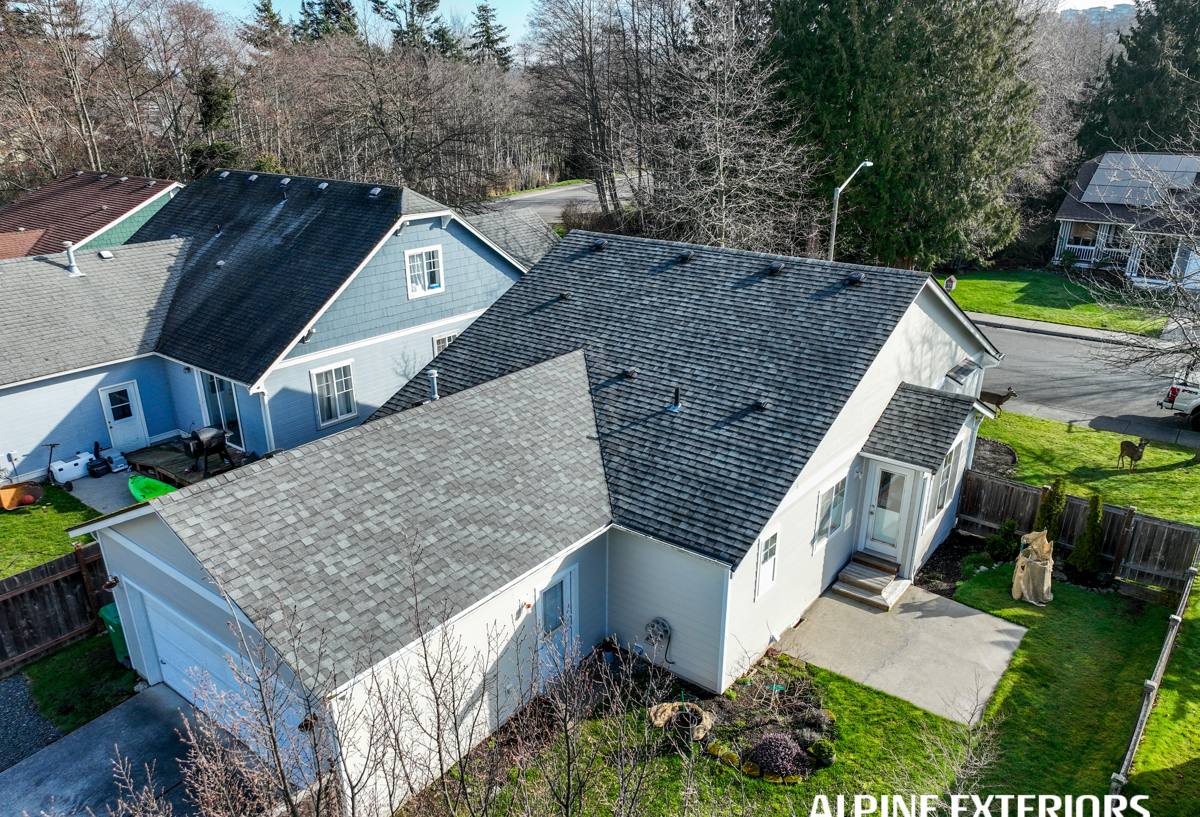
Salt Air and Driving Rain: The Two Forces That Wear Down Siding Here
Proximity to Bellingham Bay means a steady, low-level exposure to salt-laden air, especially on west- and water-facing elevations. Salt air doesn't just sit on a wall — it accelerates corrosion of fasteners and metal trim, and it degrades paint films faster than inland exposure does. A siding product with a weak factory finish will chalk, fade, or peel years ahead of schedule in a spot like this.
Layered on top of that is wind-driven rain. Storms off the Strait of Georgia and the Salish Sea don't just fall straight down here — they get pushed sideways into walls, especially on exposed or unsheltered elevations. That means water intrusion risk isn't only about the field of the siding; it's about every seam, every window flange, every butt joint and inside corner. Siding that swells, wicks moisture, or relies on paint alone to stay sealed is the first thing to show damage in a wall that takes this kind of weather every winter.
What This Means for Material Choice
Wood-based products — cedar, primed spruce, LP SmartSide — depend on an intact protective layer to keep moisture out of the substrate. Once that layer is compromised at a cut edge, a nail head, or a joint that opens up, the wood underneath starts to absorb water and the clock starts on rot. In a salt-air, high-rain environment like Edgemoor, that protective layer gets tested constantly. Vinyl siding handles moisture fine on its own, but it flexes with temperature and wind load in ways that open gaps at seams over time, and it doesn't stand up structurally to wind-driven rain the way a rigid product does.
Moss Season and Shade: Why North Walls and Roofs Struggle
Whatcom County's wet season runs long, and Edgemoor's tree canopy extends it further by keeping shaded walls and roof planes damp well after a storm has passed elsewhere. That combination — shade plus moisture plus mild temperatures — is exactly what moss and algae need. On roofing, that means granule loss and shortened shingle life if moss is left to mat and hold water against the surface. On siding, it means constant surface dampness on north- and east-facing walls, which is hard on any product that isn't dimensionally stable or that provides an organic food source for growth.
This is one of the more overlooked parts of exterior work in this neighborhood. A siding or roofing job that looks fine on a sunny install day can start showing moss and staining within a year or two if the crew didn't account for which elevations stay wet longest. We plan ventilation, flashing details, and product choice around that reality rather than treating every wall the same.
Why We Install Only James Hardie Fiber Cement
We made a decision a while back to stop installing vinyl, LP SmartSide, Cemplank, Allura, and primed wood siding, and to install James Hardie fiber cement exclusively. That's not a marketing position — it's a maintenance and durability call, made after seeing how each of those products actually performs over years in this climate, not just on the install day.
Fiber cement doesn't absorb water the way wood-based products do, so it doesn't swell, rot, or feed moss growth the way an organic substrate can. It's non-combustible, which matters in a region where wildfire smoke and ember exposure are a growing seasonal concern even west of the mountains. And James Hardie's ColorPlus factory finish is baked on and warranted against fading and peeling — a meaningful advantage in a salt-air environment where field-applied paint takes a beating.
HZ5 and the Pacific Northwest Engineering
James Hardie engineers its HZ product lines for specific climate zones, and the HZ5 line is built for regions like ours — places with sustained moisture exposure and freeze-thaw cycling. That's a meaningful difference from a generic fiber cement product; the formulation is matched to what a wall in this part of Washington actually experiences over a winter.
What a Correct Install Looks Like
Fiber cement only performs as well as its installation. That means correct fastener spacing and type (especially important given the salt-air corrosion risk noted above), proper clearance at grade and at roof lines, sealed and flashed butt joints, and rainscreen or drainage-plane detailing on elevations that take the brunt of wind-driven rain. We don't treat any of that as optional, because the failures we get called out to fix on other contractors' work are almost always installation shortcuts, not a materials problem.
Beyond Siding: Roofing, Windows, and Decks for the Full Exterior
Siding is one piece of a wall system, and in Edgemoor's conditions it works best when the rest of the exterior is addressed at the same time.
- Roofing: Shaded, moss-prone roof planes need attention to ventilation and moss-resistant materials or treatments, not just a like-for-like reroof.
- Windows: Old flashing details around window openings are one of the most common hidden water entry points we find behind failing siding. Replacement windows are also a chance to correct flashing that was never done right the first time.
- Decks: Outdoor living space matters on wooded, view-oriented lots like these, and deck framing and ledger connections need the same moisture-conscious detailing as the rest of the exterior, especially on shaded, damp sites.
Handling these together, rather than as separate contractors working in isolation, means flashing and drainage details actually get coordinated at the points where siding meets roof, window, and deck ledger — which is where most real-world leaks originate.
What a Local Crew Brings to an Edgemoor Project
A crew that works across Whatcom County regularly knows which elevations in a neighborhood like Edgemoor need extra attention before they ever pull a tape measure — which walls stay wet longest, which lots are exposed to wind off the bay, and which older homes in the area are likely to have outdated flashing or ventilation hiding behind the existing siding. That local pattern recognition shortens the diagnostic phase of a project and reduces surprises once removal starts.
It also means faster response if something needs a look after the job is done — a local crew isn't driving in from out of the area for a warranty callback.
Cost Factors on an Edgemoor Exterior Project
Every home is different, but these are the variables that most often move the number on a siding or full-exterior project in this neighborhood.
| Factor | Why It Matters Here |
|---|---|
| Access and lot slope | Wooded, sloped lots common in Edgemoor can add setup and staging time |
| Existing wall condition | Hidden moisture damage behind old siding is more likely on long-shaded walls |
| Siding profile and trim complexity | Board-and-batten, more intricate trim, and multiple accent colors add labor |
| Window and flashing work | Correcting old flashing during a siding job adds cost but prevents repeat failures |
| Scope: siding only vs. full exterior | Bundling roofing, windows, or a deck with siding coordinates drainage details and can be more efficient than separate projects |
What to Expect From Us
- An on-site walkthrough that looks at drainage, shading, and existing moisture damage, not just the visible siding surface
- A written estimate that spells out product line, color, and any flashing or ventilation corrections included
- James Hardie fiber cement only, installed to manufacturer specification for fastener, clearance, and joint detailing
- Coordination across siding, roofing, window, and deck work when a project touches more than one of those systems
- A clear explanation of warranty coverage, both on materials and on our installation labor
If you're in Edgemoor and dealing with siding that's showing its age, moss creeping up a shaded wall, or you're just planning ahead for a home in this environment, we're happy to come take a look. A free, no-pressure estimate is the easiest way to find out what your home actually needs — use the form below to get started.