 Bellingham Siding
 Siding for Columbia, Built Around What This Climate Actually Does to a House
Columbia is one of Bellingham's older, more established neighborhoods, and that shows in the housing stock — a mix of homes from different decades, many with siding that's been recoated, patched, or replaced more than once. That's not unusual for this part of Whatcom County. Between the marine air coming off Bellingham Bay, the amount of rain the region sees over the course of a year, and the shade and moisture that let moss and algae take hold on north-facing walls, exterior siding here works harder than it does in drier parts of the country. A material that performs fine in Spokane or Boise can struggle in Bellingham.
We do siding, roofing, windows, and decks across Bellingham and Whatcom County, and Columbia is part of our regular service area. This page walks through what we actually see on homes in and around this neighborhood, how we approach a siding project here, and why we've standardized on one siding product instead of offering the full menu of options most contractors sell.
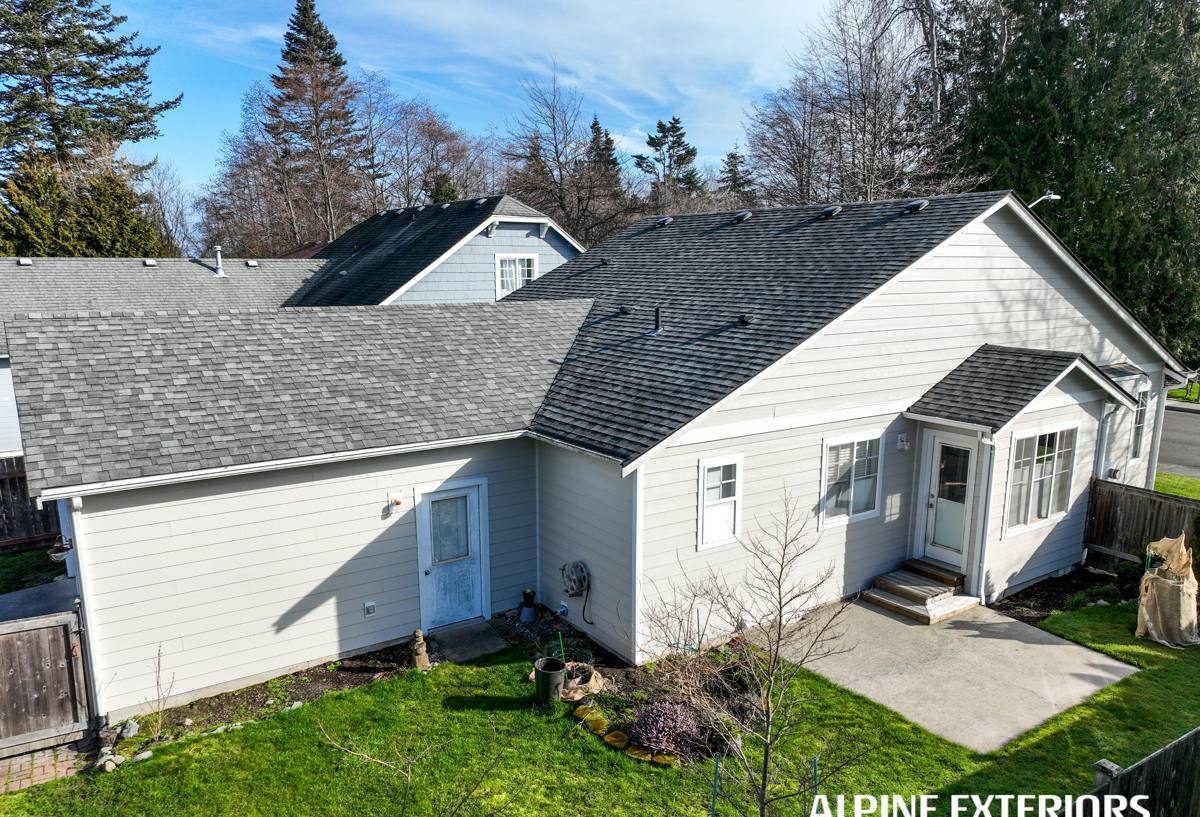
The Climate Columbia Homes Live With
Salt Air and Moisture
Bellingham sits right on the water, and neighborhoods within a few miles of the bay — Columbia included — get exposure to salt-laden air more than homeowners often expect. Salt air accelerates corrosion on fasteners, flashing, and any metal components in a siding or roofing system, and it can speed up the breakdown of finishes that aren't built to handle it. It's a slow, cumulative effect rather than something dramatic, which is exactly why it gets overlooked until a wall shows real damage.
Driving Rain
Whatcom County doesn't get the heaviest rainfall totals in the state, but it gets a lot of steady, wind-driven rain, especially in fall and winter. Driving rain finds every gap in a siding system — lap joints, trim intersections, window and door penetrations — and pushes water sideways and upward, not just straight down. Siding and flashing details that would be fine in a calm-rain climate can fail here if they weren't installed with wind-driven moisture in mind.
Moss and Organic Growth
Long, wet, overcast stretches of the year create ideal conditions for moss, algae, and mildew on exterior surfaces, particularly on shaded or north-facing walls and anywhere tree cover keeps a wall from drying out between rain events. Organic growth isn't just cosmetic — on porous or absorbent siding materials, moisture trapped under moss and algae can lead to rot, delamination, or paint failure over time.
What This Means for Siding Material Choice
Every siding material handles Bellingham's combination of salt air, driving rain, and moss season a little differently. Here's an honest comparison of how the common options actually perform in this climate, not just on a spec sheet.
| Material | Moisture Behavior | Moss/Algae Resistance | Typical Maintenance |
|---|---|---|---|
| Vinyl siding | Doesn't rot, but seams and J-channels can trap moisture; warps in heat, brittle in cold | Prone to algae staining, especially on shaded sides | Occasional washing; panels can crack or fade over time |
| Primed wood / cedar | Absorbs moisture readily; needs a sound paint film to stay protected | High — organic material is a natural host for moss and mildew | Repainting every 5-8 years, more often in shaded areas |
| LP SmartSide (engineered wood) | Wood-based core; performs well when caulking and paint are maintained, vulnerable if seals fail | Moderate — treated core resists rot better than raw wood but still needs a maintained finish | Regular caulk and paint upkeep at seams and edges |
| James Hardie fiber cement | Non-combustible, dimensionally stable, doesn't absorb and swell the way wood-based products do | Factory-cured surface resists moisture intrusion that feeds organic growth | Periodic rinsing; factory finish holds up without repainting on the manufacturer's schedule |
Why We Install Only James Hardie Fiber Cement
We get asked fairly often why we don't offer vinyl, LP SmartSide, or one of the other fiber cement brands. It's not that those products are junk — vinyl is inexpensive and low-maintenance in the right setting, and engineered wood siding has genuinely improved over the years. But we've made a professional decision to install one product across every job, and it's based on how these materials actually perform over 20-plus years in a climate like ours.
Wood-Based Products and Moisture
LP SmartSide and traditional wood or cedar siding rely on an intact finish and well-maintained seams to keep moisture out of a wood-based core. In a climate with this much sustained rain and humidity, any gap in that maintenance — a missed caulk line, a scratch in the finish, a gutter that overflows onto a wall — gives moisture a way in, and wood-based cores respond to trapped moisture by swelling, delaminating, or rotting. That's a maintenance burden we don't think is worth putting on a homeowner in Bellingham.
Vinyl's Trade-Offs
Vinyl doesn't rot, but it isn't rigid, so temperature swings cause it to expand and contract, and over enough cycles that stresses seams and fastening points. It also can't be painted a dark, custom color without risking warping from heat absorption, which limits design options on a lot of homes.
What Hardie Gets Right
James Hardie fiber cement is made from cement, sand, and cellulose fibers, cured into a dense, stable board that doesn't feed moss and algae the way organic materials do, and doesn't swell or rot the way wood-based products can. Hardie's HZ5 product line is engineered specifically for climates like the Pacific Northwest, and the ColorPlus factory finish is baked on under controlled conditions rather than field-painted, which is a big part of why it holds color and resists cracking longer than most site-applied paint jobs. It's also non-combustible, which matters more each year as wildfire smoke and regional fire risk become bigger considerations for homeowners here. We stand behind it because we've seen how it performs on real homes, not because it's the only thing we know how to install.
A Full Exterior Envelope, Not Just Siding
Siding doesn't work in isolation — it's one part of a system that includes the roof, windows, flashing, and trim, and all of it has to work together to keep water out of a wall assembly. We handle siding, roofing, windows, and decks, which matters in a neighborhood like Columbia because a lot of the moisture problems we find during a siding estimate actually trace back to a roofing or flashing issue, not the siding itself.
- Roofing: A roof with worn flashing or clogged valleys can send water down behind siding at the roofline, which shows up later as staining or soft spots on the wall below.
- Windows: Old or poorly flashed window openings are one of the most common points of water intrusion we find behind siding, especially on walls that take direct, wind-driven rain.
- Decks: Deck ledger boards attached directly to a house need proper flashing to keep water from tracking back into the wall assembly — a detail that's easy to get wrong and expensive to ignore.
- Siding: The visible layer, but only as good as what's underneath it — house wrap, flashing, and proper fastening all matter more than the siding brand.
Having one crew look at the whole envelope means fewer blind spots than hiring separate contractors for each trade and hoping the details line up at the seams.
Why a Local Crew Matters in Columbia
Whatcom County's building codes, wind exposure requirements, and permitting process aren't identical to what you'd find elsewhere in Washington, and a contractor who works here regularly already knows the local inspection expectations and how Bellingham's microclimate — bay-adjacent, wet, moss-prone — should shape installation details like flashing laps, fastener spacing, and ventilation. A crew that's worked in Columbia and the surrounding Bellingham neighborhoods has a feel for which walls on a given lot take the worst weather and which details actually matter for longevity here, versus what a national installation guide assumes for a generic climate zone.
What a Siding Project in Columbia Typically Involves
Every home is different, but a well-run siding project generally follows the same sequence, and knowing what to expect helps you evaluate any contractor's proposal, including ours.
- An on-site inspection that looks at the existing siding, trim, flashing, and any signs of moisture damage — not just a quick measurement for a quote
- A written scope that specifies the Hardie product line, profile, and color, plus how flashing and trim details will be handled at windows, doors, and rooflines
- Removal of old siding and an inspection of the sheathing and house wrap underneath before anything new goes up
- Correct fastening and clearances per Hardie's installation specifications — this is where a lot of the long-term performance actually gets decided
- Proper flashing and caulking at every penetration, since these details matter more than the siding material itself for keeping water out
- A final walkthrough so you understand what was done and what, if anything, needs periodic attention going forward
Cost Factors Worth Understanding
Siding costs vary based on home size, existing condition, and how much repair work is needed underneath before new siding goes on. Rather than quoting a number that won't mean much without seeing your home, here's what actually drives the price up or down on most Columbia-area projects.
| Factor | Why It Matters |
|---|---|
| Condition of existing sheathing | Rot or moisture damage found during tear-off adds repair scope before new siding can go up |
| Home shape and trim detail | More corners, dormers, and trim work mean more labor and material cuts |
| Siding profile and color | Different Hardie profiles (lap, shingle, panel) and ColorPlus colors carry different material costs |
| Access and site conditions | Tight lots, slopes, or landscaping close to the house can add time for material staging and protection |
| Scope beyond siding | Bundling roofing, window, or trim work into the same project can be more efficient than separate jobs |
Signs It Might Be Time to Look at Your Siding
Homeowners in Columbia often reach out after noticing one of these, though catching them early is always cheaper than waiting.
- Visible moss or algae buildup that keeps returning after cleaning
- Soft spots, bubbling, or warping, especially near ground level or under windows
- Paint that's peeling or failing faster than it used to
- Gaps or separation at seams, corners, or trim boards
- A musty smell or visible staining on interior walls that share an exterior wall
None of these automatically means a full re-side is needed, but they're worth a professional look before they turn into a bigger repair.
If you're in Columbia or anywhere else in the Bellingham area and want an honest read on your siding, roofing, windows, or a deck, we're glad to come take a look. The estimate is free, there's no pressure, and you'll get a straight answer about what your home actually needs — use the form below to get started.