 Bellingham Siding
 Birch Bay sits right where Whatcom County meets the Salish Sea, and that location shapes everything about how a house ages here. Homes along the bay and back through the surrounding neighborhoods take a steady diet of salt-laden air, wind-driven rain off the water, and a moss season that can stretch for most of the year in shaded, north-facing spots. We work on homes throughout this stretch of the county, and the patterns repeat: paint failing years ahead of schedule, siding that stays damp long after a storm has passed, and moss creeping up from the roofline onto the walls below. None of that is bad luck — it's just what this coastline does to a house that wasn't built or sided for it.
What Birch Bay's Climate Actually Does to a House
Coastal Whatcom County doesn't get the temperature swings that stress siding in other parts of the country, but it makes up for that with relentless moisture and salt exposure. Three things stand out for homes in and around Birch Bay:
Salt Air and Corrosion
Proximity to the water means airborne salt settles on every exterior surface, not just the side facing the beach. Salt is hygroscopic — it pulls moisture out of the air and holds it against whatever it lands on. On fasteners, trim, and siding that isn't rated for this kind of exposure, that means faster corrosion, faster paint breakdown, and a shorter service life overall.
Driving Rain
Wind off the water doesn't just drop rain straight down — it pushes it sideways into walls, under laps, and into any gap in the water-resistive barrier. Siding systems that rely on tight tolerances or that swell and shrink with moisture are more likely to develop problems here than they would a few miles inland.
Moss and Shade
Tree cover and short winter daylight mean a lot of north- and east-facing walls stay damp for days at a time. That's exactly the environment moss and algae need. Beyond the cosmetic issue, sustained dampness against a wall assembly is what eventually leads to rot, trapped moisture, and paint that fails from the back side out.
Why We Only Install James Hardie Fiber Cement
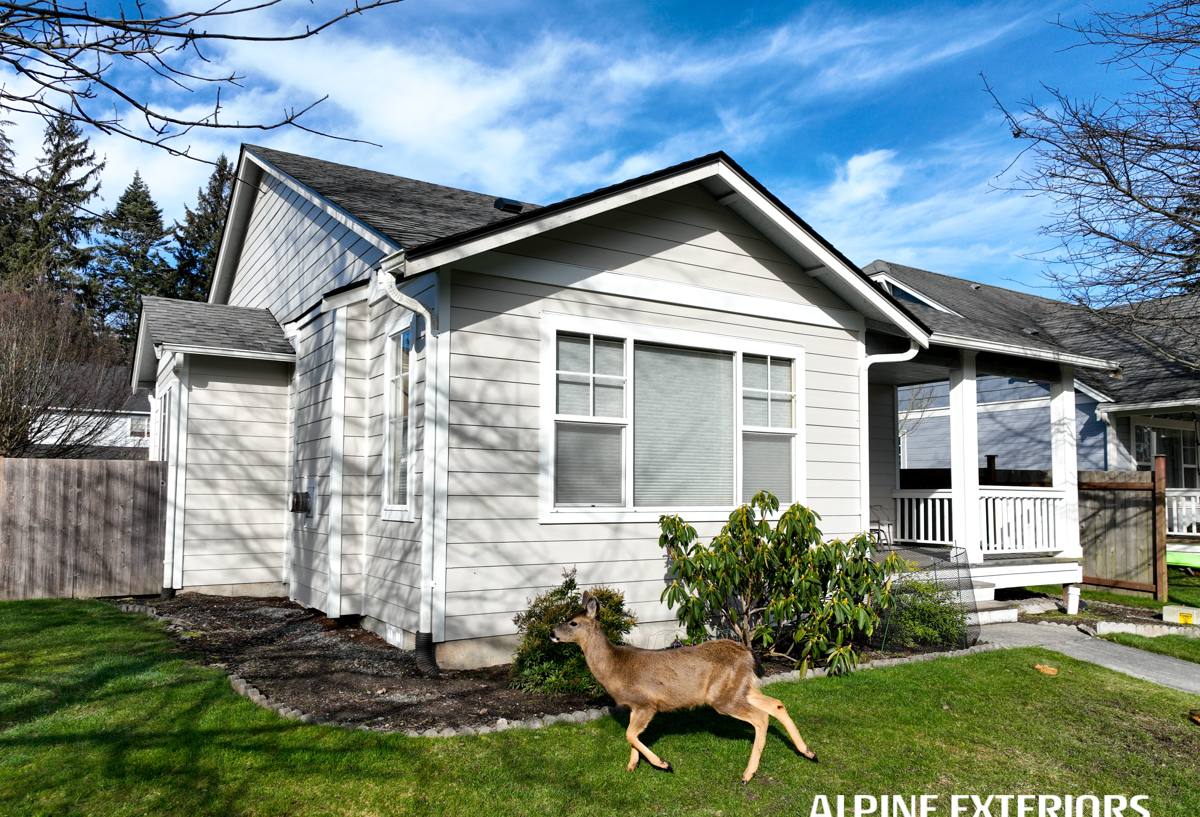
We made a decision as a company to install James Hardie fiber cement siding exclusively, and we don't install vinyl, LP SmartSide, cedar, primed spruce, or other fiber cement brands like Cemplank or Allura. That's not a marketing position — it's a practical one, built on what actually holds up in this climate.
Fiber cement is non-combustible, doesn't expand and contract with moisture the way wood-based products do, and holds paint dramatically longer than wood or wood composite siding. James Hardie specifically engineers regional product lines (their HZ5 line is built for climates like ours) and backs installations with a strong, transferable warranty when the work is done to their specification. In a place where salt air and driving rain are the norm rather than the exception, those differences compound over the life of the siding.
We go into the trade-offs of the alternatives on our other pages, but the short version: vinyl can warp and fade and doesn't offer the same fire performance; LP SmartSide is wood-strand based and more sensitive to sustained moisture exposure; cedar and primed spruce require an ongoing maintenance commitment that most homeowners don't want to sign up for on a house that faces this much weather. Fiber cement, installed correctly, is simply the better match for a Birch Bay exterior.
Siding Installation Done Right
James Hardie siding performs the way it's supposed to only when it's installed to spec. That means correct fastening patterns, proper clearance from grade and roof lines, correctly flashed penetrations and butt joints, and a house wrap and drainage plane that actually manages bulk water instead of trapping it. On a coastal property, we pay particular attention to:
- Flashing and sealing around windows, doors, and any wall penetration, since driving rain finds gaps that vertical rain never would
- Maintaining proper clearance between siding and the ground, deck ledgers, and roof surfaces to avoid wicking moisture
- Using fasteners rated for coastal exposure so corrosion doesn't become the weak point in an otherwise sound installation
- Building in a drainage gap behind the siding where the wall assembly calls for it, so any moisture that does get behind the cladding has somewhere to go
We also factor in ColorPlus factory-applied finishes where the homeowner wants them, which hold color and resist fading better than field-applied paint — a real advantage on walls that get direct salt spray or long shaded dampness.
Roofing: The First Line of Defense
Siding problems often start at the roofline. A roof that's shedding granules, letting moss establish itself, or funneling water somewhere it shouldn't puts extra load on the siding and trim below it. We handle roof replacement and repair alongside siding work, which lets us look at the whole exterior envelope together rather than fixing one component while ignoring how it interacts with the rest of the house. Moss control at the roof edge, proper flashing at valleys and walls, and gutters that actually keep water away from the foundation and siding all matter more here than they would in a drier region.
Windows: Where Water Intrusion Usually Starts
Old or poorly flashed windows are one of the most common sources of hidden water damage we find in coastal Whatcom County homes. Wind-driven rain pushes water into any gap around an aging window frame, and that moisture often travels inside the wall before it ever shows up as a visible stain. When we replace siding on a home with original or aging windows, we recommend evaluating them at the same time — it's far more efficient to address flashing and window replacement while the wall is already open than to come back later.
Decks: Built for Damp Ground and Salt Exposure
Decks near the bay face their own version of the same problems: constant dampness, salt exposure, and, depending on the lot, heavy shade that keeps surfaces from drying out between rains. We build and repair decks with hardware and fasteners suited to that exposure, and we pay attention to ledger flashing and drainage the same way we do on siding, since a poorly flashed deck ledger is a common point of hidden rot on homes in this area.
Signs Your Siding Is Already Struggling
Homeowners often call us after noticing one or two of these signs, not realizing how far along the underlying problem already is:
| What You See | What It Usually Means |
|---|---|
| Paint peeling or bubbling in sheets | Moisture trapped behind the siding, often from a failed water-resistive barrier or poor flashing |
| Moss or dark streaking on north-facing walls | Sustained dampness that hasn't had a chance to dry between rain events |
| Soft or spongy spots near the bottom of walls | Wood rot from long-term moisture exposure at grade or trim level |
| Rust streaks below fasteners or trim | Corrosion from salt exposure on hardware not rated for coastal conditions |
| Visible gaps or separation at siding joints | Material movement over time, common with wood-based or vinyl products |
What a Project Looks Like
Every home is different, but most siding projects in this area follow a similar sequence: an on-site evaluation of the existing siding, trim, and any signs of moisture damage; removal of the old material and inspection of the sheathing underneath; repair of any damaged sheathing or framing found in the process; installation of a proper water-resistive barrier and drainage plane; and finally installation of the James Hardie siding, trim, and flashing details to spec. We also look at the roof, windows, and any decks attached to the home while we're there, since problems in one area often trace back to another.
A Few Questions Worth Asking Before You Hire
- Are you licensed and insured to work in Whatcom County?
- Will you show me the manufacturer's installation instructions you're following?
- What's included in your written estimate — demolition, sheathing repair, flashing, and disposal?
- Who handles the warranty if something goes wrong five years from now?
- Can you walk me through how you'll handle water management at penetrations and butt joints?
Why a Local Crew Matters Here
A crew that works this coastline regularly knows which walls take the worst of the weather, which older homes in the area were built with materials that don't hold up anymore, and how to sequence a project around the region's rain patterns. That local knowledge shows up in small decisions — where to add extra flashing, which fastener spec to use, how to plan a tear-off around an incoming weather window — that a crew unfamiliar with coastal Whatcom County might not think to make.
If your Birch Bay home is showing signs of wear from salt air, moss, or driving rain, we're happy to take a look and walk you through what we're seeing. Reach out for a free, no-pressure estimate — there's a form right below this page.