 Bellingham Siding
 Building a Deck That Holds Up on the Bay
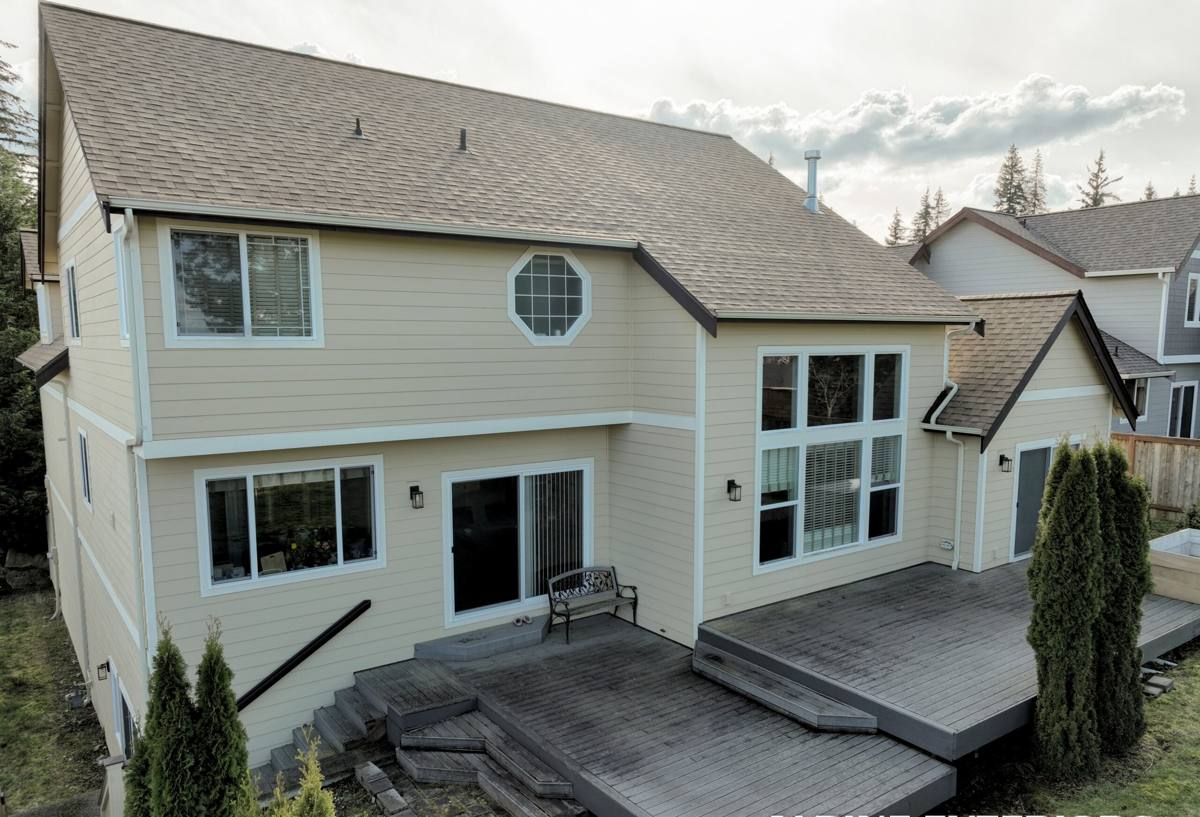
A deck in Birch Bay lives in a harder environment than one built a few miles inland. It sits closer to salt-laden marine air off the water, it takes wind-driven rain from more directions than a sheltered lot would, and it spends a long stretch of the year damp enough to grow moss on any surface that doesn't drain and dry properly. None of that means a deck out here has to be high-maintenance or short-lived. It means the framing, fasteners, and decking material all have to be chosen and installed with that exposure in mind from the start, not treated the same way you'd build a deck in a drier part of Whatcom County.
We build and replace decks for homes in and around Birch Bay, and we treat a deck as an outdoor structure that has to survive the same climate stresses as the siding and roof on the house it's attached to. That's a different mindset than a lot of general framing crews bring to deck work, and it shows up in the small details — the fasteners, the flashing where the deck meets the house, and the gaps left for drainage — more than in anything visible from the yard.
What This Climate Does to a Deck
Salt Air and Corrosion
Being close to the water means more salt in the air than most of inland Whatcom County sees, and salt speeds up corrosion in anything metal. Fasteners, joist hangers, post bases, and railing hardware all take more punishment here than they would a few miles east. A deck built with standard interior-grade screws or under-spec'd hangers can start showing rust streaks and loosening connections well before the wood itself is a problem, and by then the fix isn't cosmetic — it's structural.
Driving Rain and Standing Water
Wind off the bay pushes rain sideways into railings, stair stringers, and the ledger board where a deck attaches to the house. That's a heavier and more directional moisture load than a simple rainfall total suggests. Any spot where water can collect instead of running off — a poorly sloped ledger flashing, boards installed tight with no drainage gap, joists without proper end protection — becomes the place rot starts first.
Moss and Surface Growth
Mild temperatures and near-constant moisture add up to a long moss season across this part of the county, and a deck surface is a prime target. Shaded decks, and the north or tree-covered side of a lot, will grow moss and mildew faster than sun-exposed areas. On a wood deck that turns into a slip hazard and a maintenance chore; on composite or synthetic decking it's mostly a cleaning issue, but only if the boards were installed with enough airflow underneath to let things dry out between rains.
What a Correctly Built Deck Involves
A deck that's going to last in Birch Bay's climate comes down to a handful of details that aren't visible once the project is finished, plus material choices that match how the deck will actually be used and exposed.
Ledger Attachment and Flashing
Where the deck ties into the house is the single most common failure point on any deck, and it's especially unforgiving in a wet, wind-driven climate. The ledger board needs proper flashing that directs water out and away from the house framing, not just a bead of caulk and a hope. Done wrong, this is where you get hidden rot in the rim joist and sheathing behind the deck — damage that often isn't visible until it's already extensive.
Framing and Fasteners
We frame with fasteners and connectors rated for the moisture and salt exposure a waterfront-adjacent deck actually sees, not the minimum spec that would pass in a drier location. Joist hangers, post bases, and structural screws all matter more here than the visible decking boards do, because they're what's actually holding the structure together after the finish surface has been rained on for a decade.
Drainage and Airflow Underneath
A deck built low to the ground or without adequate ventilation underneath traps moisture against the framing and encourages both rot and moss growth. Proper spacing between boards, adequate clearance from grade, and in some cases a drainage system underneath a second-story deck all factor into how long the structure stays sound.
Decking Material Choice
Wood, composite, and PVC decking all behave differently in this climate, and the right choice depends on how much maintenance a homeowner actually wants to do versus how much they want to spend upfront.
| Decking Type | How It Handles This Climate | Maintenance |
|---|---|---|
| Pressure-treated wood | Affordable, but needs consistent sealing to resist moss and moisture in a wet, shaded climate | High — annual cleaning and periodic re-sealing |
| Cedar | Naturally moisture-resistant but still needs finish maintenance; can gray and weather faster in salt air | Moderate to high |
| Composite decking | Resists rot and moisture well; still needs cleaning to keep moss and mildew off the surface | Low to moderate — periodic cleaning |
| PVC/synthetic decking | Best moisture and rot resistance of the common options; performs well under sustained wet exposure | Low — occasional cleaning |
There's no single right answer for every homeowner — a wood deck that's properly maintained can look great for many years, and plenty of Birch Bay homeowners prefer the look and lower upfront cost. What matters is picking the material with eyes open about the maintenance commitment it comes with in this specific climate, not assuming every decking product behaves the same way once it's exposed to salt air and a long wet season.
New Builds vs. Deck Replacement
We see two kinds of projects out here about equally often: new decks on homes that never had one, or additions being expanded, and replacements of decks that have reached the end of their useful life. The two jobs look similar on the surface but start from different points.
New Construction
A new deck gives us full control over layout, footing depth, ledger attachment, and material choice from the ground up. It's usually the more straightforward job because there's no existing structure or hidden damage to work around.
Replacement and Rebuild
Replacing an older deck almost always uncovers something the surface didn't show — soft framing under the boards, a ledger board that was never flashed correctly, or post footings that have shifted over the years. We check the structural bones before quoting a straight board-for-board swap, because reusing compromised framing under new decking just hides the same problem for a few more years.
Our Process
- On-site assessment of the location, sun and shade exposure, and (for replacements) the condition of the existing structure and ledger connection
- A written scope covering framing, fasteners, decking material, railing, and any flashing or drainage work at the house connection
- Permitting where required — deck size, height, and railing requirements vary by jurisdiction and by how far the structure sits off the ground
- Framing and structural work, inspected before decking goes down
- Decking, railing, and stair installation to the manufacturer's specifications for the material chosen
- A final walkthrough covering drainage, railing security, and basic care for whatever material was installed
What to Check Before Hiring a Deck Builder in Birch Bay
- Do they explain how they'll flash and seal the ledger board connection, not just what decking brand they carry
- Do they use corrosion-resistant fasteners and hardware suited to a marine-influenced climate
- Will they inspect and address existing framing on a replacement job, not just swap boards on top of it
- Do they pull permits when the project requires one
- Can they explain the maintenance trade-offs between wood, composite, and PVC decking honestly, without steering you only toward what's easiest for them to install
Why Local Experience Matters Here
A deck built to a generic regional spec can still fail early in Birch Bay if it doesn't account for the salt exposure, wind-driven rain, and moss season that come with being this close to the water. We work in this specific stretch of Whatcom County regularly, which means we're not guessing at how much drainage detailing or what grade of hardware a deck actually needs here — we've seen what holds up and what doesn't over years of building and repairing decks in this exact climate. That local pattern recognition is worth more than a generic spec sheet when the goal is a deck that's still solid in fifteen or twenty years.
If you're planning a new deck or need to replace one that's showing its age, we're happy to take a look and put together a straightforward, no-pressure estimate. There's a form below — reach out and we'll walk the site with you and talk through what your home actually needs.