 Bellingham Siding
 South Hill's Exterior Climate, in Plain Terms
South Hill sits above downtown Bellingham with some of the best views in Whatcom County — and views come with exposure. Homes up on the hill catch wind and driving rain off the Salish Sea more directly than houses tucked into lower, more sheltered neighborhoods. That combination of elevation, moisture, and salt-tinged marine air is exactly the mix that wears down siding faster than most homeowners expect, especially on the weather-facing walls of a house.
Bellingham's climate doesn't hit siding with extreme heat or hard freezes the way other parts of the country do. Instead it applies steady, patient pressure: months of damp air, long stretches without full sun exposure to dry a wall out, and a moss and algae season that can run nearly year-round on shaded or north-facing siding. Products that handle occasional wetting fine in a drier climate often struggle here, where the wall assembly rarely gets a real chance to dry out between rain events.
What We See on South Hill Homes
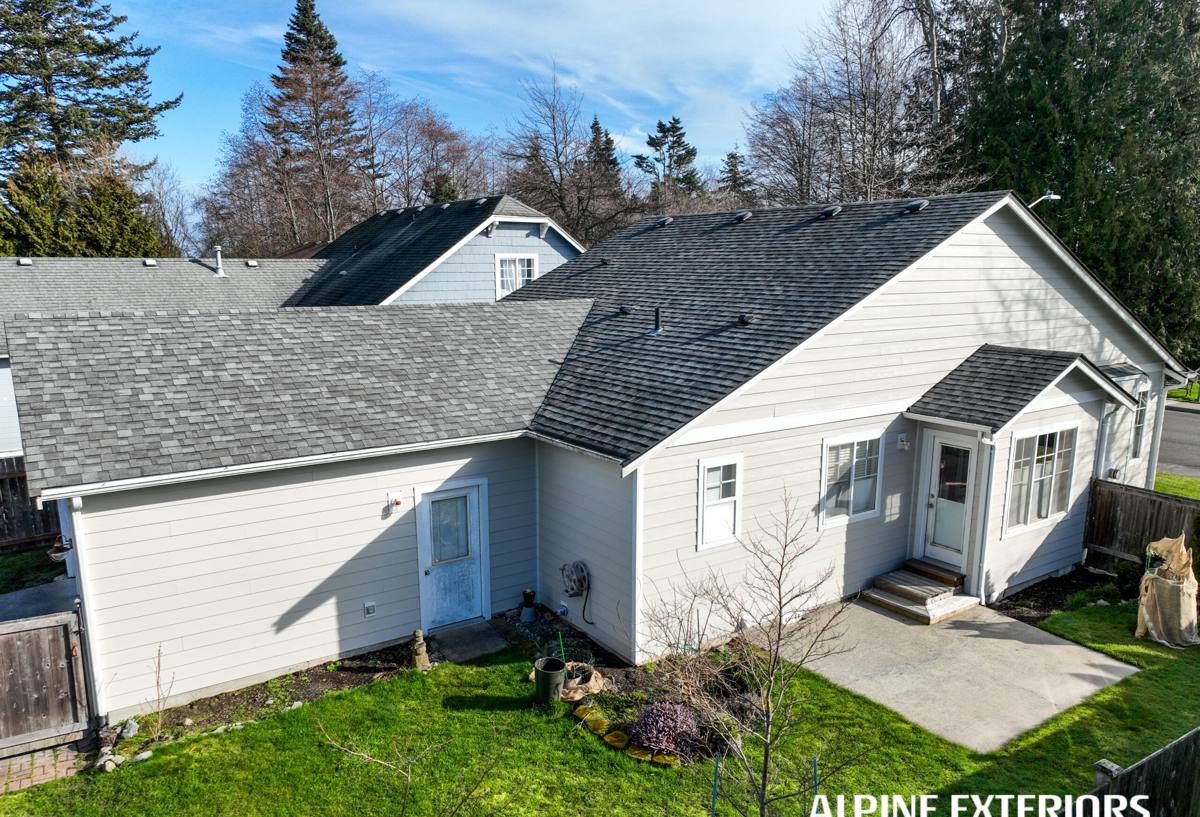
Working in this neighborhood, the same patterns show up again and again:
- Moss and green staining building up on north- and west-facing walls, porch undersides, and anywhere tree cover blocks the sun
- Paint failure and caulk breakdown on older wood and composite siding, usually starting at butt joints and trim edges
- Swelling, delamination, or soft spots on wood-based or engineered-wood siding where moisture has worked its way behind the surface
- Corrosion streaking on fasteners and trim exposed to salt-laden wind off the bay
- Gutters and flashing details that were adequate when installed but are now undersized for the volume of water the hill sheds during a hard rain
None of this is unique to any one house — it's what this climate does to exterior materials over enough years. The difference is in which materials shrug it off and which ones need constant intervention to keep looking and performing the way they should.
Why Elevation and Wind Exposure Matter
Wind-driven rain doesn't just wet a wall — it forces water sideways and upward into laps, joints, and any gap in the water-resistive barrier. Higher, more exposed lots on South Hill see more of this than sheltered lots closer to sea level. That makes correct flashing, proper lap spacing, and a siding product that doesn't absorb and hold water even more important here than it might be a few blocks downhill.
Why We Install Only James Hardie Fiber Cement
We made a deliberate decision as a company to stop installing vinyl siding, LP SmartSide, and other engineered-wood or lower-tier fiber cement products, even though we could install any of them. The reason is simple: on the North Sound coast, we were seeing too many callbacks tied directly to how those materials handle sustained moisture, and we didn't want to keep selling homeowners a product we'd have to keep coming back to fix.
James Hardie fiber cement is a cement-and-cellulose composite. It doesn't absorb and swell the way wood-based products can, and it doesn't have the seams, expansion behavior, or UV-driven fading issues that come with vinyl. It's also non-combustible, which matters increasingly to insurers and to homeowners thinking about wildfire smoke and ember exposure even in a wetter climate like ours. Hardie's ColorPlus factory-applied finish is baked on in a controlled environment, not brushed or sprayed on-site, which gives it more consistent coverage and a longer service life than field-applied paint.
We're not going to tell you every other siding product is junk — that's not honest and it's not our call to make about materials we don't install. What we will tell you is what we've observed firsthand on Whatcom County homes over years of service calls, and why we'd rather stand behind one product system we trust completely than offer several and hope the cheaper ones hold up.
Hardie's Engineered-for-Climate Lines
Hardie manufactures its HZ5 product line specifically for regions with wetter, harsher winter climates — Bellingham and the rest of Whatcom County fall into that category. That's not a marketing label; it reflects a different engineering formulation aimed at climates that don't dry out for long stretches of the year, which is precisely the situation on an exposed South Hill lot.
| Factor | What It Means for South Hill Homes |
|---|---|
| Moisture resistance | Fiber cement doesn't swell, rot, or delaminate from prolonged dampness the way wood-based siding can |
| Wind-driven rain | Correct lap and flashing detailing plus a non-absorptive material reduces water intrusion at exposed elevations |
| Moss and algae | Factory finish resists the staining and surface breakdown that accelerates moss growth on porous materials |
| Salt air / coastal wind | Non-combustible cement composite doesn't corrode; proper fastener selection avoids streaking over time |
| Long-term appearance | ColorPlus finish is warrantied against fading and peeling far longer than typical field-applied paint |
How Our Process Works for South Hill Properties
Every job starts with an honest look at the house, not a sales pitch. We walk the exterior, check the condition of the existing siding, trim, and flashing, and look specifically at how water has been moving around the building — where it pools, where it's been getting behind the cladding, and which walls take the worst of the wind and rain. On a hillside property, we pay particular attention to grading and drainage around the foundation, since water shedding off an upper lot can create problems a flatter lot wouldn't have.
What a Proper Installation Includes
- Removal of the old siding and inspection of the sheathing underneath for any hidden rot or moisture damage
- Repair of any damaged sheathing before new material goes up — covering a problem is not the same as fixing it
- A correctly installed water-resistive barrier and flashing details at every window, door, and penetration
- James Hardie panels or planks installed to manufacturer spec — proper fastening, clearances, and caulking (or intentionally none, where Hardie's reveal system calls for it)
- Attention to ground clearance and drip edges so the new siding isn't set up to repeat the same moisture problems
We also handle roofing, windows, and decks, which matters more than it might seem on a hillside home. Siding, roofing, and window flashing all have to work together as one water-management system. If your roof edge, window flashing, or deck ledger isn't detailed correctly, it doesn't matter how good the siding is — water will find the gap. Being able to look at the whole exterior as one crew, rather than coordinating between three separate contractors, is a real advantage on a property with this much weather exposure.
Maintenance Reality for This Neighborhood
No siding product is maintenance-free in Bellingham's climate, but the maintenance burden varies a lot by material. James Hardie fiber cement with a ColorPlus finish generally needs an occasional rinse to keep moss and pollen from building up, and periodic caulk checks at trim joints — nothing more aggressive than that under normal conditions. Wood-based and engineered-wood products in this same environment typically need more frequent repainting, more vigilant moisture monitoring, and faster response to any sign of swelling or soft spots, because once moisture gets in, the damage tends to progress.
For a home on South Hill catching more wind and rain than average, that difference in maintenance demand compounds year over year. A product that tolerates being wet more often, and dries out without degrading, is simply a better fit for the site conditions here than one that depends on staying dry to perform well.
Planning a Siding Project on a Hillside Lot
A few things are worth thinking through before starting a project on an elevated or exposed South Hill property:
- Access — steep driveways or lots can affect staging, scaffolding, and material delivery, which we account for in scheduling
- Drainage — grading and gutter capacity should be evaluated alongside the siding itself, not as an afterthought
- Wind exposure — the more exposed the elevation, the more that flashing and lap detailing quality matters
- Existing damage — older wood or composite siding on an exposed hillside lot is more likely to be hiding sheathing damage than the same product on a sheltered lot
- Timing — exterior work goes more smoothly scheduled around Bellingham's wetter months when possible, though it can be done responsibly in most seasons with the right approach
Why a Local Crew Matters Here
A contractor who only works in drier climates will make different assumptions than one who works Whatcom County year-round. We know what South Hill's rain and wind do to a wall assembly because we see it on service calls, not just installations. That's part of why we standardized on one siding system instead of offering a menu of products — we'd rather be genuinely expert in what actually holds up here than generalists across everything on the market.
If you're weighing a siding project on South Hill — whether it's a full replacement, storm damage repair, or you're just trying to understand what's happening to your current siding — we're glad to take a look and give you a straight answer. Reach out for a free, no-pressure estimate and we'll walk the property with you.