 Bellingham Siding
 Siding Work in Sehome: A Central Bellingham Neighborhood With Its Own Set of Wear Patterns
Sehome sits in the heart of Bellingham, close to Western Washington University and the rise of Sehome Hill, with a mix of older homes and infill construction packed into a walkable, established part of the city. Like most of central Bellingham, it's inside the reach of Whatcom County's marine climate: salt-tinged air off the Sound, driving rain that comes in sideways during winter storms, and a moss and mildew season that can stretch across most of the year on shaded, north-facing walls. None of that is unusual for this part of the state. But it does mean exterior materials here are worked harder, and for longer stretches of the year, than they would be almost anywhere inland.
We're a local exterior contractor serving Bellingham and the surrounding Whatcom County area, including Sehome. We handle four things — siding, roofing, windows, and decks — and we treat them as one connected exterior system rather than four separate jobs, because on a house, they are. On siding specifically, we install one product: James Hardie fiber cement. Not vinyl, not LP SmartSide, not primed spruce or cedar, not other fiber cement brands like Cemplank or Allura. That's a standard we hold ourselves to, and later in this page we'll explain honestly why.
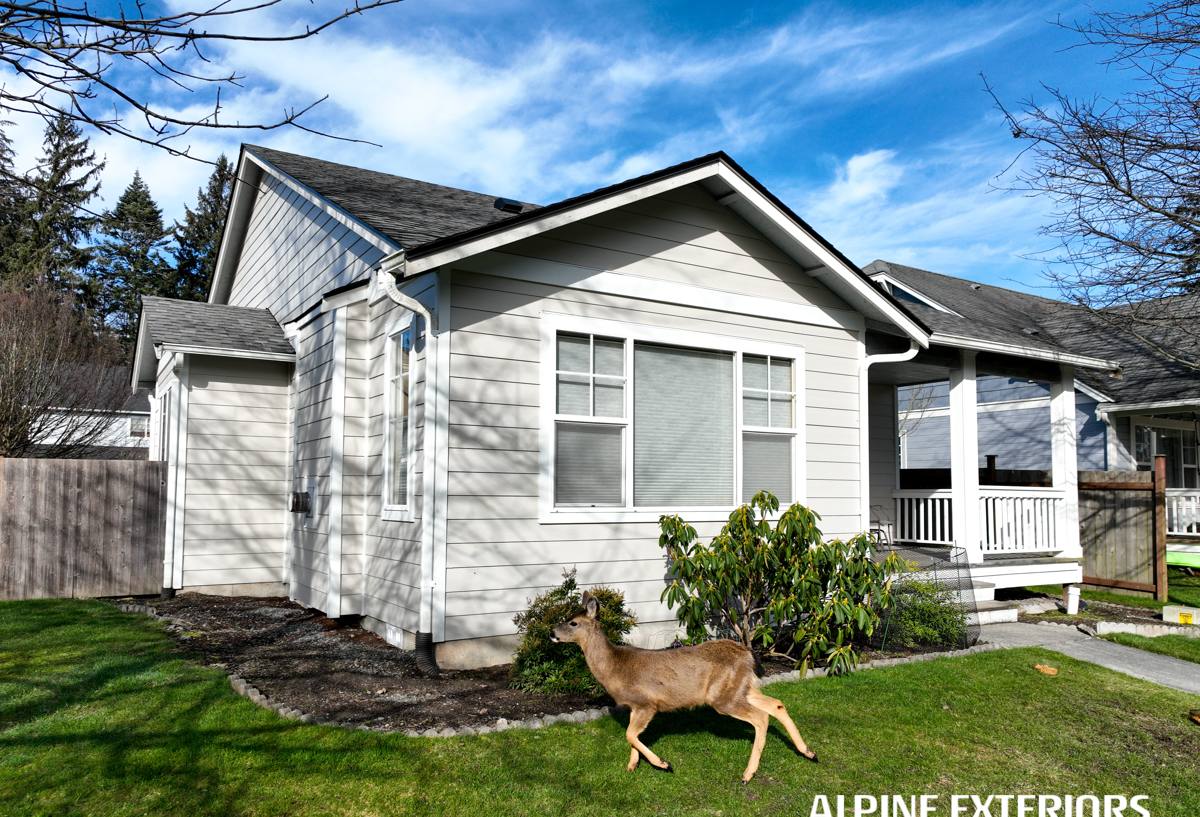
What Sehome Homes Deal With
Salt Air
Bellingham Bay is close enough that airborne salt is a real factor on siding, trim, fasteners, and any exposed metal on a house in Sehome. Salt-laden moisture accelerates corrosion on lower-grade fasteners and flashing, and it speeds up the breakdown of paint films and coatings that weren't built to handle it. Over years, that shows up as chalking, fading, and eventually cracking or peeling on materials that rely on a field-applied finish.
Driving Rain
Storms off the Pacific tend to arrive with wind, which pushes rain sideways into walls rather than letting it fall straight down and shed off easily. That matters more at penetrations, corners, and butt joints than most homeowners expect — it's not the flat wall surface that fails first, it's the seams and transitions where water is being forced in laterally instead of just running down.
Moss and Sustained Dampness
Sehome's tree cover and hillside terrain mean plenty of homes have walls that stay shaded and damp for long stretches, especially through fall and winter. That's exactly the environment moss, algae, and mildew need to take hold. On wood-based siding products, sustained dampness combined with organic growth is one of the more common paths to rot, especially at butt joints and lower courses near grade or landscaping.
Why We Standardized on James Hardie Fiber Cement
James Hardie fiber cement is a blend of cement, sand, and cellulose fiber, engineered specifically for climate zones like ours. A few things about it line up directly with what Sehome homes face:
- Non-combustible — fiber cement doesn't contribute fuel to a fire the way wood-based sidings can, which matters for insurance conversations as much as for safety.
- Factory-applied ColorPlus finish — the color and protective coating are baked on at the factory under controlled conditions, not brushed or sprayed on-site where weather and technique introduce variability. That finish is formulated to resist fading and hold up under UV and moisture exposure far longer than typical field-applied paint.
- HZ5 engineered product line — Hardie makes region-specific formulations. The HZ5 line is engineered for wetter, colder climates like the Pacific Northwest, which is what we specify for Sehome and the rest of our Whatcom County service area.
- Moisture and pest resistance — being cement-based rather than wood-based, it doesn't feed rot fungus or attract wood-boring insects the way organic siding materials can.
- Strong, transferable warranty — Hardie backs its products with a manufacturer warranty that can transfer to a new owner if the home sells, which matters to buyers and appraisers alike.
None of that means fiber cement is maintenance-free — it isn't, and we'll cover that below — but it holds up to salt air, driving rain, and a long moss season noticeably better than the alternatives, which is the entire reason we standardized on it.
What We Don't Install, and Why
We get asked fairly often why we don't offer vinyl, LP SmartSide, cedar, primed spruce, or other fiber cement brands. Each of those products has legitimate strengths — we're not going to pretend otherwise. But here's the honest trade-off analysis behind our decision:
Vinyl Siding
Vinyl is inexpensive and low-maintenance in mild climates, but it's a petroleum-based product that can warp or become brittle with temperature swings, and its color is baked through the material rather than a separately engineered finish coat — which sounds like an advantage until you're trying to match a faded panel years later. In a marine climate with driving rain, vinyl's overlapping panel system also relies heavily on correct installation to shed water properly at seams.
LP SmartSide and Other Engineered Wood
Engineered wood siding uses treated wood strand material, which performs well when installation details (caulking, flashing, paint maintenance) are followed exactly and maintained on schedule. The risk is that it's still a wood-based product at its core — moisture that gets past a compromised seam or unmaintained cut edge has a wood substrate to work on, which is a bigger liability in a climate with Sehome's rain and moss exposure than in a drier region.
Cedar and Primed Spruce
Natural wood siding is beautiful and has real heritage appeal, but it demands the most ongoing maintenance of any option here: regular refinishing, careful caulking, and vigilance against exactly the kind of sustained dampness and moss growth that shaded Sehome lots produce. Primed spruce in particular relies entirely on a field-applied topcoat holding up — and field-applied finishes are the first thing to fail under UV and salt exposure.
Other Fiber Cement Brands (Cemplank, Allura)
These are legitimate fiber cement competitors to Hardie, and the base material science is similar. Our decision here comes down to product line depth, factory finish warranty structure, and consistency of supply and support in this region — not a claim that the base material is inferior.
How Our Siding Installation Works
Correct installation matters as much as the product itself — fiber cement installed wrong will still fail early. Our process on a Sehome home typically looks like this:
- Inspection and tear-off — we remove existing siding and inspect the sheathing and framing underneath for rot, especially at butt joints, corners, and anywhere moss or dampness has been sitting against the wall.
- Repair before cover — any soft or compromised sheathing gets replaced. Covering over rot with new siding just hides a problem that keeps growing.
- Weather-resistive barrier — a correctly lapped and sealed water/weather barrier goes on before siding, which is the layer actually responsible for keeping incidental moisture out of the wall assembly.
- Flashing at every penetration — windows, doors, and any wall penetration get properly integrated flashing, since these are the points most exposed to Sehome's sideways-driven rain.
- Hardie installation to manufacturer spec — correct fastener spacing, gapping, and clearances (including ground clearance and clearance from roof lines and decks) per Hardie's published installation requirements, which is also what keeps the warranty valid.
- Trim, caulking, and finish detail — clean lines at corners and openings, with sealant used only where it's actually meant to be, not as a substitute for correct flashing.
Beyond Siding: Roofing, Windows, and Decks
Siding doesn't work in isolation. A roof that's shedding water improperly onto a wall, a window that's not flashed correctly, or a deck ledger that's trapping moisture against the house will undermine even a perfect siding job. That's why we handle all four systems:
- Roofing — a roof in poor condition sends water where it shouldn't go, including down onto siding and trim it was never meant to see that much of.
- Windows — proper flashing integration between window and siding is one of the most common failure points we find when we open up older walls in this climate.
- Decks — deck ledger boards and any structure attached directly to the house need to be detailed so they don't trap moisture against the siding or framing behind them.
Having one crew responsible for how these systems meet each other, instead of separate contractors who never talk to each other, is a real practical advantage on an older Sehome home where several of these systems may be original or long overdue.
What Drives Siding Cost
Every home is different, but these are the main factors that move a siding project's price up or down:
| Factor | Why It Matters |
|---|---|
| Tear-off complexity | Multiple layers of old siding or extensive rot repair adds labor before new siding even starts |
| Wall square footage and home shape | More corners, dormers, and cut-ins mean more labor-intensive detail work per square foot |
| Siding profile and texture | Lap width, shingle-style panels, and board-and-batten each carry different material and labor costs |
| Color and finish choice | Standard ColorPlus colors versus custom or premium finishes affect material pricing |
| Trim scope | Full trim replacement versus reusing sound existing trim changes both material and labor totals |
| Access and site conditions | Steep lots, tight setbacks, or limited staging area (common on some Sehome lots) can add time |
We don't publish blanket per-square-foot pricing because these variables genuinely change the number from house to house — the honest way to get a real figure is a walk-through estimate.
Checklist: Vetting an Exterior Contractor in Bellingham
- Are they licensed and insured to work in Washington State?
- Will they put the specific siding product and product line in writing, not just "Hardie" generically?
- Do they inspect and address sheathing condition before installing new siding, or just cover what's there?
- Can they explain their flashing details at windows, doors, and penetrations without hand-waving?
- Do they carry manufacturer certification for the products they install, and is the warranty transferable?
- Are they familiar with this specific climate — salt air, driving rain, moss — or working from a generic playbook?
Living With Hardie Siding in Sehome's Climate
Fiber cement is low-maintenance compared to wood, but "low" isn't "zero." In Sehome's conditions, a realistic maintenance rhythm looks like periodically rinsing off moss and grime buildup on shaded walls, keeping gutters and downspouts clear so water isn't sheeting down the siding face, keeping vegetation and landscaping from holding moisture directly against lower courses, and doing a visual check after major storms for any caulking or trim that's come loose. None of this is intensive, but skipping it entirely for years at a time is where even a good product starts to show its age early.
Why a Local Crew Matters
A contractor who works Whatcom County regularly knows which details actually matter here — how much clearance to leave at grade given our rainfall, which wall orientations in a neighborhood like Sehome need extra attention for moss and shade, and how local wind-driven storms behave differently than a generic installation manual assumes. That local knowledge doesn't replace following manufacturer specs, but it's what keeps a spec-compliant install from still underperforming in practice.
If you're weighing a siding project — or thinking about how your roof, windows, and siding are working together as a system — we're happy to come take a look and give you a straightforward, no-pressure estimate. There's no obligation, and no pressure pitch. Just an honest read on what your home actually needs.