 Bellingham Siding
 Birch Bay Sits Right at the Edge of the Weather
Birch Bay is one of the more exposed stretches of Whatcom County. The homes here face Georgia Strait directly, which means siding takes a harder hit than it would a few miles inland in Bellingham. Salt-laden air, wind-driven rain that comes in sideways off the water, and a long, damp moss season all work on a home's exterior year-round, not just during winter storms. A siding installation that would hold up fine in a sheltered neighborhood can fail early out here if it isn't built for this specific exposure.
That's the starting point for every Birch Bay siding job we take on: this isn't generic Pacific Northwest weather, it's waterfront Whatcom County weather, and the installation has to account for that from the first course to the last piece of trim.
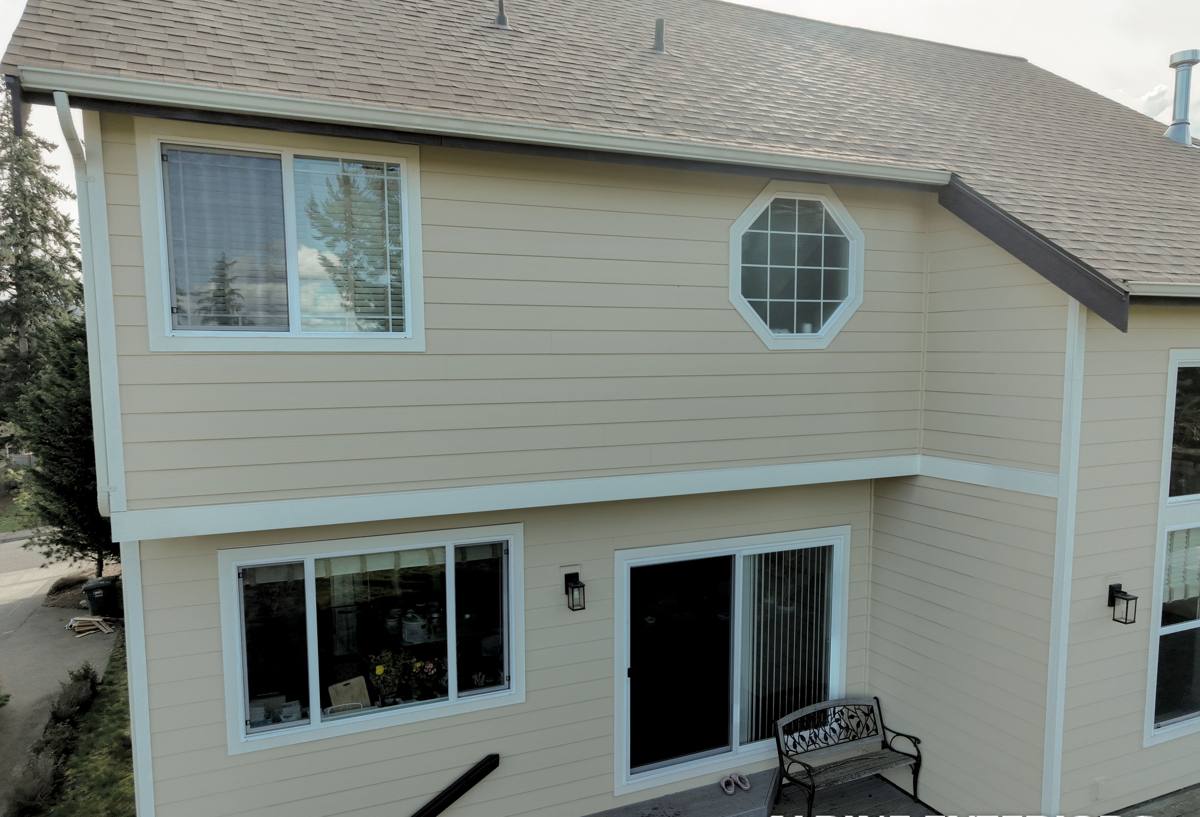
What Salt Air, Driving Rain, and Moss Actually Do to Siding
Salt Air
Airborne salt doesn't just sit on the surface — it works into fasteners, trim joints, and any exposed cut edge of a siding board. Over years, that accelerates corrosion of the wrong fastener type and breaks down finishes that aren't rated for a marine environment. This is why fastener selection and factory-applied finishes matter more in Birch Bay than they do a few miles inland.
Driving Rain
Wind off the Strait pushes rain sideways into wall assemblies, not straight down the way it falls in a calm setting. That means water is testing every joint, seam, and penetration in the siding system, not just the horizontal laps. A house wrap and flashing detail that's merely adequate in a low-wind area can let water past the siding in a Birch Bay storm.
Moss Season
Whatcom County's damp season runs long, and homes close to the water stay wetter longer because of coastal humidity and shade patterns near tree lines. Moss and algae need sustained moisture to establish, and once they take hold on a siding surface, they hold even more moisture against it, which shortens the life of paint, caulk, and the substrate underneath.
What a Correct Siding Installation Involves Here
None of these conditions are a mystery — they're just conditions the installation has to be built to handle. A correct job in Birch Bay isn't a different product, it's a more disciplined execution of the fundamentals:
- A continuous, properly lapped weather-resistive barrier behind the siding, with every seam taped or shingled correctly so water sheds outward, not inward
- Flashing at every window, door, deck ledger, and roof-to-wall intersection — the places wind-driven rain finds first
- A drainage gap or rainscreen approach where the wall assembly calls for it, so any moisture that does get behind the siding has somewhere to go
- Corrosion-resistant fasteners installed at the correct spacing and depth, not just "close enough"
- Factory-finished siding and trim, so the protective coating isn't relying on a field-applied coat of paint to do all the work
- Correct caulking at butt joints and trim intersections — enough to seal, not so much that it traps moisture
Skip any one of these and the siding might still look fine for a year or two. In a Birch Bay exposure, the gaps show up faster than they would somewhere sheltered — usually as staining, soft trim, or moss creeping in at the laps.
Why We Install Only James Hardie Fiber Cement
We standardized on James Hardie for every home we side, and a waterfront community like Birch Bay is exactly why. James Hardie fiber cement is non-combustible, dimensionally stable in wet-dry cycling, and available in an HZ5 product line engineered specifically for the wetter, harsher climates found in the Pacific Northwest — as opposed to a general-purpose product that's the same everywhere in the country.
The ColorPlus factory finish is baked on under controlled conditions rather than brushed or sprayed on-site, which gives it better adhesion and UV resistance than field-applied paint, and it comes with its own finish warranty. Fiber cement also doesn't feed moss and algae growth the way wood-based products can, and it holds up to salt air exposure far better than materials that rely on a surface coating alone for protection.
We don't install LP SmartSide, vinyl, or cedar, and that's a deliberate standard, not an oversight — those products each carry trade-offs in moisture behavior, maintenance burden, or long-term performance that we're not willing to put our name behind on a home facing this kind of exposure. Hardie, installed correctly, is what we trust to hold up on Birch Bay's coastline for the long haul.
Our Installation Process for Birch Bay Homes
1. On-Site Assessment
We walk the exterior, check the existing wall assembly where it's accessible, and look specifically at wind exposure, tree cover, and drainage patterns around the foundation — all of which affect how the new siding needs to be detailed.
2. Tear-Off and Substrate Check
Old siding comes off and we inspect the sheathing underneath for rot, soft spots, or prior water intrusion. Any damaged sheathing gets repaired before anything new goes on — covering a compromised substrate just hides the problem.
3. Weather Barrier and Flashing
A new house wrap goes on with correct lapping, and flashing is installed or replaced at every window, door, and penetration. This step matters more here than almost anywhere else in the job.
4. Hardie Installation
Panels or planks go up to manufacturer spec — correct fastener type, spacing, and clearance from grade and rooflines, with factory-cut edges kept sealed per Hardie's installation guidelines.
5. Trim, Caulk, and Touch-Up
Trim gets fitted and sealed, cut edges are treated, and any factory-finish touch-up is done with Hardie's matched touch-up product rather than generic paint.
6. Final Walkthrough
We walk the finished job with the homeowner and point out anything they should watch for going into the wet season.
What Siding Installation Typically Costs to Get Right
Every Birch Bay home is different — square footage, number of stories, trim detail, and how much substrate repair is needed all move the number. In broad terms, most full siding installations on a home this size in this region land somewhere in the $15,000–$40,000+ range, with the spread driven mainly by house size and how much flashing and repair work the tear-off uncovers. A firm number only comes from an on-site look.
| Cost Factor | Why It Matters in Birch Bay |
|---|---|
| Home size and story count | More wall area and more scaffolding/ladder work for two-story sections facing the water |
| Sheathing condition | Coastal moisture exposure means a higher chance of hidden rot behind old siding |
| Flashing and window/door count | Every penetration needs correct flashing to hold up to wind-driven rain |
| Trim complexity | Corner boards, fascia, and detail work add labor time regardless of siding material |
| Existing siding removal | Multiple layers or hazardous materials (older homes) add disposal and labor cost |
Signs a Birch Bay Home Needs New Siding
Coastal exposure tends to show wear in specific places before others. Worth checking:
- Moss or dark streaking building up along horizontal laps, especially on shaded or north-facing walls
- Soft or spongy trim boards around windows, doors, or corners
- Paint that's chalking, peeling, or bubbling faster than it should
- Visible gaps or separation at butt joints and corners
- Staining or discoloration that tracks downward from a window or roofline, suggesting a flashing failure
- A musty smell or visible staining on interior walls that back up to exterior siding
Any one of these on its own isn't necessarily an emergency, but in a Birch Bay exposure they tend to compound quickly once moisture finds a way in.
Maintenance in a Marine Climate
Even correctly installed siding benefits from a bit of attention out here. A rinse-down once or twice a year knocks back salt residue and slows moss establishment, especially on north- and west-facing walls that stay shaded and damp longest. Keeping gutters clear and vegetation trimmed back from the walls reduces the standing moisture that moss and algae need to get started. James Hardie's factory finish and non-combustible composition take a lot of the burden off routine maintenance compared to a wood-based or field-painted product, but no siding is entirely maintenance-free in a coastal setting.
Why Local Experience in Birch Bay Matters
A crew that's worked this specific stretch of coastline knows which walls take the worst of the weather, how far to carry flashing details beyond the minimum code requirement, and what kind of wear shows up first in this exposure. That's different knowledge than general Bellingham or inland Whatcom County experience — a home a mile from the water behaves differently than one facing it directly. Hiring a crew that already understands Birch Bay's specific exposure means fewer surprises during the job and a better chance the installation performs the way it's supposed to for decades, not just until the first hard winter storm.
If your Birch Bay home's siding is showing its age or you're planning ahead for a replacement, we're happy to take a look and give you a straightforward, no-pressure estimate — just fill out the form below.