 Bellingham Siding
 Composite Decking in Birch Bay: Why the Waterfront Climate Changes the Job
Birch Bay sits directly on the water in northern Whatcom County, and a deck out here works harder than a deck a few miles inland. It takes on salt-laden marine air, long stretches of driving rain through fall and winter, direct UV bouncing off open water in the summer, and a moss and algae season that runs most of the year on shaded sides of the house. A deck built without that combination in mind will show it early — soft boards, corroded fasteners, slick surfaces, and framing that rots from the inside before the decking on top even looks worn.
We build composite decks for homes in and around Birch Bay, and we treat the deck as a full system — framing, fasteners, drainage, and surface material together — rather than just a stack of boards. This page focuses specifically on composite decking in this location: what the climate demands of it, what a correct build actually involves, and what to look for in a contractor who's used to building here.
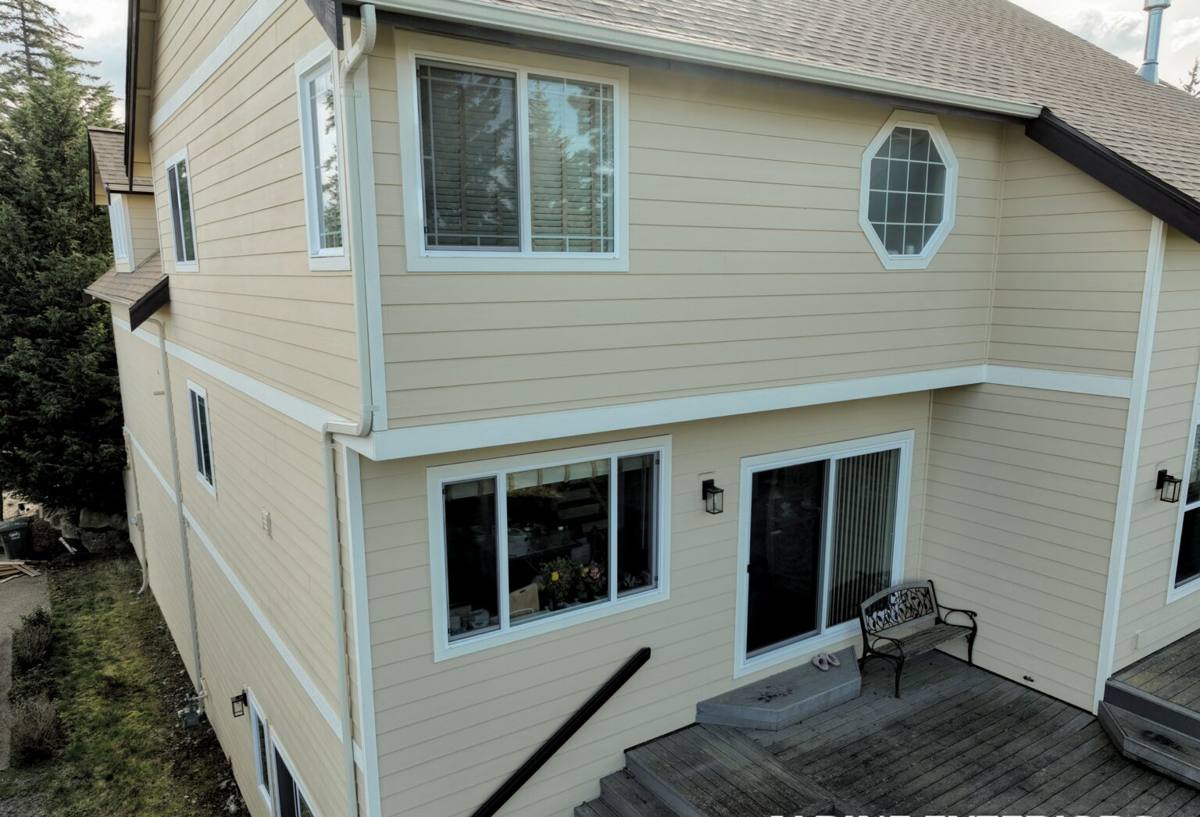
What Birch Bay's Climate Does to a Deck
Salt Air and Corrosion
Being right on the bay means more direct salt exposure than most of Whatcom County sees. Salt accelerates corrosion on screws, joist hangers, post bases, and any exposed metal hardware. A deck that looks fine on the surface can have compromised structural connectors underneath if the hardware wasn't rated for corrosive exposure in the first place. This is one of the areas where cutting a corner doesn't show up for years — and then shows up all at once.
Driving Rain and Standing Water
Waterfront exposure brings more wind, and wind-driven rain doesn't just fall on a deck surface — it gets pushed under railings, into fastener holes, and along ledger board connections. Composite decking sheds surface water well, but the framing underneath still needs to drain and dry out between storms. A deck built without attention to slope, gapping, and airflow under the boards will trap moisture against the framing even if the decking itself is a low-maintenance product.
Moss, Algae, and Mildew
Mild temperatures, shade, and near-constant moisture add up to a long growth season for moss and algae across this part of Whatcom County. Decks on the shaded or north-facing side of a house, or under trees, tend to stay damp longer and grow moss faster than sun-exposed sections. Composite surfaces resist this better than untreated wood, but no decking material is immune — the board's cap technology and the amount of airflow underneath both affect how much of a problem this becomes.
UV and Temperature Swings
Open water reflects UV back up at a deck from below as well as down from above, which is harder on surface finishes than a shaded inland deck deals with. Add in the freeze-thaw swings that hit this part of Washington in winter, and you've got a material that needs to hold its color, resist cracking, and stay dimensionally stable through repeated wet-dry and hot-cold cycles.
Composite vs. Wood Decking for This Climate
Homeowners in Birch Bay usually end up choosing between pressure-treated wood, cedar, and composite decking. Each has a place, and we'll walk through honest trade-offs rather than push one option regardless of the situation — but in a marine climate like this one, the maintenance gap between wood and composite tends to be the deciding factor for most people.
| Material | Moisture Behavior | Maintenance in Salt Air | Typical Longevity Here |
|---|---|---|---|
| Capped composite decking | Dimensionally stable; cap layer resists moisture absorption | Low; periodic washing, no sealing or staining required | 25-30+ years with correct framing and drainage |
| Pressure-treated wood | Absorbs and releases moisture; prone to cupping and splitting | High; needs regular sealing and inspection for rot | 10-15 years before major boards need replacing |
| Cedar | Naturally moisture-resistant but still absorbs water over time | High; refinishing needed regularly in wet, salty air | Shorter without consistent upkeep; fades and grays fast near water |
| Uncapped or first-generation composite | Older formulations can absorb moisture at cut edges | Moderate; more prone to mold staining than fully capped boards | Variable; depends heavily on product generation and install quality |
The distinction between capped and uncapped composite matters more than most homeowners realize. Fully capped boards have a protective polymer shell wrapped around the core on all sides, which is what actually gives composite its low-maintenance reputation. Older or budget composite products without a full cap can still wick moisture at cut ends and develop the same mold and swelling issues people associate with wood — just more slowly. We install fully capped composite decking for exactly that reason.
What a Correctly Built Composite Deck Involves
Substructure and Framing
The decking is only as good as what's underneath it. Framing needs to be sized and spaced correctly for the specific composite product being used — composite boards have different span ratings than wood, and installing them on wood-spec joist spacing can lead to a bouncy, under-supported deck over time. In a wet climate, we also pay close attention to ledger board flashing where the deck attaches to the house, since that connection is one of the most common points for hidden water intrusion.
Fasteners and Hardware
Given the corrosion risk from salt air, every screw, joist hanger, post base, and structural connector needs to be rated for corrosive or coastal exposure — not just standard exterior-grade hardware. This is a place where the cost difference between correct and incorrect hardware is small, but the consequence of getting it wrong shows up as rusted, weakened connections years down the road.
Ventilation and Drainage Underneath
A deck that sits low to the ground or over a patio needs enough airflow underneath to let moisture escape rather than sit and soak into the framing. On grade-level or low-clearance decks, that can mean adding ventilation gaps, grading the ground below to drain away from the house, or in some cases installing an underdeck drainage system if the space below is meant to be usable.
Board Installation Details
Composite boards need correct gapping between boards for expansion and drainage, hidden fastener systems installed to the manufacturer's spacing, and picture-frame or edge details that are actually cut and finished rather than left with exposed core material at the ends. Small details like end caps on exposed board edges keep water from getting into the one part of a capped board that isn't fully protected.
Cost Factors on a Birch Bay Composite Deck
Composite decking costs more upfront than pressure-treated wood, and the total for any given deck depends on more than just square footage. These are the factors that move the price most on projects out here:
| Factor | Why It Matters Here |
|---|---|
| Deck height and substructure | Taller or more complex framing needs more structural hardware and bracing, which adds cost but also matters more for wind exposure on the water |
| Ledger and flashing complexity | Correct flashing at the house connection takes more labor but is the single most important detail for preventing hidden water damage |
| Railing system | Composite or metal railing systems cost more than basic wood rail but hold up far better against salt air and UV |
| Board grade and cap type | Fully capped, higher-grade composite costs more than entry-level composite but performs significantly better long-term in this climate |
| Site access and demolition | Removing an old deck, especially one with rot damage, adds labor before the new build even starts |
We give a firm, written quote after walking the site, not a rough number over the phone — deck framing conditions and existing damage vary too much from property to property to price accurately without seeing it.
Our Process
We start with an on-site assessment of the existing deck or build area, checking for framing condition, drainage, and any signs of prior water damage if there's an existing structure being replaced. From there we put together a clear, written scope covering material selection, framing plan, hardware, and railing before any work begins. During the build, ledger flashing, fastener corrosion resistance, and proper drainage underneath the deck are handled as standard practice — not offered as an upsell.
A Checklist Before Hiring a Deck Contractor in Birch Bay
- Ask whether they install fully capped composite decking and can explain the difference from uncapped or lower-grade composite
- Confirm they use corrosion-rated fasteners and hardware, given the salt air exposure on the water
- Ask how they handle ledger board flashing where the deck meets the house
- Get a written scope of work and firm quote before signing, not a verbal estimate
- Confirm current Washington contractor licensing and active liability insurance
- Ask how they plan for drainage and airflow underneath low-clearance sections of the deck
Maintaining a Composite Deck Near the Water
Composite decking cuts maintenance significantly compared to wood, but "low-maintenance" isn't "no-maintenance" in a climate like this one. A periodic wash to clear salt residue, pollen, and organic buildup keeps the surface from developing the slick film that leads to moss growth on shaded sections. Railings, fastener heads, and any exposed metal hardware are worth a visual check once or twice a year, since that's where corrosion issues show up first and are easiest to catch early. Beyond that, a correctly built composite deck in this location shouldn't need sealing, staining, or structural attention for a long time.
If you're weighing options for a new composite deck, a replacement, or just want an honest read on how an existing deck is holding up against Birch Bay's weather, we're happy to take a look. Reach out below for a free, no-pressure estimate.