 Bellingham Siding
 Roof Repair Built for the Puget Area's Weather
Homes in the Puget area of Bellingham sit close enough to the water and the tree line that their roofs deal with a specific combination of stress most inland houses never see: salt-tinged air moving off the Sound, driving rain that comes in sideways during winter storms, and a moss season that can run nine months out of the year in shaded, north-facing sections. None of these things destroy a roof overnight. They work slowly, and that's exactly why so many repair calls we get in this neighborhood are for damage that's been building for a year or more before anyone noticed a stain on the ceiling.
This page is about roof repair specifically — not full replacement, not siding, not gutters, though we'll touch on how those systems interact with a roof because on a real house they never work in isolation. If you own or manage a home in Puget and you've got a leak, a soft spot, missing shingles after a windstorm, or a roof that's just gone green with moss, this is what a correct repair looks like and how we approach it.
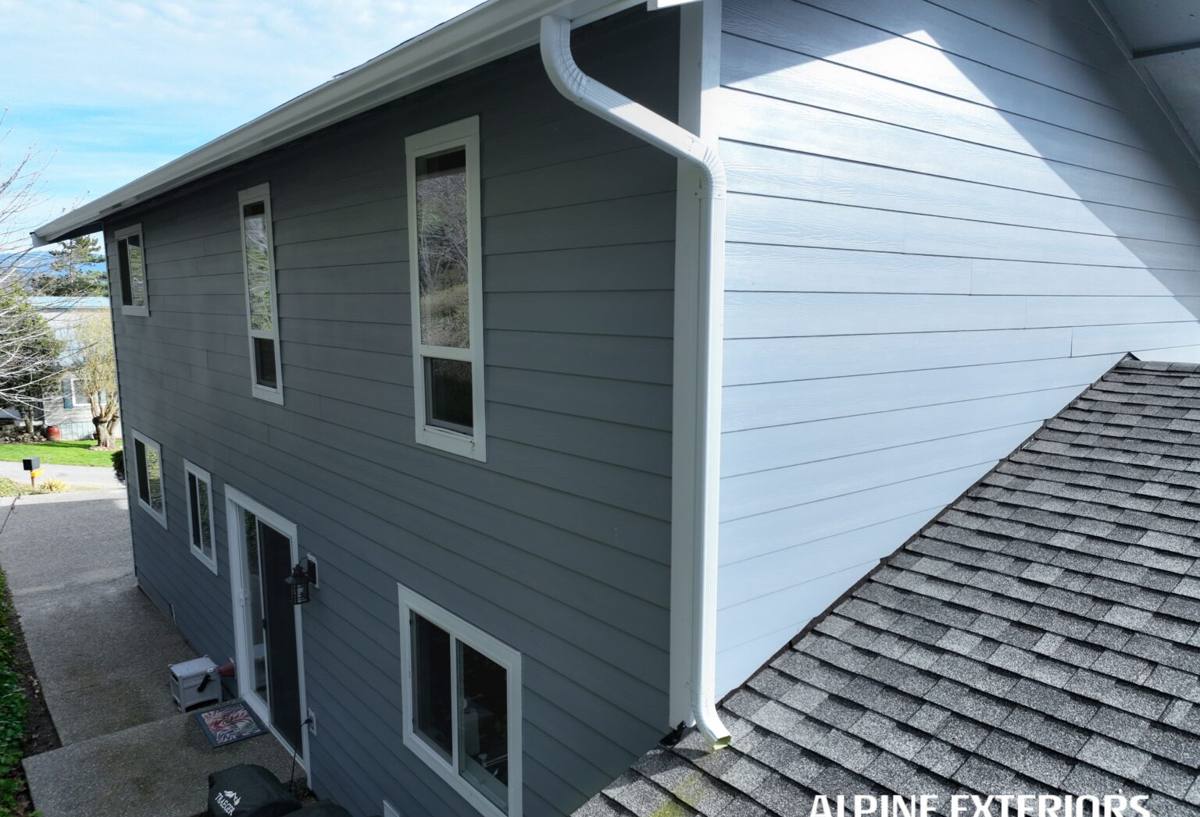
What Puget's Climate Actually Does to a Roof
Salt Air and Metal Fasteners
Proximity to Bellingham Bay means airborne salt settles on roofing surfaces and, more importantly, on the metal components — nail heads, flashing, vent boots, gutter hangers. Standard fasteners corrode faster here than they would twenty miles inland. Once a nail head rusts through or a flashing seam corrodes, water finds the opening, and it usually finds it at the worst possible time, during a heavy winter storm rather than a dry spell when you'd notice and fix it easily.
Driving Rain and Wind-Driven Water
Whatcom County storms don't always drop rain straight down. When wind pushes rain sideways, water gets forced up and under shingle edges, into valleys, and around chimney and skylight flashing in ways that a well-installed roof is designed to resist but a roof with even minor wear is not. This is why a lot of Puget-area leaks show up specifically during storms with strong southwest wind, rather than during ordinary rain.
Moss, Shade, and Slow Rot
Puget has enough tree cover and enough damp, shaded roof sections that moss establishes easily, especially on north-facing slopes and anywhere debris collects in a valley or behind a chimney. Moss isn't just cosmetic. Its root structure lifts shingle edges, holds moisture against the roof deck long after the rest of the roof has dried, and accelerates the rot of the wood underneath. A roof that looks intact from the ground can have soft, spongy decking under a mat of moss that's been sitting there for two winters.
Common Repair Calls We See in This Neighborhood
- Active leaks around chimneys, skylights, and roof-to-wall transitions where flashing has corroded or separated
- Missing or lifted shingles after a windstorm, especially along ridge lines and roof edges
- Soft or spongy decking discovered during a moss removal or gutter cleaning
- Valley leaks where debris and moss have blocked water flow and forced it under the shingles
- Rusted or failing flashing around vent pipes and exhaust stacks
- Ice-dam-related damage after a hard freeze followed by a quick thaw
- Gutter and fascia rot at the roof edge where water has been overflowing for one or more seasons
Most of these have a common thread: they started small. A repair that would have taken a few hours and a modest cost when the problem first appeared turns into a deck replacement and interior drywall repair if it sits through two or three more wet seasons.
What a Correct Roof Repair Actually Involves
A lot of what gets sold as "roof repair" is a patch — a bead of sealant over a visible crack, a shingle nailed back down without checking what's underneath it. That approach buys a few months, not years, and on a Puget roof dealing with constant moisture, it often fails by the following winter. A repair done right starts with understanding why the damage happened, not just where it's visible.
Our Process
- Inspection from the roof, not just the ground. We get up there and physically check the decking, flashing, fastener condition, and shingle integrity around the problem area and beyond it — leaks often travel before they show up on a ceiling, so the visible damage isn't always directly above the source.
- Identify the actual cause. Corroded flashing, failed sealant, wind-lifted shingles, moss-lifted edges, or deck rot each need a different fix. Patching the symptom without addressing the cause is how the same leak comes back.
- Check the decking. If water has been getting in for a while, the plywood or board decking underneath may be soft or delaminating. Repairing shingles over rotten decking doesn't hold — the new material has nothing solid to attach to.
- Repair with matched or compatible materials. We match shingle type, color, and exposure as closely as possible so the repair doesn't stand out, and we use corrosion-resistant fasteners and flashing appropriate for a marine-influenced climate, not the cheapest option available.
- Reseal and re-flash properly. Flashing gets bedded and sealed correctly rather than just caulked over — caulk alone is a temporary fix, not a repair.
- Clean up moss and debris while we're up there. If moss or built-up debris contributed to the problem, we remove it and talk through what it'll take to keep it from coming back, rather than leaving it to cause the same issue again in a year.
Repair vs. Replacement: How to Tell Which You Need
Homeowners often call assuming they need a full roof replacement when a targeted repair would solve the problem, and just as often the reverse — a "quick patch" request turns out to be a symptom of a roof that's genuinely at the end of its service life. The honest answer depends on age, extent of damage, and how many separate problem areas exist.
| Situation | Usually Repair | Usually Replacement |
|---|---|---|
| Single leak, isolated cause (one flashing point, one damaged section) | Yes | No |
| Roof under 15 years old, otherwise sound | Yes | No |
| Multiple leaks in different areas of the roof | Sometimes | Often |
| Widespread moss with soft decking in several sections | Rarely | Often |
| Roof near or past its expected lifespan for the material | No | Yes |
| Granule loss and shingle brittleness across most of the roof | No | Yes |
We'll tell you plainly which category your roof falls into. If a repair is the right call, we won't push a replacement — and if the roof is genuinely past the point where repair makes financial sense, we'll explain why rather than stacking patch jobs on a roof that needs to come off.
Why the Puget Area Specifically Matters
Roofing problems in this neighborhood aren't identical to what a crew sees working in drier parts of Whatcom County or further inland. A contractor who mostly works subdivisions without heavy tree cover or direct exposure to Bellingham Bay's air can miss the specific patterns that show up here — the moss concentration on shaded north slopes, the flashing corrosion rate near the water, the way wind off the Sound drives rain into valleys and roof-to-wall transitions from a specific direction. Knowing the neighborhood's microclimate changes where we look first during an inspection and what we prioritize in a repair.
It also matters for timing. Moss removal and flashing repairs done in late summer or early fall, before the wet season sets in, hold up far better than emergency repairs made mid-storm in January. A crew that knows the local rhythm of the weather will often recommend scheduling preventive work ahead of the season rather than waiting for a leak to force the issue.
Signs You Shouldn't Ignore
- Dark streaks or green growth on roof slopes, especially north-facing sections
- Granules collecting in gutters or at the base of downspouts
- Ceiling stains, even small ones that seem to dry up between storms
- Shingles that look curled, cracked, or lifted at the edges
- Daylight visible through the roof deck from inside the attic
- Sagging or soft spots you can feel when walking the roof (or that a contractor flags during inspection)
- Rust streaks running down from flashing or vent pipes
Any one of these on its own doesn't necessarily mean an emergency, but in a climate that stays wet for months at a stretch, small issues compound faster than they would somewhere drier. Catching them early is almost always the cheaper path.
Materials and Fasteners We Use for This Climate
Not every roofing material or fastener performs the same way under constant moisture and salt-air exposure. For repairs in Puget, we favor corrosion-resistant flashing and fasteners rated for coastal or marine conditions rather than standard-grade hardware, because the cost difference is small and the failure difference over ten years is not. We also pay close attention to underlayment condition during any repair that exposes the decking — a compromised underlayment in this climate is often the real reason a leak keeps recurring even after shingles are replaced.
When shingle matching isn't possible because a product has been discontinued or the existing roof has weathered significantly, we'll tell you honestly what your options are — a close match, a slightly visible repair, or, if the mismatch would bother you, a broader discussion about whether a larger repair or eventual full replacement makes more sense. We'd rather have that conversation upfront than let you discover it after the work is done.
What to Expect When You Call Us
We'll ask what you're seeing — where the leak or damage is, how long it's been going on, and whether it's tied to specific weather. From there we schedule an on-roof inspection, not a drive-by estimate, because roof problems in this climate are rarely visible from the ground. You'll get a clear explanation of what's actually wrong, what caused it, and what it'll take to fix it properly, along with an honest read on whether repair or replacement is the right call. No pressure, no upsell to a full roof replacement when a repair will genuinely hold.
If you're in the Puget area of Bellingham and dealing with a leak, storm damage, or a mossy roof that's overdue for attention, we're happy to take a look. Reach out for a free, no-pressure estimate using the form below — we'll walk the roof, explain what we find in plain terms, and give you a straight answer on what it needs.