 Bellingham Siding
 Why Decks in Blaine Wear Differently Than Decks Inland
Blaine sits right on the water at the northwest corner of Whatcom County, and that location changes how a deck ages. Salt-laden air moves off the water and settles on everything outdoors, including your deck's fasteners, flashing, and any exposed metal hardware. Combine that with driving rain that comes in sideways during winter storms off the Strait of Georgia, and you get a deck that's fighting moisture intrusion from more directions than a typical inland deck ever has to. Add a moss and algae season that can run eight months or longer in this part of Whatcom County, and you have three separate stressors working on the same structure at the same time.
None of this means a deck in Blaine is doomed. It means the repair work has to account for salt exposure, water shedding, and organic growth specifically, not just patch whatever is visibly broken. A repair that would hold up fine in a drier, inland yard can fail early here if it ignores any one of those three factors.
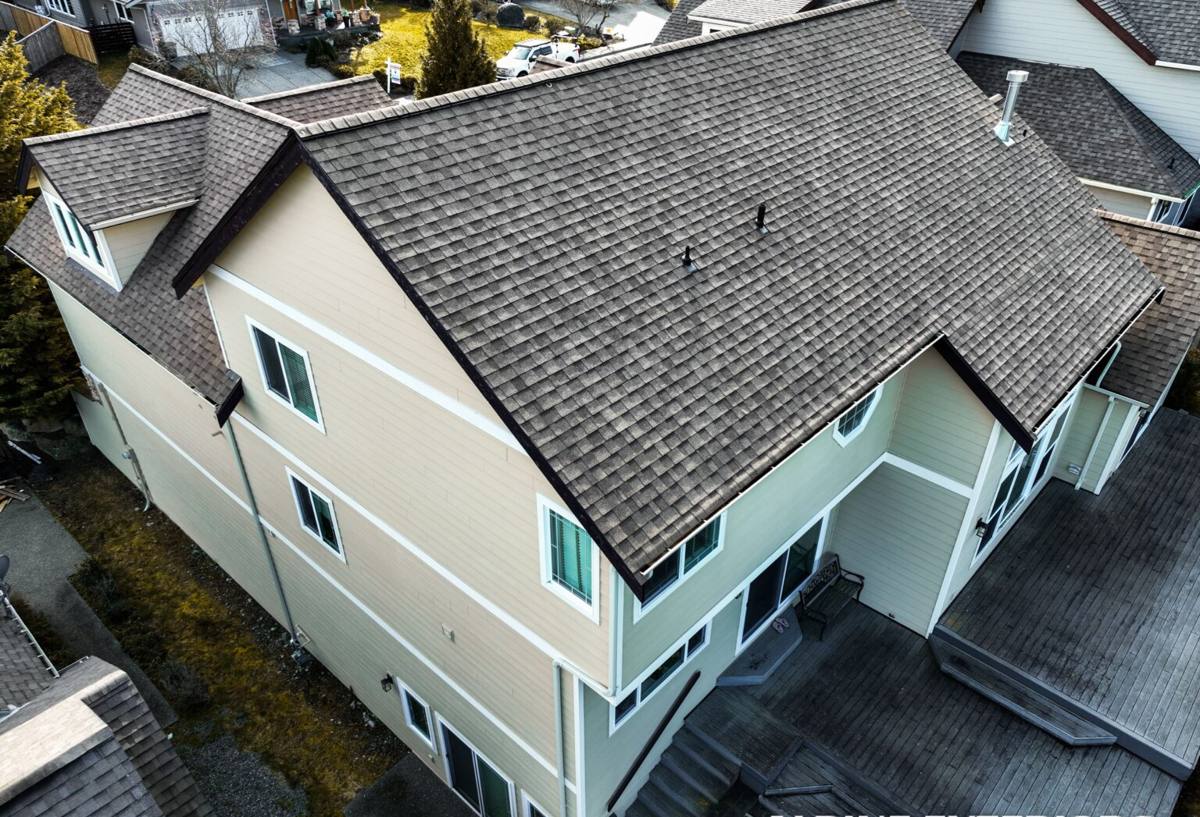
How Salt Air, Rain, and Moss Actually Damage a Deck
Salt Air and Corrosion
Airborne salt accelerates corrosion in fasteners, joist hangers, post bases, and any exposed screws or nails. Once a fastener starts rusting, it loses holding strength gradually and often invisibly, since the failure is happening inside the wood or under a deck board where you can't see it. By the time a board feels loose or a railing wiggles, the fastener underneath may already be badly compromised.
Driving Rain and Water Intrusion
Rain that comes in at an angle finds its way into places vertical-only rain never reaches: under railing caps, behind ledger board flashing, into end-grain cuts on joists and beams, and around post bases. Wood is far more absorbent at its end grain than along its face, so any cut edge that isn't sealed or flashed becomes a moisture entry point. Over years, this shows up as soft spots, checking, and rot that starts from the inside out.
Moss, Algae, and Prolonged Dampness
Blaine's long damp season means moss and algae get a real foothold on shaded or north-facing decking, especially under trees or against the house where airflow is limited. Moss holds moisture directly against the wood surface far longer than open air would, which softens the wood and makes it more vulnerable to rot even in wood that's otherwise in decent shape. It's also slippery and genuinely dangerous on stairs and ramps when wet.
Signs Your Deck Needs Repair (Not Full Replacement)
Most decks we look at in Blaine don't need to be torn out and rebuilt. They need targeted repair to the specific components that are failing while the sound structure stays in place. Here's what we look for during an inspection:
- Soft, spongy, or discolored decking boards, especially near the house or under overhangs
- Rust streaking below fasteners or visible corrosion on joist hangers and post bases
- Railings or stair stringers that flex or wobble under normal pressure
- Gaps opening up between the ledger board and the house
- Standing water or slow drainage after rain instead of water shedding off cleanly
- Persistent moss or algae that returns within weeks of cleaning
- Cracked, splintering, or checked wood on stair treads and high-traffic areas
- Visible daylight or gaps where flashing has pulled away from the house
A deck showing several of these at once, especially structural ones like a wobbling stair stringer or a separating ledger, needs a professional look before anyone uses it heavily. Cosmetic wear alone, like graying wood or surface mildew, is often a maintenance issue rather than a repair issue.
What a Correct Deck Repair Actually Involves
A repair done right in a coastal climate like Blaine's goes past swapping out the board that looks bad. It means checking the structure that board was attached to, since rot and corrosion rarely stay contained to a single spot.
Structural Inspection First
Before replacing anything, we check the ledger board attachment, joists, beams, and post bases for hidden rot or corrosion. A deck that's structurally sound below deserves a repair that respects that; a deck with compromised framing needs that addressed first, or the new decking will just be sitting on a weak base.
Matching Fasteners to the Environment
In a salt-air environment, fastener grade matters more than it does further inland. We use corrosion-resistant, exterior-rated fasteners and hardware sized correctly for the load they're carrying, not whatever is cheapest or fastest to install. This is one of the most common shortcuts we see in older repairs, and it's usually the first thing to fail again.
Flashing and Water Management
Ledger board flashing, and flashing at any point where the deck meets the house, gets checked and corrected as part of a real repair. This is the single most common source of hidden rot on decks that attach to a house, and it's easy to overlook because the damage happens out of sight.
Matching Existing Materials
Whether your deck is pressure-treated lumber, cedar, or composite decking, a repair should match the existing material and finish as closely as possible so the fix doesn't stand out or behave differently than the surrounding structure under weather stress.
Repair vs. Replacement: How We Decide
| Factor | Favors Repair | Favors Replacement |
|---|---|---|
| Framing condition | Joists, beams, posts are sound | Widespread rot or corrosion in structural members |
| Extent of damage | Isolated to a few boards or one area | Damage spread across most of the deck |
| Age of deck | Within expected service life | Well past typical lifespan for the material |
| Fastener condition | Hardware still holding, minor surface corrosion | Widespread rust, hangers compromised |
| Cost over time | Repair cost is a fraction of replacement | Repeated repairs are approaching replacement cost |
We'll always tell you honestly which side of that table your deck falls on. If a repair is the right call, that's what we'll recommend and price. If the structure is too far gone to repair responsibly, we'll explain exactly why before you spend money on a fix that won't hold.
Our Deck Repair Process in Blaine
- On-site inspection. We walk the full deck, including underneath where accessible, checking framing, fasteners, flashing, and drainage, not just the surface.
- Honest assessment. We tell you what's actually wrong, what's driving it (usually moisture, corrosion, or a combination), and whether repair or replacement makes sense.
- Written scope and estimate. You get a clear plan of what will be removed, repaired, or replaced, with materials and fasteners specified.
- Repair work. We address the root cause first, structure, flashing, drainage, then rebuild the visible surface to match.
- Final check. We walk the finished repair with you and point out anything you should keep an eye on going forward.
Drainage and Moss Prevention Built Into the Repair
Fixing the damage without addressing why it happened just buys you a few more years before the same problem returns. Where we can improve drainage, whether that's adjusting board spacing, correcting a low spot, or clearing a drainage path that's been blocked, we address it as part of the repair. Where moss is a recurring issue because of shade or limited airflow, we'll be upfront about what a repair can fix and what's simply a maintenance reality of a shaded, damp lot near the water. Some moss return is manageable with periodic cleaning; it isn't something any repair can permanently eliminate on a deck that stays shaded and damp most of the year.
Maintaining Your Deck Between Repairs
A few habits go a long way toward stretching the life of a repair in this climate:
- Sweep debris and standing water off the deck surface regularly, especially in fall
- Clean moss and algae off stairs and shaded areas before they get slick
- Check railings and stair stringers for movement once or twice a year
- Keep gutters and downspouts near the deck clear so water isn't dumping onto it
- Reseal or refinish wood decking on the manufacturer's recommended schedule
- Trim back vegetation that's shading the deck and keeping it damp longer than it needs to be
Why Hire a Crew That Already Works in Blaine
Deck repair in a coastal Whatcom County town isn't the same job as deck repair thirty miles inland. A crew that works Blaine regularly already knows what salt air does to fasteners over a few winters, how far driving rain travels under a railing cap, and which shaded spots in this area fight moss no matter how often they're cleaned. That experience means fewer surprises during the inspection and a repair scope that accounts for the real cause of the damage instead of just the symptom you called about.
We stand behind the repair work we do, and we'd rather tell you a smaller repair is enough than talk you into more than your deck actually needs.
If you're seeing soft boards, rusting hardware, or a deck that just doesn't feel as solid as it used to, we're happy to take a look and give you a straight answer. Fill out the form below for a free, no-pressure estimate on your deck repair in Blaine.