 Bellingham Siding
 Decks Built for Sudden Valley's Wooded, Lakeside Setting
Sudden Valley sits along the south shore of Lake Whatcom, a few miles outside Bellingham city limits, in a landscape defined by mature timber, steep lots, and a lot of shade. That combination makes it one of the more demanding places in Whatcom County to build an outdoor deck correctly. A deck design that works fine on an open, sunny lot in town can struggle here — not because the materials are bad, but because the site conditions are different, and the build needs to account for that from the first sketch.
We've built and repaired decks throughout this part of the county long enough to know what actually causes problems in this specific setting, and what doesn't matter nearly as much as people assume. That's the difference between a deck that looks good for one season and one that holds up for twenty.
Shade, Moss, and Standing Moisture
Tree cover is one of Sudden Valley's best features and one of its toughest challenges for outdoor structures. Heavy shade means surfaces stay damp longer after rain, sunlight rarely dries wood or composite decking between storms, and organic debris — needles, leaves, pollen — collects in gaps and corners. That's the exact recipe for moss and algae growth, and it's why decking here needs a plan for drainage and airflow that a full-sun lot might not require.
Slopes and Uneven Lots
Much of Sudden Valley is built into hillside terrain around the lake basin. Elevation changes are common even on a single lot, which means decks often need taller footings, engineered support on the downhill side, or a multi-level design instead of a simple single-plane platform. Getting the framing plan right on a sloped lot matters more here than the decking material choice — a beautiful deck surface sitting on undersized or poorly braced framing is a problem waiting to happen.
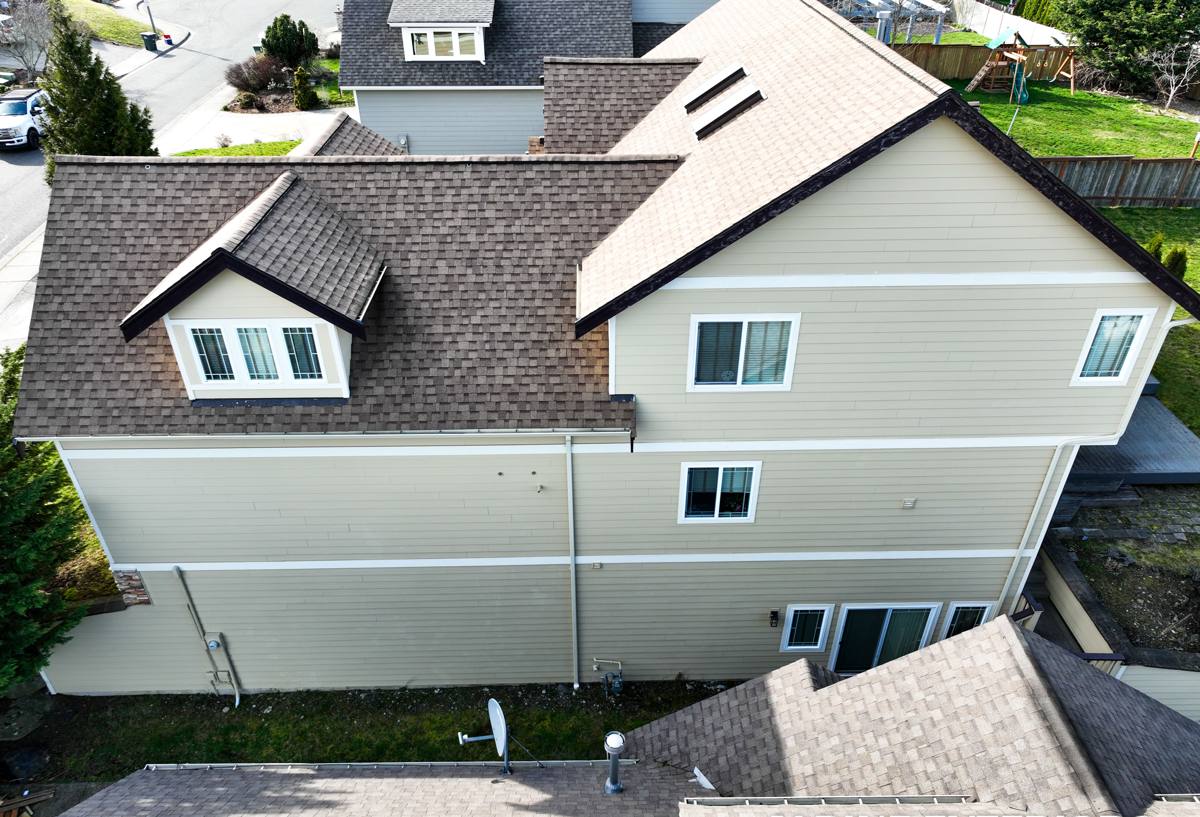
What Bellingham's Climate Actually Does to an Outdoor Deck
Whatcom County's marine climate is generally mild, but "mild" doesn't mean easy on wood and hardware. Three things do most of the damage over time:
- Salt air off Bellingham Bay and the Puget Sound accelerates corrosion on fasteners, brackets, and any exposed metal hardware — even this far inland, moisture carries it.
- Driving rain, often pushed sideways by wind off the water, gets into joints, ledger connections, and end grain that a straight-down rain would never reach.
- A long moss season — roughly October through May in shaded spots — keeps surfaces wet, slick, and slowly breaking down organic materials that aren't sealed or ventilated properly.
None of this means a deck can't hold up here. It means the build has to be planned around these conditions instead of ignoring them, which is where a lot of decks — especially older ones, or ones built by crews unfamiliar with the area — start to fail early.
The Parts of a Deck Nobody Sees But That Determine How Long It Lasts
The decking boards get all the attention because they're what you see and walk on. But in a climate like ours, the structure underneath is what actually determines whether a deck lasts fifteen years or fifty.
Ledger Attachment and Flashing
Where a deck connects to the house is the single most common failure point we find on older decks in this area. If the ledger board isn't properly flashed to shed water away from the house framing, moisture works its way in slowly and rots the connection from the inside — often invisible until the deck starts to feel unstable.
Footings and Framing
On sloped or uneven lots, footings need to be sized and placed for the actual soil and grade conditions, not a generic layout. Framing lumber should be rated for ground contact or exterior use where it's close to soil or persistent moisture, and joist spacing should account for the decking material's specific span requirements — composite and wood don't always have the same rules.
Joist Protection
Covering the tops of joists with a waterproof tape barrier before decking goes down is a small step that makes a real difference in a wet climate. It keeps rainwater that gets between deck boards from sitting directly on cut lumber, which is one of the more overlooked causes of premature joist rot.
Choosing a Decking Surface for a Shaded, Damp Lot
There's no single "best" decking material — there's a best material for your lot, your budget, and how much upkeep you actually want to do. On a shaded, moss-prone site, some tradeoffs matter more than they would on an open, sunny lot.
| Material | Moss & Moisture Resistance | Maintenance | Typical Lifespan |
|---|---|---|---|
| Pressure-treated wood | Fair — needs regular sealing to resist absorption | Annual cleaning and re-sealing | 10–15 years |
| Cedar | Good natural resistance, but surface still needs care in full shade | Periodic cleaning, oiling or staining | 15–20 years |
| Traditional composite | Good, but can hold surface moisture on the cap layer | Low — occasional washing | 20–25 years |
| Capped composite / PVC | Very good — non-porous surface resists staining and algae | Very low — rinse as needed | 25+ years |
In heavily shaded spots we generally steer clients toward capped composite or PVC decking, simply because a non-porous surface gives moss and algae far less to grip onto, and it doesn't require the yearly sealing that wood does. That said, plenty of homeowners still prefer the look and feel of real wood, and a well-built cedar deck with a proper maintenance routine holds up fine here too. It's a real choice, not a right-or-wrong answer, and we'll walk through the tradeoffs honestly rather than push whatever's easiest for us to install.
Railings, Fasteners, and Hardware Built for This Climate
Hardware failures are a quieter problem than a rotting board, but they're just as serious — a corroded bracket or fastener is a safety issue, not just a cosmetic one. In a coastal, high-moisture area, we spec stainless steel or heavy hot-dip galvanized fasteners and structural hardware rather than standard coated screws, which corrode faster once the coating is scratched during installation.
Railings matter too, both for code compliance and for the view. A lot of Sudden Valley properties are built to take advantage of lake or tree-line views, and cable or glass panel railings are popular here because they hold sightlines open while still meeting the height and spacing requirements that apply to any elevated deck. Whatever railing style you choose, the posts and connections need to be engineered for real structural load — railings take more lateral stress than people expect, especially with kids, pets, or furniture leaning against them.
How We Approach a Custom Deck Project in Sudden Valley
Site Visit and Design
Every project starts with an in-person look at the actual lot — the slope, the tree cover, drainage patterns, and how the deck will connect to the house. Design decisions get made around what the site is actually doing, not a one-size-fits-all layout.
Permitting
Sudden Valley sits in unincorporated Whatcom County rather than inside Bellingham's city limits, so permitting for a new or significantly rebuilt deck runs through the county rather than the city. We handle that process as part of the job so you're not stuck figuring out requirements on your own.
Build and Inspection
Framing goes in first and gets checked before decking covers it up — that's the point in the process where problems are cheapest to catch. Decking, railings, and hardware go in last, followed by a final walkthrough with you before we call the job done.
Maintenance Checklist for Sudden Valley Decks
Regardless of what material you choose, a shaded lakeside lot needs more attention to moss and moisture than a sunny in-town yard. A simple seasonal routine goes a long way:
- Clear leaves, needles, and debris from between boards and around the perimeter before fall rains set in
- Rinse or gently scrub visible moss and algae before it gets a chance to establish — a soft-bristle brush is usually enough
- Check that gaps between boards and along the house connection are clear so water can actually drain, not pool
- Inspect railings and stair connections once a year for looseness, which can signal a hardware or framing issue underneath
- For wood decks, plan on resealing or staining on a regular cycle — shaded wood dries slower and needs the protection more, not less
- Trim back overhanging branches where you reasonably can, to give the deck surface more light and airflow
Why Hire a Crew That Already Works This Neighborhood
A lot of general contractors can frame a deck. Fewer have actually dealt with the specific combination of Sudden Valley's sloped lots, heavy tree cover, and Whatcom County's wet climate enough times to know where problems tend to show up before they happen. We've seen what moss does to a north-facing deck that never gets sun, what standing water does to a poorly flashed ledger board, and what an unreinforced railing post does after a few years of lakeside wind. That experience shows up in the small decisions — footing depth, fastener choice, board spacing — that homeowners never see but absolutely notice ten years later when the deck next door is falling apart and theirs isn't.
Many properties in Sudden Valley also fall under the community association's design guidelines, so a crew familiar with the area is generally better positioned to design something that fits without unnecessary back-and-forth.
Get a Straightforward Estimate
If you're planning a new deck or replacing one that's past its prime, we're happy to come take a look at your lot, talk through material options honestly, and put together a free, no-pressure estimate. Use the form below to get started.