 Bellingham Siding
 Why Sudden Valley Roofs Age Differently
Sudden Valley sits tucked into the trees along Lake Whatcom, and that setting is a big part of what makes the community desirable — and part of what shortens the life of a roof out there. Heavy tree cover means shade for most of the day on a lot of homes, which means roof surfaces that never fully dry out between rains. Add in Whatcom County's long wet season and the salt-laden air that moves in off the Puget Sound and up through the lowlands, and you've got a roof environment that works harder than a roof on an open lot in town.
Moss and moisture are the two biggest threats to a Sudden Valley roof, but they're not the only ones. Needle and leaf litter from surrounding conifers and deciduous trees collects in valleys and behind chimneys, holding water against the roofing material long after a storm passes. Combine that with the driving, wind-pushed rain that comes through the region several months out of the year, and you have a recipe for slow, hidden damage — the kind that shows up as a stain on a ceiling long after the roof itself started failing.
A roof replacement in this neighborhood isn't just about swapping old shingles for new ones. It's about building a roof system that's set up to handle shade, moisture, and organic debris better than the one that's currently failing.
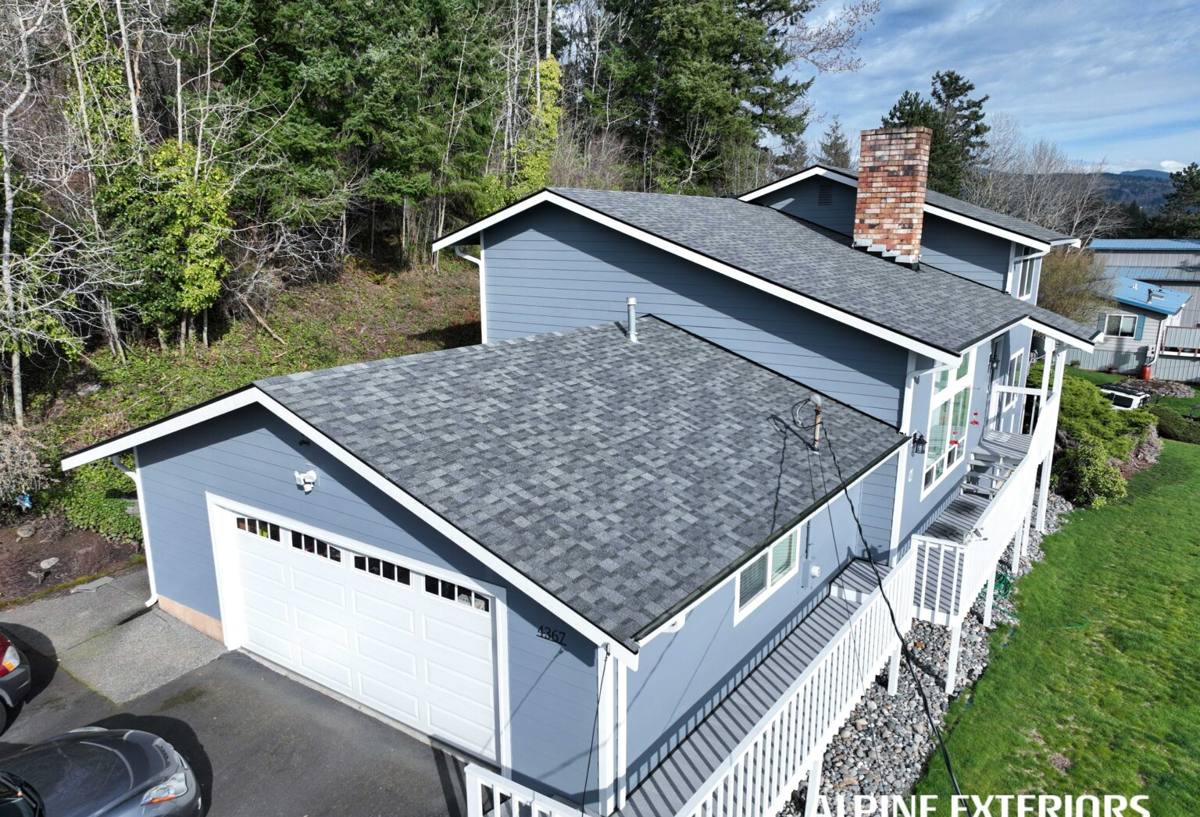
Signs a Sudden Valley Roof Has Reached Replacement Age
Not every roof problem calls for a full replacement — plenty can be patched or repaired. But there's a point where repairs stop being cost-effective and start being a way of delaying the inevitable. Homeowners in this area should watch for:
- Thick, established moss growth across shaded slopes, especially north-facing sections that rarely see direct sun
- Granule loss showing up as dark streaks below shingle edges, or bare gravel collecting in gutters
- Shingles that are curling, cupping, or lifting at the edges — a sign the mat underneath has absorbed moisture over repeated wet-dry cycles
- Soft or spongy decking felt underfoot, or visible sagging along the roofline
- Daylight visible through the attic sheathing, or damp insulation and musty smell in the attic space
- Repeated leaks at the same valley, chimney, or skylight despite prior patch repairs
- A roof that's simply reached the end of its rated service life, even if it looks intact from the ground
Moss deserves its own mention here. A light dusting on a roof isn't an emergency, but moss that's built up into a mat holds water against the shingle surface around the clock. Over a few seasons, that constant moisture works into the granule layer and eventually the mat itself, and no amount of pressure washing reverses that damage once it's set in. If moss is a recurring, year-after-year problem on a particular roof, that's usually a sign the roofing material and ventilation weren't matched to the site conditions in the first place.
What a Correct Roof Replacement Actually Involves
A roof replacement is more than laying new shingles over what's there. Done right, it's a full system rebuild, and every layer matters more in a shaded, high-moisture setting like Sudden Valley than it would on a drier lot.
Tear-Off and Deck Inspection
We remove the existing roofing down to the decking rather than layering over it. That's the only way to actually see what's underneath — soft spots, rot, or water staining that a re-roof over the top would just seal in and hide. Any damaged decking gets replaced before anything new goes down; skipping this step is one of the most common shortcuts that leads to problems a few years down the road.
Ventilation and Moisture Management
Proper attic ventilation matters everywhere, but it matters more under heavy tree cover, where the roof surface itself gets less help from sun and wind to dry out. Balanced intake and exhaust ventilation keeps the underside of the deck dry, which reduces the odds of rot, mold, and premature shingle aging from the inside. We also pay close attention to underlayment selection — a high-quality synthetic or self-adhering membrane in vulnerable areas (valleys, eaves, around penetrations) gives the roof a second line of defense against wind-driven rain, which this area sees plenty of.
Flashing, Valleys, and Penetrations
Most roof leaks don't come from the open field of shingles — they come from flashing: chimneys, skylights, vent pipes, and valleys where two roof planes meet. These are the spots where debris collects and water concentrates, and they're the spots that need the most care during a tear-off. We replace flashing rather than reusing old pieces, and we detail valleys so runoff — including the needle and leaf debris common in this neighborhood — has a clear path off the roof instead of a place to sit and pool.
Ice, Wind, and Debris Considerations
Sudden Valley doesn't see the same snow load as the mountains, but wind-driven rain and the occasional freeze-thaw cycle are real factors. We install ice-and-water shield in the areas most prone to backup — eaves, valleys, low-slope transitions — and make sure fasteners and edge metal are rated for the wind exposure this side of the lake can get.
Choosing a Roofing Material for a Shaded, Moss-Prone Lot
There's no single "best" roofing material for every home, but for a heavily treed, shaded lot, some choices hold up better than others. The table below lays out honest trade-offs for the options most Sudden Valley homeowners weigh.
| Material | Moss/Moisture Resistance | Maintenance | Typical Lifespan |
|---|---|---|---|
| Standard asphalt composition shingle | Moderate — algae-resistant (AR) shingles help but don't eliminate moss on shaded slopes | Periodic moss removal and gutter clearing recommended | 20–30 years, often less under heavy shade without upkeep |
| Algae-resistant (AR) architectural shingle with zinc/copper strips | Improved — metal strips discourage moss and algae regrowth on the slope below them | Lower than standard shingle, but not maintenance-free | 25–30 years |
| Standing seam metal roofing | Strong — smooth, non-porous surface gives moss little to root into; sheds debris more readily | Occasional debris clearing; no granule loss to worry about | 40–50+ years |
| Cedar shake | Poor in heavy shade — organic material retains moisture and is highly susceptible to rot and moss under tree cover | High — regular treatment and moss management required | Highly variable; shortened significantly in shaded, wet conditions |
We're upfront with Sudden Valley homeowners about this: cedar shake is a beautiful, traditional look, but on a shaded lot with heavy tree cover, it's fighting the exact conditions it's most vulnerable to — trapped moisture and constant organic contact. That's a maintenance and moisture-behavior trade-off, not a knock on the product itself; it just isn't the right fit for every site. For most shaded lots in this community, we steer homeowners toward AR-rated architectural shingle or standing seam metal, depending on budget and the look they're after.
Our Roof Replacement Process
- On-site assessment. We walk the roof (or use a drone where pitch or access makes that safer) and check the attic from the inside — decking condition, ventilation, insulation, and any moisture signs.
- Honest scope and written estimate. We explain what we found, what needs to happen, and what it costs — no upsells for repairs the roof doesn't need.
- Material selection. We walk through the options above based on your home's sun exposure, tree cover, and budget, not a one-size-fits-all recommendation.
- Permitting. Roof replacements in unincorporated Whatcom County typically require a building permit; we handle that paperwork as part of the job.
- Tear-off and deck repair. Full removal down to the sheathing, with any compromised decking replaced before underlayment goes down.
- Underlayment, flashing, and ventilation installed. The layers that do the real work of keeping water out, matched to this site's moisture exposure.
- New roofing installed to manufacturer spec. Correct nailing pattern, exposure, and valley detailing — the details that determine whether a warranty actually holds up.
- Site cleanup and final walkthrough. Magnetic sweep for stray fasteners, debris hauled off, and a walkthrough so you know exactly what was done.
What Drives the Cost of a Sudden Valley Roof Replacement
Every roof is different, and we don't like throwing out numbers that don't apply to your home. What we can do is explain the factors that move the price up or down, so an estimate makes sense when you get one.
| Factor | Why It Matters |
|---|---|
| Roof size and number of planes | More square footage and more valleys/hips mean more material and labor |
| Pitch and access | Steep roofs and homes with limited driveway or crane access take longer and require more safety setup |
| Decking condition | Rot or soft sheathing found at tear-off adds material and labor to replace it before roofing can go down |
| Material choice | Standard shingle, AR shingle, and standing seam metal carry different material and installation costs |
| Layers to remove | Tearing off multiple existing layers costs more than a single-layer tear-off |
| Ventilation and flashing upgrades | Bringing older ventilation or flashing up to current standards adds scope but reduces future moisture problems |
We put all of this in writing before work starts, and we'll flag anything that changes the scope — like unexpected decking rot — before we act on it, not after.
Why Local Experience in Sudden Valley Actually Matters
A roofing crew that's worked in Sudden Valley before knows things a crew from outside the area has to learn on your dime. That includes navigating the community's private roads and any HOA requirements around contractor access and work hours, understanding how tree cover on a given lot affects material choice, and knowing how to stage equipment and dumpsters on lots with tighter driveways or steeper grades than you'd find on a flat in-town street.
It also means knowing what actually fails first on roofs out here — which is almost always moss-driven granule loss and moisture intrusion in shaded valleys, not wind damage or hail, which are less of a factor in this part of Whatcom County than they are elsewhere in the country. A crew that treats a Sudden Valley roof exactly like a roof in an open subdivision is missing the conditions that matter most for how long the work will actually last.
What to Ask Before You Hire
- Are you licensed and insured to work in Washington State, and can you provide proof?
- Will you inspect and photograph the decking during tear-off, and tell me before covering up any problems you find?
- What underlayment and ventilation approach do you recommend for a shaded lot, and why?
- Is the permit included in your scope, or is that on me to pull?
- What's covered under the manufacturer's material warranty versus your workmanship warranty, and for how long?
- Can you give me a written, itemized estimate rather than a single lump-sum number?
Get a Straightforward Assessment for Your Sudden Valley Roof
If your roof is showing moss buildup, granule loss, or signs of age, it's worth having someone take an honest look before a small problem becomes water damage inside the house. We'll walk the roof, check the attic, and give you a clear picture of what your home actually needs — no pressure, no scare tactics. Use the form below to request a free estimate, and we'll get back to you to schedule a time that works.