 Bellingham Siding
 Why Columbia Homes Need Siding Built for This Climate
Columbia is one of Bellingham's established residential neighborhoods, with a mix of older homes and newer construction sitting close enough to Bellingham Bay that salt-laden air is a daily fact of life. That combination — homes with decades of exterior wear, sitting in a marine environment with heavy annual rainfall — puts real stress on siding that a lot of homeowners don't think about until they see the damage. Paint that won't hold, trim that's gone soft, or a green haze creeping across the north side of the house are all symptoms of the same underlying problem: the siding wasn't built for, or wasn't installed correctly for, this exact climate.
This page is about one thing: what it actually takes to put James Hardie fiber cement siding on a Columbia-area home the right way. Not a generic overview of siding in general — the specific climate pressures this neighborhood deals with, what a correct installation looks like, and why the crew you hire matters as much as the material itself.
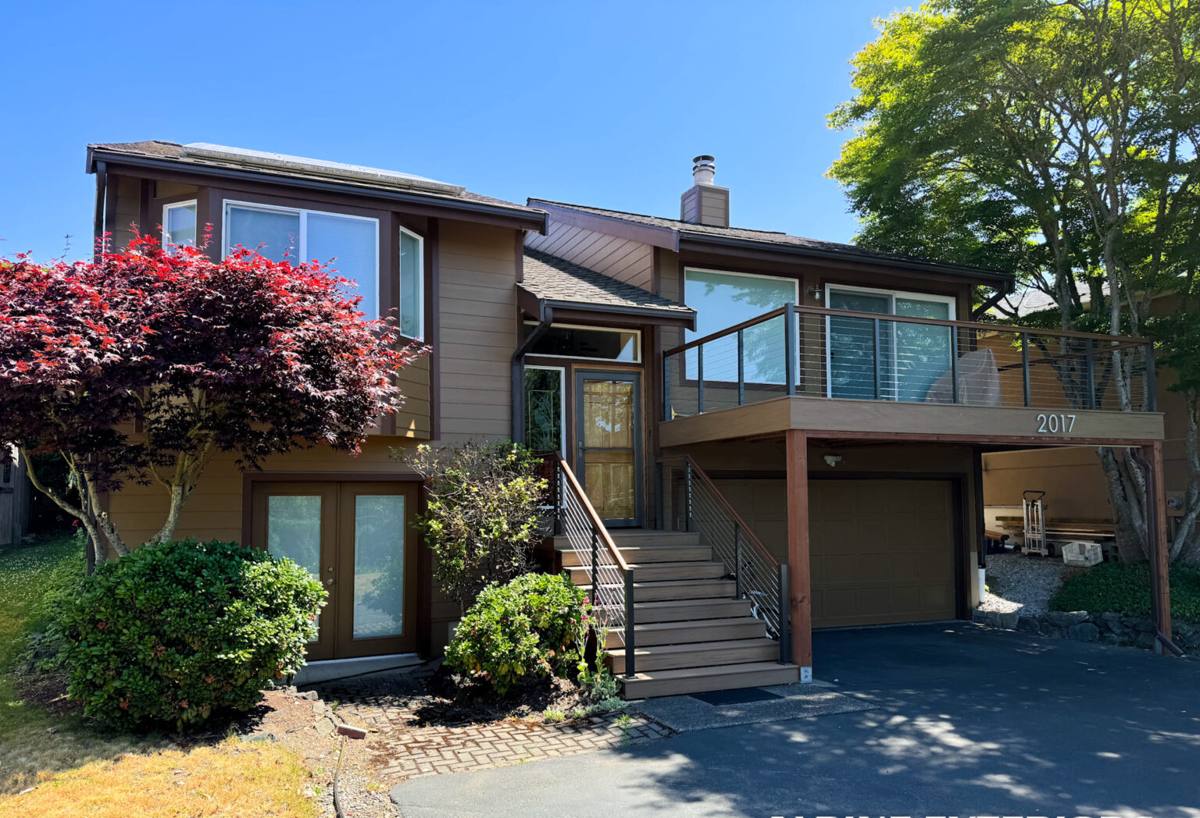
The Real Enemies: Salt Air, Driving Rain, and a Long Moss Season
Whatcom County's marine climate is mild, which is part of why people love living here — but "mild" doesn't mean gentle on a house. Three things do most of the damage to siding in the Bellingham area, and Columbia gets all three:
- Salt air: proximity to the bay means airborne salt settles on exterior surfaces year-round. It accelerates corrosion on exposed fasteners and metal trim, and it breaks down cheaper paint films faster than an inland home would ever experience.
- Driving rain: Pacific Northwest storms don't just fall straight down — wind-driven rain gets pushed sideways into laps, seams, and butt joints. Any siding system that isn't detailed with real drainage in mind will eventually let water behind it, no matter how good the surface material is.
- A long moss season: mild, wet winters and shaded lots mean moss and algae get months of ideal growing conditions on north- and west-facing walls, roof lines, and anywhere siding stays damp longer than it should.
None of these are exotic problems — they're just constant. A siding product and installation that can shrug off one bad storm but not eight months of steady moisture and salt exposure every single year isn't the right fit for a Columbia home.
What James Hardie Siding Brings to This Climate
We install James Hardie exclusively, and this is exactly the kind of climate that explains why. Fiber cement doesn't absorb water the way wood does, and it doesn't trap moisture against a wall the way some engineered wood products can. It's also non-combustible, which matters in a region where wildfire smoke and ember exposure have become more of a concern in recent summers.
The HZ5 Climate Engineering
James Hardie's HZ5 product line is engineered specifically for climates like ours — wet, humid, and prone to freeze-thaw cycling in the colder months. It's formulated to resist moisture-related damage better than standard fiber cement, which matters on a wall that's going to spend a good part of the year damp.
ColorPlus Factory Finish
The other piece is the finish. James Hardie's ColorPlus coating is baked on at the factory under controlled conditions, which gives it far better adhesion and fade resistance than field-applied paint. In a salt-air environment, that difference shows up as years of extra life before you're looking at a repaint — and a backed warranty on the finish itself, not just the substrate.
What a Correct Installation Actually Involves
Here's the part most homeowners never get told: James Hardie siding performs exactly as well as it's installed, and no better. The product can be engineered for our climate, but if the installation doesn't respect water management, all that engineering is fighting an uphill battle.
Clearances and Flashing
Hardie's own installation instructions specify minimum clearances from grade, roof lines, decks, and other siding — usually several inches — specifically so wicked-up moisture and splash-back don't sit against the bottom edge of the board. Every window, door, and roof-to-wall intersection needs proper flashing and kick-out details so driving rain gets directed away from the wall assembly, not into it.
Fastening and Fastener Choice
In a salt-air environment, fastener corrosion is a real failure point if it's ignored. Correct installation means using fasteners rated for the exposure, driven at the manufacturer's specified pattern and depth — not overdriven, not underdriven, and not through butt joints without proper backing.
Rain Screen and Drainage Plane
Behind the siding itself, a correctly built wall assembly includes a weather-resistant barrier and, ideally, a drainage gap that lets any incidental moisture that does get past the cladding drain and dry out instead of sitting against the sheathing. This is the single biggest difference between a siding job that lasts decades in this climate and one that starts showing rot behind the walls in five to seven years.
Our Process for Columbia Siding Projects
1. On-Site Assessment
We start by looking at the whole wall system, not just the surface — checking for existing moisture damage, evaluating current flashing and trim details, and confirming what's actually going on behind the old siding before we quote anything.
2. Prep and Tear-Off
Old siding comes off, and we inspect the sheathing underneath. Any soft or water-damaged sheathing gets addressed before a single new board goes up — covering over a problem with new siding just hides it for a few more years.
3. Weather Barrier and Installation
We install a proper weather-resistant barrier and drainage detailing suited to this climate, then install the Hardie boards, panels, or trim to manufacturer spec — correct clearances, correct fastening, correct flashing at every penetration.
4. Final Inspection and Walkthrough
Before we call a job finished, we walk the whole exterior looking for anything that could become a water intrusion point down the road — caulking lines, trim joints, penetrations for vents and fixtures — and we go over the finished work with the homeowner directly.
Why a Crew That Already Works in Columbia Matters
Siding installation isn't identical everywhere. A crew that's used to working in a dry climate can do technically fine work and still get water management details wrong for a place like Bellingham, because they've never had to think hard about eight months of steady rain and salt exposure. A crew that already works Columbia and the surrounding Bellingham neighborhoods knows the local lot conditions, the way moss builds up on shaded elevations, and what Whatcom County's permitting and inspection process actually expects — so there are no surprises mid-project.
There's also a simple accountability advantage to hiring local: if a flashing detail or a caulk joint needs attention two winters from now, you're calling a company that's still doing business a few miles from your house, not chasing down a crew that moved on to another region.
James Hardie vs. Other Siding Options in This Climate
We get asked fairly often why we don't install vinyl, LP SmartSide, or cedar. Here's an honest comparison of how each holds up against the specific conditions Columbia homes face:
| Factor | James Hardie Fiber Cement | Vinyl | Engineered Wood (LP SmartSide) | Cedar |
|---|---|---|---|---|
| Moisture resistance | Excellent — doesn't absorb or swell | Good on the surface, but seams can let water behind it | Wood-based core is moisture-sensitive if the finish fails | Needs consistent maintenance to resist rot |
| Salt air / coastal durability | Strong; factory finish resists fading and chalking | Can become brittle and discolored over time | Finish maintenance is critical near salt exposure | Weathers naturally but degrades faster near salt air |
| Fire resistance | Non-combustible | Combustible; can melt or warp under heat | Combustible | Combustible |
| Maintenance | Repaint cycle is long thanks to ColorPlus finish | Low maintenance but can't be effectively repainted | Requires diligent caulking and repainting | Regular staining/sealing required |
| Typical lifespan when installed correctly | 30+ years | 20–30 years | 20–30 years, finish-dependent | 20–30 years with upkeep |
Every one of these products has legitimate strengths — vinyl is inexpensive and low-maintenance, cedar has real curb appeal, engineered wood is workable and affordable. Our decision to install only James Hardie comes down to how those trade-offs play out specifically in a wet, salty, moss-prone climate over the long run, not a claim that the alternatives are poorly made.
Signs Your Columbia Home's Siding Needs Attention
A lot of siding problems in this climate develop slowly and get written off as cosmetic until they're not. Watch for:
- Persistent moss or algae staining that comes back within weeks of cleaning
- Paint that's peeling, bubbling, or chalking heavily, especially on north- or west-facing walls
- Soft spots, warping, or visible gaps at board seams and corners
- Rust streaks near fasteners or trim
- Interior wall discoloration or a musty smell near exterior walls
- Visible daylight or drafts around window and door trim
Any one of these on its own might be minor. Two or more together, especially on a home that's due for a repaint anyway, usually means it's worth a real inspection rather than another cosmetic fix.
Cost Factors to Expect
We don't publish blanket per-square-foot pricing because every Columbia home is different — wall square footage, number of stories, trim complexity, and how much sheathing repair is needed all move the number. In general, expect the estimate to be shaped by:
- Total wall area and home height (multi-story homes cost more per square foot due to access and staging)
- Condition of the sheathing and framing once old siding is removed
- Amount of trim, window, and corner detail work
- Product selection within the James Hardie lineup (lap siding, panel systems, and trim packages price differently)
- Whether existing paint or old siding requires special handling during removal
The only way to get real numbers is a walkthrough of your specific home — which is exactly what we offer.
If you're weighing a siding replacement for a home in Columbia or anywhere else in the Bellingham area, we're happy to take a look and give you a straight, no-pressure estimate. There's a form below — reach out and we'll get a time on the calendar.