 Bellingham Siding
 Barkley's Growth Has Outpaced What's Under the Siding
Barkley has been one of Bellingham's fastest-growing neighborhoods for years, with new construction filling in alongside homes built over the past two decades. That mix creates a specific problem: a lot of these homes are still wearing their original builder-grade siding, chosen during construction to hit a price point rather than to hold up long-term against a Whatcom County winter. Whether that's vinyl that's chalked and warped, engineered wood that's swelling at the seams, or an early fiber cement job that was never flashed correctly, the result is the same — siding that's aging faster than the house around it.
We install siding in Barkley the way it should have gone on the first time. That means one product line, installed to the manufacturer's actual specification, by a crew that isn't guessing at how Bellingham weather behaves on a wall. This page is about that one job — full siding installation for a Barkley home — not a general overview of every service we offer.
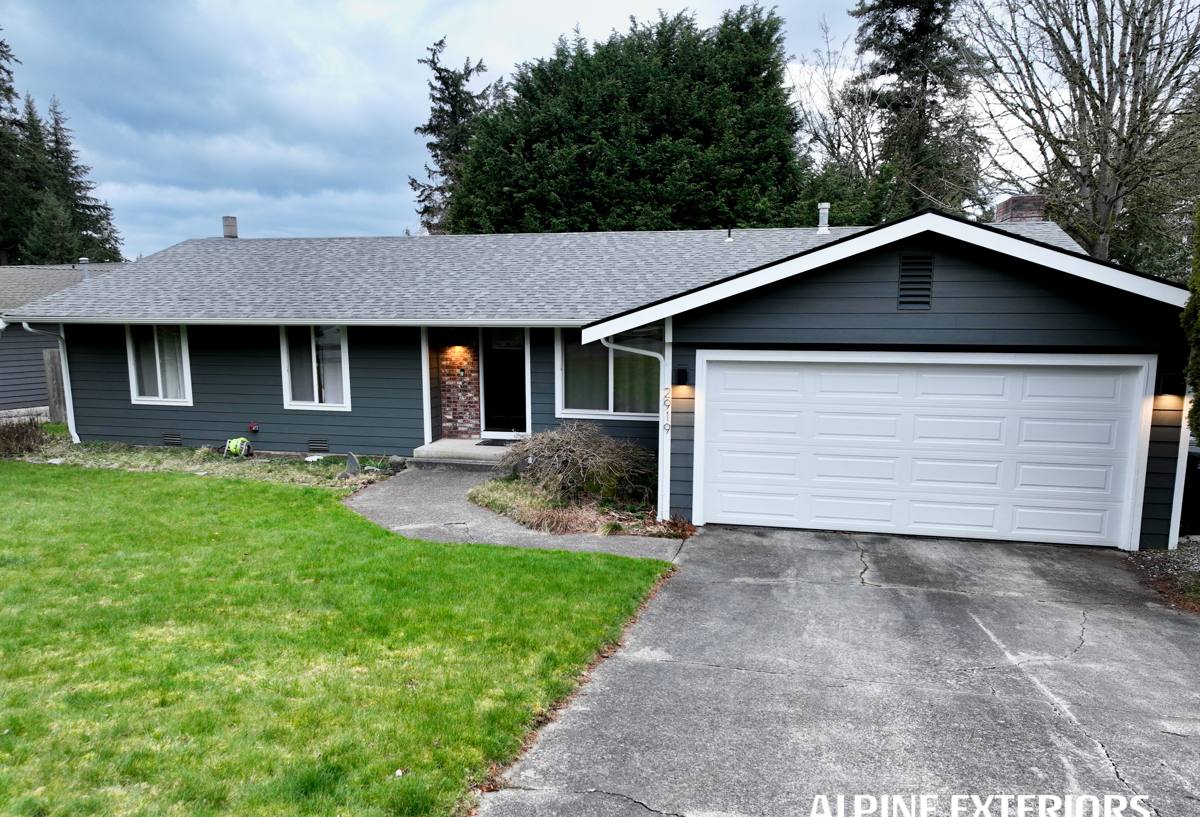
What Bellingham Bay's Climate Actually Does to a Wall System
Homeowners in Barkley deal with a specific combination of stressors that doesn't show up the same way everywhere in the country:
- Salt air corrosion: Proximity to Bellingham Bay means airborne salt accelerates corrosion on fasteners, flashing, and trim hardware that isn't rated for it.
- Driving rain: Pacific Northwest storms don't just fall straight down — wind-driven rain gets pushed sideways into seams, laps, and penetrations that weren't sealed or flashed correctly.
- A long moss and mildew season: Mature trees, shaded lots, and months of damp weather give moss, algae, and mildew a long runway to take hold on any siding surface that holds moisture or lacks a factory finish designed to resist it.
None of this is exotic — it's just what Whatcom County does to an exterior year after year. But it means a siding installation here has to account for moisture intrusion and material stability in a way that a install in a dry climate simply doesn't.
Why We Only Install James Hardie Fiber Cement
We don't install vinyl, LP SmartSide, Cemplank, Allura, or bare cedar or spruce siding, and that's a deliberate standard, not an oversight. Each of those products has real strengths, but each also has a trade-off — moisture sensitivity, maintenance burden, warranty structure, or long-term appearance — that we're not willing to put our name behind on a Bellingham roofline. James Hardie's fiber cement is non-combustible, dimensionally stable, and manufactured in HZ formulations engineered specifically for high-moisture climate zones like ours.
The factory-applied ColorPlus finish is the detail that matters most in a neighborhood like Barkley: it's baked on under controlled conditions rather than field-painted, which means better fade and moss resistance than a job-site paint job, and it's backed by a long transferable limited warranty that follows the house if it's sold. For a homeowner, that's the difference between repainting siding every several years and simply living with it.
| Product | Common Trade-Off | Why We Standardized on Hardie Instead |
|---|---|---|
| Vinyl | Can warp, fade, and crack in temperature swings; limited to lighter colors | Fiber cement holds dimension and color under UV and moisture cycling |
| LP SmartSide | Engineered wood core is moisture-sensitive at cut edges and seams | Fiber cement has no wood fiber to swell or rot when water reaches an edge |
| Bare Cedar / Spruce | Requires ongoing sealing, staining, and moisture maintenance | ColorPlus finish is factory-cured and doesn't need routine refinishing |
| Cemplank / Allura | Similar fiber cement chemistry, different warranty and finish system | We standardize on one system so install specs, fasteners, and warranty claims stay consistent |
What Correct Siding Installation Actually Involves
Siding failures almost never trace back to the product itself — they trace back to installation shortcuts that don't show up until years later. On a Barkley home, where wind-driven rain is a real load on the wall assembly, these details aren't optional extras:
Behind the Siding
Before a single course goes up, the sheathing has to be sound and dry, and the weather-resistive barrier needs to be installed and lapped correctly — upper layers over lower layers, shingle-style, so water moving down the wall never finds a horizontal seam to get behind. Window and door openings need proper head, jamb, and sill flashing, and any wall penetration (hose bibs, vents, electrical) needs to be sealed and flashed, not just caulked over.
Fastening and Clearance
James Hardie publishes exact fastener spacing, nailing patterns, and minimum clearances — typically 6 inches of clearance from grade and roofing, and 1–2 inches from decks and patios — because those gaps are what let the bottom edge of the siding dry out after it gets wet. Skipping them traps moisture right at the most vulnerable edge of the board.
Joints and Caulking
Hardie's system is engineered to shed water at properly lapped joints, not to rely on caulk as the primary defense. Caulk is used only where specified — over-caulking every seam actually traps moisture behind the board instead of letting it escape.
| Correct Practice | Common Shortcut | Why It Matters |
|---|---|---|
| WRB lapped shingle-style, taped seams | Stapled on quickly, seams left loose | Loose seams let wind-driven rain track behind the siding |
| 6-inch grade clearance maintained | Siding installed tight to grade or patio | Tight clearance wicks ground moisture into the bottom edge |
| Manufacturer-spec fastener pattern | Fewer fasteners, wrong spacing to save time | Under-fastened panels can crack or blow loose in coastal wind |
| Kick-out flashing at roof-wall intersections | Flashing omitted or undersized | Missing kick-out flashing is a leading cause of hidden rot at roof lines |
Our Installation Process, Step by Step
- On-site assessment: We walk the home, check the existing siding, sheathing condition, and any signs of moisture intrusion before quoting anything.
- Product and color selection: We help you choose the right Hardie profile — lap, panel, or board-and-batten — and a ColorPlus finish that fits the home and any neighborhood aesthetic expectations.
- Tear-off and substrate repair: Old siding comes off, and any damaged sheathing or framing found underneath is repaired before we move forward — we don't cover up rot.
- Weather barrier and flashing: A new WRB goes on with correct laps, and all windows, doors, and penetrations are flashed to shed water outward.
- Siding installation to spec: Hardie boards or panels go on with the manufacturer's fastening pattern, joint treatment, and clearances — no shortcuts to save a day of labor.
- Trim, caulking, and touch-up: Trim is fitted, caulk applied only where the system calls for it, and any factory-finish touch-up is done with Hardie's matched products.
- Final walkthrough: We review the finished job with you before calling it done.
What Drives Cost on a Barkley Siding Installation
Every home is different, so we won't quote a number without seeing the house, but these are the real factors that move a bid up or down:
| Factor | Why It Affects Cost |
|---|---|
| Tear-off vs. new construction | Removing and disposing of old siding adds labor the original build didn't have |
| Sheathing/framing repair needed | Hidden rot found during tear-off has to be fixed before new siding goes on |
| Home size and wall complexity | More corners, gables, and dormers mean more cutting, flashing, and trim work |
| Siding profile chosen | Lap, panel, and board-and-batten systems differ in material and labor needs |
| Access and site conditions | Tight lots, slopes, or landscaping near the foundation affect setup and staging time |
A Checklist for Choosing a Siding Contractor in Barkley
- Do they specify the exact fastening pattern and clearances they'll follow, or just say "we'll install it right"?
- Will they show you the flashing and weather-barrier plan before covering it up?
- Are they factory-trained or certified on the specific product they're installing?
- Do they carry proper licensing and insurance for exterior work in Washington?
- Will they put the warranty terms — manufacturer and workmanship — in writing?
- Do they have experience with homes in this climate zone, not just siding in general?
Why Local Experience in Barkley Specifically Matters
A siding crew that's worked in Barkley knows the practical realities of the neighborhood — homes on smaller lots with tight side-yard access, a mix of newer construction alongside older builder-grade jobs, and in some cases community design guidelines that govern acceptable exterior colors and materials. That local knowledge means fewer surprises on install day and a finished color and profile choice that fits the neighborhood rather than looking out of place next to it.
It also means we've already seen how Bellingham's salt air, rain, and moss season affect siding installed five, ten, and fifteen years ago in this exact area — which is exactly the information that should be shaping how a new install goes on today.
Ready for an Honest Look at Your Siding
If your Barkley home's siding is showing its age, or you're building new and want it done right from the start, we're happy to take a look and give you a straightforward assessment — no pressure, no sales script. Fill out the form below to schedule a free estimate.