 Bellingham Siding
 Siding Replacement for Cordata Homes
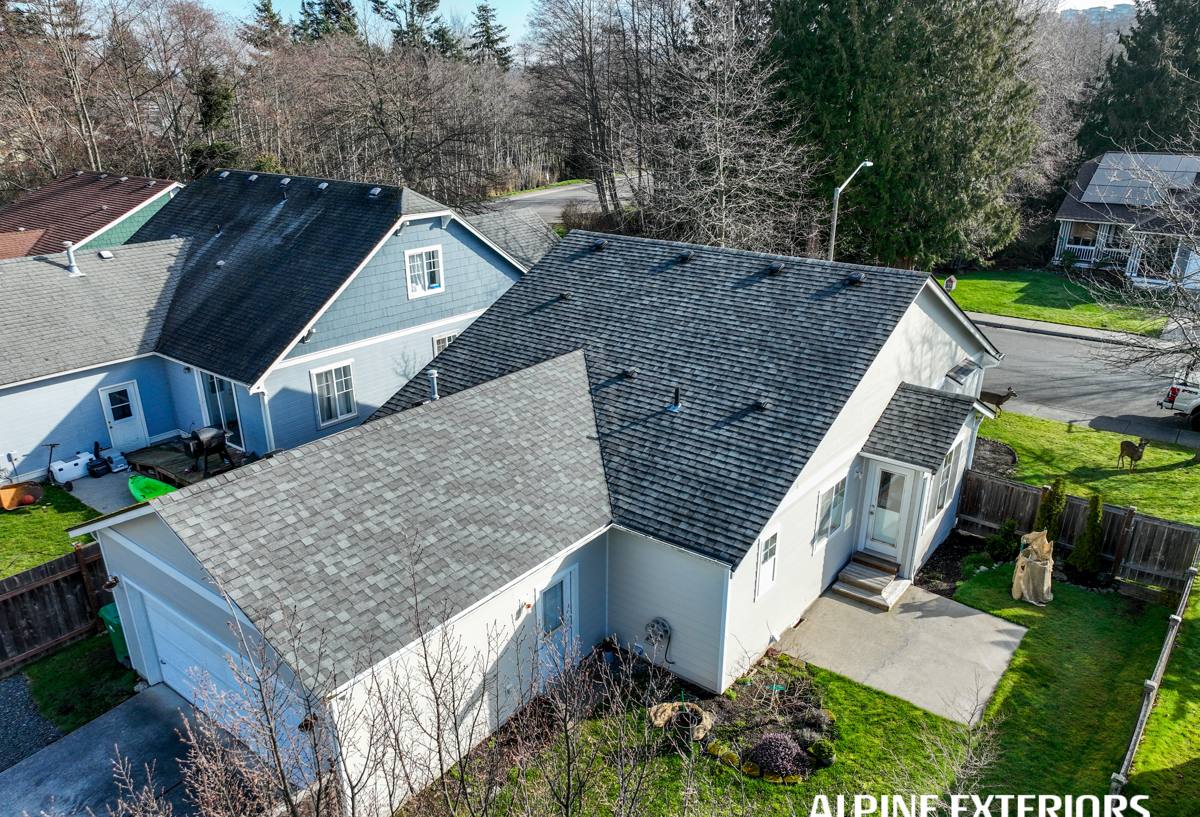
Cordata is one of Bellingham's north-side neighborhoods, sitting inland from the bay but still squarely inside Whatcom County's wet, marine-influenced climate. Homes here range from newer subdivisions to older construction, and no matter the age, the siding on the outside of the house is doing one job around the clock: keeping water out. When that siding starts to fail — through cracking, delamination, or simply age — the fix isn't cosmetic. It's structural protection for everything behind the wall.
This page covers what siding replacement actually involves for a Cordata home, what the regional climate demands from the materials and methods used, and why we've standardized on one product system instead of offering a menu of options.
Why Bellingham's Climate Is Hard on Siding
Whatcom County doesn't get hurricanes or extreme heat, but it has its own steady, grinding set of conditions that wear siding down over years rather than all at once.
Salt Air and Moisture
Proximity to the Salish Sea means the air carries salt and moisture even miles inland. Salt-laden air accelerates corrosion on fasteners, trim, and any exposed metal flashing, and it keeps humidity levels elevated around the building envelope longer than you'd see in a drier climate. Siding materials that aren't dimensionally stable, or that rely on paint film alone for protection, take a beating from this cycle of damp-dry-damp.
Driving Rain
Bellingham doesn't just get rain — it gets wind-driven rain that hits siding at an angle, forcing water into laps, seams, and butt joints that would stay dry in a calmer climate. This is why lap coverage, caulking discipline, and correct flashing at every penetration matter more here than in places where rain falls mostly straight down.
Moss Season
The long, mild wet season — roughly October through May — is prime moss and algae growth conditions. North-facing walls, areas shaded by trees, and any siding with textured or absorbent surfaces are especially prone to green and black staining. Moss doesn't just look bad; it holds moisture against the siding surface, extending the time the material stays wet after every rain event.
Put together, these three conditions mean Cordata siding isn't just weathering — it's under sustained pressure to shed water fast, resist corrosion, and not become a growth surface for moss and mildew.
Signs a Cordata Home Needs Siding Replacement
Not every siding problem means a full replacement, but these are the signs that usually point that direction rather than a patch or repaint:
- Soft or spongy spots when you press on the siding, especially near the bottom courses or window trim
- Visible cracking, splitting, or delamination (layers separating) on the siding face
- Paint that won't hold — repeated peeling or blistering within a couple of years of repainting
- Persistent moss or black streaking that comes back quickly after cleaning
- Warping, bowing, or buckling panels, particularly on walls that face prevailing wind and rain
- Rot or soft framing discovered around windows, doors, or at the base of walls
- Rising energy bills with no other explanation, suggesting the wall assembly is no longer sealing properly
If you're seeing more than one of these at once, that's usually a sign the water-resistive barrier behind the siding has also been compromised, not just the visible surface.
Why We Install Only James Hardie Fiber Cement
We get asked regularly why we don't offer vinyl, LP SmartSide, or other fiber cement brands. The honest answer is that we tested our reputation on materials that didn't hold up the way manufacturers claimed in a climate like this one, and we made a call: one product system, installed correctly, every time.
James Hardie fiber cement is non-combustible, dimensionally stable, and doesn't rely on an engineered wood core that can swell or degrade if moisture gets past the surface. Its ColorPlus factory-applied finish is baked on under controlled conditions, which gives it far better fade and moisture resistance than field-applied paint — a real advantage in a climate where repainting siding every few years isn't something most homeowners want to budget for. Hardie also engineers specific product lines (HardieZone HZ5 and HZ10) for different climate exposures, and Western Washington falls into the range those products are built for.
None of this means fiber cement is maintenance-free or installer-proof. It means the material itself gives a Cordata home a real head start against salt air, driving rain, and moss — provided it goes on correctly, which is the other half of the equation.
What a Correct Siding Replacement Job Involves
Tear-Off and Inspection
Replacement starts with removing the old siding down to the sheathing, not just covering over it. This is the point where hidden rot, failed flashing, or compromised sheathing gets found and fixed — problems that a re-side over the top would just seal in.
Water-Resistive Barrier
A correctly lapped weather-resistive barrier goes over the sheathing before any siding is hung. In a climate with this much wind-driven rain, the WRB is the actual waterproofing layer; the siding is the first line of defense, not the only one. Seams get lapped shingle-style, top over bottom, so water always drains outward rather than behind the barrier.
Flashing at Every Penetration
Windows, doors, hose bibs, light fixtures, and vents are all places where water can find a path behind the siding. Correct flashing — installed and integrated with the WRB in the right order — is one of the most common places a rushed installation fails, and it's exactly the kind of detail that doesn't show up as a problem until a year or two later.
Rainscreen or Direct Application
Depending on the wall assembly and exposure, a furred-out rainscreen gap behind the siding can give any moisture that does get past the cladding a way to drain and dry rather than sitting against the sheathing. This is a detail worth discussing directly for a Cordata home given how long the wet season runs here.
Installation to Manufacturer Spec
James Hardie publishes specific fastening patterns, minimum clearances (from grade, roofing, and decks), caulking requirements, and painting guidelines for cut edges. Following these to the letter isn't optional paperwork — it's what keeps the manufacturer's warranty valid and what actually determines whether the siding performs for its full service life.
Our Process for Cordata Homeowners
| Stage | What Happens |
|---|---|
| Free estimate | On-site walkthrough of your home's siding, trim, and problem areas; honest assessment of repair vs. full replacement |
| Scope and product selection | Choice of Hardie plank profile, texture, and color; review of trim, corner, and flashing details specific to your home |
| Prep and tear-off | Removal of old siding, inspection and repair of sheathing and framing, protection of landscaping and windows |
| Barrier and flashing | Water-resistive barrier installed and lapped correctly; flashing integrated at every window, door, and penetration |
| Siding installation | Hardie siding installed to manufacturer fastening and clearance spec, with attention to lap coverage against driving rain |
| Final inspection and cleanup | Walkthrough with the homeowner, caulking and touch-up check, full site cleanup |
James Hardie Product Lines for This Climate
| Product Line | Best For | Why It Fits Here |
|---|---|---|
| HardiePlank lap siding | Most home styles, full replacements | Traditional lap profile, factory ColorPlus finish resists the fade and staining cycle from moss season and salt air |
| HardieShingle | Accent walls, gables, craftsman-style homes | Shingle look without the moisture absorption and upkeep of cedar shingles |
| HardieTrim | Window, door, and corner trim | Matches the durability of the field siding so trim doesn't become the weak point |
| HardiePanel | Modern styling, accent sections | Clean vertical lines with the same non-combustible, moisture-stable core |
Cost Factors for a Cordata Siding Replacement
Every home is different, but the same handful of factors drive most of the cost variation we see on siding replacement projects in this area:
| Factor | Why It Matters |
|---|---|
| Home size and wall area | More square footage means more material and labor, the largest single cost driver |
| Existing siding removal | Multiple layers of old siding, or extensive rot repair found during tear-off, adds time and material |
| Trim and detail complexity | Homes with lots of windows, gables, dormers, or architectural detail take more cutting and flashing work |
| Product line and profile | Plank width, texture, and whether shingle or panel accents are added change material cost |
| Sheathing and framing repair | Rot discovered behind old siding needs to be fixed before new siding goes on, which is not always visible until tear-off |
| Rainscreen or furring | Adding a drainage gap behind the siding is an added labor step but improves long-term drying performance |
We give straightforward, itemized estimates and explain the reasoning behind each line — no surprise add-ons after the work starts unless something genuinely unexpected turns up during tear-off, in which case we stop and talk to you before proceeding.
Checklist: What to Ask Before Hiring a Siding Contractor
- Are you licensed, bonded, and insured in Washington State, and can you provide proof?
- Will you remove the old siding down to the sheathing, or install over the existing wall?
- What water-resistive barrier and flashing details do you use, and can you explain them in plain terms?
- Do you install to the manufacturer's published fastening and clearance specifications?
- What warranty covers the material, and what warranty covers your labor separately?
- Can you walk me through how you'll handle rot or damage found once the old siding comes off?
- Do you have experience working in this specific area and its housing stock?
Why a Crew That Already Works Cordata Matters
Siding installation quality comes down to the details — how the WRB is lapped, how flashing is integrated at each penetration, how tight the fastening pattern is, how well cut edges are sealed. A crew that already works around Bellingham and Whatcom County has already made the calls on rainscreen gaps, corner details, and trim choices that hold up against this specific mix of salt air, driving rain, and a long moss season. That's not something you get from a general contractor who does a handful of siding jobs a year in a very different climate.
It also means we're not learning on your house. We know what this weather does to a wall assembly over five, ten, twenty years, and we build the installation around that — not around the minimum needed to pass a one-time inspection.
Get a Free Estimate for Your Cordata Home
If your siding is showing wear, holding onto moss, or just due for an honest evaluation, we're happy to walk your home with you and give you a straightforward, no-pressure assessment. Use the form below to request your free estimate.