 Bellingham Siding
 Why Board & Batten Fits Birchwood
Board and batten siding has a strong following in Birchwood, and it's easy to see why. The vertical lines read as clean and modern on newer builds, but the same profile also suits the more traditional homes scattered through this part of Bellingham. It's a look that works whether a house is going for a farmhouse feel, a craftsman update, or a simple, low-fuss exterior. But the reason we're writing about it specifically for this neighborhood isn't the aesthetics — it's that board and batten, done wrong, is one of the more failure-prone siding profiles in a wet marine climate, and done right, it's one of the more durable ones.
Birchwood sits close enough to the water and the lowland weather patterns that come with it that homes here deal with a specific combination: salt-laden air off the Sound, long stretches of driving rain pushed in by wind rather than falling straight down, and a moss season that can run most of the year in shaded, north-facing spots. Any siding installed here has to handle all three at once, and the batten strips — the vertical trim pieces that give this profile its name — are exactly where a lot of installs start to fail if the crew doesn't understand what this climate actually does to a wall.
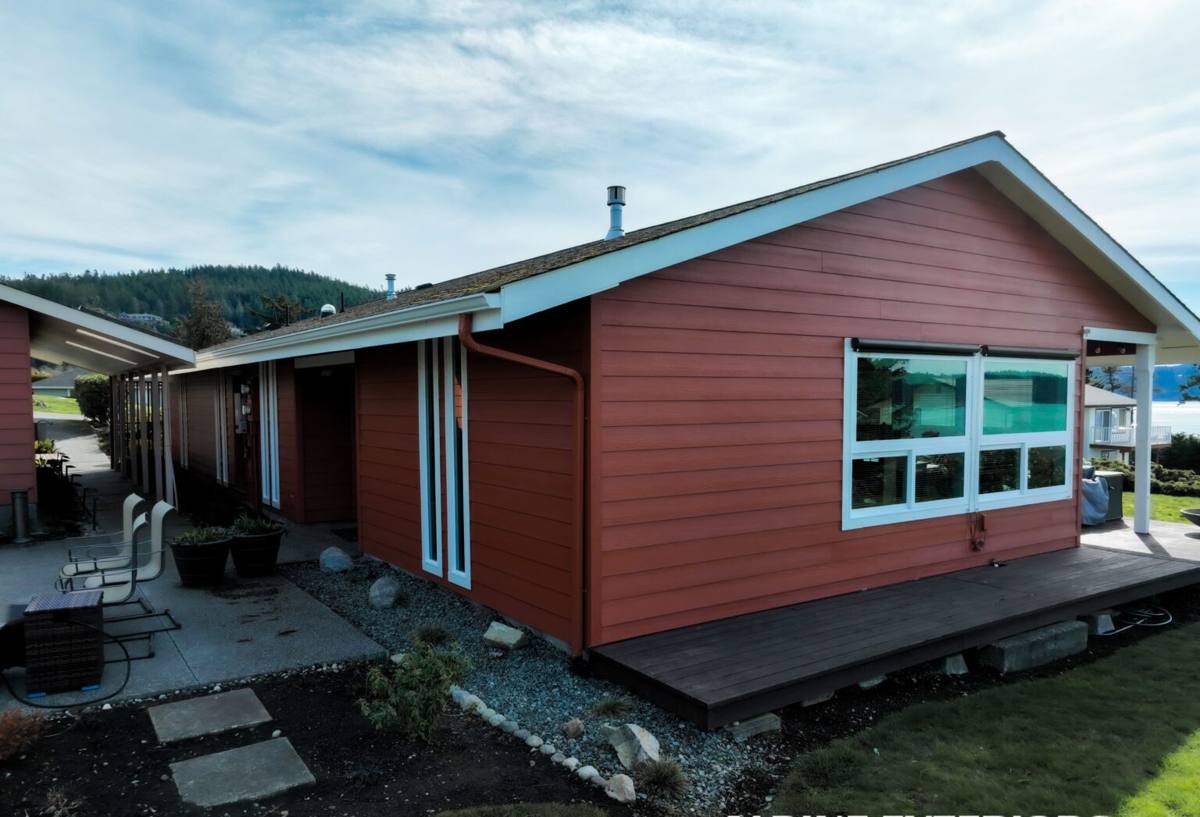
What Driving Rain and Salt Air Do to a Board & Batten Wall
Board and batten is a face-fastened or batten-covered vertical siding system, and every seam between a batten and the panel underneath is a potential water path. In a climate with mostly vertical rainfall, that's manageable. In Bellingham, and especially in exposed or wind-funneled lots around Birchwood, rain regularly hits siding at an angle. That means water gets pushed sideways into every seam, every fastener head, and every joint where a batten meets a window or door trim.
Salt air compounds the problem. It accelerates corrosion on fasteners, staples, and any exposed metal flashing, and it's harder on cheap or improperly coated hardware than plain rainwater alone. A board and batten wall with the wrong fastener spec, or battens nailed without accounting for expansion, will show rust streaking, loosening battens, and water staining years before a wall built with the right materials and technique.
Where board and batten typically fails first
- Batten-to-panel seams with no drainage gap behind them, trapping moisture against the substrate
- Fastener corrosion where galvanized or coated nails weren't rated for coastal exposure
- Butt joints between panel lengths that weren't flashed or backed properly
- Bottom edges near grade or decks where splashback keeps the panel wet longer than the rest of the wall
- North- and shade-facing walls where moss and algae hold moisture against the surface for months at a stretch
Why We Only Install This Profile in James Hardie Fiber Cement
Board and batten can be built out of several materials, and we're upfront that we only install one: James Hardie fiber cement, typically through Hardie's vertical panel and batten systems. We don't install vinyl board and batten, LP SmartSide, primed wood, or cedar battens, and the reasoning is specific to what this climate does over time, not a blanket knock on any of those products.
Wood battens and panels, even primed ones, need paint maintenance on a real schedule to stay ahead of moisture intrusion, and in a climate with Bellingham's rainfall totals, that maintenance window shrinks. Miss a cycle and you're often looking at soft spots or rot at the seams before you notice a problem from the ground. Engineered wood products bring their own moisture-management requirements around cut edges and joints that are easy to get wrong on a vertical profile with this many seams. Vinyl board and batten is low-maintenance in the sense that it doesn't need repainting, but it's a thinner, more temperature-reactive material, and it doesn't hold up the same way to sustained wind-driven rain at the seams or to the freeze-thaw swings this region sees in winter.
Fiber cement doesn't rot, doesn't feed moss the way wood grain does, and holds a factory finish that isn't relying on field-applied paint to keep water out. It's also dimensionally stable — it doesn't expand and contract with humidity the way wood does, which matters a lot on a profile where every batten is a fastening point. That stability is a big part of why board and batten in fiber cement holds its lines straight for decades instead of cupping or splitting at the nails.
What a Correct Board & Batten Install Actually Involves
The difference between a board and batten wall that lasts and one that fails early almost never comes down to the material alone — it comes down to what's behind it and how the seams are handled. On every Birchwood job, that means:
Water management behind the panel
A drainable house wrap or rainscreen gap behind the panels so any water that does get past a seam has somewhere to go besides sitting against the sheathing. This is non-negotiable in a climate this wet, and it's one of the first things we check on any tear-off where the old siding failed.
Fastener spec built for coastal exposure
Corrosion-resistant fasteners rated for the exposure Birchwood actually sees, placed and spaced to Hardie's engineering specs — not just "close enough." Under-fastened or wrongly spaced battens are one of the most common causes of the loosening and cracking we get called out to fix on other contractors' work.
Proper joint and seam treatment
Butt joints backed and flashed, not just butted and caulked. Caulk is a maintenance item, not a water barrier on its own, and any install that relies on it as the primary defense at a seam is building in a future problem.
Trim and clearance details
Correct clearance at grade, decks, and roof lines so splashback and ponding water aren't sitting against the bottom courses, plus properly flashed window and door transitions where battens meet trim.
Our Process on a Birchwood Job
| Stage | What Happens |
|---|---|
| Assessment | Walk the exterior, check current siding and water damage patterns, note shaded/exposed sides and grade clearance |
| Plan | Confirm panel and batten layout, drainage approach, and trim details specific to the home's exposure |
| Prep | Remove old siding, repair or replace damaged sheathing, install drainable wrap and flashing |
| Install | Panels and battens set to spec with corrosion-resistant fasteners and proper seam backing |
| Finish & walkthrough | Trim, caulking at appropriate points only, final inspection with the homeowner |
Moss, Shade, and North-Facing Walls
Birchwood has enough tree cover and shaded lots that moss and algae growth on siding is a real, recurring maintenance issue rather than a rare complaint. Board and batten's vertical lines actually help here compared to horizontal lap siding — water and debris don't sit on horizontal ledges the same way — but the seams at each batten still give moss a foothold if the panel surface stays damp. James Hardie's factory finish is far less hospitable to moss and algae growth than raw or painted wood, and the panels can be cleaned with a soft wash without stripping a field-applied coating, which matters a lot on shaded walls that need attention more than once a season.
Cost Factors Specific to This Profile and Area
Board and batten in fiber cement generally costs somewhat more than standard lap siding, largely because of the extra material (the battens themselves) and the additional labor to fasten and seal each one correctly. A few things move the number on a Birchwood job specifically:
- Home height and wall complexity — more corners, dormers, and trim transitions mean more seams to detail correctly
- Condition of the existing wall — sheathing repair or moisture damage found during tear-off adds scope
- Access and site conditions — sloped lots, tight setbacks, or limited staging area common on some Birchwood streets
- Color and finish selection within the Hardie ColorPlus line, and any custom trim work
- Whether existing water damage from a prior siding failure needs to be addressed before new siding goes on
We'll walk through actual numbers for your home during an estimate — broad ranges without seeing the house and its exposure aren't useful to you.
What to Check Before Hiring for Board & Batten Work
- Ask specifically how they handle drainage behind the panels, not just what material they use
- Confirm the fastener spec and whether it's rated for coastal/marine exposure
- Ask how butt joints and seams are backed and flashed, not just caulked
- Check that they're familiar with local grade clearance and moss-prone shaded conditions
- Get manufacturer certification confirmation if they're installing James Hardie products
Board and batten rewards a crew that treats every seam as a water-management detail, not just a visual line. That's the standard we hold every install to, whether it's a full home or a single wall section that took the brunt of the weather.
If you're weighing board and batten for a Birchwood home, we're happy to take a look and give you a straight read on what your walls actually need. The estimate is free, there's no pressure, and you'll get a clear answer either way.