 Bellingham Siding
 Edgemoor's Windows Work Harder Than Most
Edgemoor sits close to Bellingham Bay, tucked in among mature trees with a mix of older and newer custom homes on wooded, often sloped lots. That location is part of what makes the neighborhood desirable — and part of what makes window performance a bigger deal here than it is a few miles inland. Homes this close to the water take on salt-laden air, near-constant tree shade that keeps moisture sitting on glass and frames longer, and weather that comes off the bay sideways more often than straight down. Windows that would hold up fine in a drier, more open part of Whatcom County can start showing problems years earlier out here.
This page is about one thing done right: custom window installation for Edgemoor homes, sized and specified for what this particular pocket of Bellingham actually throws at a house.
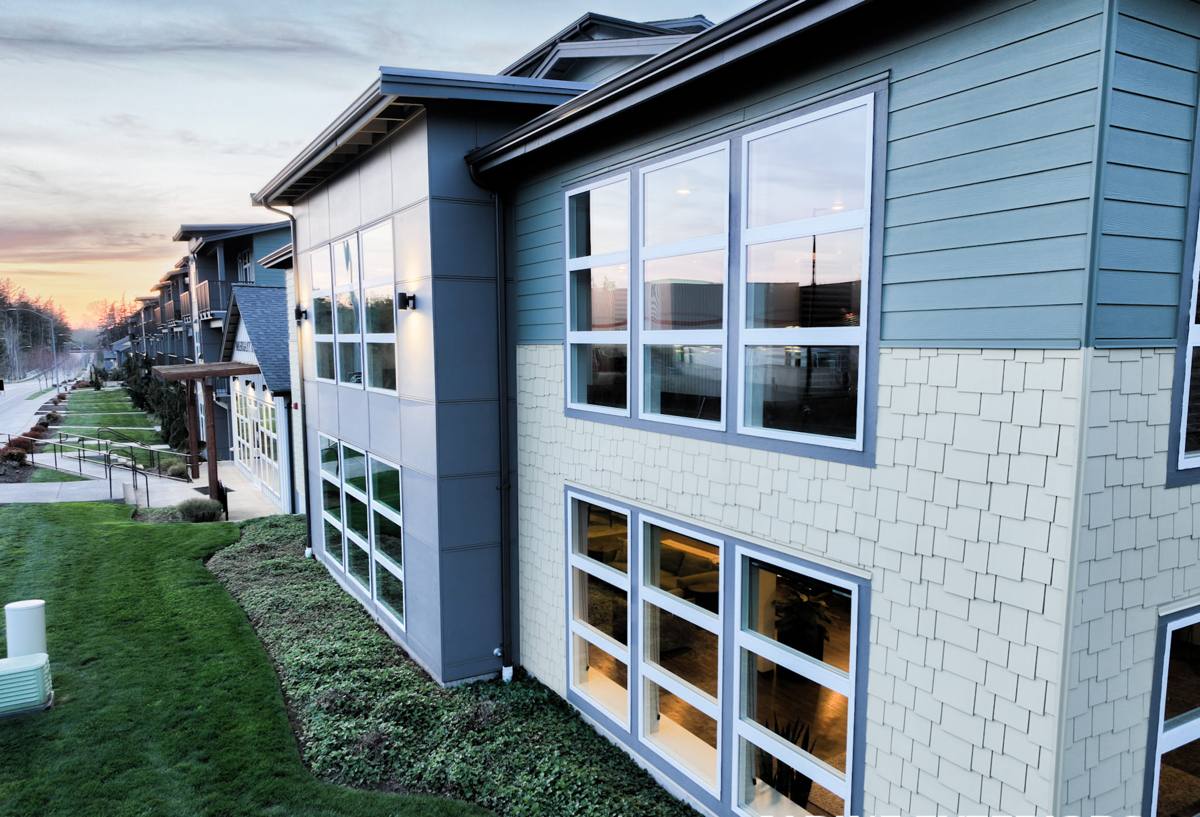
What Bellingham's Climate Does to Windows Over Time
Whatcom County doesn't get extreme weather in the dramatic sense — no hurricanes, no desert heat — but it applies steady, low-grade stress to a home's exterior almost year-round. On windows specifically, that shows up as:
- Salt air corrosion — homes within a mile or two of Bellingham Bay see accelerated corrosion on exposed metal hardware, hinges, and cheaper aluminum components. It's slow, but it's relentless.
- Driving rain — wind off the water pushes rain sideways into window assemblies rather than letting it run straight down the glass. Flashing and sealant details that would be adequate on a sheltered inland wall aren't always enough here.
- Moss and mildew season — the long, wet, shaded stretch from fall through spring keeps organic growth active on sills, trim, and anywhere water sits instead of draining. Tree cover in Edgemoor extends that window even further than open lots see.
- Condensation — temperature swings between a warm interior and a cold, damp exterior cause interior condensation on underperforming glass, which over time contributes to sill rot and mold at the frame edges.
None of this means Edgemoor is a hostile place to own a home. It means windows here need to be specified and installed with those specific stresses in mind, not just picked off a standard catalog page and set in place.
What a Correct Custom Window Installation Actually Involves
It's Not Just the Window Unit
A window is only as good as what's around it. Most window failures we get called out to inspect — fogged glass, soft sills, interior staining below the frame — trace back to installation details, not the window product itself. On a coastal, high-moisture site like Edgemoor, the details that matter most are:
- Flashing sequencing — water-resistive barrier and flashing tape need to be layered so water sheds outward at every step, with the sill pan flashing done first and lapped correctly under the sides and header.
- Sill pans — a proper sloped sill pan gives any water that does get past the exterior seal somewhere safe to go, instead of sitting against the framing.
- Sealant selection and placement — not every exterior sealant is rated for the amount of UV and moisture cycling a bay-facing window sees. We use products chosen for that exposure, not just whatever's cheapest.
- Backer rod and gap sizing — gaps that are too tight or too loose around the frame either trap moisture or let it track in. This is a measurement detail that gets skipped when a crew is rushing.
Get these right and the window itself becomes almost a secondary concern — even a mid-tier unit will perform well for years. Get them wrong, and even a premium window will fail early.
Choosing Frame Material for a Bay-Adjacent Home
There's no single "best" window material — the right choice depends on the home's exposure, its architectural style, and how much upkeep the owner wants to do. Here's how the common options hold up specifically under Bellingham's marine, wet, shaded conditions:
| Material | Coastal/Moisture Performance | Maintenance | Best Fit |
|---|---|---|---|
| Vinyl | Good — won't rust or corrode, handles moisture well | Low | Budget-conscious replacements, rear/side elevations |
| Fiberglass | Excellent — very stable in temperature swings, resists warping | Low | Bay-facing walls, high-exposure elevations |
| Wood (clad exterior) | Good if detailed correctly — cladding protects the exterior face, interior stays wood | Moderate | Historic or higher-end custom homes wanting a wood interior look |
| Aluminum | Fair — prone to corrosion near salt air unless marine-grade and properly finished | Moderate to high | Modern architectural styles where thin sightlines matter more than exposure |
| Solid wood (uncladded) | Poor in this exposure without diligent upkeep — most vulnerable to moisture and rot | High | Sheltered, low-exposure openings only |
For most Edgemoor homes, we steer owners toward fiberglass or vinyl on exposed, water-facing elevations, and reserve wood-look options for more protected walls where the maintenance tradeoff makes sense. That's a judgment call based on the specific house, not a one-size answer.
Custom Sizing and Shapes for Edgemoor's Older and Unique Homes
Edgemoor's housing stock spans a real range of eras and styles, and a lot of these homes weren't built to standard modern window dimensions. Custom window work here often means:
- Matching original rough openings on older homes rather than resizing framing, which keeps cost and disruption down
- Replicating divided-light or specialty grid patterns to preserve a home's original character
- Fitting non-standard shapes — arched tops, angled bays, tall narrow openings that take advantage of tree-filtered or bay-facing views
- Specifying larger glass units with the structural and thermal performance to handle bigger view openings without excessive heat loss or condensation risk
This is where "custom" earns its name — it's not a marketing word, it's the actual measuring, ordering, and installation process needed when a home doesn't match an off-the-shelf size.
Our Process for an Edgemoor Window Project
- On-site assessment — we look at existing window condition, sill and frame moisture, current flashing (where visible), and the specific exposure of each elevation on your lot.
- Measurement and specification — exact openings are measured, and material, glass package, and hardware are specified for that elevation's exposure, not a blanket spec for the whole house.
- Ordering and scheduling — custom units take longer to arrive than stock sizes; we build the timeline around that and keep you updated rather than leaving it vague.
- Removal and installation — old units come out carefully to protect interior finishes, sill pans and flashing go in first, then the new window, then air-sealing and exterior trim.
- Final check and cleanup — every unit gets operated, checked for square and proper seal, and the site is cleaned up before we call the job done.
Cost Factors for Custom Window Projects
Every Edgemoor project prices differently based on the home, but the factors that actually move the number are consistent. Broad ranges below are for planning purposes — your estimate will be specific to your home.
| Factor | Why It Matters |
|---|---|
| Standard vs. custom size/shape | Non-standard openings require custom-ordered units, which cost more than stock sizes |
| Frame material | Fiberglass and clad-wood generally cost more upfront than vinyl but can last longer in this exposure |
| Glass package | Upgraded low-E coatings and gas fills add cost but improve comfort and reduce condensation risk |
| Number of openings and elevation exposure | Bay-facing and high-exposure walls sometimes warrant a higher spec than sheltered rear walls |
| Existing condition | Rot repair or reframing discovered during removal adds labor beyond a straight swap |
| Access and site conditions | Sloped lots, tree cover, and second-story openings can affect labor and equipment needs |
Keeping New Windows Performing in This Climate
A correct installation does most of the work, but a little seasonal attention keeps windows performing for the long haul in a wet, shaded, salt-air environment like Edgemoor:
- Rinse salt residue off exterior glass and frames periodically, especially on bay-facing elevations
- Clear moss and debris from sills and tracks before it holds moisture against the frame
- Check exterior caulking annually for cracking or separation, particularly after a hard winter
- Make sure weep holes on vinyl and aluminum units stay clear so water can drain out
- Operate every window a few times a year, even ones you rarely open, to keep hardware and seals functioning
- Watch for interior condensation buildup, which can signal a seal or ventilation issue worth checking early
Why a Crew That Already Works Edgemoor Matters
Window installation done wrong doesn't usually fail on day one — it fails two or three winters later, after driving rain has found its way past a poorly detailed sill or a corroding hinge finally seizes. Hiring a crew that already works this specific pocket of Bellingham means we're not guessing at how exposed a given elevation is to salt air, or how long moss season really lasts under the tree cover common to this neighborhood. We've seen how these variables play out on real Whatcom County homes, and we spec and install accordingly — not from a generic playbook written for a drier climate.
If you're weighing a custom window project for your Edgemoor home, we're glad to come take a look, walk the exposure on each elevation with you, and put together a straightforward, no-pressure estimate. There's a form below — reach out and we'll get you scheduled.