 Bellingham Siding
 Windows Built for Happy Valley's Weather, Not a Catalog Climate
Happy Valley sits close enough to Bellingham Bay and the surrounding wetlands that its homes take a steady beating most inland neighborhoods never see. Salt-laden air off the bay works into metal hardware and fasteners over time. Driving rain, pushed sideways by wind off the water, tests every seal and sill. And the long gray stretch from October through April keeps north and west-facing walls damp for months, which is exactly the environment moss and mildew like best. Windows that are rated "energy-efficient" on a spec sheet in a showroom don't automatically hold up here — what matters is how the whole assembly performs against wind-driven water and sustained moisture, not just its lab-tested U-factor.
We work on homes throughout Bellingham and Whatcom County, and Happy Valley's mix of older bungalows, mid-century houses, and newer infill has taught us where windows tend to fail first in this specific setting: south and west exposures that catch the worst of the storms, ground-floor windows near landscaping that stays wet, and any opening where the original flashing was never designed for today's rain volumes.
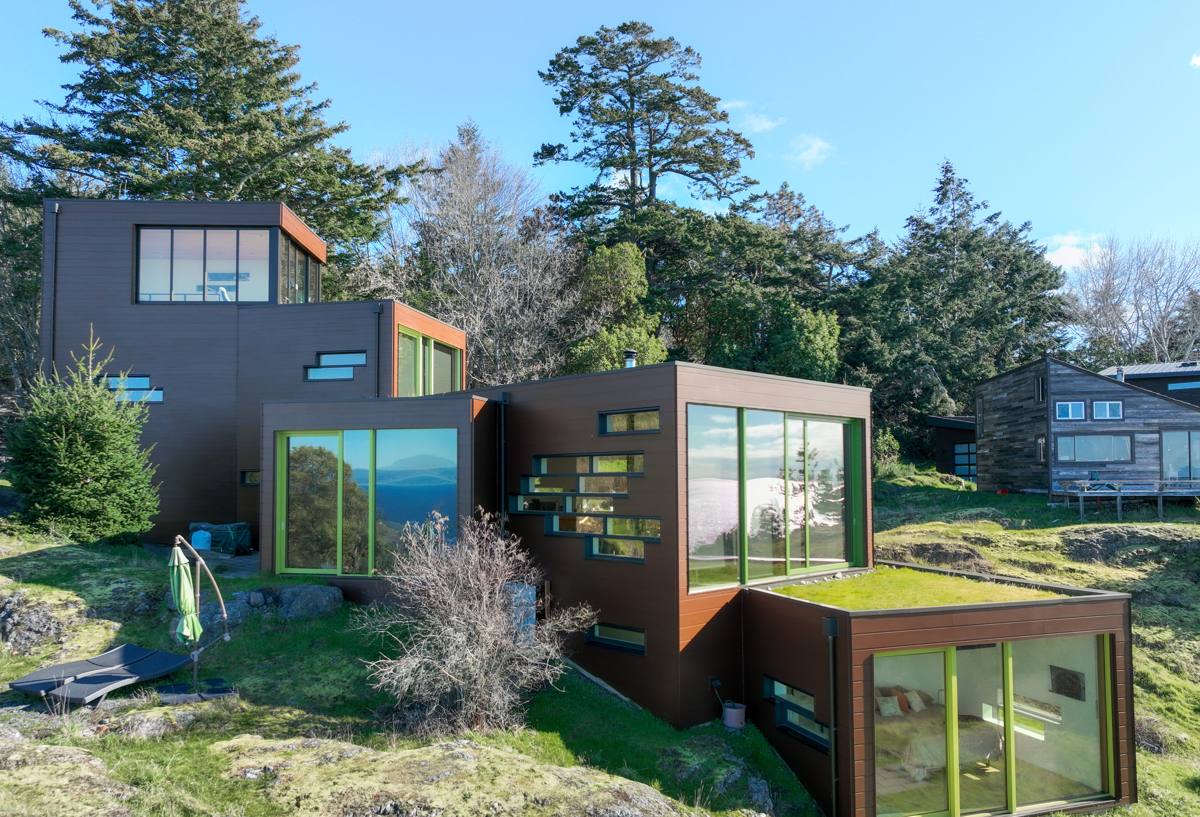
What "Energy-Efficient" Should Actually Mean on This Job
Energy efficiency in a window isn't one number — it's a combination of the glass package, the frame material, and how well the unit is sealed into the wall. A window with excellent glass but a poor installation will still leak air and eventually water, no matter what the label says. For Happy Valley homes, we weigh three things equally:
- U-factor — how well the window resists heat transfer; lower is better for our heating-dominated climate.
- Air infiltration rating — how tightly the sash seals against wind, which matters more here than in calmer inland areas.
- Water penetration resistance — how the assembly sheds wind-driven rain, since that's the failure mode we see most often on bay-facing homes.
A homeowner focused only on the energy sticker can end up with a window that's efficient on paper but still lets water track in around the frame during a January storm. We treat the water-management detailing as just as important as the glass spec.
Signs Your Current Windows Are Already Losing the Fight
Most window failures in this climate show up slowly, so it helps to know what to watch for before a small problem becomes a wall repair. Common signs we see on Happy Valley service calls include:
- Condensation or fogging between the panes of a double-pane unit — the seal has failed and the insulating gas is gone.
- Soft or discolored trim below a window, which usually means water has been getting behind the casing.
- Visible moss or green film building up on the sill or lower frame faster than on the siding around it.
- A noticeable draft you can feel with your hand near the sash on a windy day.
- Hardware — locks, cranks, hinges — that's stiff, corroded, or won't close snugly anymore.
- Rooms near older windows that are noticeably harder to keep warm through the winter than the rest of the house.
Any one of these on its own isn't an emergency, but several together usually mean the window and its surrounding flashing are due for replacement rather than another round of caulk.
Frame Material: What Actually Holds Up Near the Bay
We get asked often what frame material is "best." The honest answer is that it depends on exposure, budget, and how much upkeep you want to sign up for. Here's how the common options compare for a Happy Valley setting specifically:
| Frame Material | Performance in Salt Air / Rain | Maintenance | Notes |
|---|---|---|---|
| Vinyl | Good — won't corrode or rot | Low | Most common choice; wide efficiency range depending on chamber design and glass package |
| Fiberglass | Very good — dimensionally stable in temperature swings and damp conditions | Low | Higher upfront cost; holds paint well if you want a custom color |
| Aluminum-clad wood | Fair to good if detailing is precise | Moderate | Beautiful interior wood look, but any gap in the cladding lets moisture reach the wood core |
| Bare aluminum | Poor without thermal break — conducts cold and can corrode near salt air | Moderate to high | We generally steer homeowners away from this near the bay unless it's a thermally broken, coastal-rated product |
We don't push one brand or material on every job — the right call depends on your home's exposure and what you're trying to solve. What we won't do is install a product whose warranty or maintenance demands don't match how exposed your particular wall is; that's a setup for callbacks and disappointment, not a reflection on any one manufacturer.
What a Correct Installation Actually Involves
The window unit itself is maybe half the job. The other half — the part that actually determines whether you get twenty years of performance or five — is the installation detailing. On every Happy Valley project we:
- Remove the old window and inspect the rough opening for hidden rot or prior water damage before anything new goes in.
- Repair or rebuild any compromised framing so the new window has a sound, dry surface to seal against.
- Install flashing in the correct shingle-lap order — sill pan first, then side flashing, then head flashing — so water is always directed outward and down, never trapped behind the siding.
- Set the window level, plumb, and square, then shim and fasten per the manufacturer's specification.
- Seal the interior air barrier and exterior water barrier separately, with the right sealant for each, so the assembly can manage both airflow and moisture correctly.
- Finish trim and siding tie-ins so water sheds past the window rather than pooling at the edges.
Skipping or rushing the flashing step is the single most common cause of window leaks we're called out to fix — and it's invisible from the outside until the damage has already spread into the wall.
Our Process for a Happy Valley Job
We keep the process straightforward and try to minimize the time your openings are exposed to weather:
- Walkthrough and assessment — we look at each window's exposure, current condition, and any signs of past water intrusion, not just measure for size.
- Honest recommendation — we'll tell you which windows genuinely need replacement now and which can reasonably wait, rather than upselling a whole-house job you don't need yet.
- Scheduling around the weather — we plan installs for realistic dry windows given our forecast, and we don't leave openings exposed overnight if we can help it.
- One opening at a time — we complete flashing and sealing on each window before moving to the next, rather than pulling multiple units and racing the weather.
- Final check — we walk every completed window with you, checking operation, seals, and trim before we call the job done.
Living with Moss Season: What You Can Do Between Visits
Even well-installed windows benefit from a little seasonal attention in this climate. Moss and algae thrive on the north and west sides of Happy Valley homes where sun exposure is limited, and buildup on sills or nearby trim can hold moisture against surfaces longer than they're designed for. A few habits go a long way:
- Clear debris and moss from sills and tracks a couple of times a year, especially before the fall rains set in.
- Keep gutters and downspouts clear so water isn't sheeting down over window heads.
- Trim back landscaping that keeps a window in shade and dampness most of the day.
- Check exterior caulk lines annually — a hairline gap that's fine in summer can become a leak path once fall storms arrive.
Choosing a Contractor Who Actually Works This Neighborhood
Window installation is unforgiving of shortcuts, and a crew unfamiliar with coastal Whatcom County conditions can install a genuinely good window incorrectly. Local experience matters here because it means we already know which exposures in Happy Valley take the worst weather, what the older housing stock's framing typically looks like once you open a wall, and how to schedule around the region's rain patterns instead of guessing. When you're comparing contractors for a job like this, a short checklist helps:
| What to Ask | Why It Matters |
|---|---|
| Do you flash and seal, or just caulk the trim? | Caulk alone is not a substitute for proper flashing and will fail faster in wind-driven rain |
| Are you licensed and insured in Washington? | Protects you if something goes wrong during the project |
| What's the warranty on labor, separate from the product warranty? | Manufacturer warranties don't cover installation errors — labor warranty is what protects you there |
| Can you explain why you're recommending this frame material for my exposure? | A contractor who tailors the recommendation to your wall, not a one-size-fits-all pitch, is doing the job right |
Ready When You Are
If your windows in Happy Valley are drafty, fogged, or showing water staining, it's worth getting a straight answer on what's actually going on before winter storms make it worse. We're happy to come take a look, walk you through what we see, and put together a free, no-pressure estimate — use the form below to get started.