 Bellingham Siding
 Why Roofs in Birchwood Wear Out Faster Than the Warranty Sticker Suggests
Most asphalt shingle roofs are rated for twenty to twenty-five years on paper. In Birchwood, a lot of roofs don't make it that far without significant repair, and it's not because the shingles were defective. It's the combination of conditions this part of Whatcom County throws at a roof year-round: salt-laden air moving in off Bellingham Bay, driving rain that comes in sideways during winter storms instead of falling straight down, and a moss season that, thanks to shade from mature trees and near-constant moisture, can run from early fall through late spring.
None of those three things alone is unusual for a roof to handle. Together, over enough winters, they find every weak point in a roofing system — a flashing detail that was close enough but not quite right, a vent that was never properly balanced, an underlayment that wasn't rated for standing water. A new roof installation done for this climate has to account for all three from the start, not just meet the minimum building code.
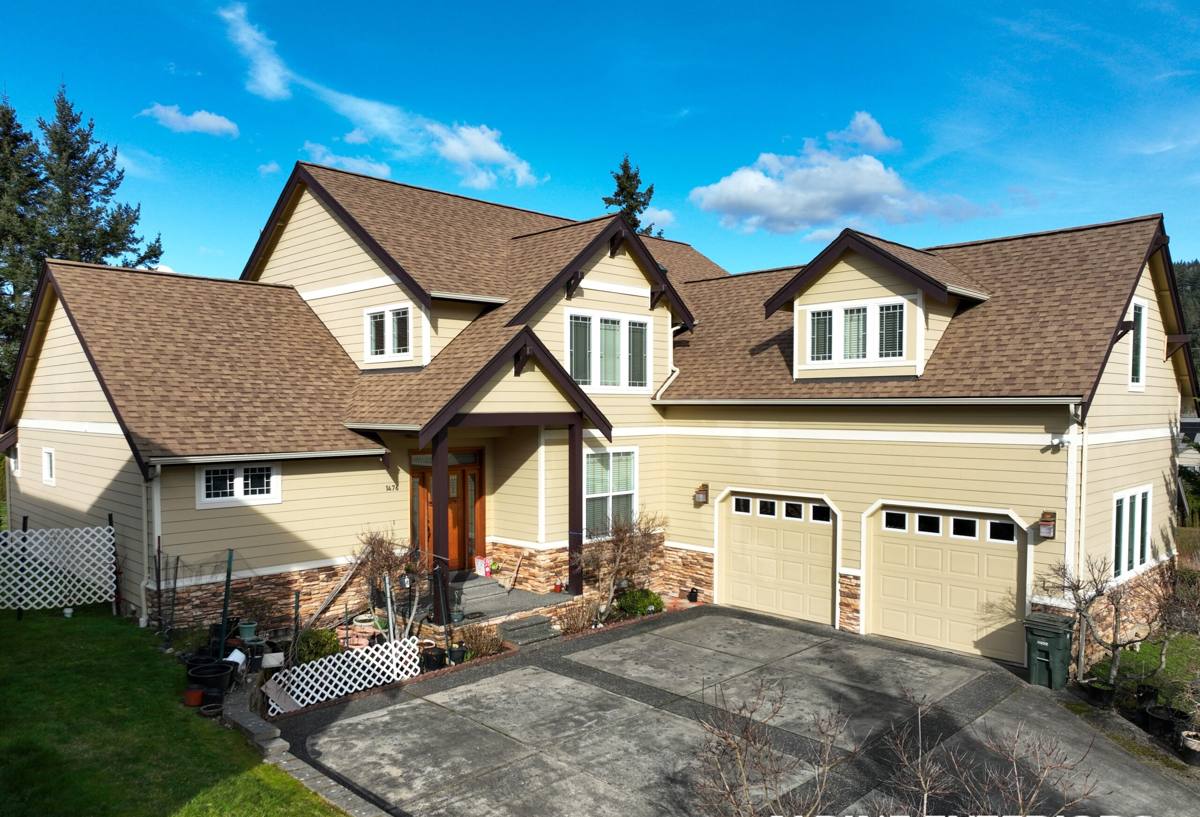
Signs a Birchwood Home Needs a New Roof, Not Another Repair
Age and Material Condition
If your roof is original to the house and the house is pushing twenty years old, patch repairs start becoming a temporary fix on a system that's failing as a whole. Shingles lose their granule coating and flexibility over time, and once that happens broadly across the roof, sealing one leak just means the next one shows up a few feet away next winter.
Visible Warning Signs
- Granules collecting in gutters or at downspout outlets
- Shingles that are curling, cupping, or cracking at the edges
- Thick moss mats, especially on north-facing slopes, holding moisture against the shingle surface
- Wear concentrated in valleys, where water volume and debris are heaviest
- Flashing around chimneys, skylights, or vent pipes that's visibly lifted or rusted
Interior and Attic Clues
Ceiling stains, a musty smell in the attic, or visible daylight through the roof deck are signs the problem has already moved past the shingles into the structure underneath. At that point, a roof-only repair won't solve it — the deck and possibly the framing need attention as part of the new roof installation.
What a Correctly Installed New Roof Actually Includes
Full Tear-Off and Deck Inspection
We don't install over an existing layer of shingles. A full tear-off lets us see the actual roof deck, which matters a lot in a climate where trapped moisture under old roofing is common. Soft or delaminated plywood, usually found at eaves and valleys where moss and debris have held water longest, gets replaced before anything new goes down.
Underlayment Built for Wet Weather
A synthetic underlayment goes down first as the roof's real waterproofing layer — shingles are the visible surface, but the underlayment is what actually keeps water out if wind drives rain up under a shingle edge. In valleys, around penetrations, and along eaves, we add a self-adhering ice-and-water barrier, which handles the standing water and wind-driven rain that a standard underlayment alone isn't built for.
Balanced Ventilation
Intake vents at the eaves and exhaust at the ridge keep air moving through the attic space. Without that balance, moisture builds up underneath the deck, which shortens the life of the roof from below and feeds the exact conditions moss and algae need to establish themselves from above.
Flashing Details That Actually Get Attention
Most roof leaks trace back to flashing, not the field shingles. Step flashing along walls, counterflashing at chimneys, and kickout flashing where a roof edge meets a wall are small metal details that are easy to rush and expensive to get wrong. We treat these as the part of the job that determines whether the roof is dry in ten years, not an afterthought.
Choosing a Roofing Material for Birchwood's Climate
There's no single "best" material for every home — it depends on your roof's pitch, tree cover, budget, and how much long-term maintenance you want to take on. Here's how the common options actually compare under local conditions:
| Material | Moss & Algae Resistance | Wind / Rain Performance | Typical Lifespan Here | Maintenance |
|---|---|---|---|---|
| Architectural asphalt shingle | Moderate; better with algae-resistant granules | Good when properly fastened and flashed | 18–25 years | Periodic moss removal, gutter care |
| Standing seam metal | High; sheds moss and needles more easily | Excellent; handles driving rain and wind well | 40+ years | Low; occasional fastener/seam checks |
| Synthetic shake / composite | Moderate to high depending on product | Good; check manufacturer wind rating | 30–40 years | Low to moderate |
Our standard for cedar shake specifically is to steer most clients away from it in this climate — not because it can't look good, but because untreated wood shake in a persistently damp, moss-prone environment carries a higher maintenance burden and shorter practical service life than the alternatives above, and we'd rather be upfront about that trade-off than sell a product we know will need more attention than most homeowners want to give it.
How Our Installation Process Works
- On-site inspection of the current roof, attic, and ventilation, with a written estimate — no pressure, no same-day-signature tactics
- Material selection based on your roof's pitch, tree exposure, and budget, plus permit filing where required
- Property protection — tarps over landscaping, driveway protection, and a plan for debris containment before tear-off starts
- Full tear-off and deck inspection, with any rot or damage repaired before new material goes down
- Installation of underlayment, ice-and-water barrier, flashing, ventilation components, and the finish roofing material
- Final inspection, full site cleanup, and a magnetic sweep for stray nails
- Walkthrough with the homeowner and delivery of warranty paperwork
Managing Moss and Algae for the Long Haul
What Gets Built In During Installation
Zinc or copper strips installed near the ridge release trace metal ions with every rain, which slows moss and algae growth on the slopes below. Proper ventilation reduces the trapped moisture that moss thrives on, and where the roof design allows it, minimizing unnecessary valleys reduces the spots where needles and debris collect and hold water.
What Homeowners Can Do Between Inspections
Keeping gutters clear so water isn't backing up under the shingle edge, trimming back branches that shade and drip onto the roof, and using a soft wash rather than a pressure washer when moss does need to be cleared all extend the life of a new roof without damaging the shingle surface.
What Drives the Cost of a New Roof in Birchwood
Every roof is priced based on its own specifics, but these are the factors that move the number most:
| Factor | Why It Matters |
|---|---|
| Roof size and pitch | More surface area and steeper slopes both increase material and labor time |
| Number of existing layers | Tearing off two layers of old shingles takes longer than one |
| Deck condition | Rot found during tear-off means plywood replacement before installation continues |
| Material choice | Metal and composite products cost more upfront than asphalt but need less long-term maintenance |
| Roof complexity | Valleys, dormers, skylights, and chimneys all add flashing work and labor time |
| Ventilation upgrades | Adding intake or exhaust vents where the current system is inadequate adds a modest cost that pays off in roof longevity |
We'll give you an honest, itemized estimate after seeing the roof in person — broad online price ranges rarely account for what's actually going on under your specific shingles.
Why Hire a Crew That Already Works in Birchwood
A contractor who works this neighborhood regularly already understands the local permit process through the City of Bellingham and Whatcom County, knows the wind and snow load requirements that apply here, and has seen firsthand how tree cover and moisture patterns in this specific area affect roof performance. That local knowledge shows up in small decisions — where to add extra ice-and-water barrier, how much ventilation a shaded roof actually needs — that a crew passing through for one job is less likely to get right the first time. It also means we're still around and reachable if a warranty question comes up two winters from now, not a phone number that stopped working after the storm season that brought them to town.
Questions to Ask Before You Sign a Roofing Contract
- Are you licensed and bonded to work in Washington State, and can you provide proof?
- Can I see your current general liability and workers' compensation insurance certificates?
- Is the scope of work, material brand, and warranty term all in writing before I sign anything?
- Who pulls the permit, and is that cost included in the estimate?
- What happens if you find deck damage once tear-off starts — is that a separate cost conversation, or a surprise on the final invoice?
- Do you have references from work done in this area, not just photos from out of state?
If you're weighing a repair against a full new roof installation for a home in Birchwood, we're glad to take a look and give you a straight answer either way. Reach out for a free, no-pressure estimate using the form below.