 Bellingham Siding
 Deck Repair in Sehome: Built for Bellingham's Weather, Not Just Any Weather
Sehome sits close to Bellingham Bay and up against the tree cover of Sehome Hill, which means decks here take on a specific mix of punishment: salt-tinged air drifting off the bay, driving rain that comes in sideways off Whatcom County's winter storms, and long stretches of shade that keep wood damp for days after the rain stops. A deck built or repaired without that combination in mind will show it within a few seasons — soft spots near the house, blackened boards, railings that wiggle more than they used to. We repair decks in Sehome regularly enough to know which failures are climate-driven and which are just age, and we fix accordingly instead of guessing.
Why Shade and Moisture Matter More Here
A deck in full sun dries out within an hour or two of a rain shower. A deck tucked under trees or on the north side of a Sehome home can stay damp for a day or more, especially through the fall and winter when Bellingham gets long stretches of overcast, drizzly weather. That extended dampness is what feeds moss, softens wood fiber, and lets rot get started in places a homeowner never thinks to check — the underside of boards, the top of framing members, anywhere two pieces of wood sit tight against each other and trap water.
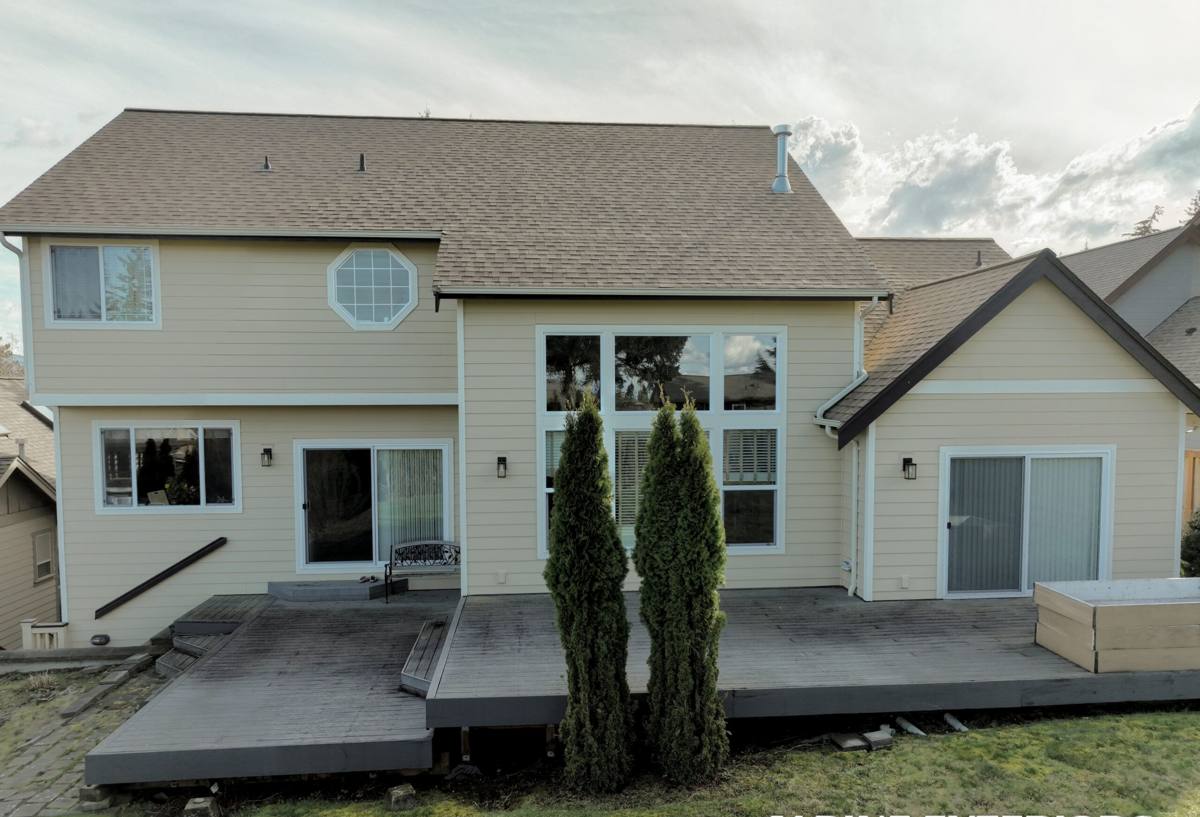
Signs Your Sehome Deck Needs Repair
Most deck problems don't announce themselves loudly. They show up as small, easy-to-dismiss details that add up to a real structural issue. Walk your deck and look for these:
- Boards that feel spongy, springy, or noticeably softer underfoot than the rest of the deck
- Green or black staining that comes back within weeks of cleaning it off
- Railings or guard posts that move when you push on them — even slightly
- Gaps opening up between the house and the deck's ledger board
- Rust streaks running down from screws, nails, or joist hangers
- Stairs that feel less solid than they used to, especially near the bottom stringer
- Standing water that takes more than a few hours to dry after rain
- Visible daylight or soft wood where support posts meet concrete footings
Any one of these on its own might be minor. Two or three together, especially near the ledger board or a support post, usually means the damage has moved past the surface and into the structure.
Common Deck Problems We Find in Sehome Homes
Ledger Board and Rim Joist Rot
The ledger board — the piece that bolts the deck to the house — is the single most important structural connection on most decks, and it's also the piece most exposed to water running off the house wall. When flashing is missing, undersized, or was never installed correctly to begin with, water sheets down behind the ledger every time it rains. Given Bellingham's rain totals, that's a lot of exposure over a few years. This is the repair we take most seriously, because a failed ledger connection is a safety issue, not just a cosmetic one.
Post Base and Footing Deterioration
Where a wood support post meets its concrete footing is another spot that holds moisture — water splashes up, gets trapped against the post base, and never fully dries in a shaded yard. We regularly find posts that look fine from a few feet away but are soft or hollow at the base.
Cupping, Splitting, and Fastener Failure in Decking Boards
Individual boards absorb moisture unevenly, which causes cupping (the edges curl up) and eventually splitting. Older nailed decking is especially prone to popping loose as the wood swells and shrinks through Whatcom County's wet-dry cycles. We also see a lot of corroded fasteners on decks that used the wrong hardware grade for our climate — steel that isn't rated for exterior, wet-use conditions rusts through faster than most homeowners expect.
Loose Railings and Guard Posts
Railing posts take a lot of leverage — a person leaning on a railing puts real force on that connection — and if the post base has any rot or the fasteners have corroded, it loosens over time. This is one of the most common safety-related repairs we do, and one of the easiest to miss until someone actually leans on it.
What a Correct Deck Repair Actually Involves
A repair that just replaces the board you can see and ignores what's underneath tends to fail again within a season or two. We approach it in a specific order.
Structural Inspection First
Before we touch anything, we check the ledger connection and flashing, probe posts and framing for soft spots, and look at the footings. This tells us whether we're dealing with a surface repair or something that needs framing work.
Moisture and Rot Mapping
We identify exactly how far rot has spread — wood rot rarely stays contained to the spot where it's visible, so we probe surrounding material to find the real boundary before cutting anything out.
Code-Correct Framing and Flashing
Any ledger, joist, or post work gets tied back together with proper joist hangers and structural fasteners rather than toe-nailing, and ledger flashing gets redone to current standards, not just patched. This is where a lot of older Sehome decks were under-built to begin with, and it's the part of the repair that actually prevents the same failure from coming back.
Matching Materials Where It Matters
For a full board or section replacement, we match species, dimension, and finish as closely as possible so the repair doesn't stand out as a patch. Where an exact match isn't practical, we'll say so upfront rather than surprise you at the end.
Repair vs. Replacement: What Actually Drives the Cost
Homeowners often assume any deck trouble means a full rebuild. Often it doesn't. The table below covers the factors that actually determine which way a project goes.
| Factor | Favors Repair | Favors Replacement |
|---|---|---|
| Ledger board condition | Solid, properly flashed | Rotted or improperly flashed |
| Extent of rot | Isolated to a few boards or one post | Spread through multiple framing members |
| Footings | Solid, code-depth, no movement | Undersized, cracked, or heaving |
| Deck age | Under 12-15 years, decent build quality | Original construction was already substandard |
| Railing system | Loose posts, sound framing beneath | Guard posts rotted at the base |
| Overall structure | Framing layout still meets current spacing | Joist spacing or beam sizing under current code minimums |
We'll always tell you honestly which side of that line your deck falls on. A repair that's really a stopgap on a failing structure isn't a good use of your money, and we're not going to sell you one.
Our Repair Process
- On-site assessment — we inspect the full deck, not just the area you called about, since related problems often hide nearby
- Written scope and estimate — what's being repaired, what materials we're using, and what it costs, with no vague allowances
- Demo of affected areas only — we remove what needs replacing, not more than necessary
- Framing and flashing correction — structural fixes get done to current code, even if that wasn't how it was originally built
- Rebuild and finish — new boards, hardware, and railing components installed and fastened correctly
- Walkthrough — we go over what we did and what to watch for going forward
Materials and Fasteners We Use
For repairs, we lean toward stainless or hot-dip galvanized fasteners rated for exterior, wet-use applications rather than standard coated screws — the small upcharge is worth it given how much moisture a Sehome deck deals with over a year. For decking material, we'll talk through pressure-treated lumber, cedar, and composite options honestly: treated lumber is the most economical and easy to repair piecemeal later, cedar looks great but needs more maintenance attention in a shaded, damp yard, and composite costs more upfront but handles our climate's moisture cycles with less upkeep. None of these is universally "right" — it depends on your budget, how much maintenance you want to do, and how the rest of the deck is built. We'll give you our honest read rather than pushing whatever's easiest for us to install.
Why a Crew That Already Works in Sehome Makes a Difference
Sehome's mix of hillside lots, mature tree cover, and older housing stock means decks here have a fairly consistent set of failure patterns — we've seen the same ledger flashing shortcuts and undersized post footings on enough Sehome homes to know where to look first instead of starting from scratch on every job. We're also familiar with the City of Bellingham's permitting requirements for structural deck work, which matters more than people expect: a repair that touches framing or footings can trigger permit requirements, and getting that wrong can cause problems when you go to sell the house. Working locally in Whatcom County also means we're not driving in from out of the area and guessing at what our wet-side weather does to a deck over a decade — we see the results of it every week.
Keeping Your Deck in Good Shape After Repair
A repaired deck still needs some seasonal attention, especially given how long moss season runs here.
- Sweep off leaves and debris regularly in fall — trapped organic matter holds moisture against the boards
- Treat or remove moss before it gets established, rather than after it's spread across several boards
- Check railing posts for movement once or twice a year
- Reseal or re-stain wood decking on the schedule your specific product calls for — shaded areas often need it more often than sunny ones
- Keep gutters and downspouts near the deck clear so runoff isn't dumping extra water onto or under it
If you're noticing soft spots, a shaky railing, or moss that keeps coming back no matter what you do, it's worth having someone look at it before it turns into a bigger structural repair. We offer free, no-pressure estimates for deck repair work in Sehome and the surrounding Bellingham area — use the form below and we'll take a look.