 Bellingham Siding
 Windows Built for the Silver Beach Microclimate
Silver Beach sits along the southwest shore of Lake Whatcom, and that location shapes almost everything about how windows perform there. Mature tree cover keeps many lots shaded most of the year, the lake itself adds humidity and morning fog that lingers longer than it does a few miles inland, and the broader Whatcom County climate brings long stretches of driving rain off the Sound along with a moss season that can run from fall through spring. None of that is a problem for a well-built, correctly installed window. It becomes a problem fast for a window that was installed with shortcuts, or for original openings that are decades old and were never sealed to modern standards.
We work on homes in this neighborhood regularly, and the patterns repeat: fogged double panes on the shaded, north-facing side of a house, soft wood at the bottom corners of older wood sills, and moss creeping into frame joints where water sits instead of draining. A custom windows project here isn't just about picking a style you like. It's about matching the product and the installation detail to a lot that stays wetter and shadier longer than most of the rest of Bellingham.
A Mix of Older Cottages and Newer Builds
Part of what makes this neighborhood interesting to work in is the mix of housing stock. Some homes started as simple lake cottages and have been added onto and winterized over the years, which often means original openings that don't match any current standard size. Others are newer, full-time residences built to current codes. Both situations call for custom measuring rather than assuming a stock size will drop in — and on the older cottages, we're frequently working around framing that has shifted slightly over the decades, which changes how a replacement window needs to be shimmed, squared, and flashed.
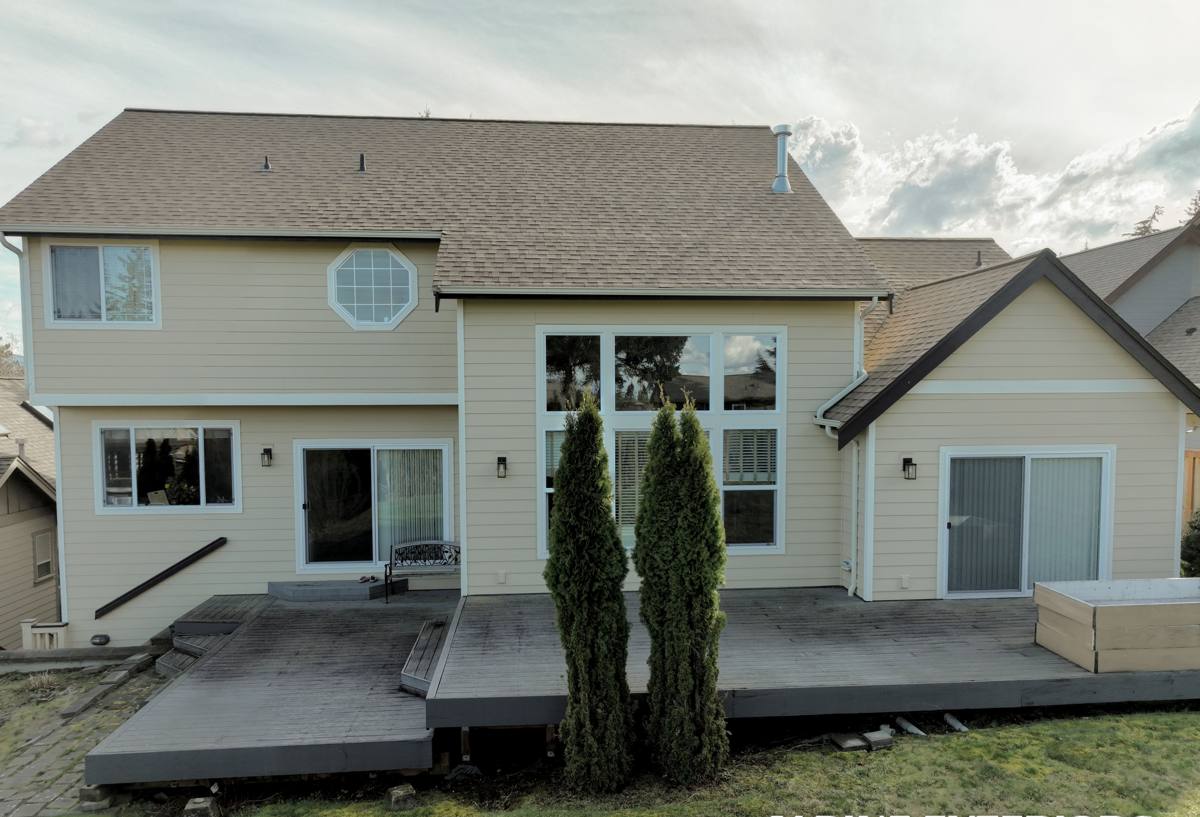
Signs Your Windows Are Losing the Battle
Homeowners in Silver Beach usually notice a problem before they can name it — a room that feels drafty even with the heat running, or a window that's suddenly hard to slide. Here's what we tell people to actually check for:
- Condensation or fogging between the panes of a double- or triple-pane window (a sign the seal has failed, not something you can fix without replacing the glass unit)
- Soft, spongy, or discolored wood at the bottom corners of sills and frames
- Visible moss or dark algae staining building up in frame joints or on the exterior casing
- Noticeable draft or a cold spot near the window even when it's fully latched
- Windows that have become difficult to open, close, or lock — often a sign the frame has swelled or shifted
- Paint or finish that's peeling or bubbling right at the window perimeter, which usually points to moisture getting behind the trim
- Visible daylight or gaps around the frame from the exterior
Any one of these on its own might just need minor maintenance. Several of them together, especially on the shaded or lake-facing side of a house, usually means it's time to talk about replacement rather than repair.
What "Custom" Actually Means Here
"Custom windows" gets used loosely in this industry, so it's worth being specific. For Silver Beach, custom usually means one of a few things: an odd or non-standard opening size from an older addition, a home where you want a matched look across mismatched original windows, or a lake-facing wall where sightlines and glass placement matter more than they would on a standard suburban elevation. In every case, the window is built or ordered to the actual opening and the actual performance needs of that wall — not fit to the opening after the fact.
Window Styles That Hold Up to Driving Rain
Style choice affects weather performance more than most homeowners expect. Casement windows, which crank outward and seal against the frame with compression, generally resist wind-driven rain better than sliding styles, because the sash presses into the weatherstripping rather than just sitting against it. Double-hung windows are a good fit for matching a traditional look on older cottages, and modern versions perform well when installed correctly, but they rely on the sash weight and balance mechanism staying properly aligned over time. Large fixed picture windows, popular for lake views, have no moving parts to fail but need especially careful flashing since there's more glass and frame perimeter exposed to weather in one spot. We help homeowners weigh the view they want against the exposure that wall actually gets.
Frame Material Comparison for a Wet, Shaded Lot
Material choice matters more here than it would on a dry, sun-exposed lot elsewhere in the county. The table below reflects how the common options generally hold up under Silver Beach conditions specifically — persistent shade, humidity, and moss exposure.
| Material | Moisture Behavior | Maintenance in Shade/Moss Conditions | Relative Cost Tier |
|---|---|---|---|
| Vinyl | Doesn't rot or absorb water; seams and welds are the main long-term concern | Low — occasional cleaning to keep grime and mildew film off the frame | Budget-friendly |
| Fiberglass | Very stable in moisture and temperature swings; minimal expansion/contraction | Low — holds paint or finish well if you want a custom color | Mid to upper-mid |
| Wood (unclad) | Attractive but vulnerable to rot without diligent upkeep, especially in constant shade | High — repainting/resealing on a regular cycle is non-negotiable here | Mid to premium |
| Wood-clad (wood interior, aluminum or vinyl exterior) | Good — exterior cladding shields the wood from direct weather | Moderate — still needs interior wood maintained, exterior is low-fuss | Premium |
There's no single "right" answer in this table — it depends on the look you want, the specific exposure of the wall in question, and how much upkeep you're realistically willing to do. A shaded, north-facing lake side is a poor spot for unclad wood no matter how much you like the appearance; a covered porch on the same house might handle it fine.
Our Installation Process
Most window failures we see aren't a bad product — they're a flashing and sealing detail that was skipped or done wrong the first time. In a climate with this much driving rain, the installation detail matters as much as the window itself.
- On-site assessment and measurement. We check the existing framing, sill condition, and any signs of past water intrusion before we ever order a window.
- Removal and opening inspection. Once the old window is out, we can see the framing and sheathing directly — this is when hidden rot or past improper sealing usually shows up, and it needs to be addressed before the new window goes in.
- Sill pan and flashing installation. This is the step that matters most in our climate: a properly sloped sill pan and correctly layered flashing tape direct any water that gets past the window back outside the wall, instead of letting it sit against the framing.
- Setting, shimming, and squaring the window. A window that isn't square won't seal or operate correctly no matter how good it is.
- Insulating and sealing the perimeter. Gaps get properly insulated, not just caulked over, to control both drafts and condensation.
- Exterior trim, caulking, and finish work. The final seal against wind-driven rain, done to shed water rather than trap it.
- Site cleanup and walkthrough. We test operation and go over care with you before we consider the job done.
Why the Flashing Detail Matters More Here
A missed or shortcut flashing step can look fine for a year or two before hidden rot shows up in the framing — by which point it's a much bigger repair than a window replacement. On a lake-adjacent lot with more ambient moisture and shade, that timeline can move even faster. This is the single most important thing to get right, and it's also the easiest thing for a homeowner to never see, since it's buried behind the trim.
Living With Moss Season
Moss doesn't damage window glass, but it does damage the frame and trim around it if it's left to establish, because it holds moisture against the surface far longer than open air would. A few habits go a long way: keep nearby branches trimmed back from the wall so airflow and sunlight can reach the window, rinse visible moss or algae off frames and sills before it gets a foothold in the joints, and check that exterior caulking lines are intact each fall before the wet season sets in. If you already have moss growing into a frame joint, that's usually a sign water is draining somewhere it shouldn't be, and it's worth having someone look at the flashing, not just cleaning the surface.
Energy Performance and Comfort
Beyond weather resistance, glass package matters for comfort in a house that's shaded most of the day. Low-E coatings help manage heat loss through the glass in our cooler, wetter months, and the right glass package also affects condensation resistance on the interior pane — a common complaint in humid, shaded rooms during winter. We talk through glass options based on which direction a room faces and how the house is used, rather than defaulting to one package for the whole house.
Why a Locally Familiar Crew Makes a Difference
Silver Beach has its own quirks: narrow access on some lake-side lots, older framing on cottage-era homes, and a moisture and shade profile that's different from a sunny lot a few miles away in town. A crew that already works this neighborhood knows to check for those things without being told, knows what typical framing conditions look like once a window comes out, and can plan around tighter site access without it turning into a change order. We also stay current on what Bellingham and Whatcom County require for permitting on window projects, which can depend on whether you're doing a like-for-like replacement or changing the size or structure of an opening.
If you're dealing with a drafty window, visible moss or moisture damage, or you're just planning ahead before next winter's rain sets in, we're happy to come take a look. Estimates are free and there's no pressure — fill out the form below and we'll set up a time to walk the property with you.