 Bellingham Siding
 Why Sudden Valley Roofs Wear Differently Than Roofs Elsewhere
Sudden Valley sits in a pocket of Whatcom County where dense evergreen canopy, lake-influenced moisture, and the broader marine climate of the Pacific Northwest all combine on the same roof at the same time. That's a different load than a roof faces in a drier inland town. Needles and organic debris collect in valleys and behind chimneys, shade keeps sections of the roof damp for days after a storm, and the long, wet fall-through-spring stretch gives moss and moss-related decay a real head start if the roof deck, underlayment, and shingle choice weren't built to handle it.
Add in the driving rain that comes off Pacific storm systems and the salt-laden marine air that moves through this part of Whatcom County, and you've got a combination that ages fasteners, flashing, and lower-grade shingles faster than a spec sheet ever suggests. None of that means a roof in this neighborhood needs to be exotic or overbuilt — it means the details that get skipped on a rush job (proper ventilation, correct underlayment, tight valley and flashing work) matter more here than they would somewhere drier.
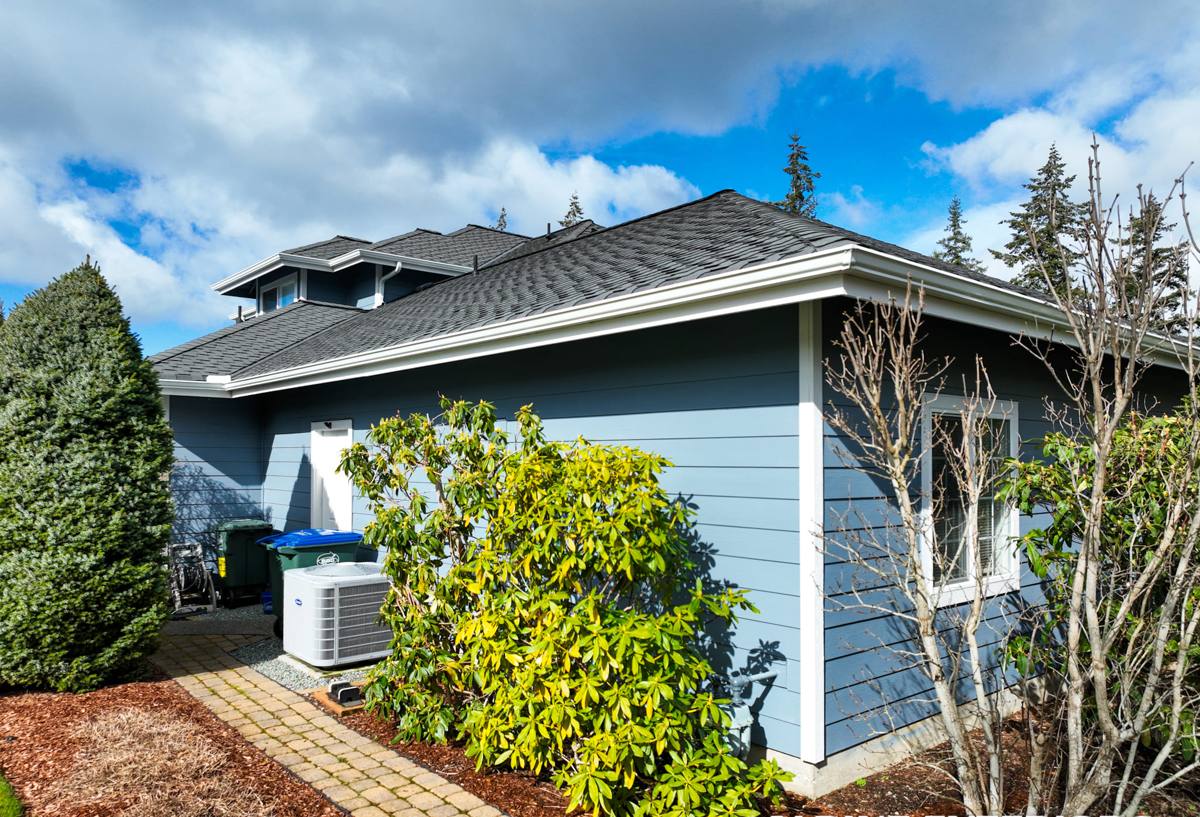
Signs a Sudden Valley Roof Needs Replacement, Not Another Repair
Most homeowners call us after a repair, not before one. That's normal — but it's worth knowing when patching stops making sense and full replacement becomes the honest recommendation.
- Granule loss heavy enough that you can see bare shingle mat, especially on south- and west-facing slopes
- Moss established in mats rather than a light surface film — once it's rooted under shingle tabs, cleaning it off doesn't undo the damage already done
- Soft or spongy spots underfoot during a walk-inspection, which usually means the deck itself has taken on moisture
- Daylight visible through the roof deck from inside the attic, or staining on attic insulation
- Shingles curling, cupping, or losing their seal along multiple courses rather than in one isolated area
- Roof age past 20–25 years for standard asphalt composition, regardless of how it looks from the ground
If only one or two of these apply and they're isolated, a repair is often the right call and we'll say so. Replacement makes sense when the damage is spread across the field of the roof or the underlying deck and underlayment are compromised — patching a system that's already failing underneath just delays the same conversation.
What a Correct New Roof Installation Actually Involves
A roof replacement is more than pulling off old shingles and nailing down new ones. In a climate like this one, the layers underneath the visible shingle do most of the real work.
Tear-off and deck inspection
We remove the existing roofing down to the deck rather than layering over it. That's the only way to actually see the plywood or OSB underneath, check for soft spots or delamination from long-term moisture intrusion, and replace only the sections that need it — not the whole deck, and not none of it.
Underlayment built for wet climates
Synthetic underlayment with a full self-adhered ice-and-water barrier at eaves, valleys, and around every penetration gives the deck a second line of defense when wind-driven rain gets under a shingle tab, which happens here more than in drier regions.
Flashing done right, not reused
Flashing around chimneys, skylights, dormers, and wall intersections is one of the most common sources of leaks on older roofs, and it's routinely reused during cheaper replacements to save time. We install new flashing at every one of these transitions.
Ventilation that matches the roof
Balanced intake and exhaust ventilation keeps attic moisture from condensing on the underside of the deck — a slow, invisible failure mode that shows up as premature shingle failure and deck rot years before anyone notices a leak.
Choosing the Right Roofing Material for This Neighborhood
There isn't one "correct" material for every home in Sudden Valley — it depends on tree cover, roof pitch, sun exposure, and budget. Here's how the common options actually compare for a shaded, moisture-heavy lot like the ones common in this area.
| Material | Moss/moisture resistance | Typical lifespan | Trade-offs |
|---|---|---|---|
| Standard asphalt composition shingle | Moderate — needs clean gutters and periodic moss treatment | 20–25 years | Lowest upfront cost; most sensitive to shaded, damp roof sections |
| Algae/moss-resistant (copper-granule) shingle | Good — granules actively discourage regrowth | 25–30 years | Modest cost premium over standard composition; our default recommendation for heavily shaded lots |
| Standing-seam metal | Excellent — smooth surface sheds debris and resists moss almost entirely | 40–50+ years | Higher upfront cost; requires an experienced installer, which limits who can do it well |
| Cedar shake | Poor without diligent, ongoing maintenance | Varies widely with upkeep | We don't install this as a matter of professional standard in this climate — moisture retention and moss susceptibility create an ongoing maintenance burden most owners underestimate |
That last row deserves a plain explanation rather than a dismissal. Cedar shake isn't a bad-quality product — it's a maintenance-intensive one, and in a shaded, wet microclimate like parts of Sudden Valley, that maintenance burden compounds fast. We'd rather steer a homeowner toward a material that matches how they actually want to spend their weekends than sell a product we know will need constant attention.
Our Installation Process, Step by Step
- On-site inspection and honest scope. We walk the roof, check the attic, and tell you plainly whether you need a repair or a replacement — and why.
- Written estimate with material options. You'll see the cost difference between standard, moss-resistant, and metal options before deciding, not after.
- Permit and scheduling. We handle the permit paperwork through the appropriate jurisdiction and build a weather-aware schedule, since this region's rain windows matter for tear-off timing.
- Tear-off and deck repair. Old roofing comes off completely; any compromised decking is replaced and documented before we move forward.
- Underlayment and flashing installation. Ice-and-water barrier, synthetic underlayment, and new flashing go in at every valley, penetration, and transition.
- Shingle or panel installation. Installed to manufacturer specification — nailing pattern, exposure, and fastener count matter more to long-term wind and rain performance than they get credit for.
- Ventilation check and cleanup. We confirm intake and exhaust venting are balanced, then do a full site and gutter cleanup before we consider the job finished.
- Final walkthrough. We go over the finished roof with you, not just hand you an invoice.
What Drives the Cost of a New Roof
Every roof is priced individually, but the factors that move the number the most are consistent. We'd rather explain these upfront than let a quote feel like a mystery.
| Factor | Why it matters |
|---|---|
| Roof size and number of planes | More squares and more valleys/hips mean more material and more labor-intensive flashing work |
| Pitch and access | Steep roofs and limited access (trees, tight lot lines) slow the job and increase safety setup time |
| Deck condition | Rot or soft decking found during tear-off adds material and labor that couldn't be quoted from the ground |
| Material choice | Standard composition, moss-resistant shingle, and metal carry meaningfully different material costs |
| Layers to remove | A single-layer tear-off costs less than removing two or three layers of old roofing |
We don't finalize pricing on assumptions about deck condition — that's confirmed once tear-off is underway, and we communicate before proceeding if we find something that changes scope.
Ventilation and Moss Prevention Aren't Optional Extras
A lot of roofing quotes treat attic ventilation and moss prevention as upsells. In a climate that stays damp for a good part of the year, we treat them as part of a correctly installed roof, not add-ons. Poor ventilation traps humid air against the underside of the deck, which accelerates rot and voids shingle warranties faster than sun exposure ever would. And a roof with no moss-resistant strategy — whether that's copper-granule shingle, zinc strips at the ridge, or simply a maintenance plan for a heavily shaded roof — will need moss remediation again within a few years, regardless of how good the shingle brand is.
Working Within Community Design Standards
Many planned communities carry design guidelines covering roof color, material, and sometimes approval processes before work begins. If Sudden Valley's association has requirements like this for your home, we'll work with whatever documentation or approval process is in place — homeowners should check their own community's current covenants and confirm with their HOA before committing to a material, since these requirements can change and we don't want to guess on your behalf.
Why Hiring a Crew That Already Works This Neighborhood Matters
Roofing a house in a shaded, moisture-heavy lot near Lake Whatcom isn't the same job as roofing a house on an open, sun-exposed lot ten minutes away. A crew that's done both knows which slopes on a given orientation will need extra attention to moss and moisture, how tree cover affects debris buildup and gutter sizing, and how to sequence a tear-off around this region's rain patterns instead of getting caught mid-job by a system rolling in off the coast. That local pattern recognition doesn't show up on a bid sheet, but it shows up in how long the roof actually lasts.
We're based in Bellingham and work throughout Whatcom County, including Sudden Valley, and we stand behind our installations with manufacturer-backed material warranties plus our own workmanship guarantee — details we'll walk through specifically for your roof and material choice during the estimate.
Ready to Talk About Your Roof?
If your roof is showing its age, has a moss problem you're tired of managing, or you just want a straight answer on repair versus replacement, we're happy to take a look. Use the form below to request a free, no-pressure estimate — we'll inspect the roof, explain what we find in plain terms, and give you options that fit your home and your budget.