 Bellingham Siding
 Roofing for York's Particular Mix of Weather
York sits close enough to Bellingham Bay and the surrounding waterways that homes here deal with a combination most inland roofing crews rarely think about: salt-laden air moving in off the water, long stretches of driving rain through fall and winter, and a moss season that can run eight months or more in a shaded, tree-lined neighborhood like this one. None of those factors alone will destroy a roof quickly. Together, over years, they wear down fasteners, granules, and flashing faster than a manufacturer's warranty chart ever accounts for. An asphalt shingle roof installed with generic assumptions about "Pacific Northwest weather" often underperforms here specifically because York's microclimate is a notch more aggressive than roofs a few miles inland.
This page is about one job, done right, in this one part of Bellingham: asphalt shingle roofing for York homes. Not a general overview of shingle roofing everywhere — what actually matters for a roof that has to survive salt air, sideways rain, and months of shade-grown moss without turning into a maintenance headache.
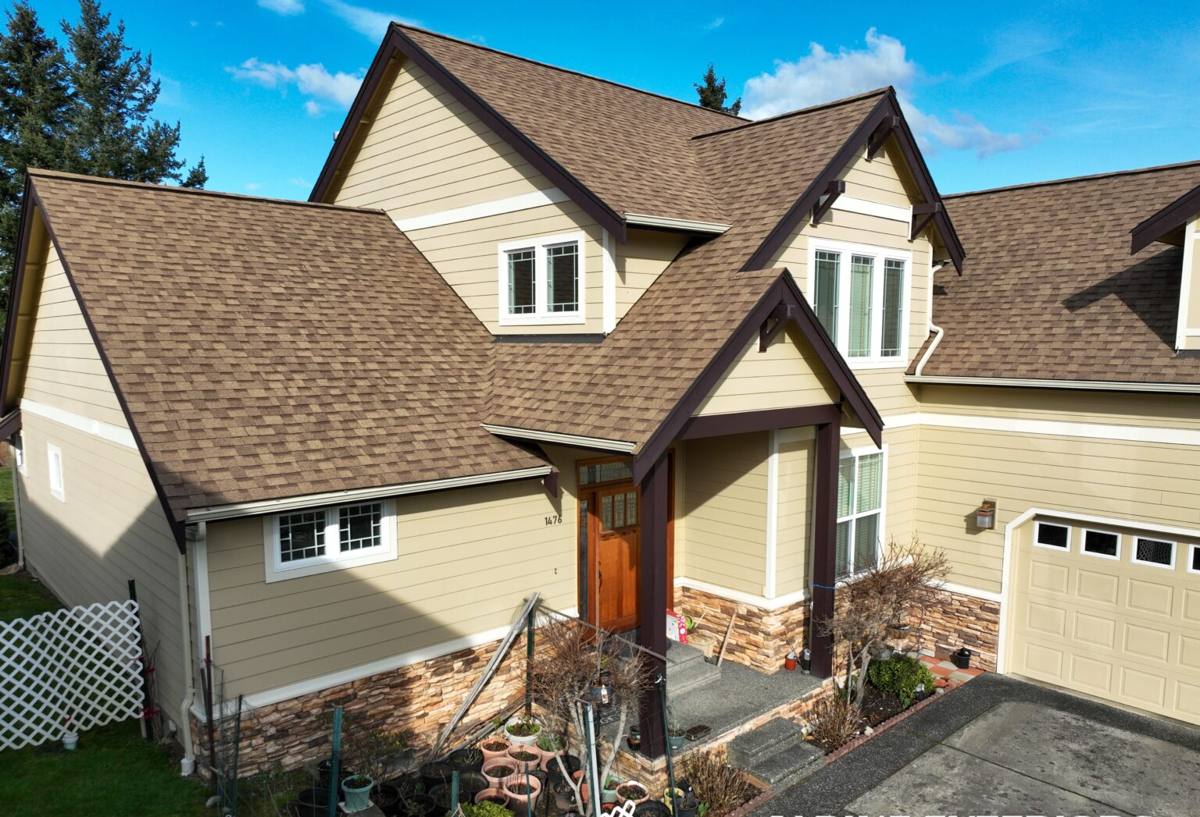
What Salt Air, Rain, and Moss Actually Do to a Shingle Roof
Salt Air and Metal Components
Asphalt shingles themselves tolerate salt air reasonably well, but the metal parts of a roofing system don't get the same pass. Nail heads, drip edge, step flashing, and vent housings are all vulnerable to accelerated corrosion when they're regularly exposed to salt-carrying moisture. Once a fastener starts to corrode, it loses holding strength — and a shingle that isn't held down properly is a shingle that's one windstorm away from lifting or tearing.
Driving Rain and Wind-Driven Water
Bellingham's rain rarely falls straight down. Storms off the Strait push rain sideways, which means water gets tested against every seam, lap, and penetration on a roof — not just the open field of shingles. Roofs that look fine from the ground can still be taking on water at valleys, chimney flashing, or vent boots if those details weren't installed with wind-driven rain specifically in mind.
Moss, Algae, and the Shade Factor
York's tree cover is part of what makes the neighborhood pleasant to live in, but shade plus moisture is exactly what moss and algae need to take hold. Moss doesn't just look bad — it holds water against the shingle surface, works its way under tabs as it grows, and can lift shingles enough to let water underneath. Left unaddressed for a few seasons, moss growth shortens the usable life of an otherwise sound roof by years.
Signs a York Roof Needs Attention
Most roofing problems don't announce themselves with a leak on day one — by the time water is visibly coming through the ceiling, the underlying damage has usually been building for a while. Here's what we tell York homeowners to watch for between inspections:
- Moss or thick algae streaking on north-facing or shaded slopes
- Granules collecting in gutters or at downspout outlets
- Shingle edges that look curled, cupped, or lifted, especially after windy weather
- Dark or discolored patches on interior ceilings, particularly near chimneys or skylights
- Visible rust staining around metal flashing or vent pipes
- Daylight visible through the roof deck from inside the attic
- Soft or spongy spots when walking the roof during an inspection
Any one of these on its own might not be urgent. Two or more together, especially on a roof that's more than 12-15 years old, usually means it's time for a closer look before the next big storm system moves through.
What a Correct Asphalt Shingle Installation Involves
Tear-Off vs. Overlay
Installing a new layer of shingles over an existing roof is sometimes allowed by code and can save money up front, but in a climate like Whatcom County's, it's rarely the right call. Overlays trap moisture between layers, hide the condition of the deck underneath, and make it impossible to install a continuous ice-and-water barrier where it matters most. On a York re-roof, we default to a full tear-off so the deck can actually be inspected and any soft or water-damaged sheathing gets replaced rather than covered up.
Underlayment and Water Barrier Placement
Given how much of the year Bellingham spends under rain, underlayment choice and placement matter as much as the shingle brand. Self-adhered ice-and-water barrier belongs at eaves, valleys, and around every penetration — the places wind-driven rain is most likely to find a way in — with synthetic underlayment across the rest of the field. Skipping this or using minimum-code coverage is one of the most common shortcuts that leads to slow, hidden leaks years later.
Ventilation
A shingle roof's lifespan depends heavily on what's happening underneath it. Without adequate intake and exhaust ventilation, attics trap moisture, which speeds up deck rot and can void shingle warranties outright. On older York homes we often find ventilation that was adequate when the house was built but never updated through later re-roofs — we check this on every job, not just when a roof is already showing damage.
Flashing Details
Flashing failures cause more leaks than worn-out shingle fields do. Step flashing at walls and chimneys, valley metal, and vent boot flashing all need to be installed — or replaced — as part of a proper re-roof, not reused from the old roof to save time. Given the corrosion risk from salt air in this part of Bellingham, we also pay attention to flashing material choice, favoring options that hold up better against salt exposure over the long term.
Choosing the Right Shingle for This Climate
Not every asphalt shingle product is a good match for a shaded, moisture-heavy, salt-air environment. The table below outlines how the common options compare for a York installation specifically.
| Shingle Type | Moss/Algae Resistance | Wind Performance | Best Fit for York |
|---|---|---|---|
| Standard 3-tab | Low unless algae-resistant granules specified | Lower wind rating | Budget projects on well-ventilated, less-shaded slopes only |
| Architectural/laminate | Good, especially with algae-resistant (AR) granules | Higher wind rating, better nail-holding surface | Standard recommendation for most York homes |
| Impact-rated architectural | Good with AR granules | Highest wind and impact resistance | Exposed or high-wind lots, homes with insurance discounts for impact-rated roofing |
For most York properties, algae-resistant architectural shingles strike the right balance: they hold up to the moss and algae pressure from tree shade, carry a stronger wind rating for storm season, and give homeowners a longer realistic service life than a basic 3-tab product, without the added cost of impact-rated shingles that aren't necessary on every lot.
How Our Process Works
Every asphalt shingle project we take on in York follows the same sequence, regardless of the size of the roof:
- Inspection and assessment — we walk the roof, check the attic, and document the condition of the deck, flashing, and ventilation, not just the shingle surface.
- Honest scope and estimate — you get a clear written estimate that separates what's needed from what's optional, with no pressure to upgrade beyond what the roof actually calls for.
- Tear-off and deck repair — old material comes off, the deck is inspected board by board, and any damaged sheathing is replaced before anything new goes down.
- Underlayment, flashing, and ventilation work — the parts of the job that don't show once shingles are installed, done to hold up against wind-driven rain and salt exposure.
- Shingle installation — installed to manufacturer specification for nailing pattern and exposure, which matters for both wind performance and warranty coverage.
- Final walkthrough — we review the completed roof with you, including gutter and downspout condition, before calling the job done.
Maintenance That Actually Extends Roof Life Here
A well-installed asphalt shingle roof in York can still lose years of service life to neglect, mostly around moss and debris control. A few habits make a real difference:
- Clear moss growth before it spreads across a full slope, using methods that don't strip granules or damage the shingle surface
- Keep gutters and valleys free of needles and leaf litter, which hold moisture against the roof edge
- Trim back tree limbs that keep a slope in near-constant shade and moisture
- Have flashing and vent boots checked every few years, since rubber vent boots in particular degrade with age and are a common source of slow leaks
- Address small issues — a lifted shingle, a rusting nail head — when they're small, rather than waiting for a leak to force the issue
Why Local Experience in York Matters
A roofing crew that mostly works drier, inland areas will often spec a roof to generic code minimums and call it done. Working in York and the surrounding Bellingham neighborhoods regularly means knowing which slopes take the worst of the moss pressure, which flashing details tend to fail first under salt air and wind-driven rain, and where minimum-code underlayment coverage simply isn't enough for this specific stretch of Whatcom County. That local pattern recognition is the difference between a roof that meets code and a roof that's actually built for the conditions it will face for the next 20-30 years.
If you're dealing with visible moss, aging shingles, or a roof that's simply due for an honest inspection, we're happy to take a look and walk you through what we find — no pressure, no upsell. Reach out for a free estimate using the form below, and we'll give you a straight assessment of what your roof actually needs.