 Bellingham Siding
 Why Birch Bay Roofs Wear Differently Than Roofs Inland
Birch Bay sits right on the water, and that changes what a roof has to deal with year after year. Homes a few miles inland in Bellingham or further into Whatcom County still get plenty of rain and shade, but Birch Bay adds salt-laden air off the water, more direct wind exposure on open lots, and the kind of persistent dampness that keeps moss and moisture problems active almost year-round. A shingle roof that would hold up fine in a drier, more sheltered part of the county can show its age faster out here if it wasn't installed with these conditions in mind.
None of this means asphalt shingles are a poor choice for Birch Bay — they're still the most practical, cost-effective roofing option for most homes in this area. It means the details of the installation matter more here than they do in a lot of other places, and it's worth understanding what those details are before you hire anyone.
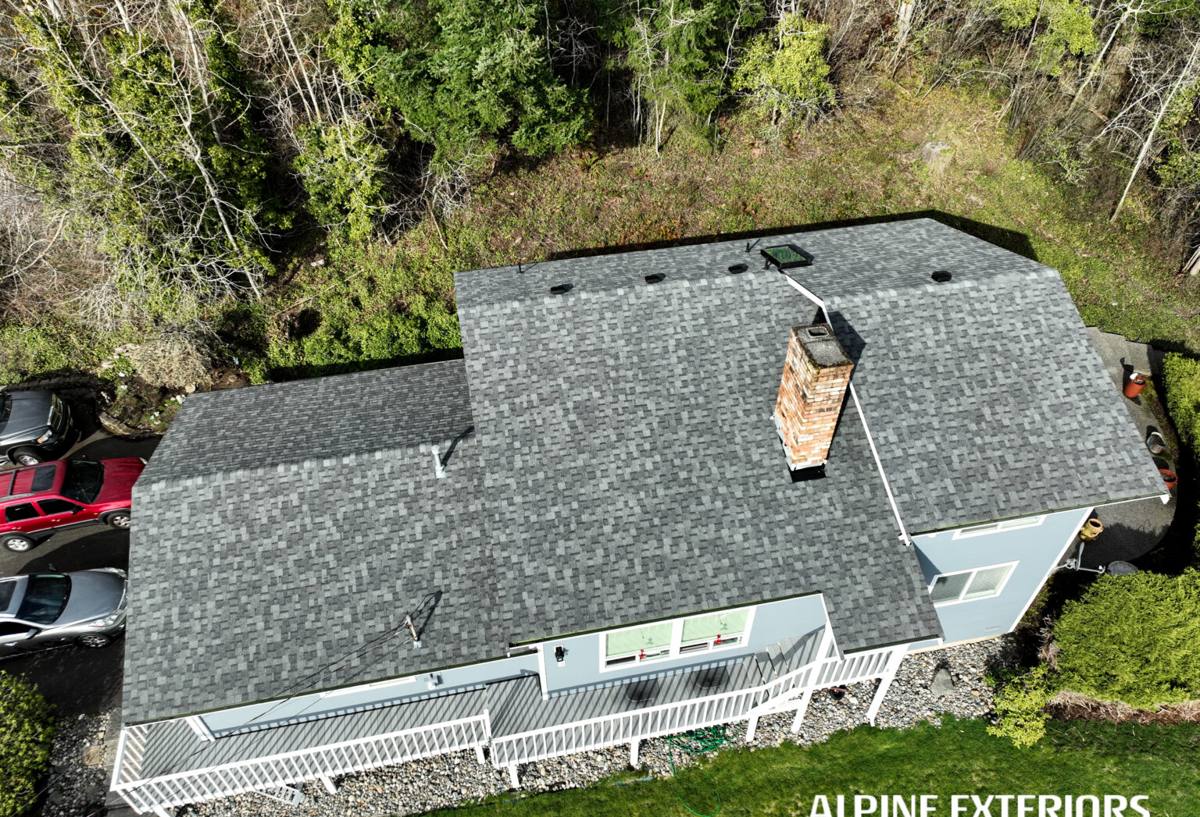
What Salt Air, Rain, and Moss Actually Do to a Shingle Roof
Salt Air and Corrosion
Airborne salt doesn't damage the shingles themselves very much, but it's hard on the metal components of a roof — nails, flashing, drip edge, vent stacks, and gutter hardware. Standard electro-galvanized fasteners can start to corrode faster in a coastal air environment than they would inland, and once a fastener head weakens or a piece of flashing pits and thins, that's where leaks start. This is a maintenance and materials issue more than a shingle issue, and it's one of the first things we account for on a Birch Bay job.
Driving Rain
Wind-driven rain off the water doesn't just fall straight down — it gets pushed sideways and up under shingle edges, around vents, and into any flashing detail that isn't sealed correctly. On a roof with proper underlayment and flashing, this isn't a problem. On a roof where corners were cut on those details, wind-driven rain is exactly what finds the weak spot, sometimes years after the original installation.
Moss and Constant Moisture
Whatcom County's long wet season gives moss plenty of time to establish itself, and Birch Bay's proximity to the water and tree cover in many yards keeps roofs damp longer between dry spells. Moss isn't just cosmetic — as it grows, its root structure lifts shingle edges and holds water against the roofing material and the deck underneath. Left alone through several wet seasons, that trapped moisture can work its way into the underlayment and eventually the roof deck itself.
Choosing the Right Shingle for a Birch Bay Home
Not every asphalt shingle product is built the same, and in a moss-prone, salt-air environment the differences matter more than they would in a milder climate. We generally point Birch Bay homeowners toward architectural (dimensional) shingles with algae-resistant granules, but the right call depends on the home, the budget, and how exposed the roof is to wind and shade.
| Shingle Type | Typical Lifespan | How It Handles Birch Bay Conditions |
|---|---|---|
| 3-Tab Asphalt | 15–20 years | Budget-friendly but less wind resistance and thinner profile; moss and algae take hold faster without treated granules |
| Architectural (Dimensional) | 25–30 years | Heavier, more wind-rated, better moisture shedding; our default recommendation for this area |
| Algae-Resistant (AR) Architectural | 25–30 years | Copper or zinc-infused granules slow algae and moss growth; worth the modest upcharge given the local moss season |
| Premium/Designer Shingles | 30+ years | Best appearance and durability, higher upfront cost; makes sense on higher-visibility or higher-exposure homes |
Wind rating is worth asking about directly. Homes on more open Birch Bay lots with less tree buffering see more direct gusts off the water than sheltered inland properties, and a shingle with a higher wind rating, installed with the correct nailing pattern, is cheap insurance against blow-off in a winter storm.
What a Correct Installation Actually Involves
The shingle itself is only one layer of a roofing system. Most leaks and premature failures we get called out to fix trace back to what's underneath the shingles, not the shingles themselves. A correct installation for this climate includes:
- Ice-and-water shield at eaves, valleys, and around penetrations — added protection where wind-driven rain and standing water are most likely to find a way in
- Synthetic underlayment across the full deck, which handles sustained moisture exposure better than older felt products
- Corrosion-resistant flashing and fasteners at chimneys, walls, vents, and valleys — a real consideration this close to salt air
- Proper nailing pattern and placement matched to the shingle manufacturer's wind-rating specs, not just "enough nails"
- Balanced intake and exhaust ventilation so the attic isn't trapping moisture against the underside of the deck
- Clean, correctly lapped valleys and step flashing at every roof-to-wall and roof-to-roof transition
Any one of these done wrong won't necessarily show up as a leak in the first year. That's part of the problem — a rushed roof can look fine at closeout and still fail early once a few wet seasons and a little wind have worked on the weak points.
Our Process, Start to Finish
- On-site inspection and estimate — we look at the existing roof, deck condition, ventilation, and any trouble spots (valleys, chimneys, low-slope sections) before quoting anything
- Written proposal — materials, scope, and price spelled out, no vague allowances
- Tear-off and deck check — old roofing removed, deck inspected for rot or soft spots and repaired before anything new goes down
- Underlayment and flashing install — ice-and-water shield, synthetic underlayment, and all flashing details done before a single shingle goes on
- Shingle installation — laid to manufacturer spec for nailing pattern and exposure, with attention to ventilation components
- Cleanup and magnetic sweep — job site and yard cleared of debris and stray fasteners
- Final walkthrough — we go over the finished roof with you before calling the job done
Ventilation and Moisture Control in a Marine Climate
Ventilation gets overlooked because it's invisible once the job is done, but in a damp climate like Whatcom County's it's one of the biggest factors in how long a roof actually lasts. An attic that can't move air properly traps warm, moist air against the underside of the roof deck, which speeds up rot from the inside and can void a shingle manufacturer's warranty even if the shingles themselves were installed correctly. On Birch Bay homes we check intake (soffit vents) and exhaust (ridge or roof vents) together — one without the other doesn't create real airflow, it just creates a dead space.
Maintenance That Actually Extends a Birch Bay Roof's Life
A well-installed shingle roof still needs some upkeep in this environment. None of it is complicated, but skipping it for years at a stretch is how small issues turn into deck repairs.
- Keep gutters clear so water isn't backing up under the shingle edge, especially during fall and winter storms
- Have moss growth treated or gently removed before it spreads across a full slope — don't pressure-wash shingles, which strips granules and shortens their life
- Trim back overhanging branches to cut down on shade and debris buildup, both of which feed moss
- Check flashing around chimneys, vents, and skylights every year or two for lifting, rust, or gaps in the sealant
- Walk the attic occasionally (or have it checked) for daylight, water stains, or musty odor — early signs of a flashing or ventilation problem
- After a significant windstorm, do a visual check from the ground for lifted or missing shingles
Cost Factors for Asphalt Shingle Roofing in Birch Bay
Pricing depends on the specifics of the home, but a few factors consistently move the number more than others in this area:
| Factor | Why It Matters Here |
|---|---|
| Roof size and pitch | Steeper or more complex rooflines take longer and need more safety setup |
| Deck condition | Older roofs with moisture history sometimes need deck repair before shingles can go on |
| Shingle grade | 3-tab vs. architectural vs. algae-resistant changes both material cost and long-term performance |
| Flashing and ventilation scope | Homes with multiple valleys, chimneys, or added ventilation work cost more but pay off in fewer callbacks |
| Tear-off vs. layover | We generally recommend a full tear-off on coastal homes so the deck and flashing can be properly inspected and addressed |
As a general range, most asphalt shingle re-roofs in this part of Whatcom County land somewhere in the mid-to-high five figures depending on size and materials — but the only way to get a real number is a look at your specific roof.
Why It Matters That We Already Work in Birch Bay
A crew that only occasionally works this close to the water can miss things a locally-experienced crew catches automatically — where wind exposure tends to be worse on a given street layout, which fastener and flashing upgrades are worth the small extra cost this close to salt air, and how aggressive the moss season really gets on shaded, tree-lined lots versus more open ones. We work throughout Bellingham and Whatcom County, including Birch Bay, and we bring what we've learned on similar homes in similar conditions to every estimate — not a one-size-fits-all approach copied from a drier climate.
If you're dealing with an aging roof, visible moss, or you're just planning ahead before it becomes a leak, we're happy to take a look and give you a straightforward, no-pressure estimate. Use the form below to get started.