 Bellingham Siding
 Window Replacement Built for Blaine's Coastal Climate
Blaine sits at the far northwest corner of Whatcom County, wedged between the Salish Sea and the Canadian border, with a lot of homes close enough to the water to catch salt spray on a windy day. That location is part of what makes the town beautiful, and it's also exactly why windows here fail differently than windows fifty miles inland. Salt air works on metal hardware and finishes. Driving rain off the water finds any weak point in a window's flashing. And the long stretch of gray, damp months between fall and spring keeps moss and algae going on north-facing walls almost year-round. A window replacement job done for Blaine needs to account for all three, not just swap old glass for new.
This page is about window replacement specifically — not siding, not roofing — and specifically for homes in and around Blaine. If you're comparing bids or trying to figure out why your current windows are struggling, this should give you a straight answer.
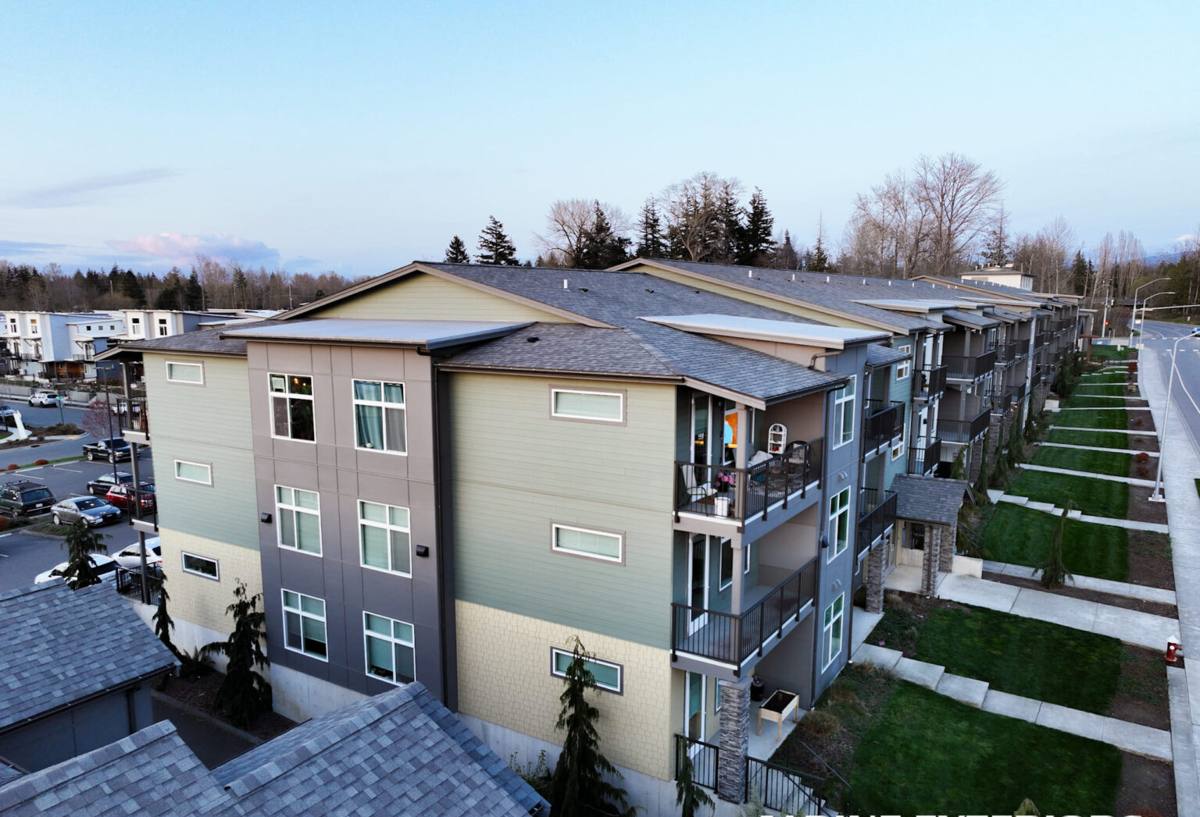
What Blaine's Weather Does to Windows Over Time
Salt Air and Hardware Corrosion
Homes within a mile or two of the water see salt-laden air move through screens, weep holes, and any gap around a window frame. Over years, that salt attacks unprotected metal fasteners, hinges, and cranks faster than it would inland. It also breaks down some finishes and coatings prematurely. This is a big reason we pay attention to what hardware and fasteners go into a window, not just the frame material — a good frame installed with the wrong hardware in a salt-air zone will still give you trouble.
Driving Rain and Water Intrusion
Wind off the water doesn't just bring rain straight down — it pushes it sideways and up under sills, sashes, and trim. Older windows, or windows that were installed without proper flashing and back-dam details, are especially vulnerable to this. Once water gets behind a window, it doesn't dry out quickly in a marine climate. That's when you start seeing soft trim, stained drywall, or a musty smell near a window that otherwise looks fine.
Moss, Algae, and Trapped Moisture
Whatcom County's moss season runs long — realistically most of the year in shaded or north-facing spots. Moss and algae hold moisture against wood trim and sills, which accelerates rot in exactly the areas that are hardest to inspect without pulling trim off. A window replacement is a good opportunity to deal with any moisture damage that's built up around the old frame before it's sealed back up behind new material.
Signs Your Blaine Home Needs New Windows
Not every window issue means full replacement, but these are the signs worth taking seriously in this climate:
- Fogging or a permanent haze between panes — the seal on the insulated glass unit has failed and can't be repaired
- Soft, spongy, or discolored wood at the sill or bottom corners of the frame
- Windows that are hard to open, close, or lock, especially after a wet stretch of weather
- Visible daylight or a draft you can feel around the frame when it's windy
- Paint or finish that's bubbling, peeling, or chalking faster on windows facing the water or prevailing wind
- A noticeable jump in heating costs without any other explanation
- Condensation on the inside of the glass regularly, even when the house isn't unusually humid
If you're seeing two or more of these, it's worth having someone look at the whole window, not just the glass.
What a Correct Window Replacement Job Involves
Full-Frame vs. Insert Replacement
There are two basic approaches. An insert (or "pocket") replacement fits a new window into the existing frame, leaving the old frame, sill, and exterior trim in place. It's faster and less invasive, and it's a reasonable option when the existing frame is still sound and dry. A full-frame replacement removes the window down to the rough opening, which lets us inspect and repair the framing, sill, and flashing underneath. In a driving-rain climate like Blaine's, we lean toward full-frame replacement whenever there's any sign of past water intrusion, because an insert installed over hidden rot just buries the problem for a few more years.
Flashing and Weatherproofing
This is the part that determines whether a window lasts fifteen years or thirty, and it's the part that's invisible once the job is done. A correct installation includes a sloped sill pan to shed any water that gets past the sash, proper integration with the house's weather-resistive barrier so water sheds over the flashing rather than behind it, and sealant only where it's supposed to be — not as a substitute for proper flashing. Skipping or rushing this step is the single most common cause of window-related water damage we see in coastal homes.
Glazing and Glass Package for a Maritime Climate
Double-pane windows with a Low-E coating and argon fill are standard for this region and perform well against Whatcom County's mild but persistently damp winters. Triple-pane glass adds meaningful sound and thermal performance but costs more and adds weight, which matters on larger openings or older framing. For homes right on the water dealing with wind noise and temperature swings, triple-pane is worth pricing out. For most inland Blaine homes, a quality double-pane package is plenty.
Choosing the Right Frame Material for a Coastal Home
We get asked about frame material more than almost anything else. There's no single right answer — it depends on your home's exposure, your maintenance appetite, and your budget. Here's how the common options actually perform in this climate, based on our own installation standards rather than brand marketing:
| Frame Material | Salt Air / Moisture | Maintenance | Notes for Blaine Homes |
|---|---|---|---|
| Vinyl | Very good — won't rust or rot | Low — occasional cleaning | Solid, cost-effective default for most homes; quality varies a lot between manufacturers |
| Fiberglass | Excellent — very stable in temperature swings and moisture | Low | Strong choice for exposed, water-facing walls; higher upfront cost |
| Wood-clad | Good if maintained; vulnerable if the cladding is ever breached | Higher — finish and seams need periodic attention | We're selective about where we recommend this given the long wet season here |
| Aluminum | Poor without thermal breaks and marine-grade coatings | Moderate | We generally steer clients away from bare aluminum this close to salt water |
To be clear, this isn't about any one product being "bad" — it's about matching material behavior to Blaine's specific mix of salt air, driving rain, and long damp stretches. We'll walk through the real trade-offs for your specific home and exposure rather than pushing one material across the board.
Our Window Replacement Process
- On-site assessment — we look at every window in question, check for hidden moisture or rot around frames and sills, and talk through what's actually driving the problem
- Measuring and product selection — precise measurements and a walk-through of frame material, glazing, and hardware options suited to your home's exposure
- Removal — careful removal of the old window and inspection of the rough opening, framing, and sheathing underneath
- Repair as needed — any rot, soft framing, or failed flashing found during removal gets addressed before the new window goes in, not covered over
- Installation and flashing — sill pan, proper flashing sequence, and integration with the existing siding or weather barrier
- Sealing and trim — weatherproof sealant in the right places, exterior and interior trim finished to match
- Final check and cleanup — operation, lock function, and seal are checked before we leave, and the site is cleaned up
Why Hire a Crew That Already Works in Blaine
Window replacement done well is mostly about the details you can't see once the job is finished — the flashing, the sill pan, the way the new unit ties into the siding. A crew that regularly works homes in Blaine and the rest of Whatcom County has already seen how those details hold up against this specific combination of wind-driven rain and salt exposure, rather than working from a generic install manual written for a drier region. That local track record matters when something needs revisiting years down the line, too — we're not a crew that did one job in town and moved on.
We're also familiar with the kind of housing stock common in this area, from older coastal cottages to newer construction, and we adjust our approach based on how the home was originally built rather than treating every job the same way.
Energy Efficiency and Comfort Gains
Old, leaky windows are a real source of heat loss, especially on walls that take the brunt of the wind. Replacing them with properly sealed, modern glazing typically shows up as fewer drafts, less condensation on cold mornings, and a noticeable difference in comfort near the windows themselves — not just a line item on a utility bill. How much you save depends heavily on your current windows' condition and your home's overall insulation, so we're cautious about promising specific numbers, but the comfort difference is usually obvious within the first cold snap.
Get a Straight Answer for Your Home
If your windows are drafty, fogged, sticking, or showing soft spots at the sill, it's worth having a local crew take a look before those small issues turn into a framing repair. We offer free, no-pressure estimates for window replacement in Blaine and the surrounding area — use the form below to get a time on the calendar.