 Bellingham Siding
 Composite Decking Built for the York Neighborhood's Climate
Homes in York sit close enough to the water and the marine weather pattern that comes with it that decking decisions here can't be copied from a catalog in Arizona or even from inland Whatcom County. Salt-laden air off the Sound, driving rain that comes in sideways for months at a stretch, and a moss season that seems to start earlier every year all put real stress on an outdoor deck. We've built and repaired decks throughout Bellingham long enough to know which mistakes show up first in this neighborhood specifically, and it's usually not the decking boards themselves — it's what's underneath them, and how the whole system was put together.
This page is about composite decking done right for York conditions: what the climate actually does to a deck over time, what a correct installation involves, and why local experience on this specific ground matters more than most homeowners expect.
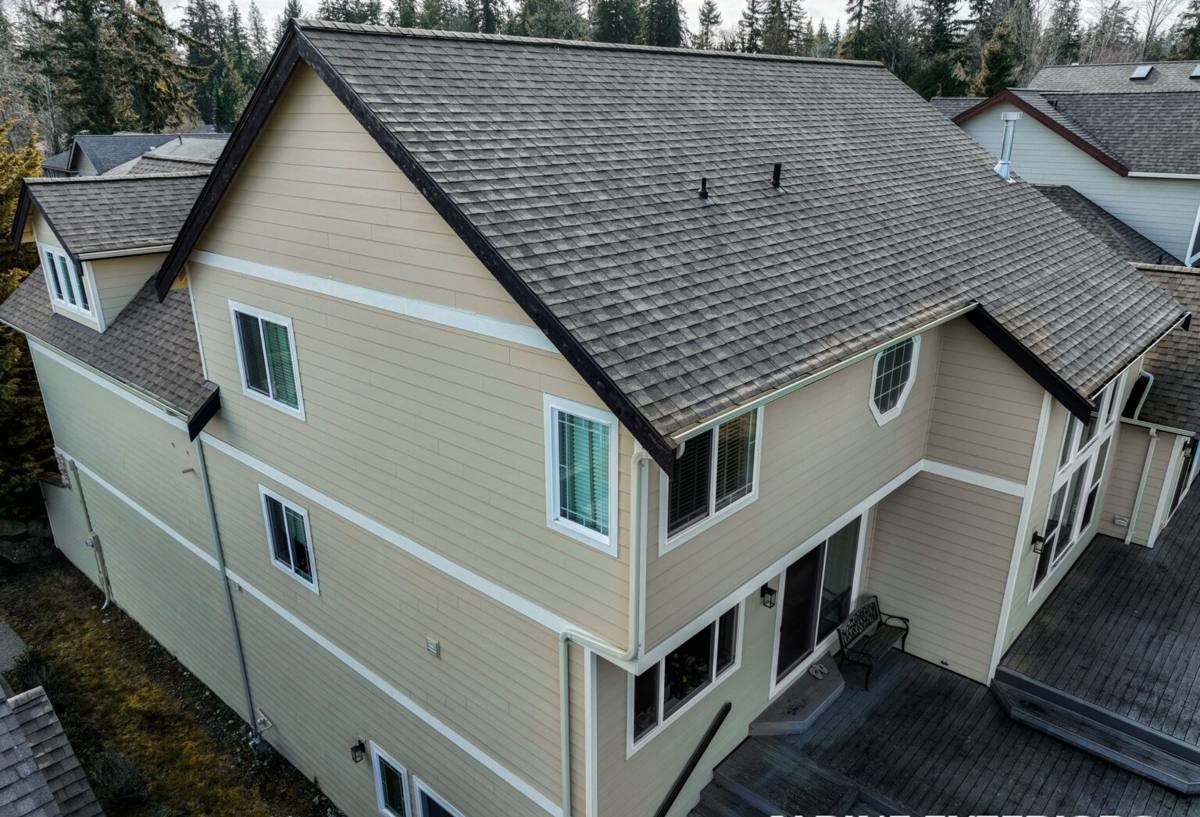
What Bellingham's Marine Climate Does to a Deck
Salt Air and Metal Fasteners
York's proximity to the water means airborne salt is a constant, low-grade presence even on days that feel perfectly dry. Salt air accelerates corrosion on any exposed metal — screw heads, joist hangers, structural brackets — long before most homeowners notice a problem on the surface. A deck can look fine on top while its fasteners are quietly rusting underneath. This is one of the most common failure points we find when we're called out to inspect an older deck in this area.
Driving Rain and Moisture Intrusion
Whatcom County doesn't just get a lot of rain — it gets a lot of wind-driven rain, which behaves differently than a straight-down downpour. It gets pushed under railings, into end-grain cuts, and into any gap where flashing or fastening wasn't done with real intention. Composite boards themselves don't rot, but the wood-framed substructure underneath almost always is wood, and that's where moisture problems actually start.
Moss, Algae, and Extended Shade Season
Between the tree cover common in York yards and our long stretch of overcast, damp months, moss and algae have a long runway to establish themselves on any horizontal surface that doesn't drain well or dry out between rains. Moss holds moisture against the board surface, and on decks with poor airflow underneath, that dampness lingers for days rather than hours. It's a slip hazard as much as a maintenance headache.
Why Composite Decking Makes Sense Here — With Honest Trade-Offs
Composite decking is a strong fit for this climate specifically because the board material itself won't rot, splinter, or need annual staining the way real wood does. That said, it's not maintenance-free, and we tell every homeowner that up front rather than let a sales pitch set the wrong expectation.
- What composite handles well: resists moisture absorption into the board itself, doesn't need sealing or staining, holds up to UV without graying the way untreated wood does, and comes with long manufacturer warranties on the boards.
- What composite still requires: periodic washing to keep moss and algae from taking hold, correct fastening and spacing so boards can expand and contract with temperature swings, and a substructure that's built to shed water — composite doesn't fix a badly built frame underneath it.
- Where trade-offs show up: composite costs more upfront than pressure-treated lumber, and lower-grade composite products can still trap surface moisture if the underlying ventilation is poor. This is a substructure and drainage problem more than a "which composite brand" problem, which is why we spend as much time talking about the frame as we do about the decking surface.
Board Types Compared
| Decking Type | Moisture Behavior | Maintenance in This Climate | Typical Lifespan Here |
|---|---|---|---|
| Pressure-treated wood | Absorbs moisture, prone to warping/checking | Annual stain/seal, ongoing moss treatment | 10-15 years with upkeep |
| Cedar | Naturally rot-resistant but still absorbs water over time | Regular oiling, moss cleaning | 15-20 years with diligent care |
| Capped composite | Water-resistant board core and surface | Periodic washing, no staining needed | 25-30+ years (manufacturer-dependent) |
| Uncapped composite | Surface more porous, can hold moisture and stain | More frequent cleaning, some fading over time | 15-20 years |
What a Correct Installation Actually Involves
The Substructure Comes First
Every deck failure we get called to look at in the York area traces back to the frame, not the decking surface. A correct job starts with pressure-treated or better-rated framing lumber, joist spacing appropriate for the composite product being installed (composite often needs tighter joist spacing than wood decking — manufacturers specify this, and skipping it leads to bounce and premature sagging), and joist tape or flashing on top of every joist to keep water from wicking into the wood from above.
Fasteners and Hardware Rated for Coastal Air
Given the salt air exposure in York, we use stainless steel or coated fasteners and hardware rated for coastal/marine environments rather than standard galvanized hardware that corrodes faster here than it would inland. This is a small line-item cost difference that prevents a much larger repair five or ten years down the road.
Drainage and Airflow Underneath
A deck built tight to the ground or against a foundation with no airflow underneath will hold moisture and grow moss faster, regardless of what decking material sits on top. Correct grading beneath the deck, proper joist height off the ground, and gaps where needed for ventilation all matter more in a climate like ours than they would in a drier region.
Board Spacing for Expansion and Drainage
Composite boards expand and contract with temperature, and correct gapping lets water drain through rather than pool on the surface. Too tight, and you get cupping or buckling; too wide, and you get a sloppy-looking deck that collects debris in the gaps. This is a detail that separates an experienced installer from someone doing their first composite job.
Our Process for a York Composite Deck Project
- On-site assessment: we look at the existing structure (if replacing a deck), drainage around the area, sun/shade exposure, and how the deck ties into the house.
- Material selection: we walk through composite options and pricing tiers honestly, including where a mid-grade product makes more sense than the top-tier line for a given budget.
- Substructure build or repair: framing, joist spacing, flashing, and hardware selected for this climate — not generic hardware store defaults.
- Decking installation: hidden or face-fastened per the product spec, correct board gapping, and attention to cut ends and edges where moisture typically finds a way in.
- Railing and finishing details: railing posts and connections checked for the same corrosion resistance as the deck itself, since railings take direct rain exposure.
- Final walkthrough: we go over basic maintenance — what washing schedule keeps moss from taking hold, what to watch for at fastener points, and what's covered under the manufacturer's warranty versus our workmanship warranty.
Signs Your Current Deck Needs Attention
- Soft or spongy spots when you walk across the deck surface
- Visible rust staining around fastener heads or hardware
- Persistent moss or algae that returns quickly after cleaning
- Gaps between boards that have widened, narrowed, or gone uneven
- Railings that feel loose or flex more than they should
- Water pooling on the surface instead of draining off after rain
Any one of these on its own might be minor. Several together usually mean the substructure needs a real look before more decking gets added on top of an already-compromised frame.
Why Local Experience in York Specifically Matters
A crew that's worked decks throughout Bellingham and specifically in neighborhoods like York already knows which hardware corrodes too fast here, which lots have drainage quirks from tree cover or slope, and how long a moss-free finish actually lasts before a wash is needed again. That's not something you get from a national installer passing through, and it's not something a generic composite decking guide can tell you — it comes from doing the work in this specific climate, repeatedly, and seeing what holds up and what doesn't.
We also know that every property in York is a little different — some sit under heavier tree cover, some get more direct wind off the water, some have older framing underneath an existing deck that needs an honest evaluation before anyone talks about new boards. We'd rather tell a homeowner the frame needs work first than sell composite decking on top of a problem that will just resurface.
Get a Free, No-Pressure Estimate
If you're planning a new composite deck or wondering whether your current one is holding up the way it should, we're happy to take a look and give you a straight answer — no pressure, no upsell. Fill out the form below to schedule a free estimate for your York property.