 Bellingham Siding
 Siding Repair for Columbia Homes
Columbia is one of Bellingham's older, established neighborhoods, which means a lot of the homes here are carrying siding that's been through decades of Pacific Northwest weather. Some of it was installed well and just needs targeted repair. Some of it was patched wrong the first time and is failing again. Either way, siding repair in this part of Bellingham isn't a generic job — it has to account for how close this neighborhood sits to Bellingham Bay, how much rain blows sideways off the water, and how fast moss and algae take hold on anything north-facing or shaded by mature trees.
This page covers what siding repair actually means for a Columbia home: the damage patterns we see most, what a correct repair involves versus a quick patch, and how our process works when you call us out to take a look.
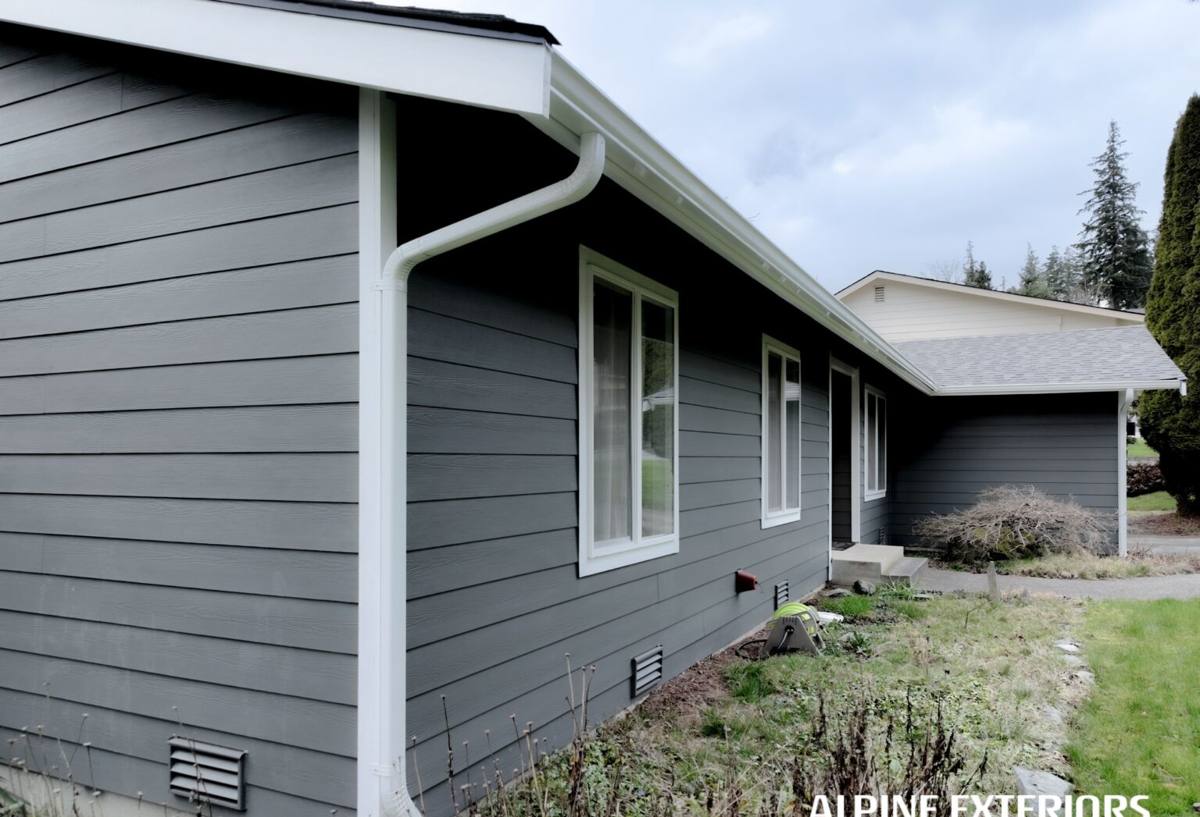
What Whatcom County Weather Does to Siding Over Time
Bellingham sits right on Bellingham Bay, and Columbia is close enough to the water that salt-laden air is a real factor on siding, trim, and fasteners — not just on boats and railings. Combine that with the region's long wet season and you get three specific stressors that show up on siding here more than almost anywhere else in Washington:
Salt Air
Airborne salt accelerates corrosion on exposed fasteners, metal flashing, and staples. Once a fastener starts rusting, it can weep stains down the face of the siding and eventually lose its grip, which is one of the more common repair calls we get in neighborhoods close to the bay.
Driving Rain
Wind off the water doesn't just drop rain straight down — it pushes it sideways into wall assemblies, working into any gap at a seam, a nail hole, a window flange, or a butt joint that wasn't sealed correctly. Over years, that's how water finds its way behind siding that looks fine from the sidewalk.
Moss and Algae Season
Bellingham's mild, wet stretch from fall through spring is long, and shaded or north-facing walls in tree-covered lots — common throughout Columbia — stay damp for extended periods. That constant moisture is exactly what moss, algae, and mildew need to establish themselves, and once organic growth is holding moisture against a wall, the siding underneath it is on borrowed time.
Common Siding Repair Issues We See in This Neighborhood
- Soft or delaminating panels near ground level, downspouts, or anywhere water repeatedly runs down the wall
- Rust streaking from corroding fasteners, especially on older installations
- Buckled or warped boards where moisture has been absorbed and released repeatedly through wet/dry cycles
- Failed caulking at trim, corners, and butt joints that has shrunk, cracked, or pulled away
- Moss and algae staining on shaded elevations that's more than cosmetic — often a sign moisture is being held against the wall
- Damage at penetrations — hose bibs, vents, light fixtures — where flashing was never installed or was installed incorrectly
- Impact damage from branches, hail, or general wear that's created an open path for water
Most of these start small. A homeowner notices a stain, a soft spot, or a section that looks "off," and by the time it's obvious from the street, there's usually already moisture intrusion happening behind the surface.
What a Correct Siding Repair Actually Involves
A lot of siding "repair" in this region is really just cosmetic — caulk over a crack, paint over a stain, call it done. That doesn't hold up through another Bellingham winter. A repair that actually lasts starts with figuring out why the damage happened, not just covering it up.
Diagnose Before You Patch
We look past the visible damage to the cause: is water getting in at a flashing detail, a fastener, a seam, or a gap in the weather barrier? Repairing the surface without fixing the entry point means the same damage comes back in a season or two.
Check What's Behind the Siding
Where there's a soft panel or a stain, there's a real chance moisture has reached the sheathing or framing underneath. A correct repair means opening that section up, confirming the condition of what's behind it, and addressing rot or saturated material before anything new goes back on — not sealing moisture in behind a fresh panel.
Match Material and Method
Repairs need to tie into the existing siding correctly — same reveal, same fastening pattern, flashing detailed to shed water the way the rest of the wall does. A mismatched patch is often where the next failure starts.
Address the Cause, Not Just the Symptom
If moss growth caused the damage, we look at what's keeping that wall wet — tree cover, grading, a downspout dumping water where it shouldn't. If corrosion is the issue, we're not refastening with the same exposed, untreated hardware. A repair that ignores the underlying condition is a repair you'll be paying for again.
Repair or Replace? What Actually Determines It
Not every problem area needs full replacement, but not every home is a good repair candidate either. Here's how we think through it on-site:
| Factor | Leans Toward Repair | Leans Toward Replacement |
|---|---|---|
| Extent of damage | Isolated to one or two sections | Spread across multiple walls or elevations |
| Underlying sheathing/framing | Sound once exposed | Soft, rotted, or water-stained over a wide area |
| Siding material | Still structurally sound elsewhere | Delaminating, warping, or failing broadly (common with aging wood composite or older fiber cement) |
| Age of existing siding | Relatively recent, isolated failure | Nearing or past expected service life |
| Root cause | Fixable at the repair site (flashing, fastener, sealant) | Systemic — wrong product for the exposure, chronic moisture across the wall |
We'll tell you honestly which side of that line your home falls on. If a targeted repair genuinely solves the problem, that's what we recommend — there's no reason to sell a full re-side when a section repair will hold.
Our Repair Process
- On-site assessment — we look at the damaged area and, where needed, open it up to check the condition of the wall behind it
- Honest diagnosis — we tell you what caused the damage, not just what it looks like
- A clear repair plan — what gets removed, what gets replaced, how the new work ties into the existing wall
- Correct execution — proper flashing and fastening, matched reveal and profile, sealed and finished to hold up through the next wet season
- A straightforward explanation of what we did and what to watch for going forward
Why We Repair and Rebuild With James Hardie Fiber Cement
When a repair area needs new material — not just a resecured board — we use James Hardie fiber cement, and we don't install anything else. That's a deliberate standard, not a default. Fiber cement doesn't absorb water and swell the way wood-based composite products can, and it isn't vulnerable to the freeze-thaw and moisture-cycling problems that show up in vinyl over time. In an environment with this much sustained moisture and salt exposure, that matters more than it does somewhere drier.
Hardie's ColorPlus factory finish also means a repaired section can be matched without relying on field-painted touch-up holding its color the same way over years of Whatcom County weather. And because Hardie is non-combustible, a repair doesn't introduce a weak point in a home's fire resistance the way some composite patches can. When a repair calls for new siding material, this is why we don't reach for anything else.
Why a Crew That Already Works Columbia Matters
Siding repair done right depends on understanding the specific conditions of the wall you're fixing — not siding repair in general, but siding repair for a home exposed to Bellingham Bay's salt air, sitting under tree cover that holds onto moisture, and taking rain that comes in sideways more often than straight down. A crew that regularly works this neighborhood has already seen how these specific conditions play out on real walls, which means less guessing about cause and a repair that's built for what actually happens here — not for a drier, calmer climate somewhere else.
Signs Your Siding Needs Repair Now
- Soft or spongy spots when you press on the siding, especially near the bottom of walls
- Visible rust streaking below fastener heads or flashing
- Paint that's bubbling, peeling, or failing in a localized area rather than across the whole wall
- Persistent moss or algae growth that keeps coming back after cleaning
- Gaps, cracks, or missing caulk at trim, corners, and seams
- Warping, buckling, or boards that no longer sit flat against the wall
- Musty smell or visible staining on interior walls that share an exterior wall with damaged siding
If any of these sound familiar, it's worth having someone look before the next wet season adds to the damage.
Get a Free Estimate
If you're seeing damage, staining, or soft spots on your siding, we're glad to come take a look, tell you honestly what's going on, and lay out what a real fix involves — no pressure, no obligation. Fill out the form below and we'll get in touch to schedule a time.