 Bellingham Siding
 Why Sunnyland Decks Wear Differently in This Climate
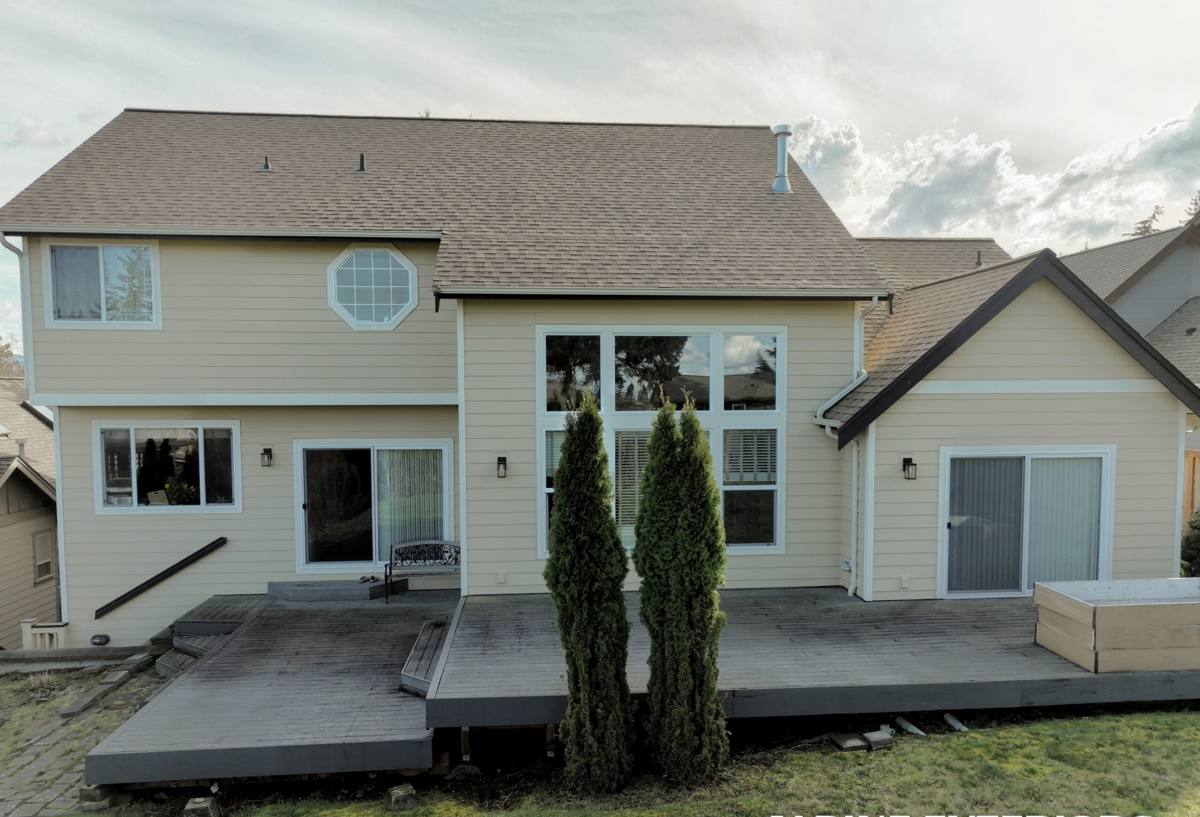
Sunnyland's tree-lined streets and established lots are part of what makes the neighborhood pleasant to live in, but that same mature tree canopy, combined with Bellingham's long wet season and proximity to Bellingham Bay, is hard on an outdoor deck. A deck here spends much of the year shaded and damp rather than baking dry in sun the way a deck in a hotter, drier climate would. That difference changes what actually holds up over time and what fails early.
Composite decking is built to handle that kind of exposure better than wood, but "composite" covers a wide range of products, and not every board is engineered the same way for a shaded, wet, coastal-influenced climate like Whatcom County's. This page covers what a Sunnyland home actually needs from a composite deck, what a correct installation looks like here, and why it matters to hire a crew that already works this neighborhood rather than one learning the local conditions on your job.
A Long Moss Season
Between the shade from mature conifers and maples and the region's extended stretch of damp weather, moss and algae have a long window to establish themselves on any horizontal surface that doesn't dry out quickly — including a deck. Once moss gets a foothold between boards or on a shaded corner of the surface, it holds moisture against the material underneath and gets slippery when wet, which is a real safety issue on stairs and landings, not just a cosmetic one.
Driving Rain and Standing Moisture
Pacific storms coming off the water don't always fall straight down. Wind-driven rain gets pushed sideways into ledger connections, under rail bases, and into any gap where water isn't meant to collect. Combined with the sheer number of wet days Whatcom County sees over a year, a deck here needs drainage and airflow built in from the start — not as an afterthought once water damage shows up.
Salt Air Off Bellingham Bay
Sunnyland sits close enough to Bellingham Bay that marine air is part of the regional climate, and salt-laden air accelerates corrosion in exposed metal — fasteners, brackets, and railing hardware in particular. A fastener that's slowly corroding loses holding strength well before it looks obviously bad, which is one reason fastener grade isn't a place to economize on a deck in this area.
What "Composite Decking" Actually Means
Composite decking is generally a blend of wood fiber and plastic, but the ratio, the plastic type, and how the board is finished vary considerably between manufacturers and product lines. Two distinctions matter most for a wet, shaded climate like this one.
Capped vs. Uncapped
Capped composite boards have a plastic shell wrapped around a wood-plastic composite core, which limits moisture absorption, staining, and mold growth at the surface. Uncapped composite is the older style — the wood-plastic blend is exposed on all sides, so it absorbs more moisture and is more prone to swelling, staining, and mold in a climate that stays damp for long stretches. In Sunnyland's shaded, wet conditions, that difference shows up faster than it would in a drier climate, which is why we standardize on capped composite for decks here.
PVC as an Alternative
Some manufacturers also make fully cellular PVC decking, with no wood fiber in the board at all. PVC resists moisture absorption completely, which can be an advantage in a heavily shaded, damp yard, though it costs more and can flex more under heavy point loads than composite. We'll talk through whether capped composite or PVC is the better fit for a specific deck based on how much sun and shade the site actually gets and how the space will be used — it depends on the lot, not a blanket answer.
What a Correct Composite Deck Build Involves in Sunnyland
The decking boards get most of the attention, but on a shaded, rain-heavy lot, the substructure and fastening details are what actually determine whether a deck holds up. A build done right for this neighborhood includes:
- Framing material rated for wet exposure — pressure-treated lumber suited to ground contact and persistent moisture, since a shaded Sunnyland lot rarely gets a long dry stretch to let framing off-gas moisture
- Stainless steel or coated, coastal-grade fasteners throughout, given the salt-air influence off Bellingham Bay
- Hidden fastener systems on the deck surface where the product allows, which reduce exposed metal and give moss and algae fewer footholds to establish on the surface
- Correct board gapping for expansion, contraction, and drainage, since composite moves with temperature and moisture differently than wood does
- Proper ledger board flashing where the deck ties into the house, a common failure point when wind-driven rain gets pushed against the structure
- Joist spacing matched to the specific composite product's span rating, not a generic wood-framing spacing pulled from a different climate's building practices
- Ventilation and drainage beneath the deck so moisture doesn't sit against the framing in a yard that already stays damp longer than most
- Layout that accounts for existing tree cover, since a deck built under heavy shade needs more deliberate airflow planning than one in an open, sunny yard
None of these details cause a visible problem on day one if they're skipped. They show up two, five, or ten years later — as a soft spot in the framing, a fastener that's stained the board around it, or a section of deck that never quite dries out and stays green with moss no matter how often it's cleaned.
How Our Process Works
We start with a site visit to look at what's actually there — existing framing condition if it's a replacement, how much shade the tree canopy casts through the day and across seasons, drainage and grade around the deck area, and how exposed the site is to prevailing wind and rain. From there we go over composite product options that fit the budget and how the space will actually be used, whether that's a quiet spot off the back of the house or something built for regular entertaining.
Decks in the City of Bellingham generally require a building permit, and elevated decks or those tied into an existing structure can carry additional review depending on the property and setbacks. We handle that permitting process as part of the job rather than leaving it for the homeowner to navigate. Once permitted, the build follows the sequence above: substructure first, with every framing and fastening choice made for the site's actual shade and moisture exposure, then the composite surface, railing, and any trim work. We finish with a walkthrough covering what upkeep the specific product you chose actually needs — usually not much, but not literally nothing either, especially with moss in the picture.
Composite Decking Compared to the Alternatives
| Material | How It Handles Shade, Rain & Moss | Maintenance | Typical Lifespan Here |
|---|---|---|---|
| Capped composite | Strong — cap layer resists moisture absorption and limits mold/algae growth at the surface | Periodic washing to clear moss and debris; no sealing or staining | Long-term, backed by manufacturer warranty |
| Cellular PVC | Excellent — no wood fiber to absorb moisture, holds up well in heavy shade | Periodic washing; no sealing or staining | Long-term, generally at a higher upfront cost |
| Uncapped composite | Moderate — absorbs some moisture, more prone to mold and staining in shaded, damp spots | More frequent cleaning to manage moss and mildew | Shorter than capped products in this climate |
| Pressure-treated wood | Weak against sustained dampness — swells, splinters, and grows moss faster in shade | Regular sealing or staining, plus moss treatment | Shortest, with the most ongoing upkeep |
| Cedar | Naturally rot-resistant but still absorbs moisture over time and grays without finish upkeep | Periodic sealing or staining to manage moisture and moss | Moderate if maintained; shorter in deep shade without upkeep |
Living With a Composite Deck Here
Composite decking is low-maintenance compared to wood, not maintenance-free — and in a neighborhood with this much tree cover, moss and organic debris are the main things to stay ahead of. A little routine care goes a long way:
- Sweep or blow off leaves, needles, and seed pods regularly so they don't sit and hold moisture against the surface
- Wash the deck a couple of times a year, more often in shaded corners, to keep moss and algae from establishing before it needs pressure washing to remove
- Keep gaps between boards clear of debris so water and airflow can move through as the design intends
- Trim back branches or shrubs that keep a section of deck shaded and damp longer than the rest of the surface
- Check railing posts and hardware for early corrosion or loosening, especially after a stretch of heavy winter storms
- Address any soft framing or standing water underneath the deck right away — that's a structural issue, not a cosmetic one
Why It Matters That We Already Work Sunnyland
A crew that mostly builds decks in drier, sunnier parts of the country can still install composite decking competently, but Sunnyland's combination of heavy shade, persistent rain, and marine air off Bellingham Bay creates conditions that don't come up the same way everywhere. Working this neighborhood regularly means we already know how much airflow a deck needs under a mature tree canopy, what fastener grade actually holds up against the salt influence here, and how Bellingham's permitting process works for a typical residential lot — we're not learning those things on your project.
That familiarity also shows up in the smaller decisions: which composite lines actually resist moss and mildew over years of Whatcom County winters rather than just looking good in a showroom, and giving you a straight answer about what your deck really needs versus what's just an add-on.
Get a Straight Answer About Your Deck
Whether you're replacing a tired deck that's had one too many wet winters or planning a new one from scratch, we're glad to walk your Sunnyland property with you and lay out the options honestly. Reach out below for a free, no-pressure estimate.