 Bellingham Siding
 Building a Deck That Actually Holds Up in Sunnyland
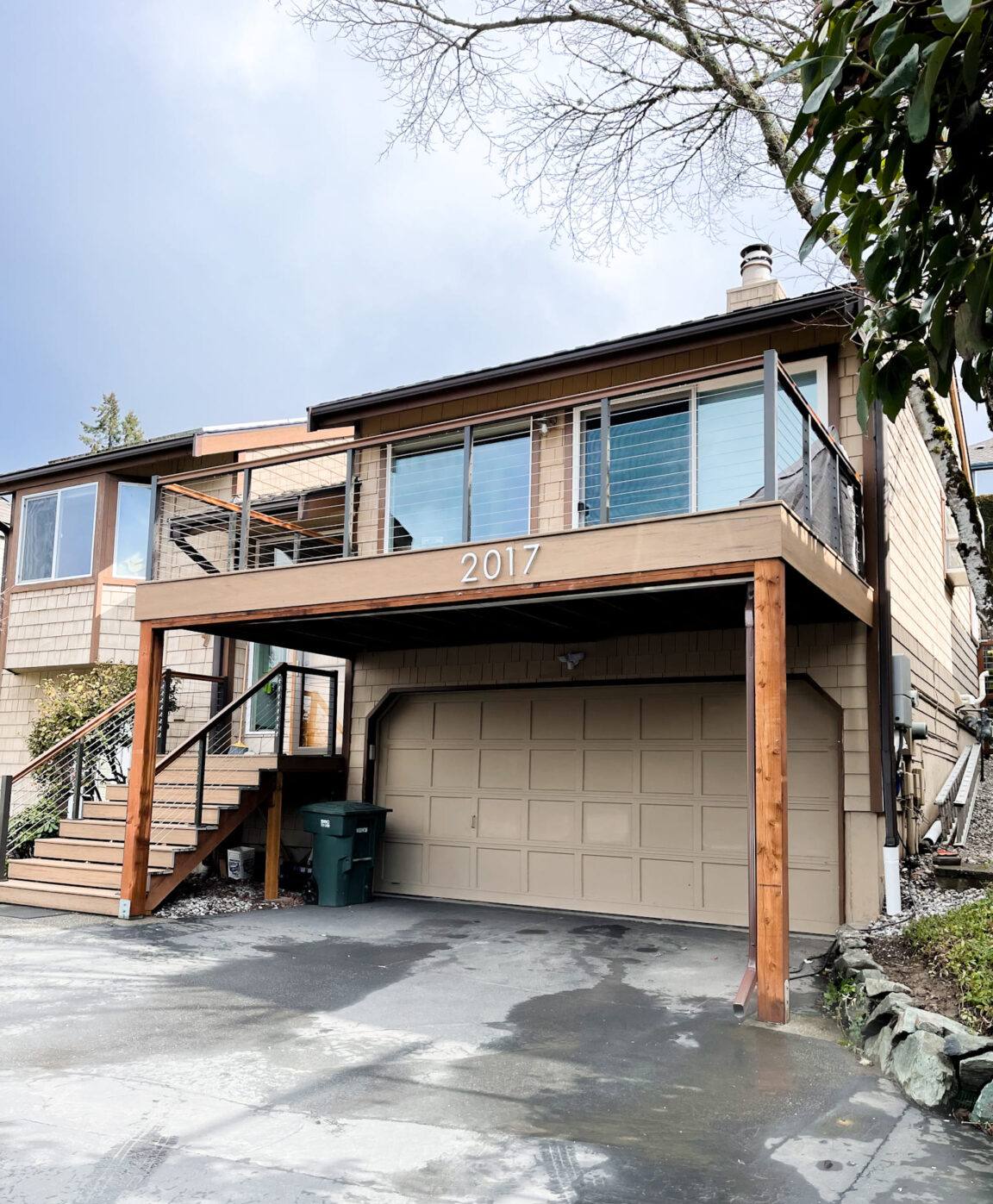
A deck in Sunnyland has to do more than look good on a sunny afternoon. It has to survive a Bellingham winter, shrug off months of drizzle, and still be solid enough to trust ten years from now. Sunnyland is one of Bellingham's older, established residential neighborhoods, and like much of this part of Whatcom County, it has a mix of home ages, lot shapes, and yard conditions — flat backyards, sloped lots, mature tree cover, and everything in between. Whatever the lot looks like, the deck built on it needs to be engineered for our specific climate, not just copied from a generic plan.
We build decks specifically for this kind of environment. That means thinking about moisture, wood movement, hardware corrosion, and moss before the first post is ever set — not treating those as afterthoughts once the deck is already showing problems.
What Bellingham's Climate Does to an Outdoor Deck
Whatcom County sits close enough to the water that homes throughout Bellingham, including Sunnyland, deal with a specific combination of conditions that's harder on a deck than most homeowners expect: salt-tinged air, frequent driving rain, and a moss season that can stretch for most of the year.
Salt Air and Metal Fatigue
Proximity to Bellingham Bay means the air here carries more salt than an inland town would. Salt accelerates corrosion in fasteners, joist hangers, and structural connectors. A deck built with standard hardware instead of coated or stainless fasteners can start showing rust streaks and weakened connections years before it should. This is one of the most common corner-cutting mistakes we see on older decks in this area — the wood looks fine, but the hardware holding it together is failing underneath.
Driving Rain and Water Intrusion
Rain in this region doesn't just fall straight down — wind-driven rain finds its way into gaps, gets behind ledger boards, and works its way into end grain and fastener holes. Over time, that moisture intrusion is what causes rot, not just general dampness. Every seam, joint, and attachment point on a deck is a potential entry point if it isn't flashed and sealed correctly.
The Long Moss Season
Shaded, moisture-retaining surfaces in Whatcom County grow moss for a large part of the year, and deck boards are exactly that kind of surface — especially under tree cover or on the north side of a house. Moss holds moisture against the wood surface, and it also makes boards slick and genuinely dangerous underfoot. A deck design that ignores drainage, airflow, and board spacing is signing up for a moss problem from day one.
Choosing the Right Decking Material for This Neighborhood
There's no single "best" decking material for every home — the right choice depends on budget, how much upkeep you want to do, and how much shade and moisture the specific spot on your lot deals with. Here's how the common options actually perform under Bellingham conditions.
| Material | Upfront Cost | Maintenance | How It Handles Our Climate |
|---|---|---|---|
| Pressure-treated wood | Lowest | Annual cleaning, periodic sealing | Affordable and repairable, but end grain and fastener holes need real attention or rot starts early |
| Cedar | Moderate | Regular sealing to hold color and resist moisture | Naturally moisture-resistant and a good look for older neighborhoods, but still an organic material that needs upkeep |
| Capped composite | Higher | Occasional washing, no sealing or staining | Strong moisture and moss resistance, holds up well to our rain and shaded conditions long-term |
| Uncapped composite | Moderate to higher | More cleaning than capped composite | Can absorb moisture at cut edges and in shaded, damp spots — we're selective about where we recommend it |
We don't push one material on every job. On a shaded, moisture-heavy lot, we'll usually steer a homeowner toward capped composite or a carefully detailed cedar build. On a sunnier, open lot, pressure-treated wood with proper sealing can be a perfectly sound, budget-friendly choice. The honest answer depends on your specific yard, not a one-size-fits-all recommendation.
The Structural Details That Separate a Good Deck From a Problem Deck
Most deck failures we get called out to inspect aren't caused by bad decking boards — they're caused by structural shortcuts that don't show themselves until years later. These are the details we treat as non-negotiable.
Ledger Board Flashing
The ledger board — where the deck attaches to the house — is the single most common source of hidden water damage on any deck in a rainy climate. Proper flashing, correctly layered with the house's existing weather-resistive barrier, keeps water from tracking behind the ledger and into the rim joist or framing. This step gets skipped or done poorly more often than any other part of a deck build, and it's usually invisible until there's already rot.
Footings and Frost Depth
Footings need to be sized and set to local frost depth and soil-bearing requirements, not guessed at. On sloped Sunnyland lots this also means accounting for drainage around each footing so water doesn't pool and undermine it over time.
Fasteners and Hardware
Given the salt air in this area, we use fasteners and structural connectors rated for coastal or wet-climate exposure rather than standard-grade hardware. It costs a little more upfront and prevents the early corrosion that weakens a deck's structural connections.
Drainage and Airflow Underneath
A deck built low to the ground with poor airflow underneath will trap moisture and grow moss and mildew faster, regardless of what decking material sits on top. Proper joist spacing, board gapping, and clearance underneath let air move and water drain instead of sitting.
Permits and Code Requirements
Deck projects in the City of Bellingham and unincorporated Whatcom County generally require a permit once the structure exceeds a certain height or size, and guardrail height, stair rise/run, and footing depth all have to meet current building code. Code requirements can change and vary by exact lot and jurisdiction, so we handle the permit research and application as part of the job rather than leaving a homeowner to sort it out. Skipping the permit step can create real problems later — at resale, with insurance, or if the structure ever needs to be inspected.
Our Deck Building Process for Sunnyland Homeowners
- On-site assessment. We walk the lot, look at drainage, sun/shade exposure, slope, and how the deck will attach to the house.
- Material and design conversation. We talk through honest trade-offs between materials and layouts based on your budget and how you'll use the space.
- Permitting. We handle the permit application and make sure the design meets current code before construction starts.
- Framing and structural work. Ledger flashing, footings, joist layout, and hardware selection are done to hold up under our specific climate, not just to pass a quick inspection.
- Decking, railing, and finish work. Board spacing, fastening method, and finish are done with drainage and moss resistance in mind from the start.
- Final walkthrough. We go over the finished deck with you, including what maintenance it will need and when.
Keeping a New Deck in Good Shape Year-Round
Even a well-built deck needs some regular attention in this climate. A short seasonal routine goes a long way toward avoiding early repairs:
- Sweep debris and standing leaves off the deck regularly, especially in fall
- Wash down moss and algae growth before it gets a foothold, particularly on shaded sections
- Check and reseal wood decking on the manufacturer's recommended schedule, not just when it looks faded
- Inspect visible hardware and fasteners once a year for rust or looseness
- Confirm gaps between boards stay clear so water keeps draining through instead of pooling
- Check the ledger board area at the house connection for any signs of staining or soft wood
Why Local Experience in Sunnyland Matters
A deck built from a plan designed for a dry inland climate is going to run into trouble here. Working regularly in Bellingham and across Whatcom County means we already know how salt air treats hardware, how driving rain finds the weak points in flashing, and how fast moss takes hold on a shaded deck through a wet winter. That local experience shows up in the details — the flashing method, the hardware grade, the board spacing — not in anything flashy, just in a deck that's still solid and safe well past the point where a poorly built one would already need repairs.
If you're planning a new deck or replacing one that's showing its age, we're happy to come take a look and talk through honest options for your specific lot. The estimate is free, there's no pressure, and you'll get a straight answer about what your yard actually needs — just fill out the form below to get started.