 Bellingham Siding
 Why Cordata Homes Need a Different Approach to Window Efficiency
Cordata sits inland from the water compared to some Bellingham neighborhoods, but it still lives inside the same Whatcom County marine climate that shapes every exterior decision here: cool, wet winters, mild summers, and a long stretch of the year where moisture is simply part of daily life. Salt-tinged air off the Salish Sea, wind-driven rain that hits window assemblies at an angle instead of straight down, and a moss season that can run from fall through spring all put steady stress on window frames, seals, and glazing. Windows that were installed correctly for a drier climate, or installed cheaply anywhere, tend to show their weaknesses here faster than they would somewhere like eastern Washington.
Energy-efficient windows in this setting aren't just about a lower heating bill, though that matters. They're about keeping bulk water and humid air out of the wall cavity, resisting the slow biological growth that thrives in constant dampness, and holding their seal through decades of temperature swings and rain. A window package that ignores those realities may still carry a good energy rating on paper while performing poorly once it's actually facing a Bellingham winter.
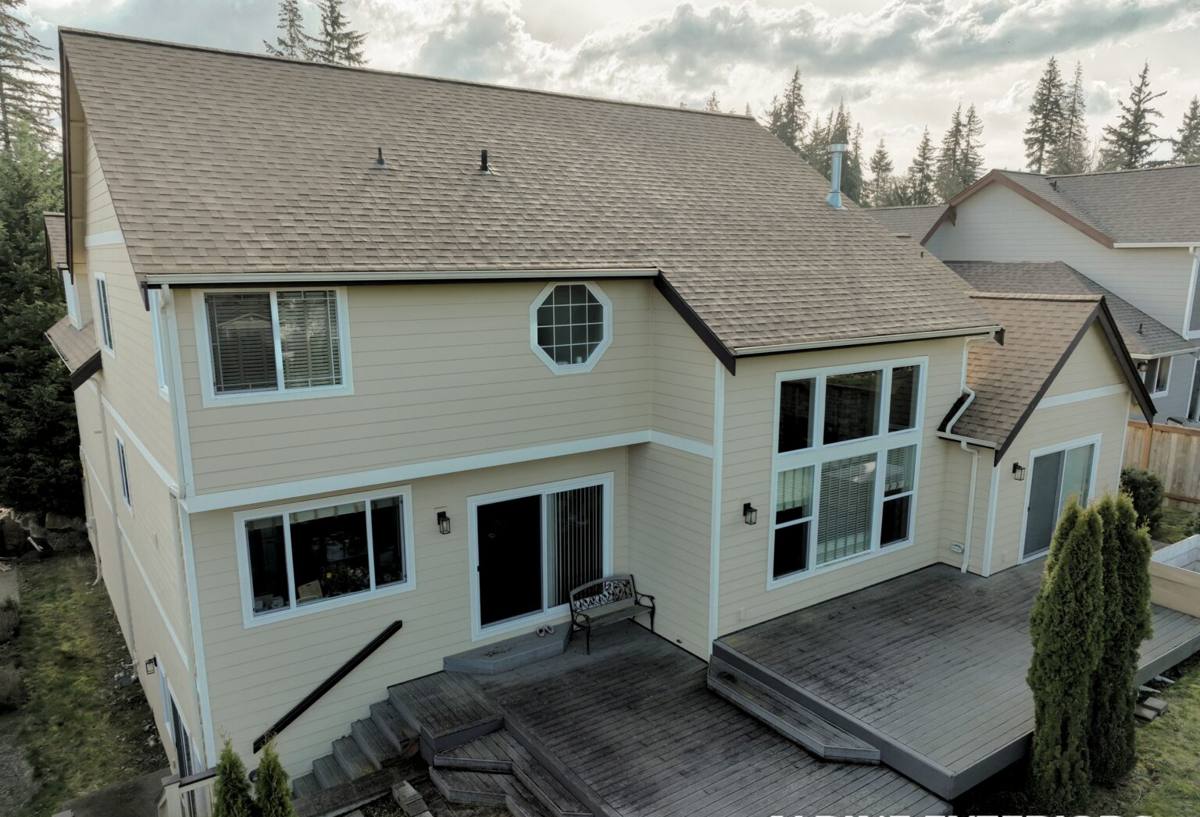
Signs Your Cordata Home's Windows Are Working Against You
Most homeowners don't think about their windows until something goes wrong. In this climate, the warning signs tend to show up gradually, and they're easy to write off as normal wear until they aren't.
- Condensation collecting between panes, which usually means a failed seal on a double- or triple-pane unit
- Cold drafts near the frame even when the window is fully latched
- Soft or discolored trim and sill wood, a sign moisture has been getting past the frame
- Visible moss or dark streaking on the exterior sill or casing
- Difficulty opening, closing, or locking a window that used to operate smoothly
- A noticeable temperature difference near windows compared to the rest of the room
- Rising heating costs without any other explanation
Any one of these on its own might not mean much. Several of them together, especially on the same wall or exposure, usually points to a window and flashing system that's no longer doing its job.
What "Energy-Efficient" Actually Means in This Climate
Energy efficiency ratings like U-factor and Solar Heat Gain Coefficient are useful, but they were developed as national standards, not Whatcom County-specific ones. For a Bellingham home, the more useful question is how a given window performs under sustained damp cold and driving rain, not just how it performs in a lab test.
The Factors That Matter Most Locally
A few specifications carry more weight here than in drier, sunnier regions:
- U-factor — lower numbers mean better resistance to heat loss through the frame and glass, which matters through our long heating season
- Gas-filled, multi-pane glazing — argon or krypton fill between panes cuts down on both heat loss and interior condensation
- Warm-edge spacer systems — the spacer between panes affects how much cold transfers to the glass edge, where fogging and frost typically start first
- Frame material behavior in constant moisture — some materials shed water and resist swelling far better than others over a 20-plus year lifespan
Frame Materials Compared for a Marine Climate
| Frame Material | Moisture Behavior | Maintenance | Typical Fit for Cordata |
|---|---|---|---|
| Vinyl | Won't rot or corrode; performs well in damp conditions | Low — occasional cleaning | Strong, cost-effective default for most homes |
| Fiberglass | Excellent dimensional stability; handles wet-dry cycling well | Low | Good upgrade for west- and south-facing walls that take the most weather |
| Wood, unclad | Attractive but vulnerable to swelling, rot, and moss growth over time | High — regular painting or sealing required | Requires disciplined upkeep; a harder fit for our climate without cladding |
| Aluminum-clad wood | Cladding protects the exterior face; interior wood still needs care | Moderate | Workable when appearance is a priority and maintenance is planned for |
None of these is universally "wrong" — the right choice depends on the wall's exposure, the home's style, and how much upkeep the homeowner wants to take on. As a matter of professional standard, we're cautious about recommending unclad wood on exposures that catch a lot of wind-driven rain, simply because the maintenance burden is real and the consequences of falling behind on it are expensive to reverse.
Reading Cordata's Microclimate Before We Recommend Anything
Not every wall of a house faces the same conditions. Before recommending specific products, we look at which direction each window faces, how exposed it is to wind and rain, how much roof overhang protects it, and whether nearby trees or structures keep it in shade and dampness longer than the rest of the house. A window on a sheltered, south-facing wall can often get by with a more modest package than one on an exposed west-facing wall catching the brunt of a winter storm. Treating every window on a house identically, regardless of exposure, usually means overpaying in some spots and under-protecting in others.
What a Correct Installation Actually Involves
The window unit itself is only part of the equation. In a climate this wet, the installation details around the window — the parts you never see once the trim goes back on — determine whether that window performs well for two decades or starts leaking within a few years.
- Removing the old unit and inspecting the rough opening for hidden rot or prior water damage before anything new goes in
- Installing a proper sloped sill pan so any water that does get past the exterior sheds outward, not into the wall
- Correctly layering flashing tape and building wrap so water is shingled downward and outward, never trapped behind the window
- Setting the window level, plumb, and square, then securing it per the manufacturer's fastening schedule
- Insulating the gap between the frame and rough opening without overpacking it, which can bow the frame
- Sealing the interior and exterior with the correct sealants — not the same product used in both locations, since interior and exterior joints need different moisture and air-sealing properties
- Finishing trim and caulking in a way that sheds water rather than collecting it
Skipping or rushing any one of these steps is how a well-rated, expensive window ends up with a moisture problem behind the wall within a few winters. It's also the most common reason we get called to fix work someone else installed.
Our Process for a Cordata Window Project
1. On-Site Assessment
We walk the exterior with you, look at each window's exposure and condition, and check for existing moisture or rot issues before recommending anything. This is also when we talk through frame material, glass package, and budget honestly, including trade-offs.
2. Measurement and Product Selection
Each opening is measured individually — older homes in particular rarely have perfectly uniform openings. We help you choose products matched to each wall's actual exposure rather than a one-size-fits-all package.
3. Installation Day
We remove the old units, address any rot or flashing issues we find in the opening (this is far more cost-effective to fix during a window job than later), and install using the sill pan, flashing, and sealing steps outlined above.
4. Final Walkthrough and Cleanup
We check operation, seals, and finish work with you before we consider the job done, and we clean up the site so you're not left with old units and debris.
Why Hiring a Crew That Already Works in Cordata Matters
Window installation isn't identical everywhere. A crew that's worked across Bellingham and Whatcom County neighborhoods has already seen how homes in this area age under constant moisture, which framing and flashing mistakes show up most often in local construction, and how to sequence a job around our weather rather than around an idealized dry-climate schedule. That experience shows up in fewer callbacks, fewer surprises once the old trim comes off, and a finished job that's actually built for the conditions it has to survive, not just the conditions on a spec sheet.
What Drives Window Project Cost
Every home and every window opening is different, so we don't quote sight unseen — but these are the main factors that move a project's cost up or down.
| Factor | Why It Affects Cost |
|---|---|
| Number of windows | More openings mean more labor and material, though per-unit cost often improves with volume |
| Frame material | Vinyl, fiberglass, and clad-wood options carry different material costs |
| Glass package | Triple-pane, upgraded coatings, and specialty glass add cost but improve performance |
| Opening condition | Rot, poor prior flashing, or out-of-square framing add repair time before the new window goes in |
| Access and height | Second-story or hard-to-reach windows take more time and equipment |
| Trim and finish work | Matching existing trim profiles or upgrading finish adds labor |
Living With Efficient Windows Through Bellingham's Moss Season
Even a well-installed, high-quality window still needs a little seasonal attention in this climate. Keeping weep holes clear of debris, wiping down sills before moss gets a foothold, and checking exterior caulk lines once a year go a long way toward protecting your investment. A quality installation makes this upkeep minor rather than urgent — but no window in Whatcom County is truly maintenance-free, and we'd rather tell you that upfront than let you find out the hard way.
If you're weighing a window project for your Cordata home, we're happy to take a look and walk you through honest options for your specific exposures and budget. Reach out for a free, no-pressure estimate using the form below.