 Bellingham Siding
 Why Roofs in Cordata Wear Differently
Cordata sits in north Bellingham, Whatcom County, close enough to Bellingham Bay and the Salish Sea that homes here deal with a mix of salt-laden air, near-constant marine moisture, and heavy tree cover left over from the second-growth timber that still lines many yards and greenbelts. That combination is hard on a roof in ways that inland, drier climates never see. Salt air accelerates corrosion on exposed metal fasteners and flashing. Driving rain, often pushed sideways by wind off the water, finds its way into any gap in flashing or underlayment that a drier climate would tolerate for years. And the shade from mature conifers and cedars keeps roof surfaces damp long after a storm passes, which is exactly what moss needs to take hold.
None of this means a roof in Cordata needs to be exotic or over-built. It means the details — ventilation, underlayment, flashing, and material choice — have to be right for this specific climate, not just "up to code" in a generic sense. A roof replacement done for a dry-climate spec sheet will underperform here inside a decade.
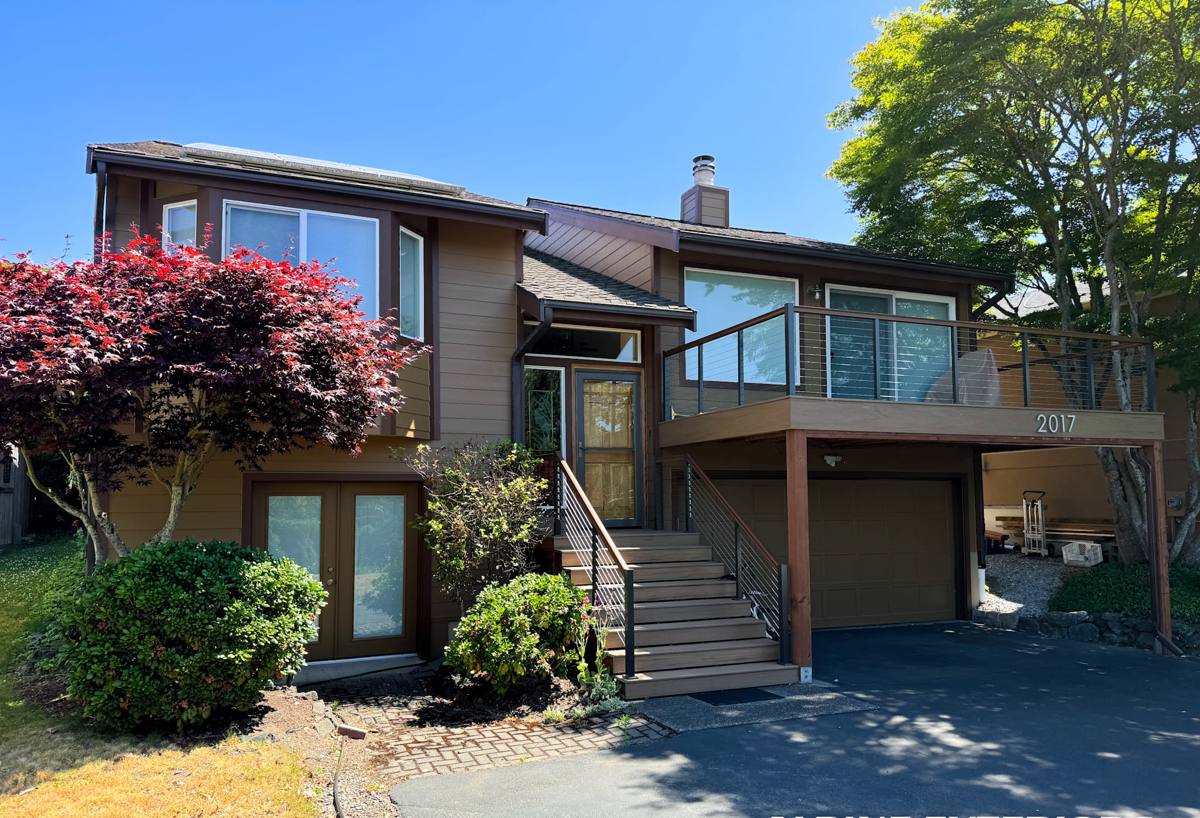
Signs a Cordata Roof Needs Replacing, Not Patching
Most homeowners call us after noticing one obvious problem — a leak, a soft spot, or shingles that look worn — but by the time a leak shows up inside the house, the roof has usually been compromised for a while. Here's what we look for when deciding whether a repair will actually hold or whether replacement is the honest recommendation:
- Granule loss heavy enough that you can see bare asphalt on multiple slopes, not just one weathered area
- Moss established at the shingle tabs and ridge line, not just on the surface — a sign moisture is already working under the shingle edges
- Soft or spongy decking felt when walked on, a sign water has reached the plywood or sheathing
- Curling, cupping, or cracked shingles on south- and west-facing slopes from years of UV and wet-dry cycling
- Rusted or lifting flashing around chimneys, vents, and valleys — common where salt air has been working on galvanized metal for years
- A roof approaching or past 20-25 years old with asphalt shingles, regardless of how it looks from the ground
One or two of these on their own might mean a targeted repair is enough. Several together, especially combined with age, usually means the roof system as a whole is past the point where patching makes financial sense.
What a Correct Roof Replacement Actually Includes
Tear-Off and Deck Inspection
We remove the existing roofing down to the deck rather than layering over old shingles. That's the only way to find soft or rotted sheathing, check the condition of the framing underneath, and start the new roof system on a solid, dry surface. Any damaged decking gets replaced before anything else goes down.
Underlayment and Water Protection
Given how much rain Whatcom County sees in a normal winter, the underlayment layer matters as much as the shingles themselves. We use synthetic underlayment across the full roof and self-adhering ice-and-water membrane at the vulnerable points — eaves, valleys, and roof-to-wall transitions — where wind-driven rain is most likely to work its way backward under the shingle course.
Ventilation
A roof that can't breathe traps moisture in the attic, which shortens the life of the decking from underneath even if the shingles up top look fine. We check intake at the soffits and exhaust at the ridge or roof vents and correct the balance where it's off, which is common on older Cordata homes built or re-roofed before current ventilation standards were common practice.
Flashing and Metal Work
Flashing around chimneys, skylights, and sidewalls is where most roof leaks actually start, not in the open field of shingles. We replace flashing rather than reuse it and use materials suited to salt-air exposure so it isn't the first thing to fail again in a few years.
Choosing a Roofing Material for This Climate
There's no single "best" roofing material for Cordata — the right choice depends on budget, how long you plan to stay in the home, and how much maintenance you want to take on. Here's how the common options actually compare under Bellingham's rain, shade, and salt-air conditions:
| Material | Moisture & Moss Behavior | Maintenance | Typical Lifespan Here |
|---|---|---|---|
| Architectural asphalt shingles | Good when installed with proper ventilation; algae-resistant versions help in shaded areas | Periodic moss removal and gutter cleaning | 20-30 years |
| Standing seam metal | Sheds water and moss very well; minimal surface for moss to grip | Low; occasional fastener and sealant check | 40-50+ years |
| Cedar shake | Attractive but holds moisture longer under heavy shade; needs consistent upkeep to resist rot and moss | High; regular treatment and inspection | 20-30 years with diligent upkeep |
| Composite/synthetic shingle | Resists moisture absorption well; performance varies by manufacturer | Low to moderate | 30-50 years depending on product |
For heavily shaded Cordata lots ringed by mature trees, we lean toward asphalt shingles rated for algae resistance or standing seam metal, since both shed moisture faster than cedar and give moss less to hold onto. We'll walk through the honest trade-offs for your specific lot and tree cover rather than pushing one product across the board.
Moss, Moisture, and Shade: Cordata's Particular Challenge
Cordata's mix of mature tree canopy and marine humidity makes it one of the more moss-prone pockets of Bellingham. Moss isn't just cosmetic — as it grows under shingle tabs, it lifts them slightly and holds water against the roof surface, which accelerates granule loss and, eventually, leaks. A few things make a real difference on a new roof:
Zinc or Copper Strips
Installed near the ridge, these release trace metal ions with every rain that inhibit moss and algae growth down-slope, without chemical treatment.
Gutter and Edge Maintenance
Debris from overhanging trees collects at the eaves and valleys faster in Cordata than in more open parts of town. Keeping gutters and roof valleys clear during the fall and winter months prevents standing water from sitting against the shingle edge.
Canopy Trimming
We're not arborists, but keeping branches trimmed back from the roofline reduces both debris buildup and the amount of shade holding moisture on the surface — a small step that meaningfully extends a new roof's moss-free years.
Our Roof Replacement Process
Homeowners want to know what's actually going to happen at their house, not a marketing pitch. Here's the sequence we follow on a typical Cordata replacement:
- On-site inspection of the current roof, attic, and ventilation, with photos and an honest assessment of what repair versus replacement actually requires
- Written estimate that breaks out material, labor, and any deck repair allowance so there are no surprise change orders mid-project
- Scheduling around Whatcom County's wetter months where possible, with a plan for tarping and weather delays if a stretch of rain moves in mid-tear-off
- Property protection — tarps over landscaping, plywood over walkways, magnetic sweeps for nails and debris
- Full tear-off, deck inspection and repair, then installation of underlayment, flashing, ventilation components, and the new roofing material
- Final cleanup and a walkthrough where we point out the ventilation and flashing work that's normally hidden once the roof is finished
Cost Factors for a Cordata Roof Replacement
Every roof is priced on its own specifics, but the factors that move the number up or down are consistent. Rough, honest ranges depend heavily on these:
| Factor | Why It Matters |
|---|---|
| Roof size and pitch | Steeper roofs take longer and need more safety setup; larger roofs mean more material and labor |
| Number of existing layers | Tear-off of two layers of old shingles costs more in labor and disposal than one |
| Deck condition | Rotted or soft sheathing found during tear-off adds material and labor to replace before roofing can go down |
| Material choice | Standing seam metal and premium composite products cost more upfront than architectural asphalt but last longer |
| Roof complexity | Valleys, dormers, skylights, and multiple penetrations all add flashing work and time |
| Access | Steep driveways, tight lots, or limited staging space can add setup time and equipment cost |
We'll give you a written number tied to your actual roof, not a phone-quote guess — the factors above are why two houses on the same block can end up with noticeably different roof replacement costs.
What to Ask Before You Sign a Roofing Contract
- Is the estimate written and itemized, or a single lump-sum number with no breakdown?
- Does the contractor carry current liability insurance and workers' compensation coverage, and will they provide proof?
- Who pulls the permit, and is that cost included in the estimate?
- What underlayment and ice-and-water shield are specified, and where will they be used on your roof?
- What's the manufacturer's warranty versus the contractor's workmanship warranty, and what voids each one?
- How does the crew handle an unexpected rain delay mid-tear-off?
A contractor who answers these plainly, without hedging, is telling you something about how they'll handle the rest of the job too.
Why Local Experience in Cordata Matters
A roof replacement crew that already works this part of Bellingham knows which slopes hold moss longest, which lots need extra attention to shade and drainage, and how the City of Bellingham's permitting and inspection process actually runs — not just the theory of it. That local pattern recognition shows up in small decisions: where to add an extra course of ice-and-water shield, which ventilation setup actually balances on a given roof shape, and how to sequence a tear-off around a week of typical Pacific Northwest weather instead of an idealized forecast. It's the difference between a roof that's technically installed to code and one that's actually built for Whatcom County conditions.
If your Cordata home's roof is showing its age or you just want an honest read on where it stands, we're glad to take a look. Request a free, no-pressure estimate using the form below and we'll walk the roof with you and lay out exactly what it needs.