 Bellingham Siding
 Building Decks in Ferndale: A Different Climate Than It Looks Like on Paper
Ferndale sits close enough to the water and to the open flats north of Bellingham that its weather behaves a little differently than places just a few miles inland. Homes here deal with a steady mix of salt-tinged air, wind-driven rain that doesn't fall straight down, and a wet season that runs long enough to grow moss on almost any horizontal surface that isn't built to shed water fast. A deck is one of the most exposed structures on a property — flat, outdoors, load-bearing, and attached directly to the house. Built without that climate in mind, a deck in this area can start showing problems in a handful of years instead of lasting decades.
We're a Bellingham-based crew and Ferndale is part of our regular service area, not a stretch job we take once and never see again. That matters more with decks than with almost any other exterior project, because the mistakes that cause real damage are usually hidden under the decking boards, not visible from the yard.
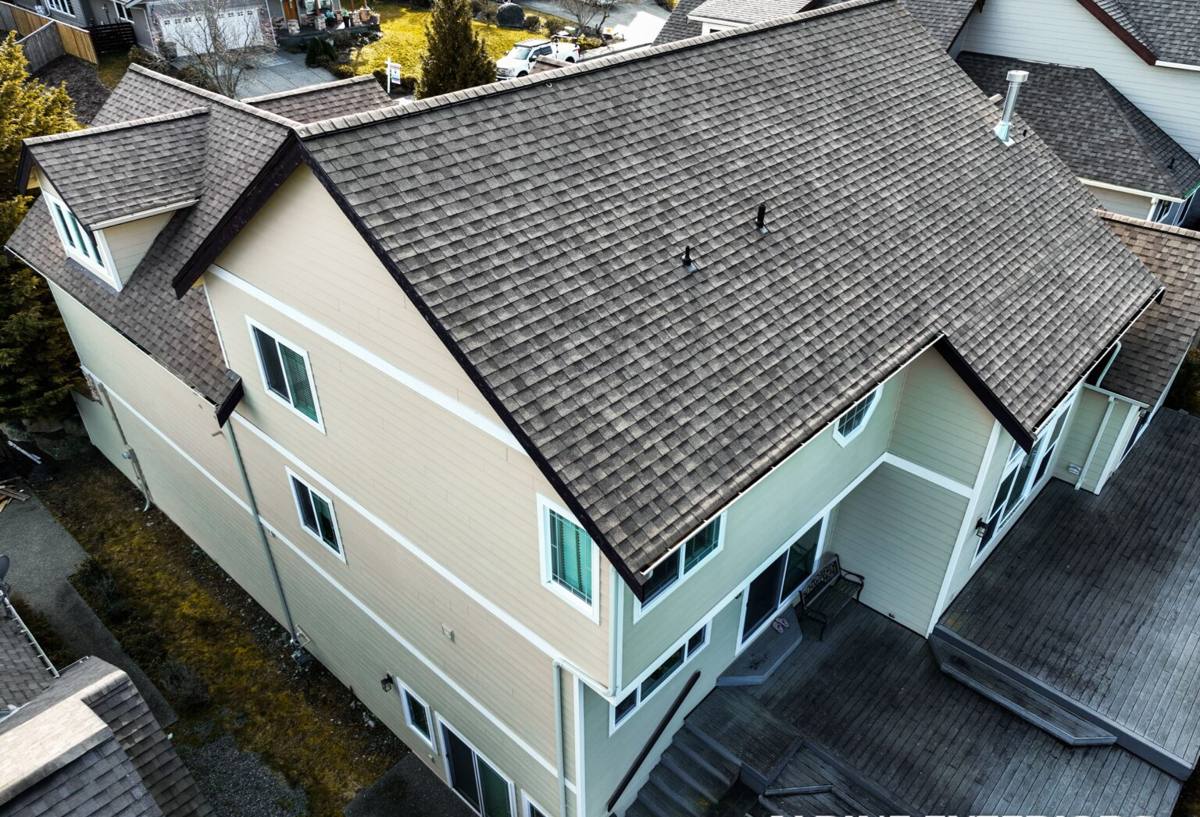
What Driving Rain and a Long Moss Season Actually Do to a Deck
Whatcom County's wet months aren't just about volume of rain — it's the duration and the wind that make the difference. Rain here gets pushed sideways against ledger boards, railings, and fascia instead of simply running off a flat surface. A deck that isn't detailed for that will let water track back into the house framing at the ledger connection, which is the single most common source of hidden rot in older decks we're called out to repair.
The long stretch of damp, low-light months also grows moss and algae on decking surfaces that don't get much direct sun or airflow underneath. Moss isn't just cosmetic — it holds moisture against the wood surface far longer than open air would, and it turns a deck slick and genuinely dangerous underfoot during the wettest months. A deck built with the wrong board spacing, no ventilation below, or a surface material that doesn't shed moisture well will develop this faster than most homeowners expect.
Add the salt air common to homes closer to the water around Ferndale and you get a third issue: metal hardware corroding faster than it would inland. Fasteners, brackets, and connectors that aren't rated for coastal exposure can start rusting and losing strength well before the wood around them shows any sign of wear.
The Three Failure Points We See Most Often
- Ledger board attachment without proper flashing, letting wind-driven rain track behind the house siding
- Standard or undersized fasteners corroding in salt-influenced air, weakening railing and joist connections from the inside out
- Decking laid tight to the frame with no drainage gap or airflow underneath, trapping moisture and accelerating moss growth and rot
Choosing the Right Decking Material for a Ferndale Home
There's no single "best" decking material — it's a real trade-off between upfront cost, long-term maintenance, and how the material behaves in this specific climate. We walk every homeowner through these trade-offs honestly rather than pushing whatever has the best margin.
| Material | Upfront Cost | Maintenance in This Climate | Typical Lifespan Here |
|---|---|---|---|
| Pressure-treated wood | Lowest | Needs regular cleaning, moss treatment, and re-staining or sealing every 1-2 years | 10-15 years with upkeep |
| Cedar | Moderate | Naturally more rot-resistant but still needs sealing and moss management; shows weathering if neglected | 15-20 years with upkeep |
| Composite decking | Higher | Occasional washing; resists moisture absorption and rot, but surface can still grow algae film if never cleaned | 25-30 years, manufacturer-dependent |
| PVC/capped polymer | Highest | Lowest maintenance of the group; sheds water and resists staining well in wet climates | 25-30+ years |
For homes closer to Ferndale's open, wetter, moss-prone lots, we generally steer clients toward composite or capped polymer decking when budget allows, simply because it removes the yearly maintenance cycle that wood requires to keep moss and moisture out of the surface. That said, plenty of homeowners choose wood deliberately for the look and lower upfront cost — the honest trade-off is accepting the maintenance schedule that comes with it, not skipping it.
What's Underneath Matters More Than What You Walk On
The framing, flashing, and fasteners under a deck are what determine whether it lasts 10 years or 30, and they're the parts a homeowner never sees once the project is finished. This is also where corner-cutting is easiest to hide and hardest to catch after the fact.
Framing and Hardware Standards We Hold To
- Ledger board flashed with a proper water-diverting detail, not just caulked, so wind-driven rain can't track behind it into the house wall
- Stainless steel or coated fasteners and structural connectors rated for coastal/marine-influenced exposure, not standard galvanized hardware that corrodes faster in salt air
- Joist tape or flashing on the top of every joist to keep standing water from soaking into the wood over years of exposure
- A drainage gap and airflow path under the decking so moisture doesn't sit trapped against the framing during the wet months
- Footings sized and set to local frost depth and soil conditions, not just poured to the minimum
None of this is visible in a finished photo. It's the difference between a deck that needs a board replaced here and there over decades versus one that needs the whole substructure rebuilt in year twelve.
Railings, Fascia, and Finish Details That Actually Hold Up Here
Railings and fascia boards take the brunt of driving rain because they're vertical and exposed on every side. Wood railing systems need the same fastener and sealing attention as the decking itself, and any horizontal cap rail — a spot where water sits rather than sheds — is a common place we see rot start first on older decks. Composite and aluminum railing systems handle this exposure with less upkeep, which is worth weighing the same way as decking material: lower maintenance for a higher upfront cost.
Fascia boards along the deck's edge should be a material that won't wick moisture from end grain, and any post base connecting to a concrete footing needs a standoff or base that keeps the wood post from sitting directly in standing water after a heavy rain.
Permitting and Code Considerations for a Ferndale Deck
Most deck projects above a certain size or height require a permit, and requirements can differ between the City of Ferndale and unincorporated Whatcom County depending on exactly where the property sits. Setback rules, guardrail height, footing depth, and ledger attachment methods are all things a local inspector will check, and getting these wrong after the fact means tearing out finished work. Because we work in this area regularly, we handle the permit process as part of the job rather than leaving a homeowner to navigate it alone, and we build to pass inspection the first time rather than treating code minimums as optional.
Our Process for a Ferndale Deck Project
- On-site consultation — we look at sun exposure, drainage on the lot, proximity to water/salt air influence, and how the deck will actually be used before recommending a material or layout.
- Design and material selection — honest comparison of wood versus composite versus polymer options based on your budget and how much upkeep you want to take on.
- Permitting — we prepare and submit what's required for the jurisdiction your property falls under.
- Demolition or site prep — removal of any existing structure and grading as needed for proper drainage.
- Framing and flashing — ledger attachment, footings, joists, and all the hidden protective details covered above.
- Decking, railing, and finish work — installed to the manufacturer's specification, which matters for warranty coverage on composite and polymer products.
- Final walkthrough and inspection sign-off — confirming everything is built to code and to your expectations before we consider the job done.
Keeping a Ferndale Deck Healthy Year to Year
Even the best-built deck benefits from some seasonal attention in a climate like this. This is the same checklist we give our own clients:
- Sweep leaves and debris off the deck surface regularly through fall, especially in shaded corners where moisture lingers
- Wash the surface at least once a year with a deck-safe cleaner to remove moss and algae film before it takes hold
- Check railing posts and stair connections annually for any looseness, which can signal fastener corrosion underneath
- Reseal or re-stain wood decking on the schedule recommended for the product — skipping a year in this climate compounds fast
- Keep gutters and downspouts near the deck clear so overflow isn't dumping extra water onto the structure
- Look underneath once a year if access allows, checking for standing water, soft wood, or rust streaks on hardware
Why It Matters That We Already Work in Ferndale
A deck built by a crew unfamiliar with this specific stretch of Whatcom County is more likely to get generic details that work fine in a drier climate but fall short here — standard hardware instead of coastal-rated fasteners, no drainage gap because it wasn't built with a long wet season in mind, or a ledger flashing detail that's technically to code but not built for wind-driven rain. We're not driving in from out of the area to bid a single job and disappear. We're based in Bellingham, we already know how this climate treats decks over time, and if something needs a follow-up years down the line, we're still local and still reachable.
If you're planning a new deck or replacing one that's showing its age, we're happy to walk the property with you and talk through honest options for your budget and how much maintenance you actually want to take on. Reach out for a free, no-pressure estimate using the form below.