 Bellingham Siding
 Window Replacement in Barkley: A Newer Neighborhood Meeting an Old Climate Problem
Barkley is one of Bellingham's newer planned neighborhoods, built out over the last couple of decades with a mix of single-family homes, townhomes, and condos. That newer construction gives homeowners here an advantage most older Bellingham neighborhoods don't have, but it doesn't make Barkley immune to what Whatcom County's climate does to windows over time. Salt air drifting inland off Bellingham Bay, driving rain that comes in sideways as often as it falls straight down, and a moss season that runs long through fall, winter, and spring all put steady pressure on window seals, frames, and flashing, regardless of how new the house is.
What's changed is the timeline. A lot of Barkley homes are now reaching the age, roughly fifteen to twenty-five years, where original builder-grade windows start showing their limits: failed seals, foggy glass, stiff hardware, and flashing details that were adequate on install day but were never built for decades of sustained marine exposure. We work on window replacement throughout Barkley and the surrounding Whatcom County area, and the approach we bring accounts for that specific combination, newer housing stock meeting an unforgiving climate, rather than treating every job like a generic replacement.
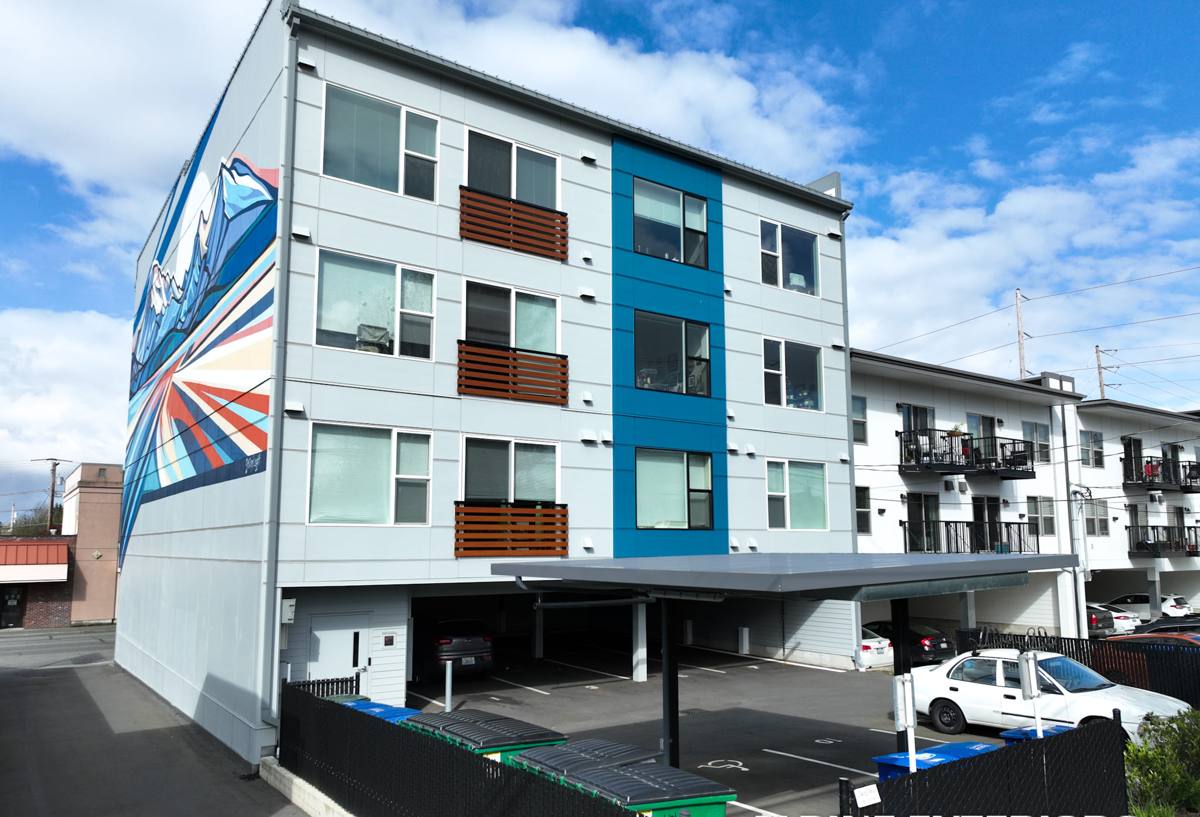
What Bellingham's Climate Does to Windows in Barkley
Barkley isn't a waterfront neighborhood, but it's close enough to Bellingham Bay and the Salish Sea that marine weather reaches it in full force. The specific ways that weather works against windows are worth understanding before deciding whether a window needs repair, replacement, or nothing at all.
Salt Air, Even This Far Inland
Salt-laden air carried off the bay doesn't stop at the waterline. It travels inland on wind and settles on everything outside, including window hardware, screen frames, and exposed fasteners. Over years, that accelerates corrosion on lower-grade metal components faster than a dry inland climate would, and it keeps painted or coated trim wetter, longer, which speeds up finish breakdown around window openings.
Driving Rain and Flashing Stress
Storms rolling through Whatcom County tend to push rain sideways into wall assemblies rather than letting it fall straight down. For windows, that means water gets forced into seams, laps, and fastener points that a calmer climate would never test. A window's flashing, not the glass or the frame, is usually what determines whether that wind-driven water stays outside or works its way behind the siding.
A Moss Season That Doesn't Really End
Shaded walls, north-facing exposures, and window trim under tree cover stay damp for long stretches across fall, winter, and much of spring here. That's exactly the condition moss and mildew need to establish themselves, and window sills and wood trim are common places it shows up first. On wood components without adequate protection, sustained dampness isn't just cosmetic; it eventually leads to soft spots and rot at joints and corners.
Condensation From Temperature Swings
The gap between a heated interior and a cold, wet exterior creates real condensation pressure on glass and frames. Fogging between panes, moisture pooling on interior sills, or a window that feels perpetually damp around the edges are usually signs a seal has failed, not just normal winter weather.
Signs a Barkley Home Needs Window Replacement
Most homeowners call because one specific window is bothering them, not because they've inspected every opening in the house. It's worth knowing the fuller list of what to look for:
- Fogging or visible moisture trapped between panes of a double-pane window
- Drafts or cold spots near the frame even with the window fully latched
- Wood sills or trim that feel soft, look discolored, or show visible rot
- Hardware that's stiff, corroded, or hard to lock
- Visible daylight or gaps where the frame meets the siding
- Moss or green staining building up on sills or shaded trim
- Paint or finish failing faster around the windows than on the rest of the exterior
- Rising heating bills with no other obvious explanation
None of these alone means every window in the house needs replacing. But they're worth having looked at by someone who can tell the difference between a seal that needs replacing and a frame that's actually failing.
What a Correct Window Replacement Job Involves
Swapping an old sash for a new one isn't the hard part of a window replacement. The details around it are what determine whether the new window performs for one wet winter or several decades.
Removing the Old Window Without Damaging the Opening
The old unit has to come out carefully enough to expose the rough opening without tearing the surrounding weather-resistive barrier or siding more than necessary. This is also when hidden problems, such as soft framing or old flashing that was never installed correctly, actually get found, before they get sealed back up behind a new window.
Flashing and Weather-Resistive Barrier Integration
This is the step that decides whether wind-driven rain stays outside the wall. Flashing has to lap correctly with the house wrap or weather-resistive barrier above and below the opening, and every seam needs to be sealed with materials rated for sustained moisture exposure. Caulk has a place in this process, but it's a supplement to correct flashing, not a substitute for it.
Insulating and Air-Sealing the Gap
The gap between the new window frame and the rough opening needs to be filled with the right amount of low-expansion insulating material, not packed so tight it bows the frame, and not left so loose that it becomes a draft and moisture path. Getting this wrong is a common source of the drafts homeowners notice even after a replacement that looked fine on install day.
Trim and Finish Work
Interior and exterior trim needs to be reinstalled or replaced cleanly, with exterior caulking and paint or finish work matched to the surrounding wall so the new window doesn't stand out as an obvious patch job. On a newer Barkley home, this usually means matching existing trim profiles and colors closely enough that the replacement reads as original.
Frame Material and Glass Options for This Climate
We install vinyl and fiberglass window systems suited to the Pacific Northwest's wet, mild climate, and we'll walk through the real trade-offs for a specific home rather than defaulting to one option for every job. Wood-frame windows without cladding are more moisture-sensitive than either alternative, which matters given how much sustained dampness this region sees.
| Frame Material | Moisture & Salt Air Behavior | Typical Maintenance | Cost |
|---|---|---|---|
| Vinyl | Resists rot and corrosion well; performs reliably in mild, wet climates like Whatcom County's | Low, no painting or sealing required | Most affordable |
| Fiberglass | Dimensionally stable across temperature swings; holds up well to sustained coastal moisture | Low; can be painted if a custom color is wanted | Mid to upper range |
| Wood-clad | Exterior cladding protects the frame, but any gap or damage in the cladding exposes wood to moisture | Higher; cladding and interior wood finish need periodic attention | Highest |
Glass package matters as much as frame material in this climate. Double or triple-pane glazing with a low-E coating improves energy performance in both directions: less heat loss during cold, damp stretches, and less unwanted heat gain in summer. It also noticeably reduces the interior condensation Barkley homeowners tend to notice on cold window glass in winter. Argon or krypton gas fill between panes adds further insulating value. We'll go over what glazing package makes sense for the budget and which windows in the house face the most weather exposure, since not every opening needs the same spec.
Our Window Replacement Process for Barkley Homeowners
- On-site assessment — we check frame condition, seal integrity, hardware function, and how existing flashing ties into the siding at each opening
- Honest recommendation — repair, replace, or leave alone, explained window by window rather than as a blanket answer
- Measuring and ordering — precise field measurements for each opening, with a realistic lead time before installation can begin
- Removal and installation — old units come out carefully, flashing and insulation are installed to spec, and new windows are set, shimmed, and sealed
- Trim, finish, and cleanup — interior and exterior trim matched to the surrounding wall, worksite left clean
- Final walkthrough — we confirm every window operates correctly and answer any remaining questions before calling the job done
What Window Replacement Costs in Barkley
We won't quote a number without seeing the windows in person, since the range for a single opening and a whole-house replacement are entirely different conversations. What we can walk through upfront is what actually moves the price:
| Cost Factor | Why It Matters |
|---|---|
| Number of windows | Whole-house replacement typically brings a lower per-window cost than one-off replacements |
| Frame material | Vinyl is generally the most affordable; fiberglass and wood-clad cost more |
| Size and configuration | Larger units, bay or bow windows, and multi-panel configurations cost more than a standard single or double-hung window |
| Glazing package | Triple-pane glass, upgraded low-E coatings, and specialty gas fills add cost over a standard double-pane package |
| Condition of the existing opening | Rot or framing repair needed behind the old window adds labor before the new one can go in |
| Access and site conditions | Second-story or hard-to-reach windows take more time and equipment than ground-level openings |
Most homeowners find it useful to prioritize the windows showing the clearest signs of failure first, such as fogged glass, soft trim, or persistent drafts, rather than replacing an entire house at once if budget is a factor. We'll give that kind of honest, window-by-window read rather than pushing a bigger project than the home actually needs.
Why a Crew That Already Works in Barkley Matters
Barkley's status as a planned neighborhood means a lot of homes share similar architectural styles, trim details, and in some cases design guidelines that affect what a replacement window needs to look like from the street. A crew that already works in this neighborhood recognizes those patterns and plans around them instead of treating every job like a blank slate.
That familiarity extends to the climate side too: how much wind-driven rain a given wall orientation actually takes on, where moss establishes first based on shade and drainage, and how flashing needs to be sequenced to hold up through a full Whatcom County wet season rather than just look right on a dry install day. Those are decisions homeowners rarely see directly, but they're exactly what determines whether a window replacement is still performing cleanly in fifteen years or showing drafts and soft trim in five.
A Few Questions Worth Asking Before You Hire
- Ask specifically how they handle flashing integration with your existing siding, not just what window brand they sell
- Confirm current Washington contractor licensing and active liability insurance
- Get a written scope that separates the manufacturer's product warranty from the installation warranty
- Ask whether they recommend repair or replacement for each window individually, and why
- Ask about realistic lead times, since window orders in this region can run several weeks depending on size
If you're dealing with drafty, foggy, or hard-to-operate windows on a Barkley home, or you're simply not sure whether repair or replacement makes more sense, we're glad to take a look and give a straightforward answer. Reach out using the form below to schedule a free, no-pressure estimate.