 Bellingham Siding
 Custom Windows in Cordata: A Different Job Than a Standard Replacement
Cordata sits in north Bellingham along the I-5 corridor, an area that's grown steadily with newer subdivisions, business parks, and infill construction over the last few decades. That growth is exactly why custom window work shows up so often here. Additions and bump-outs need windows sized to openings a stock catalog was never built for. Homeowners upgrading a builder-grade picture window for more light or a better view need something bigger than the original rough opening. And some of the earlier-generation homes in the neighborhood are now old enough that their original windows, or a prior owner's mismatched repair job, no longer match anything a standard insert replacement can solve cleanly.
"Custom" in this context doesn't mean an upgrade tier or a marketing label. It means the window has to be built to an exact opening, shape, or combination that a stock size won't fit, and it means the installation has to account for structural and flashing details that a routine swap doesn't. We handle siding, roofing, windows, and decks across Whatcom County, and on custom window work specifically, we treat the measuring, structural check, and flashing plan as the real job. The window itself is only as good as the opening it's built into.
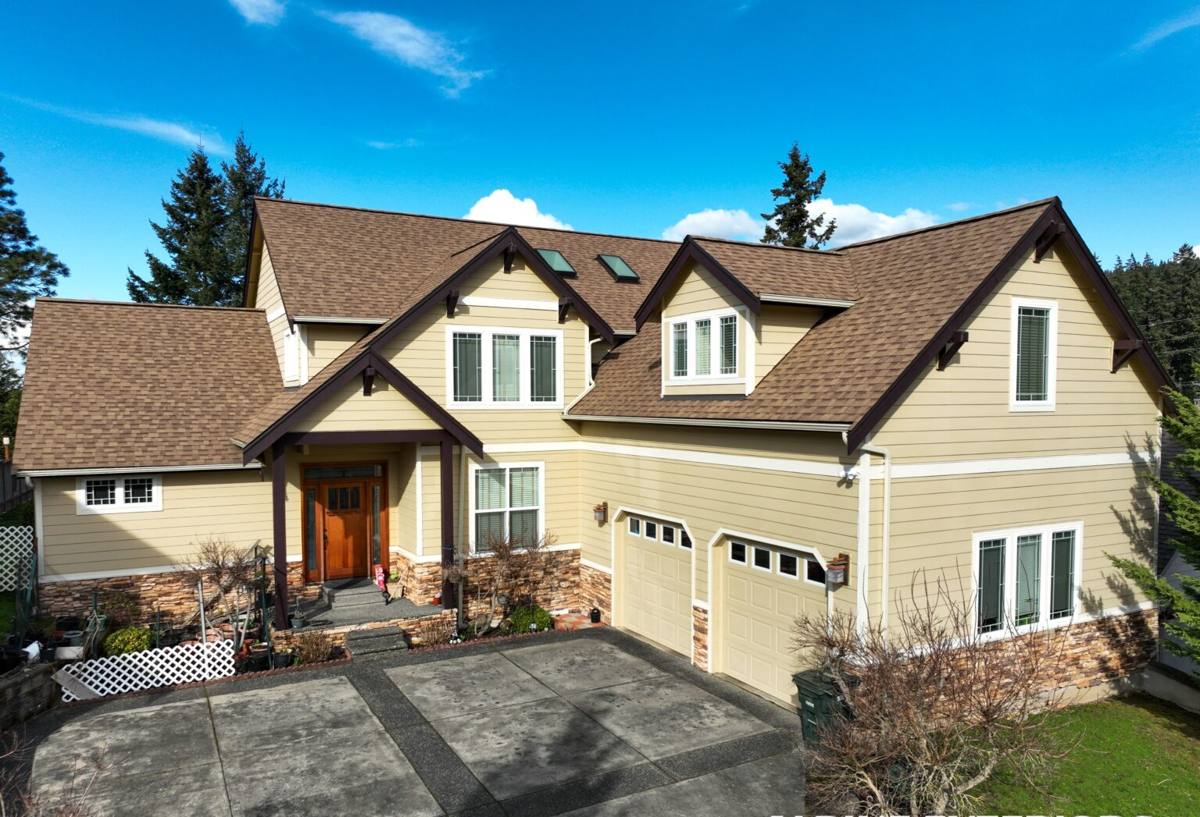
What Cordata's Climate Does to Custom Window Installations
Driving Rain and Wind Exposure
Cordata sits back from the immediate waterfront, but it's still inside the same weather system that soaks the rest of Whatcom County. Storms moving in off the Salish Sea push rain sideways into wall assemblies rather than dropping it straight down, and a custom window with more seams, more corners, or a projecting bay adds more places for that wind-driven rain to test the installation. A stock double-hung window has one head, one sill, and two jambs to flash correctly. A bay window has three walls, a roof, and a seat, each with its own seam.
Salt-Tinged Marine Air
Even set back from the bay itself, Cordata gets a steady dose of salt-carrying marine air moving through on winter storms. Over years, that accelerates corrosion on lower-grade hardware, screen frames, and fasteners, and it's a slower kind of damage that doesn't show up right away. Custom units with more hardware, more operable sashes, or specialty finishes have more components exposed to that corrosion load than a single fixed pane does.
A Long Moss and Mildew Season
Mild temperatures and consistent moisture through fall, winter, and spring give moss and mildew a long season to work on anything shaded or slow to drain. Window sills, trim, and the framing around custom shapes with flat surfaces or shelf-like ledges are common places it takes hold first, especially on north-facing walls or under deep eaves.
Condensation and Temperature Swings
The gap between a heated interior and a cold, damp exterior creates real condensation pressure on glass and frames through the wet months. Larger custom units and bay or bow configurations have more glass surface area exposed to that swing, which makes glazing package and frame material choices matter even more than they do on a standard-sized window.
What Actually Makes a Window "Custom"
A handful of situations turn a straightforward window job into a custom one, and it's worth knowing which category a project falls into before getting a quote:
- Non-standard rough opening: An opening that's a few inches off from any catalog size, common in additions, older homes, or after a remodel that shifted framing.
- Bay and bow windows: Multi-panel units that project out from the wall, requiring roof, seat, and support framing in addition to the window units themselves.
- Garden windows: Small projecting units, often over a kitchen sink, with their own mini-roof and glass shelf that need to shed water on all sides.
- Oversized or combination units: Large picture windows or multi-window combinations built for view or light that exceed standard sizing.
- Specialty shapes: Arched, angled, or transom-style windows that don't come in a stock rectangular size.
Any of these can be the right call for a Cordata home. The point isn't to talk homeowners out of them — it's to make sure the structural and flashing work behind the window gets the same attention as the window itself, since that's where most long-term problems actually start.
Why Stock Insert Replacement Doesn't Work for These Projects
A standard insert replacement fits a new window into an existing, sound frame with minimal disruption to the surrounding siding and trim. That approach only works when the opening is already a usable size and shape. Custom projects usually require removing the old unit down to the rough opening, sometimes reframing it, and building the flashing and drainage plane back from scratch rather than reusing what's there. That's more labor and more lead time, but it's the honest way to handle an opening that doesn't match a catalog size, and it's the only way to get the flashing detail right on something like a bay window with its own roof line.
Cost and Planning Factors for Custom Window Projects
| Factor | Standard Replacement | Custom Window Project |
|---|---|---|
| Measurement | Fits an existing frame or common stock size | Exact opening measurement, often with structural verification |
| Lead time | Typically a few weeks from order | Often longer, since units are built to a one-off spec |
| Structural work | Rarely needed | Common for bay, bow, or oversized units — headers and support framing may need attention |
| Flashing complexity | One head, sill, and two jambs | Multiple seams, roof lines, or angled surfaces to integrate with the wall |
| Siding and trim impact | Minimal disturbance to surrounding siding | Often requires cutting back and re-trimming siding around the new opening |
Real numbers depend on the size, shape, and condition of the existing opening, which is why we walk the specific project in person before quoting rather than pricing off a general window count.
Our Process for a Custom Window Installation
- On-site assessment of the existing opening, framing condition, and what the homeowner actually wants from the new window — light, view, ventilation, or all three.
- Exact measurement and a structural check for any project that changes the opening size or adds a projecting unit like a bay or bow window.
- Ordering the unit to spec, with a realistic lead time communicated up front rather than glossed over.
- Careful removal of the old window and preparation of the opening, including any reframing the new size or shape requires.
- Installation with flashing and a drainage plane built for the specific shape involved, not a one-size-fits-all approach borrowed from standard replacement work.
- Integration with the surrounding siding and trim so the finished opening looks intentional, not patched.
Flashing and Integration: Why It Matters More on Custom Work
Every seam in a window installation is a potential entry point for water, and custom windows simply have more seams than a standard rectangular unit. A bay or bow window adds a roof-to-wall transition and side-wall corners that a flat installation never has to deal with. A garden window needs to shed water off a small roof without directing it back toward the house. An oversized picture window has more perimeter to seal correctly and more glass area working against the frame in wind. None of that is a reason to avoid custom windows — it's a reason to treat the flashing plan as engineering, not an afterthought once the window is set in place.
A Checklist Before Hiring for Custom Window Work in Cordata
- Ask whether they measure and build a structural plan on-site before ordering, rather than working off rough estimates
- Ask specifically how they'll flash a bay, bow, garden, or oversized unit — this is where custom work succeeds or fails
- Confirm current Washington contractor licensing and active liability insurance
- Get a written scope that covers structural framing, flashing, and siding integration, not just the window unit itself
- Ask about realistic lead times, since custom-built units almost always take longer than stock sizes
Why a Local Crew Matters for Custom Window Work
A contractor who works Cordata and the surrounding Bellingham area regularly has already seen how driving rain, salt-tinged air, and a long moss season behave on custom shapes specifically, not just on standard windows. That experience shows up in the decisions that matter: how much roof pitch a bay window needs to shed water properly, where a garden window's mini-roof needs extra flashing attention, and which openings in this neighborhood's mix of newer subdivisions and infill construction tend to need reframing before a new unit will ever fit correctly. Those are the details that separate a custom window that performs for decades from one that starts leaking the first wet winter.
If you're planning an addition, upsizing a window for more light, or dealing with an opening that just doesn't match anything in a stock catalog, we're glad to take a look at your Cordata property and talk through what's actually involved. Reach out using the form below for a free, no-pressure estimate.