 Bellingham Siding
 Decks Built for Happy Valley's Trees, Slopes, and Weather
Happy Valley sits close to Western Washington University on Bellingham's south side, and it's one of the city's more heavily wooded, hillier neighborhoods. That combination — mature tree canopy, sloped lots, and Bellingham's marine climate — puts specific demands on a deck that a flat, open-lawn property in a drier part of the county simply doesn't face. A deck built here needs to handle shade that never fully burns off, runoff that moves downhill instead of just falling straight down, and a construction season that has to work around a lot of wet weeks.
We build and repair decks throughout Bellingham and Whatcom County, and Happy Valley's yards come with a recognizable set of problems: undersized footings on sloped ground, ledger boards that were never properly flashed, and decking that turns green and slick every fall because nobody accounted for how little sun the surface actually gets. None of that is unusual for the neighborhood — it's just what needs to be planned for from the start.
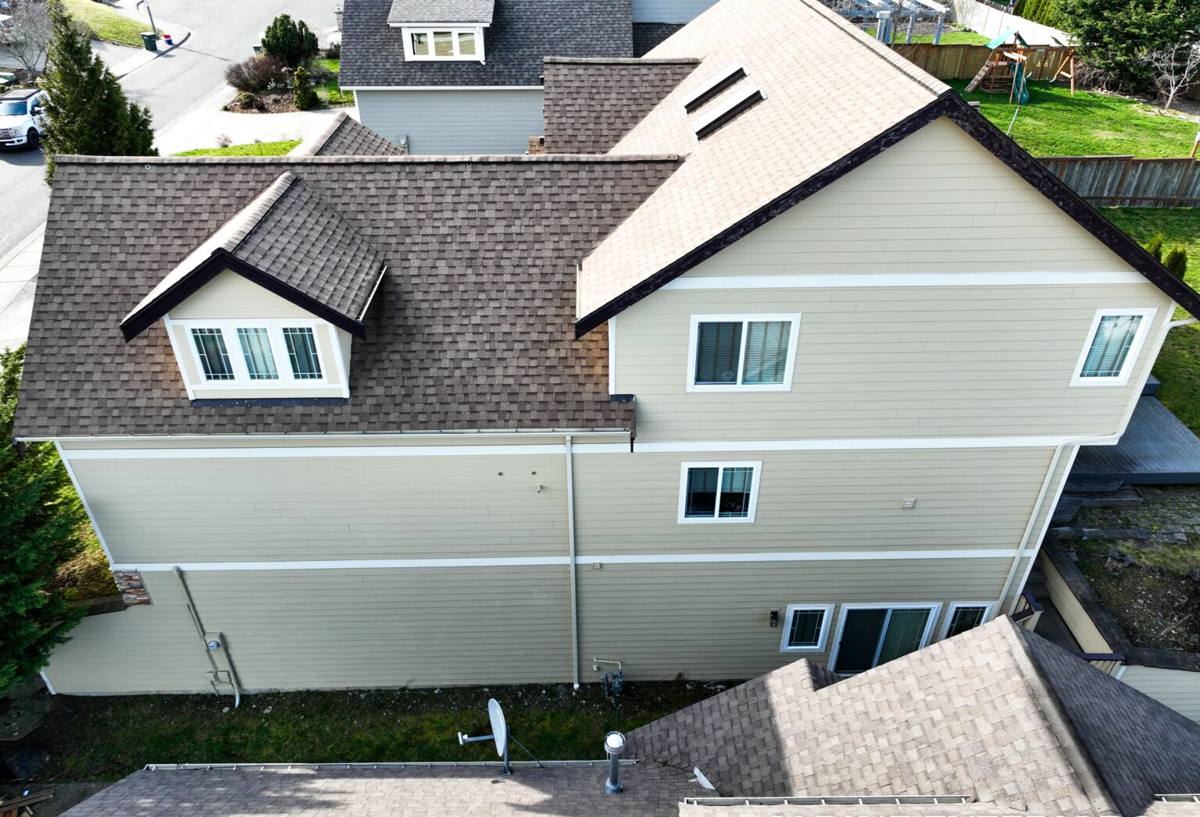
What Bellingham's Climate Does to an Outdoor Deck
Bellingham's location on the water means every exterior structure in town deals with salt-laden air, long stretches of driving rain, and a moss season that can run from fall through spring. Happy Valley's tree cover adds another layer on top of that: less direct sun to dry surfaces out, more leaf and needle litter collecting between boards, and damp shade that keeps wood and hardware wet longer than they'd stay in an open yard.
Salt Air and Fasteners
Coastal air corrodes unprotected steel over time — screws, joist hangers, and structural connectors that aren't rated for exterior or coastal exposure will eventually rust, stain the decking around them, and lose holding strength. This matters more for structural hardware than for surface screws, since a corroding joist hanger is a safety issue, not just a cosmetic one.
Driving Rain and the Ledger Connection
Where a deck attaches to the house — the ledger board — is the single most common failure point on decks in this climate. Wind-driven rain gets pushed sideways and upward into gaps that would never see water in a calmer climate. Without correct flashing and a proper gap between the ledger and siding, water tracks behind the band board and starts rotting framing you can't see until it's already a repair job, not a maintenance item.
Moss Season and Usable Footing
Shaded decking in Happy Valley grows moss and algae faster than decking in full sun, and a mossy deck surface is genuinely slippery — this isn't just an appearance issue. Board spacing, surface texture, and drainage underneath the deck all affect how fast moss takes hold and how hard it is to keep off.
Choosing Decking Material for a Shaded, Damp Lot
There's no single "best" decking material — the right choice depends on how much sun the deck actually gets, how much maintenance the homeowner wants to keep up with, and budget. For a shaded, moss-prone lot like a typical Happy Valley yard, we weigh these differently than we would for a south-facing deck in full sun.
| Material | How It Handles Shade & Moisture | Maintenance | Typical Lifespan Here |
|---|---|---|---|
| Pressure-Treated Fir/Pine | Holds up structurally but stays damp longer in shade, which accelerates checking and encourages moss/algae growth on the surface | Needs re-staining or sealing every 1-2 years to shed water and slow mildew staining | 15-20 years with consistent upkeep |
| Cedar | Naturally more rot- and insect-resistant, but still needs airflow underneath and between boards to avoid staying wet in heavy shade | Periodic cleaning and oiling to maintain color and resist mildew | 20-25 years, more with diligent care |
| Composite/PVC Decking | Doesn't absorb moisture like wood, but surface texture matters — smoother caps can still get slick with algae film in constant shade | Occasional washing; no staining or sealing required | 25-30+ years, backed by manufacturer warranty |
We don't push one product on every job. A composite deck makes a lot of sense for a heavily shaded Happy Valley lot where a homeowner doesn't want to be out there scrubbing and re-sealing every year. A well-built cedar deck, kept clean and oiled on a schedule, can also perform well and gives a different look. The trade-off is honest: less maintenance up front with composite, more character and a lower material cost with real wood, but a real time commitment to keep it looking and performing well.
Structural Decisions for Sloped, Wooded Lots
Footings on Uneven Ground
A lot of Happy Valley properties slope enough that a deck can't just sit on a uniform grid of footings at one height. That means more engineering attention to footing depth and post height variation, and it means we're often digging in root-heavy soil from established trees. We plan footing locations around root systems where we can, both to protect mature trees and because cutting through large roots to force a footing into a "convenient" spot is bad practice either way.
Elevation, Stairs, and Guardrails
Sloped lots frequently mean an elevated deck, which brings guardrail height, baluster spacing, and stair geometry into play under Washington building code — not optional details, but code minimums that get inspected. Elevated decks also need more attention to how water sheds underneath, since a taller deck traps less air movement at ground level than a low platform deck does, which can extend how long the ground and lower framing stay damp.
Ventilation Under the Deck
In a shaded yard, airflow underneath the deck structure is one of the most overlooked factors in how long the framing lasts. Skirting that seals off airflow completely looks tidy but can trap moisture against joists and posts. We detail skirting and under-deck spacing to keep some airflow moving even where the client wants the underside enclosed.
How We Build a Happy Valley Deck
- Site walk and grading assessment. We look at slope, tree root locations, existing drainage patterns, and how the deck will tie into the house before drawing anything up.
- Design and material selection. We size the deck to the lot, pick footing type and post spacing for the actual ground conditions, and go over decking material trade-offs based on how much sun the space realistically gets.
- Permitting. We handle the City of Bellingham (or Whatcom County, for lots outside city limits) permit submittal and inspections so the work is documented and legal.
- Footings and framing. Footings are set to code depth for our frost line and soil conditions; framing uses corrosion-resistant, coastal-rated hardware throughout — not just at the ledger.
- Ledger flashing. This is where we spend extra care: proper flashing, correct standoff from the siding, and sealed penetrations so wind-driven rain doesn't get behind the house wall.
- Decking, rail, and stairs. Installed per the chosen material's spec — including fastener spacing and gapping calibrated for our wet climate rather than a manufacturer's generic dry-climate defaults.
- Final walk-through. We cover maintenance expectations specific to a shaded lot before we consider the job done.
Permits and Code for Deck Work in Bellingham
Most decks attached to a house and elevated above a certain height require a building permit in Bellingham and unincorporated Whatcom County, and inspections happen at set points during construction — typically footings, framing, and final. Requirements can shift based on deck height, size, and whether it's attached or freestanding, so we confirm the specifics for each property rather than assuming. Skipping permits on an elevated deck isn't just a compliance risk; it also becomes a real problem at resale, when a buyer's inspector or the county has no record of the structure being reviewed.
Keeping a Shaded Deck Clean Through Moss Season
- Sweep leaf and needle litter off the deck regularly in fall — trapped organic debris between boards is what feeds moss growth fastest.
- Rinse and lightly scrub the surface a couple of times through the wet months rather than waiting until spring to deal with a heavy moss buildup.
- Keep gutters and downspouts near the deck clear so runoff isn't dumping extra water directly onto or under the structure.
- Trim back overhanging branches where practical to let in more light and airflow, without compromising the tree.
- Check board gaps periodically — debris-packed gaps hold moisture against the framing below, not just the surface.
- Re-oil or re-stain wood decking on schedule; a worn-out finish absorbs and holds water instead of shedding it.
Why Local Experience in Happy Valley Matters
A crew that's worked this neighborhood knows the pattern before they even walk the lot: the slope, the tree cover, the shaded corners that never quite dry out. That's not something you get from a general contractor who mostly builds in open, sunny yards elsewhere in the county. It shows up in small decisions — where footings actually go relative to root systems, how much standoff a ledger needs on a particular type of siding, which decking material makes sense for a yard that gets three hours of direct sun instead of eight. Those decisions are what separate a deck that still looks and performs well in ten years from one that needs major repair in three.
Questions to Ask Before You Sign a Deck Contract
- Will you pull the required permit, and who schedules the inspections?
- What fastener and hardware grade are you using, and is it rated for coastal/exterior exposure?
- How will the ledger be flashed where it meets my siding?
- How are footings sized and placed given the slope and tree roots on my lot?
- What's the realistic maintenance schedule for the decking material we choose?
- What's included in the written estimate, and what would trigger a change order?
If you're planning a new deck or need an honest look at one that's already showing its age, we're happy to walk the property with you and lay out real options — no pressure, no obligation. Use the form below to request a free estimate.