 Bellingham Siding
 Building Decks for Puget's Marine Climate
Puget sits close enough to the water that homes here deal with a different set of conditions than decks built twenty miles inland. Salt-laden air moves through fasteners and hardware faster than most homeowners expect, driving rain gets pushed sideways against ledger boards and stair stringers, and the shoulder seasons bring weeks of damp, low-sun weather that keeps every horizontal surface wet. A deck built to a generic spec sheet doesn't hold up to that combination for long. A deck built with Puget's actual conditions in mind does.
We're a Bellingham-based crew that works this part of Whatcom County regularly, and deck building here is its own discipline. It's not just picking a decking board and framing a rectangle — it's making dozens of small decisions about fasteners, flashing, ventilation, and material that either add up to a deck that's still solid in fifteen years or one that starts showing rot, corrosion, and moss by year five.
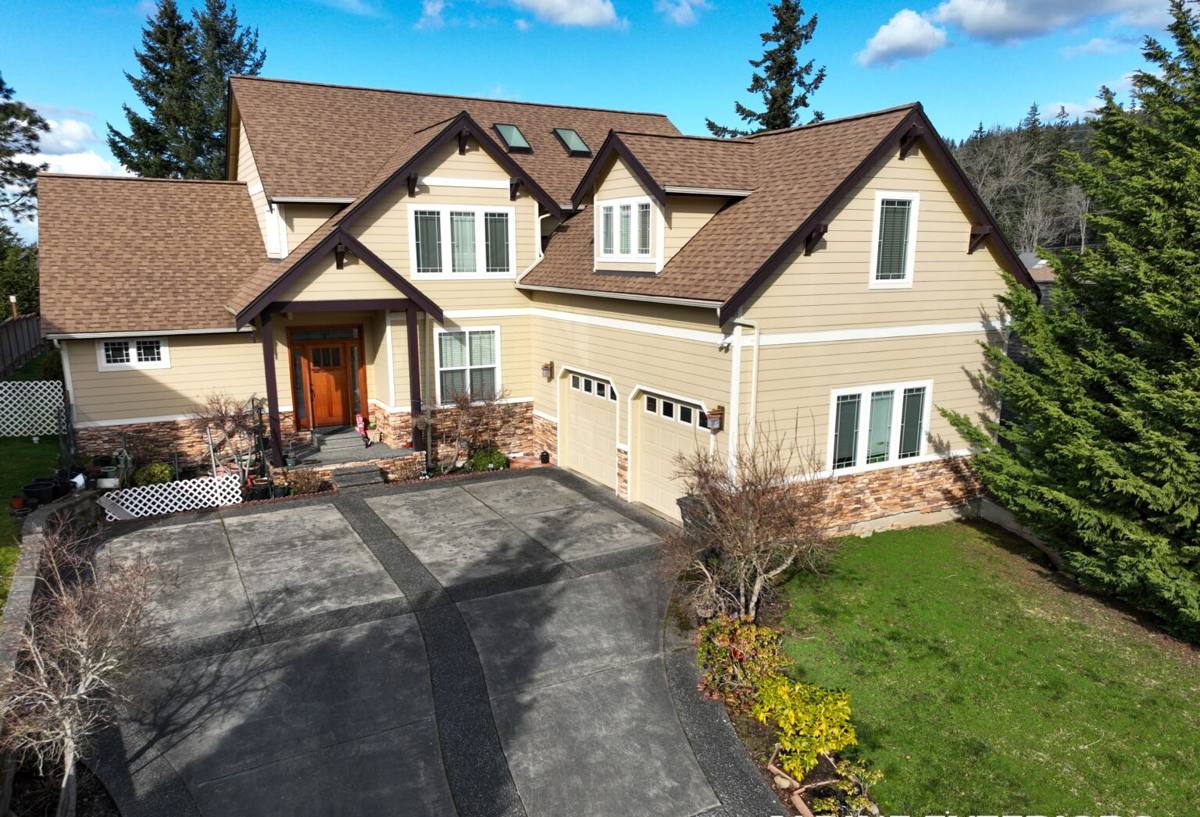
What Salt Air, Rain, and Moss Actually Do to a Deck
Each of these three factors attacks a deck in a different way, and understanding the mechanism is how you build against it.
Salt Air and Corrosion
Airborne salt accelerates corrosion on anything metal — screws, joist hangers, post bases, structural bolts. Standard electro-galvanized fasteners can start showing rust streaks and pitting well before a wood-framed deck would otherwise need attention. Once a fastener corrodes, it loses holding strength long before it looks obviously bad, which is part of why deck hardware failures often show up as a surprise rather than a slow, visible decline.
Driving Rain and Water Intrusion
Wind-driven rain off the water doesn't fall straight down — it gets pushed under rail caps, behind ledger boards, and into any gap where flashing was skipped or installed loosely. The ledger connection (where the deck attaches to the house) is the single most common point of hidden rot on decks in this area, because that's where water has both a horizontal surface to sit on and a wood-to-wood joint to seep into.
Moss and Prolonged Dampness
Bellingham's long stretch of overcast, wet months means deck surfaces — especially north-facing decks or ones shaded by trees — stay damp for extended periods. Moss and algae take hold on any surface that doesn't dry out between rain events, and beyond being slippery, a moss layer holds moisture against the decking material itself, which shortens the life of both wood and lower-grade composite products.
Choosing Materials That Actually Hold Up Here
There's no single "best" decking material — there's a best material for a given budget, sun exposure, and maintenance appetite. We walk homeowners through the real trade-offs instead of pushing one product line.
| Material | How It Handles This Climate | Maintenance | Typical Lifespan |
|---|---|---|---|
| Pressure-treated fir/hem-fir | Handles moisture well when properly sealed; needs re-coating to resist moss and graying | Annual cleaning, re-seal every 1-2 years | 15-20 years with upkeep |
| Cedar | Naturally rot- and insect-resistant; still needs sealing against driving rain and moss | Cleaning and re-oiling every 1-2 years | 15-25 years with upkeep |
| Composite/PVC decking | Won't rot or absorb water into the board itself; still needs cleaning where moss and algae sit on the surface | Periodic washing, no sealing or staining | 25-30+ years, manufacturer-dependent |
| Standard PT lumber (framing) | Fine for structure when paired with corrosion-resistant hardware and proper flashing | Low, if hardware and flashing are correct | Structural life matches hardware quality |
Composite decking has gotten popular here largely because it removes the moss-and-moisture maintenance cycle from the surface material — but the framing underneath still needs to be built to the same standard regardless of what decking goes on top. A composite deck on poorly flashed, standard-hardware framing will still develop hidden rot at the ledger even though the surface looks fine.
Framing and Substructure — Where Most Deck Problems Start
The decking boards are what you see; the framing is what determines whether the deck is safe and long-lasting. In a marine climate, we treat the substructure differently than a builder working inland might:
- Stainless steel or heavy hot-dip galvanized fasteners and joist hangers — not the standard electro-galvanized hardware that corrodes faster in salt air
- Proper joist spacing and beam sizing for the actual decking material and span, not a generic minimum
- Post bases set above grade with a gap for airflow and drainage, not buried in soil or mulch where moisture sits against the wood
- Ledger board bolted and flashed with a code-compliant water-resistive barrier, not just lag-screwed to the rim joist
- Blocking and bracing sized for both vertical load and lateral movement, which matters more where wind off the water adds sway to a structure
Drainage, Flashing, and Keeping Water Moving
Good deck drainage isn't glamorous, but it's the difference between a deck that dries out between storms and one that stays wet enough to rot or grow moss year-round.
We pay particular attention to a few points that get skipped on lower-quality builds:
- Ledger flashing that directs water out and away from the house wall, with a drip edge that actually clears the siding below it
- Board spacing and gapping calculated for the specific decking product, since composite and wood expand and contract differently
- Grading and any under-deck drainage system sloped so water moving through the deck surface doesn't pool against posts or footings
- Stair stringers and rail posts sealed at end grain, since exposed end grain is where wood absorbs water fastest
None of this is visible once the deck is finished, which is exactly why it matters to get it right the first time — these are not repairs you want to make after the fact.
Our Deck Building Process
Every deck we build in Puget follows the same sequence, adjusted for the specific site conditions:
- On-site assessment — we look at sun exposure, tree cover, drainage slope, and how exposed the site is to wind and rain off the water, since a shaded north-facing deck needs different moss and moisture handling than one in full sun
- Design and material selection — sizing, layout, and decking material chosen against your budget and maintenance preference, with the trade-offs laid out plainly
- Permitting — we pull the required permit and build to current code, including guard rail height, baluster spacing, and stair geometry
- Demolition or footing work — old deck removal if applicable, footings poured or set to local frost and load requirements
- Framing — ledger, beams, joists, and hardware installed to the corrosion-resistant standard described above
- Decking, railing, and stairs — installed with proper fastening and gapping for the chosen material
- Final walkthrough — we go over the finished deck with you, including what maintenance it actually needs (and what it doesn't)
Permits and Code in Whatcom County
Most deck projects in and around Bellingham require a building permit, and the requirements scale with the size and height of the deck — a low deck close to grade has different rules than an elevated deck with a guard rail requirement. We handle the permit process as part of the job rather than leaving it to the homeowner, and we build to the structural and safety code that applies to the property, not just to what a contract might list as a minimum.
Maintenance: What Puget Homeowners Actually Need to Do
The maintenance a deck needs here depends heavily on the material, but a few habits apply across the board:
- Sweep debris and standing leaves off the surface regularly — trapped organic matter is what feeds moss and algae growth
- Rinse or lightly scrub the surface a couple of times a year, more often on shaded or north-facing decks
- Check and re-seal wood decking on the schedule the product calls for — skipping a cycle is when moss and graying set in fast
- Look at the ledger flashing and any visible hardware once a year for early rust or gaps in the flashing
- Keep gutters and downspouts near the deck clear, since overflow onto or near a deck adds to the moisture load it's already dealing with
None of this is difficult, but it does need to happen — a deck built correctly still needs basic upkeep in this climate, it just needs far less of it than one built to a lower standard.
Why a Local Puget Crew Makes a Difference
A crew that works this specific area regularly has already seen how decks perform here over years, not just at handoff. We know which fastener grades actually hold up against the salt air this close to the water, which ledger details fail first when driving rain hits a wall at an angle, and which decking products handle a long moss season without turning into a maintenance chore. That's knowledge you don't get from a spec sheet — it comes from building and later repairing decks in this exact climate.
We also know the Whatcom County permit process and inspection expectations, which keeps the project moving instead of stalling on paperwork. And because we're local, follow-up if something needs attention down the road isn't a scheduling headache — we're already working in the area.
Getting Started
If you're planning a new deck or replacing one that's showing its age, we're happy to take a look and talk through what makes sense for your site, budget, and how much upkeep you want to deal with down the road. Reach out for a free, no-pressure estimate using the form below.