 Bellingham Siding
 Building Decks That Actually Hold Up in Silver Beach
Silver Beach is one of the more established residential pockets in Bellingham, with a mix of older homes on wooded lots and newer construction tucked in among mature trees. It's a great setting for outdoor living — until you factor in what Whatcom County weather does to an outdoor structure year-round. Salt-tinged air drifting up from Bellingham Bay, driving rain that runs sideways in a winter storm, and a moss season that can stretch from October well into April all put real stress on a deck's hardware, fasteners, and wood fiber. A deck built the way it would be built somewhere dry and inland simply doesn't last as long here.
We build and repair decks for homeowners throughout Bellingham and Whatcom County, and Silver Beach jobs come with their own set of considerations — tree canopy that keeps surfaces damp longer, sloped lots that complicate drainage, and older homes where the original ledger attachment or footings may not meet current expectations. This page walks through what a deck built for this specific neighborhood and climate should include, and what our process looks like from first visit to final walkthrough.
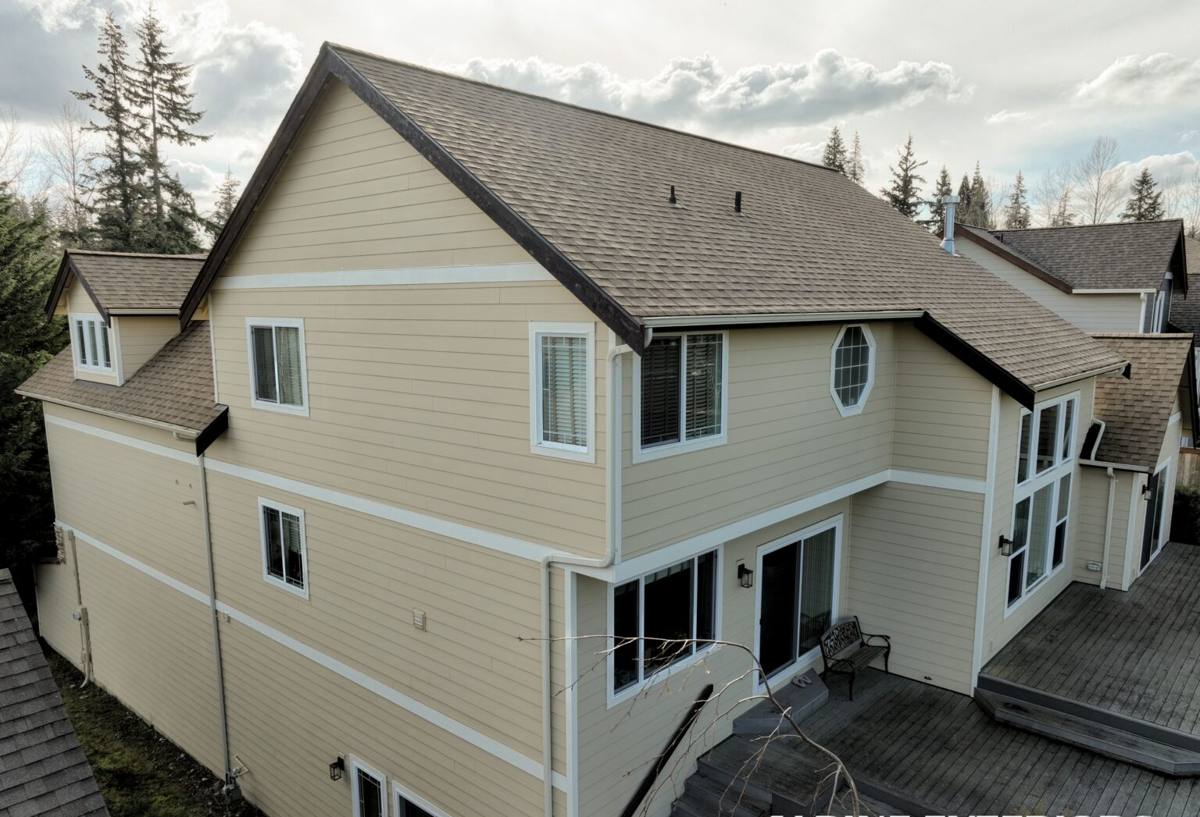
What Silver Beach Homes Need From a Deck
Every deck we build in this area has to answer to the same handful of local conditions:
- Shade and moisture retention. Mature trees are part of what makes Silver Beach attractive, but heavy canopy means decking surfaces dry out slower after rain, which extends the window for moss, algae, and mildew to take hold.
- Corrosion-prone air. Proximity to Bellingham Bay means a steady low-level exposure to salt-tinged marine air, which accelerates rust and corrosion on lower-grade fasteners and connectors faster than most homeowners expect.
- Sloped and uneven lots. Many Silver Beach properties step down toward the water or sit on a grade, which changes how footings, beam spans, and stair layouts need to be engineered.
- Driving, wind-blown rain. Storms off the water don't always fall straight down. Ledger flashing, board spacing, and under-deck drainage all matter more here than they would on a fully sheltered inland lot.
None of these are exotic problems, but they're the kind of thing that gets skipped when a deck is built to a generic spec rather than to the site in front of it.
Material Choices That Hold Up in This Climate
There's no single "best" decking material for every Silver Beach project — it depends on budget, how much upkeep you want to commit to, and how much sun versus shade the site gets. Here's how the common options actually perform under local conditions:
| Material | Moisture & Moss Behavior | Maintenance | Typical Lifespan |
|---|---|---|---|
| Pressure-treated pine/fir | Absorbs moisture readily; needs sealing to resist moss and rot in shaded spots | Annual cleaning, re-sealing every 2-3 years | 15-20 years with upkeep |
| Cedar | Naturally rot- and insect-resistant, but surface grays and holds moisture without regular oiling | Cleaning and oil/stain every 1-2 years | 20-25 years with upkeep |
| Composite (capped) | Sheds moisture well, resists moss better than wood, but can stay slick in deep shade | Periodic washing; no staining or sealing | 25-30+ years, manufacturer-warrantied |
| PVC decking | Fully moisture-resistant, best option for heavily shaded or low-airflow areas | Occasional washing | 30+ years, manufacturer-warrantied |
For sun-exposed decks on more open Silver Beach lots, quality wood is often a perfectly reasonable choice if you're willing to maintain it. For heavily shaded sites under tree cover — which describes a fair number of lots in this neighborhood — composite or PVC decking earns its higher upfront cost by resisting the moss and algae buildup that wood fights every year.
Fasteners and Hardware Matter More Than the Boards
We see more deck failures caused by the wrong hardware than by the wrong decking material. In a marine-air environment, standard galvanized fasteners can corrode faster than the wood around them, leading to staining, loosening connections, and eventually structural movement. We spec stainless steel or heavy-duty coated fasteners rated for exterior and coastal-adjacent use on every Silver Beach project, along with corrosion-resistant joist hangers and structural connectors — it costs a little more upfront and saves a full rebuild later.
What a Correctly Built Deck Involves
A deck that's going to hold up in this climate for decades needs to get several things right below the surface, not just on top:
Footings and Framing
Footings need to be sized and set below frost depth and engineered for the actual soil conditions on the lot — this matters more on the sloped sections common around Silver Beach, where a footing that would be adequate on flat ground may need to be deeper or wider. Joist spacing and beam spans get sized to the decking material and expected load, not just built to whatever spacing looks familiar.
Ledger Attachment and Flashing
Where a deck attaches to the house, proper flashing keeps wind-driven rain from working its way behind the ledger board and into the home's wall assembly. This is one of the most common failure points we find on older decks in this area — a missing or improperly lapped flashing detail that's been quietly letting water in for years before it shows up as visible rot.
Drainage and Airflow
Board spacing and under-deck ventilation determine how quickly a surface dries out after rain. On shaded lots especially, a deck built too tight to the ground or without adequate airflow underneath stays damp far longer, which is exactly the condition moss and mildew need to establish.
Stairs and Railings
On sloped lots, stair stringers need to be sized correctly and railings need to meet current code height and baluster spacing requirements — an area where older Silver Beach decks built decades ago often fall short of what's expected today.
Our Process for Silver Beach Deck Projects
- Site visit and assessment. We look at grade, drainage, tree cover, and the existing structure (if it's a replacement) to understand what the site actually demands.
- Design and material selection. We walk through the material comparison above in the context of your budget, sun exposure, and how much maintenance you want to take on long-term.
- Permitting. Deck permits in the City of Bellingham depend on height, size, and attachment to the home — we handle the permit process so you don't have to decode it yourself.
- Construction. Footings, framing, ledger flashing, decking, and railings, built to the specifics of your lot rather than a one-size-fits-all template.
- Final walkthrough. We go over the finished deck with you, including what maintenance it will and won't need going forward.
Maintenance Checklist for Long Deck Life in Silver Beach
Whatever material you choose, a little seasonal attention goes a long way in this climate:
- Sweep debris and fallen leaves off the deck regularly, especially in fall — trapped organic matter is what moss and algae feed on
- Clean the surface at least once a year with a deck-safe cleaner to remove early moss and mildew before it takes hold
- Check and re-seal or re-stain wood decking every 1-3 years depending on sun exposure
- Inspect fastener heads and connectors annually for rust staining or corrosion, particularly on railings and stair hardware
- Keep gutters and downspouts near the deck clear so runoff isn't draining directly onto or under the structure
- Trim back overhanging branches where practical to improve airflow and sun exposure on shaded sections
Common Mistakes We Fix or Avoid
When we're called out to repair or rebuild an existing Silver Beach deck, a handful of issues show up repeatedly: ledger boards attached without proper flashing, standard galvanized fasteners corroding in connectors after just a few years, footings undersized for the slope they're set on, and decking installed tight to the ground with no airflow underneath. None of these are difficult to avoid with the right approach up front — they just require building to the site and climate rather than to a generic checklist.
Why Hire a Crew That Already Works This Neighborhood
A deck built without accounting for Silver Beach's tree cover, slope, and marine-influenced air might look fine the day it's finished and still cause problems within a few seasons. Working regularly in this neighborhood means we already know which lots tend to hold moisture, where drainage typically needs extra attention, and what the City of Bellingham expects for permitting on a residential deck. That local familiarity translates into fewer surprises during the build and a deck that's actually built for the conditions it has to survive — not just the conditions on a spec sheet.
If you're planning a new deck or need an honest look at an existing one, we're happy to come out, walk the site with you, and put together a straightforward, no-pressure estimate — just fill out the form below to get started.