 Bellingham Siding
 Why Columbia Homes Need Windows Built for This Climate
Columbia is one of Bellingham's older, established neighborhoods, which means a lot of its houses are still running on the windows they were built or last remodeled with. In most parts of the country that's just a cosmetic issue. In Whatcom County, it's an energy bill and a moisture problem rolled into one. Our marine climate doesn't hit homes with brutal cold snaps very often — it wears them down slowly, with damp air, driving rain off the Sound, and long stretches of gray, wet weather where windows never really get a chance to dry out between storms.
Energy-efficient windows matter here for two reasons: they cut the steady heat loss that comes from single-pane or worn-out double-pane glass through our long heating season, and a properly installed unit keeps water out of the wall assembly behind it. That second part is the one homeowners underestimate. A window that looks fine but was installed without the right flashing and sealant details can be quietly rotting the framing around it for years before anyone notices a stain on the drywall.
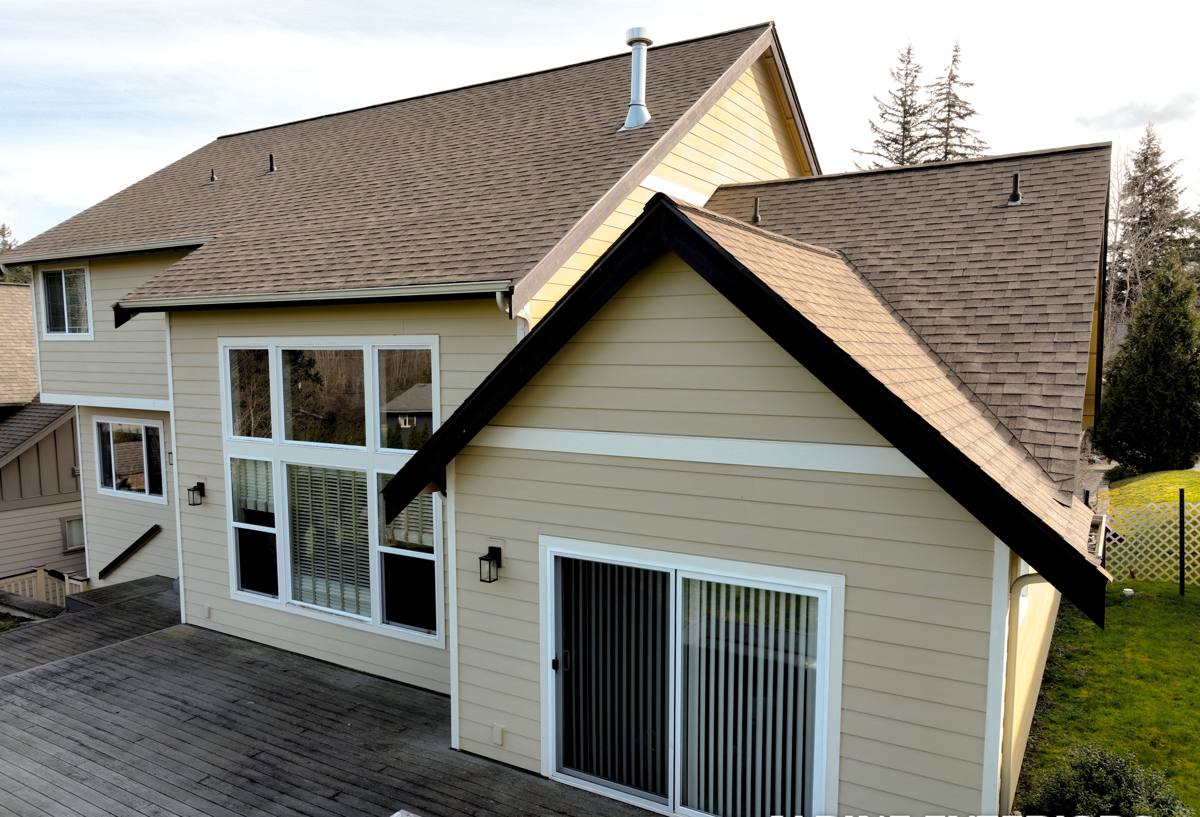
What Whatcom County Weather Does to Windows Over Time
A Long Moss Season Means Long-Term Moisture Exposure
Bellingham's moss season isn't just a roof and siding issue — it's a sign of how many months a year surfaces here stay damp. Window sills, bottom rails, and the trim around openings sit in that same damp environment. On older wood windows, this is where paint failure and soft, rotting wood usually show up first. On any window, it's a reminder that seals, weep holes, and drainage paths need to actually work, not just look finished.
Salt Air Is Hard on Hardware
Being this close to Puget Sound means a steady trace of salt in the air across the region, and that air finds its way into window hardware, screen frames, and any exposed fasteners. Locks that stick, cranks that seize on older casement units, and corrosion on aluminum components are common complaints we hear on homes that haven't had window hardware serviced in a decade or more. Good glazing choices help with energy performance, but hardware and finish quality matter just as much for how a window holds up here.
Driving Rain Tests Every Seam
Whatcom County storms don't always come straight down — wind-driven rain hits windows at an angle and pushes water into any gap that isn't properly sealed or flashed. This is the single biggest reason we see interior water staining below window openings on older homes, and it's almost never the glass itself that's failing. It's the perimeter seal, the flashing behind the trim, or a sill pan that was never installed in the first place.
What "Energy-Efficient" Actually Means for Your Windows
The phrase gets used loosely, so it helps to know what's actually being measured. Two numbers matter most for our climate:
- U-factor — how much heat escapes through the window. Lower is better for our long heating season; this is the number that most directly affects your winter energy bill.
- Solar Heat Gain Coefficient (SHGC) — how much solar heat passes through the glass. In a climate with as little direct sun as ours, this matters less than in hot, sunny regions, but it still affects comfort on west- and south-facing rooms.
Look for the NFRC label on any window you're quoted — it's an independent rating, not a marketing number, and it's the only way to compare products on equal footing.
Glass and Glazing
Double-pane, low-E glass with an argon or krypton gas fill is the standard upgrade for most homes here and performs well for the money. Triple-pane glass adds more insulating value and a bit more sound dampening, but it's heavier, costs more, and the marginal energy benefit in our climate is smaller than it would be somewhere with real winter cold. We'll tell you honestly when triple-pane is worth it for a specific room and when double-pane low-E is the smarter spend.
Frame Material
Frame choice affects both energy performance and how the window holds up to our weather over 20-plus years. Here's how the common options stack up for a marine climate like ours:
| Frame Material | Energy Performance | Moisture & Salt-Air Behavior | Maintenance |
|---|---|---|---|
| Vinyl | Good; multi-chamber designs insulate well | Handles moisture and salt air with no corrosion risk | Low — no painting, occasional cleaning |
| Fiberglass | Very good; low expansion/contraction keeps seals tight | Excellent stability in damp, variable conditions | Low — factory finish holds up well |
| Aluminum | Weaker unless thermally broken | Prone to corrosion and condensation in salt-air, damp conditions | Moderate — hardware needs periodic attention |
| Wood / Wood-Clad | Good natural insulator | Vulnerable at exposed wood if finish isn't maintained | Higher — needs regular finish upkeep |
We install a range of these depending on the home and the homeowner's priorities. Our standard is fitting the frame material to the exposure of each specific opening — a covered, protected window and one that takes the brunt of driving rain don't always call for the same answer.
Signs Your Current Windows Are Working Against You
Most homeowners don't realize how much a tired set of windows is costing them until they start looking for it. Walk your home and check for:
- Visible condensation or fogging between the panes (a sign the seal has failed on a double-pane unit)
- Drafts you can feel with a hand near the frame on a windy day
- Windows that are difficult to open, close, or lock — often a sign of frame warping or hardware corrosion
- Soft or discolored wood on the sill, jamb, or interior trim
- Rooms near windows that feel noticeably colder in winter than the rest of the house
- Visible daylight or gaps around the frame from outside
- Paint or finish that's peeling specifically around the window opening, even if the rest of the trim looks fine
Any one of these is worth a look. Several together usually means it's time to stop patching and start planning a real replacement.
How We Handle a Window Project in Columbia
- On-site assessment. We look at each opening individually — sun exposure, rain exposure, current condition, and how it ties into the surrounding siding and trim — rather than quoting a blanket product for the whole house.
- Product selection based on the opening, not a sales script. We walk you through frame material, glass package, and grille or finish options, and we'll tell you plainly where a cheaper option is genuinely fine and where it isn't.
- Proper removal and prep. This is where a lot of window jobs go wrong. We check the framing and sheathing behind the old unit for hidden rot before anything new goes in — installing a new window over a compromised opening just hides the problem for a few more years.
- Correct flashing and sealing. Sill pans, flashing tape, and sealant details are installed to shed water the way this climate demands, not just to pass a quick visual check.
- Integration with existing siding. Trim and siding around the new window get rebuilt to match, with attention to keeping the water-resistive barrier continuous — no gaps where the old and new work meet.
- Walkthrough and cleanup. We confirm every window operates correctly and go over care basics before we consider the job done.
Windows and Siding Work Together — Or Fail Together
As a siding contractor first, we see window failures from an angle that a pure window-replacement outfit sometimes misses: the wall assembly is one connected system. A window installed with a broken moisture barrier will eventually cause siding and sheathing damage around it, no matter how good the window itself is. Likewise, siding replaced without properly re-flashing the window openings it surrounds just relocates the same water problem.
This is a big part of why we recommend evaluating windows and siding together whenever one of them is being replaced, even if you only came to us with one job in mind. It's not an upsell — it's how you avoid paying twice to fix the same leak from two different angles.
What Affects the Cost
We don't post fixed prices because every opening is different, but these are the factors that actually move the number on a Columbia-area project:
| Factor | Why It Matters |
|---|---|
| Window size and opening count | Larger and more numerous openings mean more material and labor |
| Frame material | Vinyl is typically the most affordable; fiberglass and wood-clad cost more upfront |
| Glass package | Triple-pane and specialty coatings add cost over standard double-pane low-E |
| Condition behind the old window | Hidden rot or sheathing damage adds repair time before the new unit goes in |
| Access and second-story work | Upper-floor windows and tight access take more time and equipment |
| Trim and siding match | Matching existing exterior finish carefully takes more labor than a plain reinstall |
We'll give you a written estimate that breaks these out so you know exactly what you're paying for, not just a lump sum.
Why a Crew That Already Works Columbia Makes a Difference
Every neighborhood in Bellingham has its own mix of housing ages and construction styles, and Columbia is no exception. A crew that regularly works this area already has a feel for what's typically hiding behind the trim on homes of a certain vintage, what permitting looks like for Whatcom County and City of Bellingham projects, and how to sequence work around our wet-weather windows so a job doesn't sit half-open during a storm. That local familiarity shows up in fewer surprises mid-project and a more accurate estimate up front — not in a marketing claim, but in the actual planning of the job.
Keeping New Windows Performing for the Long Haul
Good installation gets you most of the way there, but a little upkeep keeps energy-efficient windows performing for decades in this climate:
- Clear debris from weep holes and tracks each fall before the wet season sets in
- Lubricate hardware annually, especially on units exposed to salt air
- Check exterior caulking and touch it up before it fully fails, not after water gets behind it
- Wipe down and inspect sills where moss or algae tends to collect
- Watch for condensation between panes as an early warning sign of seal failure
If you're weighing new windows for a Columbia-area home, we're happy to take a look and give you a straight, no-pressure estimate — just fill out the form below and we'll go from there.