 Bellingham Siding
 Why Fairhaven Roofs Take a Different Kind of Beating
Fairhaven sits right up against Bellingham Bay, and that location cuts both ways. The views are part of why people love the neighborhood, but the same salt-laden air that drifts up off the water is slowly working on every exposed fastener, flashing seam, and metal drip edge on a roof. Add in the amount of tree cover through the older parts of the neighborhood, and you've got shaded, damp roof sections that barely see direct sun for weeks at a time in the winter. That combination — salt air, driving rain off the Sound, and a moss season that can run from October through April in Whatcom County — is harder on a roof than most manufacturers' warranty literature accounts for.
A roof built for a dry inland climate isn't automatically wrong here, but it needs the right details: corrosion-resistant fasteners and flashing, underlayment that can handle sustained wetting rather than the occasional storm, and enough ventilation to let a shaded roof deck actually dry out between rains. Get those details right and a roof in Fairhaven can perform as well as one anywhere else in western Washington. Skip them, and you'll see moss, rust streaks, and soft decking years before you should.
Signs Your Roof Is Telling You It's Time
Most roofs don't fail all at once — they send signals for months or years first. Before scheduling any work, it's worth knowing what to actually look for from the ground:
- Moss or algae buildup that comes back within a season or two of cleaning, especially on the north-facing or shaded slopes
- Granules collecting in gutters or at downspout outlets, a sign the shingle surface is wearing thin
- Shingles that are curling, cupping, or have visibly lifted edges
- Rust staining or corrosion at flashing points, vent boots, or metal valleys
- Water stains on interior ceilings or in the attic, particularly after a heavy rain event
- Visible sagging along the roofline or between rafters
- A roof that's 20-25+ years old on asphalt shingles, even if it looks fine from the street
Any one of these can sometimes be handled with a repair. Several at once, or an older roof combined with any of them, usually means it's more cost-effective to plan a full replacement than to keep patching.
What a Correct New Roof Installation Involves
Tear-Off and Deck Inspection
A proper installation starts with a full tear-off down to the decking, not an overlay on top of old shingles. Overlays trap moisture, hide problems, and shorten the life of the new roofing material. Once the old layers are off, the decking gets inspected board by board. In a wet, shaded neighborhood like Fairhaven, it's common to find sections of plywood or plank decking that have gone soft from long-term moisture exposure, usually near valleys, chimneys, or wherever moss has been holding water against the surface. Soft or delaminated decking gets replaced before anything else goes down — installing new roofing over compromised decking just guarantees a callback.
Underlayment and Moisture Barriers
Underlayment is the roof's real waterproofing layer, and it matters more here than in drier climates. A synthetic underlayment generally outperforms old-style felt in a marine environment because it holds up better to prolonged dampness and doesn't degrade as quickly under repeated wetting. Self-adhered ice-and-water shield belongs at eaves, valleys, and around every roof penetration, giving the deck a sealed layer exactly where wind-driven rain is most likely to get pushed backward under the shingles.
Flashing Where Leaks Actually Start
Most roof leaks don't start in the field of the shingles — they start at flashing. Step flashing along walls and dormers, counter-flashing at chimneys, and valley metal all need to be installed correctly and, in a salt-air environment, made of a material that won't corrode prematurely. Kickout flashing at the base of roof-to-wall intersections deserves particular attention, since a missing or undersized kickout is one of the most common ways water gets diverted behind siding instead of into the gutter — a detail that matters even more on a job where the same crew is thinking about how the roof and siding meet.
Ventilation Balance
Balanced intake and exhaust ventilation keeps the attic and roof deck closer to outdoor temperature and humidity, which reduces condensation and helps shaded, moss-prone sections dry out faster after rain. A roof with plenty of exhaust vents but blocked or undersized soffit intake won't ventilate properly no matter how many vents are on the ridge — the airflow has to have somewhere to come from.
Choosing a Roofing Material for Salt Air and Moss
There's no single "correct" material for every Fairhaven roof — it depends on the home's style, budget, and how much shade and moss exposure the roof deals with. Here's how the common options stack up for this specific climate:
| Material | Salt Air Behavior | Moss Resistance | Typical Lifespan |
|---|---|---|---|
| Algae-resistant architectural asphalt shingles | Good — fasteners and flashing are the main concern, not the shingle itself | Improved with copper or zinc-infused granules, but still needs clean gutters and some sun exposure | 25-30 years |
| Standard 3-tab asphalt shingles | Fine, but shorter-lived overall | Weaker resistance; moss and algae take hold faster | 15-20 years |
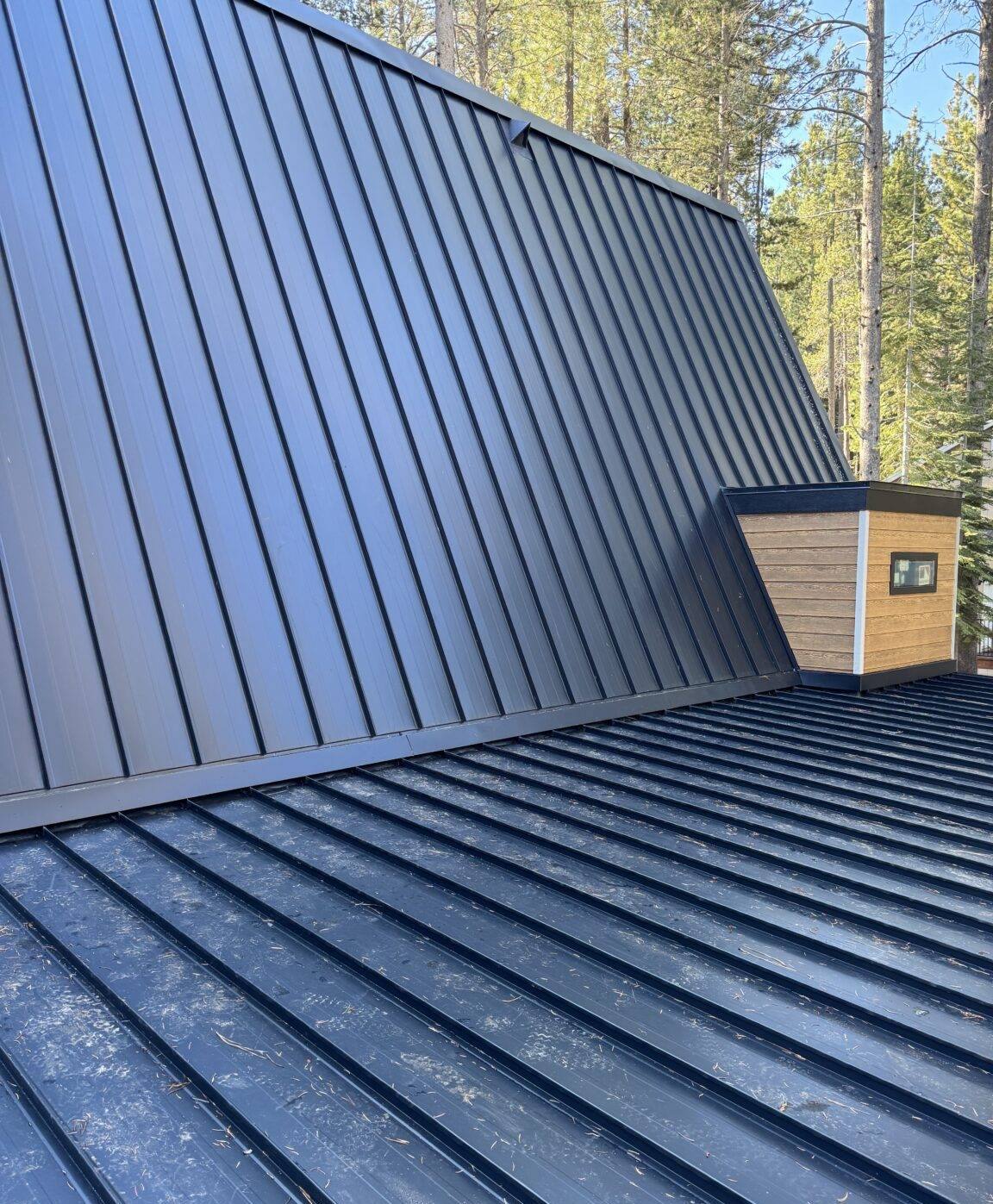
| Standing seam metal roofing | Excellent when specified with coated or stainless fasteners; steady salt exposure can affect uncoated steel over time | Very good — smooth, steep surfaces shed moss more easily | 40-50+ years |
| Cedar shake | Handles moisture well when properly ventilated, but is higher-maintenance | Needs regular treatment and cleaning to resist moss | 20-30 years with upkeep |
For most Fairhaven homes, an algae-resistant architectural shingle is the practical middle ground — reasonable cost, solid moss resistance, and a lifespan that matches the neighborhood's older, established homes. Metal roofing is worth a serious look on steeper roofs or for homeowners planning to stay long-term, since the upfront cost is offset by decades of reduced maintenance.
Cost Factors for a Fairhaven Roof Replacement
Every roof is priced individually, but the same handful of factors move the number up or down on nearly every job:
| Factor | Why It Matters |
|---|---|
| Roof size and number of facets | More square footage and more valleys, hips, and dormers mean more labor and material |
| Pitch and access | Steep roofs and homes with limited street or yard access require more time and safety equipment |
| Layers to remove | Tearing off two layers of old shingles costs more than tearing off one |
| Decking condition | Soft or rotted plywood found during tear-off adds material and labor to replace it |
| Material choice | Standard shingles, algae-resistant shingles, and metal roofing carry different material and labor costs |
| Tree cover and cleanup | Heavily treed lots common in Fairhaven can add time for cleanup and protection of landscaping |
We give a written estimate that breaks these out so you know exactly what's driving the price, rather than a single lump number.
Our Process, Start to Finish
- On-site inspection of the current roof, attic ventilation, and any visible trouble spots
- A written estimate covering material options, scope of work, and a realistic cost breakdown
- Scheduling that accounts for Bellingham's wet season — we track the forecast and won't leave a deck exposed overnight if rain is coming
- Full tear-off, deck inspection, and repair of any soft or damaged sheathing
- Installation of underlayment, ice-and-water shield, flashing, and the chosen roofing material to manufacturer specification
- Ventilation check to confirm intake and exhaust are balanced
- Full site cleanup, including a magnetic sweep for stray fasteners
- Final walkthrough so you can see the finished work before we consider the job done
Why Hire a Roofing Crew That Already Works Fairhaven
A roofer who mostly works dry, inland neighborhoods can still do competent work, but they're often applying general best practices instead of decisions shaped by this specific stretch of coastline. A crew that already works Fairhaven and the surrounding Bellingham waterfront knows which streets have the worst moss buildup by December, which lots need extra flashing attention because of mature tree cover, and how far the salt air realistically reaches inland before it stops being a real factor in fastener selection. That local pattern recognition shows up in small decisions — a heavier-gauge flashing here, an extra vent there — that add years to a roof's life without adding much to the cost.
There's also a practical side: familiarity with the City of Bellingham's permitting process and typical inspection timelines keeps a project moving instead of stalling on paperwork, and a crew that's already navigating Fairhaven's narrow streets and tighter lots knows how to stage material delivery and dumpster placement without turning your driveway into a headache for a week.
Keeping Your New Roof Performing After Installation
A correctly installed roof still benefits from basic upkeep in this climate. Keep gutters clear so water isn't backing up under the shingle edge, especially in fall when big-leaf maple and other deciduous trees drop leaves fast. Have moss treated or gently removed before it builds up into thick mats — a light annual treatment is far cheaper than the damage moss can do once it's established for a few seasons. And after any major windstorm off the Sound, a quick visual check for lifted shingles or displaced flashing catches small issues before they become interior leaks.
If you're seeing moss, granule loss, or an aging roof on your Fairhaven home, we're happy to take a look and give you an honest read on whether repair or replacement makes more sense. Reach out for a free, no-pressure estimate using the form below.