 Bellingham Siding
 Why Fairhaven Roofs Take a Different Kind of Beating
Fairhaven sits close enough to Bellingham Bay that salt-laden air is a constant, low-grade stress on every exposed metal component on a roof — flashing, fasteners, vent caps, gutter hangers. Add in the driving rain that comes off the water during fall and winter storms, and a long, shaded moss season under the neighborhood's mature tree canopy, and you get a roof that ages differently than one out on a dry, open lot inland. None of this means a Fairhaven roof needs babying. It means the repair work has to account for conditions a generic roofing checklist doesn't cover.
We've worked on roofs throughout Bellingham and Whatcom County long enough to see the pattern: the failures that show up first in Fairhaven aren't usually big, dramatic leaks. They're small — a lifted shingle tab near a valley, a hairline gap in step flashing, a fastener that's started to weep rust — and they get worse quietly until a heavy rain event pushes water past the point the roof was ever designed to shed it.
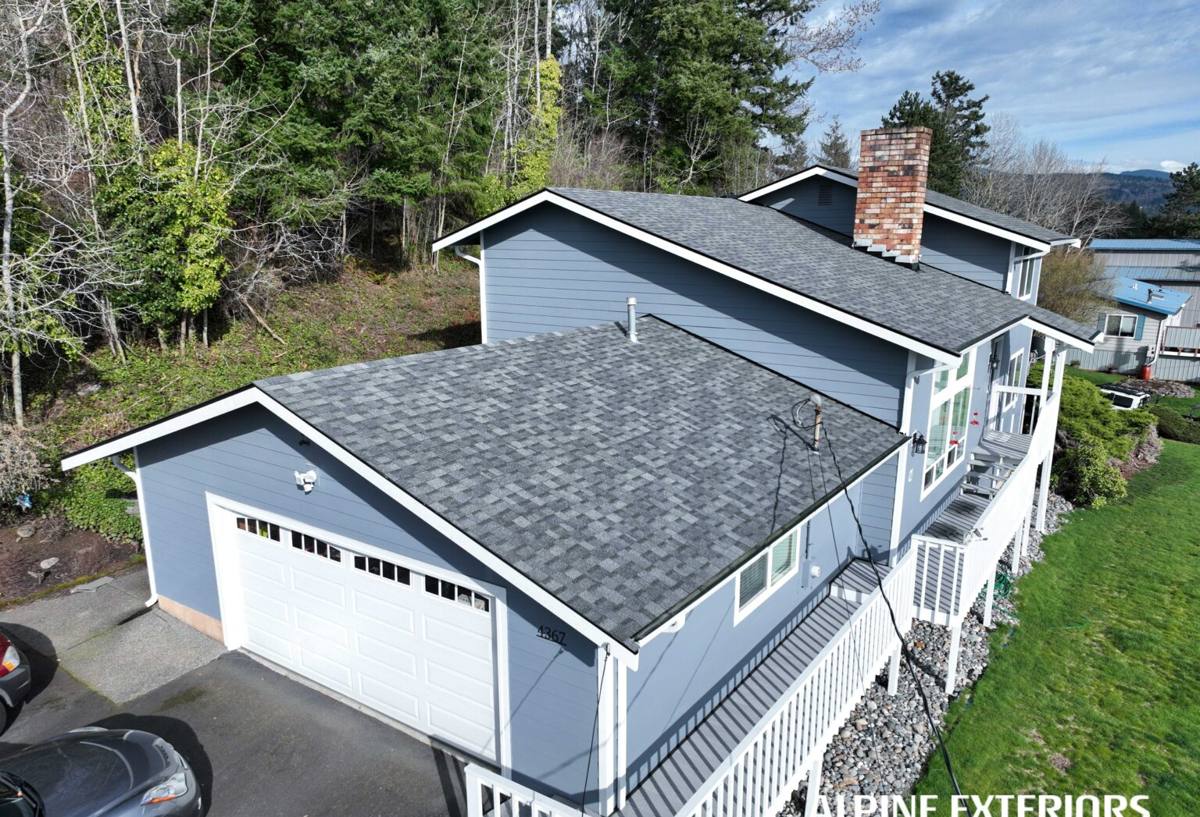
Common Roof Problems We See in Fairhaven Homes
Fairhaven has a mix of older homes — some with real age and character to their rooflines — alongside newer builds and additions. That mix creates a few recurring repair patterns:
- Moss colonization on shaded slopes. North-facing pitches and sections under overhanging trees stay damp longer, giving moss a foothold that lifts shingle edges and traps moisture underneath.
- Corroded or fatigued flashing. Salt air accelerates the breakdown of lower-grade metal flashing and fasteners around chimneys, skylights, and roof-to-wall transitions.
- Valley wear. Steeper, older rooflines often funnel a surprising volume of water through valleys during a heavy Pacific storm — if the valley metal or underlayment has degraded, this is where leaks start.
- Debris buildup from tree cover. Needles, leaves, and small branches collect in valleys and behind chimneys, holding water against the roofing material longer than it should sit.
- Attic ventilation gaps. Older additions or partial re-roofs sometimes leave ventilation mismatched, which traps moisture from below and accelerates decking rot from the underside — a problem that has nothing to do with the shingles themselves.
Signs Your Roof Needs Attention
Most roof repairs get cheaper and simpler the earlier they're caught. Homeowners in Fairhaven should walk the exterior and check the attic a couple of times a year, especially before and after the wet season. Watch for:
- Ceiling or wall stains, especially near chimneys, skylights, or where two rooflines meet
- Shingle tabs that are curled, cracked, missing, or visibly darker/spongy than the surrounding roof
- Heavy granule accumulation in gutters or at downspout outlets
- Thick moss mats, particularly on shaded or north-facing slopes
- Daylight visible through the roof deck from inside the attic
- Soft or spongy spots when the roof is walked (a job for a professional, not a homeowner on a ladder)
- Rust streaking below flashing or fastener heads
- Sagging in the roofline itself, which usually signals deck or structural moisture damage
What a Correct Repair Actually Involves
Diagnosis Before Anything Gets Touched
A repair that only patches the visible symptom tends to fail again within a season or two. Before we replace a single shingle, we trace the water's actual path — which is often not directly above the stain inside the house. Water can travel several feet along the underlayment or decking before it finds a gap to drop through, so an accurate diagnosis usually means pulling back the roofing material around the suspect area, not just eyeballing it from the ground.
Flashing and Fasteners Built for the Bay
Given the salt air here, we don't treat flashing and fastener selection as an afterthought. Standard mild-steel components corrode faster this close to Bellingham Bay, so we favor corrosion-resistant metals and coated fasteners at chimneys, valleys, skylights, and wall transitions — the spots that take the most sustained exposure. It costs a little more upfront and pays for itself by not needing to be touched again in a few years.
Matching Materials the Right Way
When a repair involves replacing shingles, matching isn't just cosmetic — mismatched or incompatible shingle types can shed water differently and create new failure points at the seams. We match material type, weight, and where possible, color and age-wear, so the repaired section performs (and looks) like part of the same roof, not a patch.
Moss Removal and Treatment Done Without Damaging Shingles
Moss has to come off carefully. Aggressive scraping or pressure-washing strips granules and shortens the life of the surrounding shingles — often doing more damage than the moss itself. We remove moss with low-impact methods, clear the debris that feeds it, and apply treatment aimed at slowing regrowth on the shaded slopes where it tends to come back fastest.
Repair vs. Replacement: How We Decide
Not every roof problem calls for a full re-roof, and we're not going to tell a homeowner they need one when a targeted repair will hold up. The decision comes down to a few honest questions:
- How much of the roof's usable life is left? A localized repair on a roof with years of service life remaining makes sense. The same repair on a roof already near the end of its expected lifespan may just be delaying a replacement that's coming anyway.
- Is the damage isolated or systemic? One failed flashing joint is a repair. Widespread granule loss, multiple failure points, and soft decking in several areas point toward replacement being the more cost-effective path.
- Is there hidden decking damage? This is often the deciding factor. Surface repairs over rotted decking don't hold — the decking has to be sound, or replaced, for any repair to last.
We'll always give you both numbers — repair and replace — along with the honest reasoning behind the recommendation, and let you make the call.
What Drives the Cost of a Roof Repair
Roof repair pricing varies a lot based on the specifics of the job. Rather than quote a number that won't hold up once we're actually on the roof, here's what actually moves the price:
| Factor | Why It Matters |
|---|---|
| Extent of damage | A single flashing repair costs a fraction of what's needed when several areas or a full valley need attention |
| Roof pitch and access | Steeper or harder-to-access rooflines take longer and require more safety setup |
| Decking condition | Sound decking under the damaged area keeps the job simple; rotted decking adds material and labor to replace it before roofing can go back on |
| Material type | Matching an existing specialty or older material can take more time to source than standard shingle |
| Number of penetrations involved | Chimneys, skylights, and vent stacks each add flashing detail work beyond a plain field repair |
Simple, localized repairs generally run in the range of a few hundred dollars. Jobs involving multiple areas, valley rebuilds, or decking replacement run into the low thousands. We'll never guess at a price over the phone for anything beyond the simplest fix — we quote after we've actually looked at the roof.
Our Process From Call to Completion
- Initial conversation. You describe what you're seeing — a stain, a missing shingle, a known trouble spot — and we ask enough questions to know what to expect on-site.
- On-site inspection. We get on the roof (and in the attic, when relevant) to trace the actual source of the problem, not just the symptom.
- Written recommendation and quote. You get a clear explanation of what's wrong, what we recommend, and why — repair or replace, with pricing tied to the actual scope.
- The repair itself. Work is done with materials and fasteners suited to this climate, matched to your existing roofing where a full replacement isn't warranted.
- Final walkthrough. We show you what was done and what to watch for going forward, particularly if moss or debris buildup was part of the original problem.
Why a Crew That Already Works Fairhaven Matters
A roofer who's worked across Whatcom County knows that a roof two miles inland and a roof in Fairhaven, close to the water, don't age the same way even if they're built from identical materials. Knowing which slopes hold moss longest, which flashing details fail first in salt air, and how the City of Bellingham's permitting applies to roof work on older homes isn't something you pick up from a single job. It comes from doing this repeatedly in the same neighborhood, on the same style of homes, through the same weather patterns year after year. That familiarity is what keeps a repair from turning into a callback.
Maintenance That Extends the Life of a Repair
A good repair buys you time, but a few habits stretch that further:
- Clear gutters and valleys of leaves and needles at least twice a year, more often under heavy tree cover
- Trim back branches that overhang the roofline to cut down on shade and debris
- Have moss-prone slopes checked annually rather than waiting for visible mats to form
- Address small leaks as soon as they're noticed rather than waiting for the next dry spell to "deal with it later"
- Keep attic ventilation clear so moisture from inside the house isn't adding to what the roof is already fighting from outside
If you're seeing signs of trouble on a Fairhaven roof, or just want an honest read on where things stand before the next round of Pacific storms rolls in, we're glad to take a look. Request a free, no-pressure estimate using the form below.