 Bellingham Siding
 Ferndale's Climate Asks More of Siding Than Most Places Do
Ferndale sits close enough to Bellingham Bay and the Strait of Georgia that salt-laden air is part of daily life here, not an occasional coastal breeze. Add in Whatcom County's long wet season — driving rain that can come in sideways off the water for weeks at a stretch — and a shady, moisture-holding shoulder season that lets moss and algae take hold on anything that stays damp, and you have a climate that is genuinely hard on exterior materials. Siding on a Ferndale home isn't just cosmetic. It's the first line of defense against three things working on a house at once: salt-driven corrosion of fasteners and trim, water intrusion at seams and penetrations, and organic growth that traps moisture against the wall assembly.
We've installed and repaired siding across Ferndale and the greater Bellingham area long enough to recognize which failures are climate-driven rather than random bad luck. Swollen seams, peeling paint low on the wall, dark streaking under eaves, and soft trim near downspouts show up in predictable places on this coastline — and they show up faster on the wrong material.
What Ferndale Homes Actually Need From Their Siding
Real Moisture Management
A siding system in this climate has to shed water fast and dry out completely between storms. Materials that absorb moisture — even a little, even slowly — stay wet longer through a Whatcom County winter than they would somewhere drier, and that extended damp period is exactly what invites rot, mold, and moss.
Resistance to Salt-Driven Wear
Salt air accelerates corrosion on fasteners, flashing, and any exposed metal, and it degrades paint film faster than it would inland. A siding product and finish system that isn't built to handle that exposure will show chalking, fading, and edge deterioration well ahead of schedule.
A Finish That Doesn't Demand Constant Upkeep
Repainting a house every few years isn't practical for most homeowners, and in a climate this wet, paint applied on-site rarely holds up as well as a factory-cured finish anyway. The siding needs a finish that's tough enough to go a long stretch — measured in decades, not years — before it needs attention.
Why We Install Only James Hardie Fiber Cement
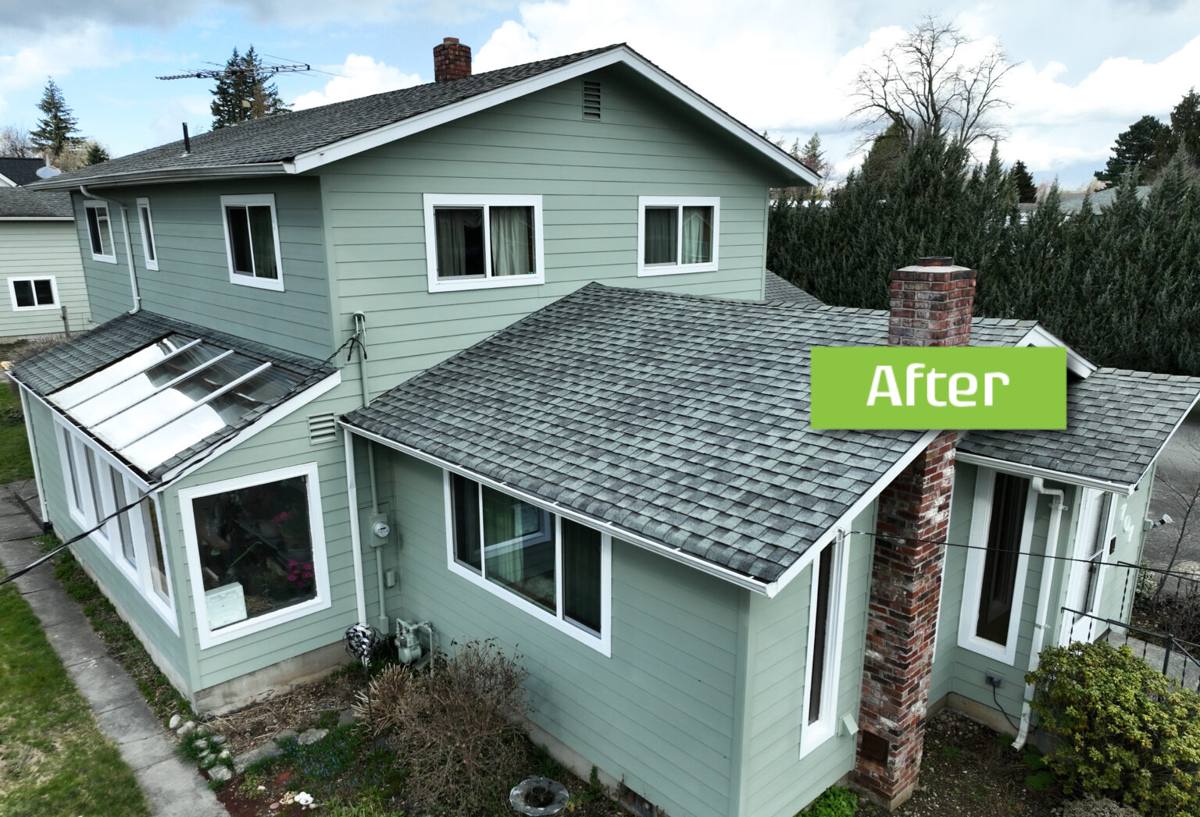
We standardized on James Hardie fiber cement siding for every home we work on, including in Ferndale, because it's engineered specifically for the conditions described above. It's non-combustible, dimensionally stable in wet-dry cycling, and available in HZ5 formulations built for exactly this kind of climate zone. The ColorPlus factory finish is baked on under controlled conditions rather than applied on-site, which is a meaningful difference in a place where on-site paint has to cure through rain and humidity. Hardie also backs the product with a strong, transferable limited warranty. We won't put LP SmartSide, vinyl, Cemplank, Allura, or bare cedar on a home — not because those products have no merit anywhere, but because after years of working this specific coastline, we've settled on the one system we trust to perform here without surprises.
What a Correct Fiber Cement Installation Involves
Flashing and Water Management Come First
Most siding failures we get called out to fix, on any brand, trace back to flashing and water management — not the siding panel itself. Proper installation starts with a correctly lapped weather-resistive barrier, flashing at every window, door, and penetration, and a drainage plane behind the siding so any water that does get past the surface can escape instead of sitting against the wall sheathing.
Gaps, Fastening, and Manufacturer Spec
James Hardie publishes exact installation requirements — clearance from grade and roof lines, fastener spacing and depth, joint treatment, and minimum gaps at trim — and those specs exist for a reason. Fasteners driven too deep, panels installed tight against trim with no expansion room, or courses hung too close to grade are the kinds of shortcuts that void the warranty and cause problems within a few wet seasons, not decades.
Caulking and Finish Details
The seams, joints, and trim transitions are where a job is won or lost. We use sealants and touch-up products compatible with the ColorPlus finish so color and performance stay consistent, and we treat every cut edge before it goes up, since a factory finish only protects what it's actually covering.
How James Hardie Compares to Other Siding Options in This Climate
Every siding material has a place somewhere. This is how the common options stack up specifically against Ferndale's salt air, rain, and moss pressure — not in a mild inland climate where the trade-offs look different.
| Material | Moisture Behavior | Salt Air Durability | Maintenance | Typical Finish Life |
|---|---|---|---|---|
| James Hardie Fiber Cement | Dimensionally stable, doesn't swell or rot | Engineered for coastal exposure (HZ5) | Occasional wash; no repainting for a long stretch | Factory ColorPlus finish, long-rated |
| Vinyl | Doesn't absorb water but can warp and gap, letting moisture behind it | Can fade and become brittle faster near salt air | Low, but panels are hard to touch up if damaged | Color is baked in but fades over time; not repaintable easily |
| LP SmartSide (engineered wood) | Wood-based; edges and cuts are vulnerable if not fully sealed | Salt and moisture together stress the wood substrate | Requires diligent caulking and edge maintenance | Site or factory finish; edge failure is the common weak point |
| Cedar / Primed Spruce | Absorbs moisture; needs to breathe and dry properly | Salt accelerates weathering and finish breakdown | Highest — regular refinishing and sealing | Site-applied finish, shortest interval before recoat |
Our Process for a Ferndale Siding Project
The steps don't change much house to house, but the details we pay attention to are shaped by this coastline.
- Inspection and moisture check — We look at the existing wall assembly, not just the siding surface, and check for trapped moisture or soft sheathing before we quote anything.
- Tear-off and prep — Old siding, damaged trim, and compromised weather barrier come off, and we inspect and repair the sheathing underneath before anything new goes up.
- Weather barrier and flashing — This is the step that determines whether the job holds up through a Whatcom County winter, and we don't rush it.
- Hardie panel installation — Installed to manufacturer spec for gaps, fastening, and clearance, with attention to how each section will actually shed water.
- Trim, caulking, and touch-up — Cut edges sealed, joints treated, and finish matched so the whole wall reads as one consistent system.
- Final walkthrough — We go over the finished work with you before calling the job done.
Living With Moss Season
Even a correctly installed, well-finished Hardie siding job will see moss and algae attempt to take hold in Ferndale's shadier, damp-prone spots — that's the nature of this region, not a defect. The difference is what happens next. A dimensionally stable fiber cement panel with a factory finish can be gently washed off without damaging the material or stripping the color underneath, whereas softer or more porous materials can hold moisture against themselves and degrade under the same growth. Keeping gutters clear, trimming back vegetation that shades the wall, and an occasional low-pressure wash go a long way toward keeping the siding looking the way it did the day it went up.
Why It Matters to Hire a Crew That Already Works in Ferndale
Siding installation isn't uniform across climates, and a crew that mostly works drier inland regions doesn't always carry the same instincts about flashing details, clearance from grade, or where moisture tends to collect on a coastal property. Before hiring anyone for a Ferndale siding project, it's worth checking a few things:
- Do they carry current licensing and insurance for exterior work in Washington State?
- Can they explain their flashing and water-management approach in specific terms, not just "we follow code"?
- Do they install to the manufacturer's published spec, and will they say so in writing?
- Do they have experience with coastal Whatcom County conditions specifically, not just siding in general?
- Is the warranty — both manufacturer and labor — clearly explained and transferable if you sell the home?
A siding job that looks fine on installation day can still fail in three years if the flashing or fastening was wrong. The value of hiring a crew that already works this coastline is that the mistakes that show up two winters later are the ones we've already learned to avoid.
If you're weighing a siding replacement or repair for a Ferndale home, we're happy to take a look and give you a straight, no-pressure estimate — just fill out the form below.