 Bellingham Siding
 Why South Hill Siding Takes a Different Approach
South Hill sits close enough to Bellingham Bay that salt-laden air, wind-driven rain, and a moss season that can stretch from October well into spring all show up on the exterior of a house faster than they do a few miles inland. Add in the tree cover and shade patterns common on South Hill's sloped lots, and you get siding that stays damp longer after every storm. That combination is hard on the wrong materials and forgiving of almost nothing when installation details are cut short.
We install James Hardie fiber cement siding exclusively, and on South Hill homes specifically, that choice is about matching a product to what this microclimate actually does to a house year-round, not just picking something durable in general.
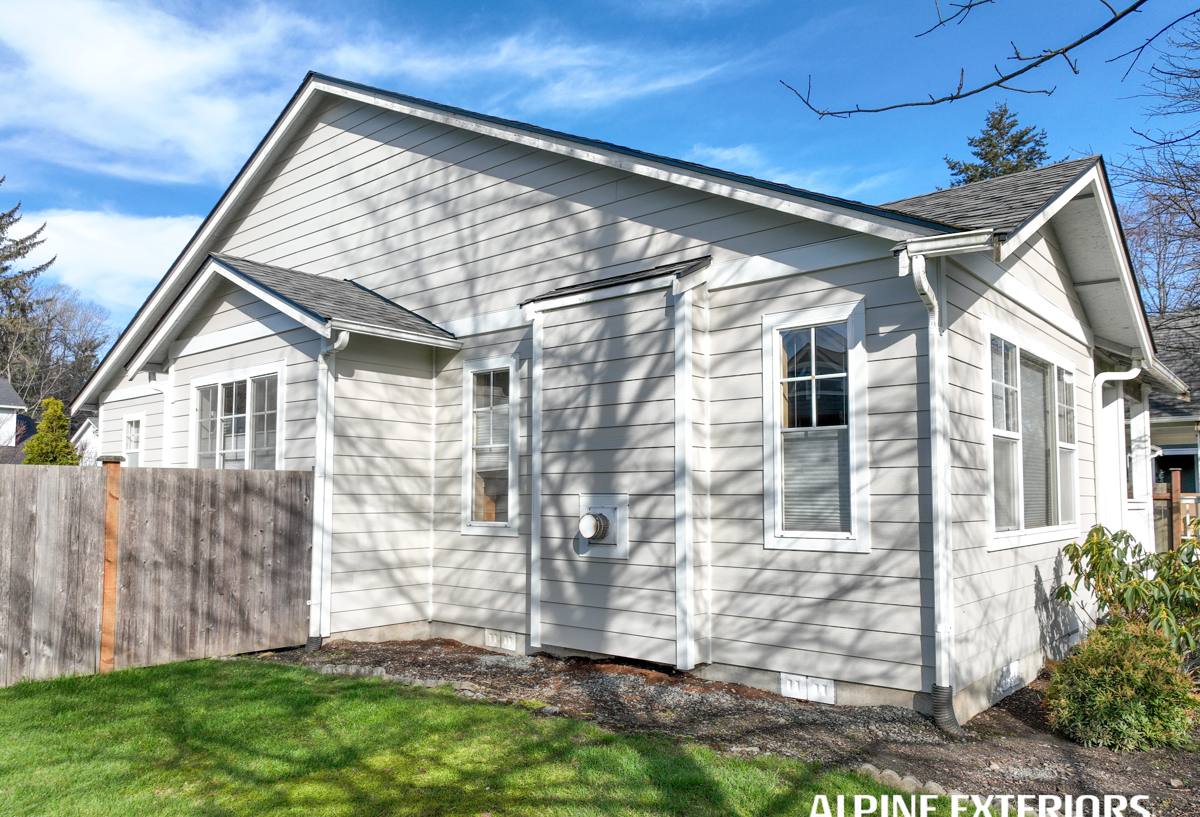
What Whatcom County's Climate Does to Siding
Salt Air and Coastal Exposure
Homes on South Hill's western and southern-facing slopes catch airborne salt off the bay, especially during winter storms. Salt accelerates corrosion of fasteners and trim metal, and it works into porous or poorly sealed siding surfaces over time. Fiber cement doesn't corrode, and it doesn't absorb salt the way wood-based products can, but the fasteners, flashing, and caulking around it still need to be chosen and installed with that exposure in mind.
Driving Rain
Bellingham's rain rarely falls straight down. Wind off the water pushes it sideways into wall assemblies, which means water intrusion problems here are almost always about lap coverage, flashing, and sealed penetrations rather than the siding material itself failing. A siding job can use the best product available and still leak if the water management details behind it are wrong.
Moss and Sustained Moisture
Shaded, north-facing walls and anything under tree cover stay damp for extended stretches. Moss and algae find a foothold on surfaces that hold moisture or have a porous, uneven texture. This is one of the most visible differences between siding products in this climate: some substrates give moss something to grip into, others don't.
Why Fiber Cement Specifically Fits This Neighborhood
James Hardie fiber cement is cement, sand, and cellulose fiber, cured into a dense, stable board. It doesn't rot, it doesn't feed insects, and it's non-combustible. For South Hill's damp, shaded lots, the properties that matter most are:
- Moisture stability — it doesn't swell, warp, or delaminate the way wood-based or wood-composite sidings can after repeated wet-dry cycles.
- Dense, factory-cured surface — a smoother, less porous surface than raw wood gives moss and algae less to grab onto, which matters on shaded South Hill walls.
- Factory-applied ColorPlus finish — baked-on color that resists the fading and chalking that salt air and UV exposure cause faster here than in drier inland climates.
- Non-combustible core — not a coastal-specific benefit, but part of why we standardized on Hardie across every job we take.
Fiber cement isn't magic — it still needs correct installation to perform. But it starts from a materially better position for this climate than the alternatives.
What a Correct Fiber Cement Job Actually Involves
Most siding failures we get called to look at in Whatcom County aren't material failures — they're installation shortcuts. On South Hill, where wind-driven rain and prolonged dampness are the norm, these details aren't optional extras:
Water Management Behind the Siding
- Weather-resistant barrier installed and lapped correctly, shingle-style, so water sheds outward rather than behind the barrier
- Rigid flashing at every horizontal transition, window and door head, and roof-to-wall intersection
- Proper drainage gap or rainscreen approach where the wall assembly and exposure call for it
- Kick-out flashing at roof-wall intersections so runoff is directed into gutters, not down the wall
Fastening and Fit
- Correct fastener type and spacing per the James Hardie installation manual — not generic siding nails
- Fasteners driven into framing, not just sheathing, at the manufacturer's specified depth
- Proper minimum clearance from grade, roof lines, and decks to keep the bottom edge of the siding out of standing moisture and splash-back
- Correctly sized gaps at butt joints and trim, caulked with a quality sealant rated for the exposure — not packed tight, which traps moisture
Finish Details
- Factory-cut edges primed or field-painted per Hardie spec wherever a cut is exposed
- Corner boards, trim, and penetrations (vents, hose bibs, light fixtures) sealed and flashed individually
Skip any one of these and you can end up with a house wearing a premium product that still fails early — usually from behind, where it's not visible until the damage is done.
Our Process for a South Hill Siding Project
- On-site assessment — we look at current siding condition, moisture staining, existing flashing, and the specific exposure of your lot (sun, shade, prevailing wind and rain direction).
- Product and line selection — matching the right Hardie product line and profile to your home's exposure and your design goals.
- Written scope and estimate — what's included, what product and colors, and a realistic timeline, before any work starts.
- Prep and removal — old siding removed, sheathing inspected for hidden rot or moisture damage before anything new goes on.
- Water management installation — barrier, flashing, and drainage details installed to spec, not shortcut to save a day.
- Siding installation — fastened, gapped, and sealed to James Hardie's requirements for our climate zone.
- Final walkthrough — trim, caulking, and touch-up review with you before we call it done.
Comparing Siding Options for South Hill's Climate
| Factor | James Hardie Fiber Cement | Vinyl | Wood / Cedar / Primed Spruce |
|---|---|---|---|
| Moisture and rot resistance | Does not rot; stable in sustained damp conditions | Won't rot itself, but seams and gaps can trap moisture behind it | Vulnerable to rot without diligent maintenance |
| Moss/algae resistance | Dense factory finish resists buildup better on shaded walls | Can develop algae streaking, especially in shade | Porous surface is prone to moss and mildew |
| Salt air durability | Doesn't corrode or absorb salt | Can become brittle and discolor over time in coastal exposure | Salt accelerates weathering and finish breakdown |
| Finish longevity | Factory-baked ColorPlus finish, long fade resistance | Color molded through, but can fade and chalk | Requires repainting or restaining on a recurring cycle |
| Fire resistance | Non-combustible | Combustible, can melt or deform near heat | Combustible |
| Maintenance | Occasional wash; repaint only if desired, not required | Low maintenance but limited repair options if damaged | Regular painting/staining and moisture monitoring required |
What This Costs and What Drives the Price
Every South Hill home is a little different, and a fair estimate depends on a site visit — but the main cost factors are consistent:
- Home size and wall complexity — more corners, dormers, and trim detail means more labor.
- Current siding condition — if there's hidden moisture damage under the old siding, sheathing repair adds cost but is not optional to skip.
- Product line and profile — lap width, texture, and trim style all affect material cost.
- Accessibility — steep South Hill lots and multi-story walls can affect scaffolding and labor time.
- Color and finish — factory ColorPlus finishes cost more upfront than field paint but eliminate a repaint cycle.
We'll walk through all of this in a written estimate before any commitment — no vague ballpark numbers, no pressure to sign on the spot.
Why a Crew That Already Works South Hill Matters
A siding crew that's worked other South Hill homes already knows the exposure patterns on this side of Bellingham — which walls hold moisture longest, how prevailing storms hit certain lots, and what flashing details actually hold up here versus on paper. That local pattern recognition shows up in fewer callbacks and a tighter installation the first time. It also means we're a known, findable business in this community if you ever need a warranty question answered or a follow-up visit years down the road — not a crew that worked one job in your neighborhood and moved on.
Signs Your South Hill Home May Need Siding Attention
- Visible moss or algae streaking on shaded or north-facing walls
- Soft spots, bubbling, or staining near window and door trim
- Cracked, warped, or separating boards, especially at butt joints
- Paint that's peeling or blistering repeatedly in the same spots
- Musty smell or visible staining on interior walls that share an exterior wall
- Siding older than 20-25 years that hasn't been reassessed recently
If your home is showing any of these, it's worth a professional look before small problems become structural ones.
If you're weighing a siding project for a South Hill home, we're happy to take a look, walk the exterior with you, and put together a straightforward, no-pressure estimate — free of charge and on your schedule.