 Bellingham Siding
 Why Siding Wears Differently in Happy Valley
Happy Valley sits close enough to Bellingham Bay and the surrounding waterways that homes here deal with a specific combination of stresses most inland neighborhoods don't: salt-laden air, wind-driven rain that hits siding at an angle instead of falling straight down, and a moss season that can run half the year under Whatcom County's cloud cover. None of these problems are dramatic on their own. What they do is compound. Salt air accelerates the breakdown of paint film and corrodes exposed fasteners. Driving rain finds every gap in flashing and caulk that a calmer climate would never test. Moss and algae hold moisture against the wall assembly long after a storm has passed, which is exactly the condition that rots wood-based siding and lets water travel behind panels that aren't lapped or sealed correctly.
None of this means a home in Happy Valley needs siding replaced more often than one elsewhere in Bellingham. It means the material and the installation details matter more here than they would in a drier, calmer climate. A siding system that's marginal in Spokane can fail outright in a neighborhood exposed to this much moisture and salt.
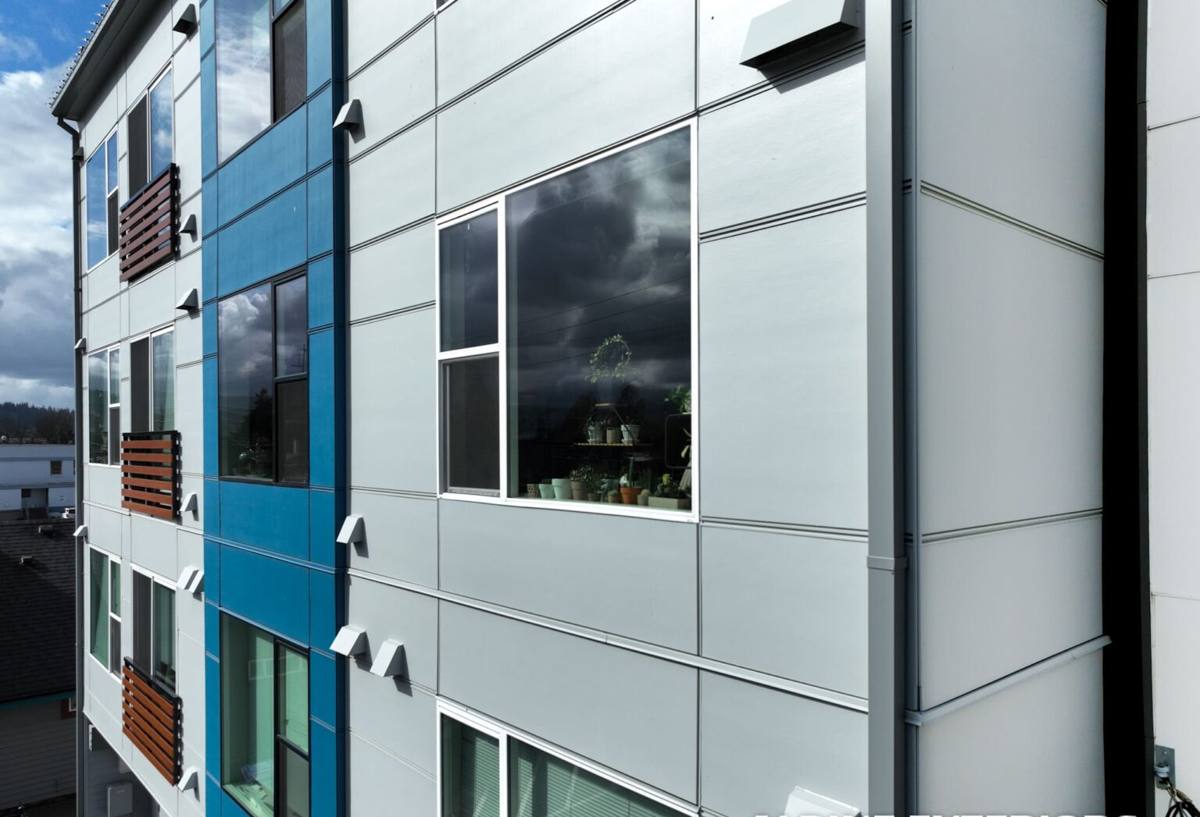
Signs a Happy Valley Home Needs Siding Replacement
Most siding failures we see in this neighborhood don't start as obvious problems — they start as small signals that get ignored for a season or two because the house still looks fine from the street. By the time damage is visible from the sidewalk, the wall sheathing underneath has often been wet for a while.
- Paint that's chalking, peeling, or bubbling faster than it should for its age, especially on walls facing the water or prevailing wind
- Soft or spongy spots when you press on siding near the bottom courses, around windows, or at butt joints
- Persistent moss or dark streaking that comes back within weeks of being cleaned off
- Visible gaps, warping, or cupping in individual boards or panels
- Rusted or popped fasteners, or nail heads bleeding through paint
- Rising interior heating costs or drafts that suggest the wall assembly is no longer doing its job
- Siding that was caulked or patched repeatedly in the same spots over the past few years
Any one of these can be a minor fix. Several together, especially on a home that's 20 years or older, usually means the siding system itself has reached the end of its useful life rather than needing another round of spot repairs.
Wood, Vinyl, and Composite Siding Age Faster Here
Wood siding depends on paint film staying intact to keep water out, and that film breaks down faster under salt exposure and constant damp. Vinyl siding doesn't rot, but it wasn't built to be a moisture barrier on its own — it relies on gaps and drainage behind it, which means the housewrap and flashing underneath are doing the real work, and vinyl's own seams and fastening are more forgiving of poor installation, which lets mistakes hide until water damage shows up years later. In a neighborhood with this much driving rain, those hidden mistakes tend to surface sooner rather than later.
What Correct Siding Replacement Actually Involves
Siding replacement is not just pulling off old boards and nailing up new ones. In a climate like Bellingham's, the parts you don't see after the job is done are what determine whether the new siding lasts 10 years or 40.
Tear-Off and Inspection
Once old siding is removed, the sheathing underneath gets inspected for rot, soft spots, and prior water damage — particularly around windows, doors, and any wall that's taken direct weather. This is often the first time a homeowner sees what's actually been happening behind the old siding.
Water-Resistive Barrier and Flashing
A new weather-resistive barrier goes on correctly lapped, and flashing is installed at every window, door, and horizontal trim break — not just caulked over gaps. In a neighborhood that takes rain sideways off the water, flashing details are where most failures actually start.
Fastening and Fit
Fiber cement siding has specific fastening requirements — nail placement, spacing, and depth all affect how the panel performs over time. Corrosion-resistant fasteners matter more here than in a drier inland climate because of the salt air.
Finish and Trim
Trim, corner boards, and caulking joints are finished to shed water rather than trap it. Factory-applied finishes reduce the number of field-painted seams, which is one less place for water to find a way in.
Why We Only Install James Hardie Fiber Cement
We don't install vinyl, LP SmartSide, primed spruce, cedar, or other fiber cement brands. That's a deliberate standard, not a lack of options. James Hardie is the one product line we've found consistently holds up to the specific combination of salt air, sustained rain exposure, and moss that Happy Valley homes deal with year after year.
Fiber cement is non-combustible, which matters for wildfire-adjacent insurance considerations in Washington even outside dense forest areas. Hardie's ColorPlus factory finish is baked on under controlled conditions rather than field-painted, which means better adhesion and more consistent coverage than a coat applied on-site in variable weather — a real advantage in a place where you can lose painting days to rain for weeks at a stretch. Hardie also engineers its HZ product lines specifically for different climate zones, including the wetter Pacific Northwest, and backs the product with a long transferable warranty that stays with the house if it sells.
None of that makes other products bad materials in every application. It means that for the specific conditions Happy Valley homes face, and for the standard we've decided to hold ourselves to, Hardie is what we're willing to put our name behind.
Our Process for a Happy Valley Project
| Step | What Happens |
|---|---|
| On-site assessment | We walk the exterior, check for existing moisture damage, and note which elevations take the most weather |
| Written estimate | Scope, product line, color, and cost broken down clearly before any work starts |
| Tear-off and sheathing check | Old siding removed, sheathing inspected and repaired where needed before anything new goes on |
| Barrier and flashing install | Weather-resistive barrier and flashing detailed at every penetration and trim break |
| Hardie installation | Panels or lap siding installed to manufacturer spec, with corrosion-resistant fasteners |
| Final walkthrough | We review the finished job with you before calling it complete |
Crews who already work this neighborhood know which elevations tend to take the worst of the rain and where moss tends to build up fastest — that local familiarity shows up in small decisions during the job, not just in the finished look.
What Affects the Cost of Siding Replacement
| Factor | Why It Matters |
|---|---|
| Home size and stories | More surface area and taller walls mean more material and labor time |
| Condition of existing sheathing | Rot found during tear-off adds repair work before new siding can go on |
| Siding profile chosen | Lap siding, shingle-style panels, and board-and-batten each price differently |
| Trim and detail work | Corner boards, window casing, and fascia work add labor beyond the flat wall area |
| Accessibility | Tight lot lines, landscaping, or multi-story elevations can affect scaffolding and staging |
| Color and finish | Factory ColorPlus finishes vs. field-painted options affect both cost and long-term maintenance |
We give a specific number after seeing the house, not a phone estimate — too much of the real cost depends on what's found once old siding comes off.
Choosing a Contractor Who Already Works This Area
Whatcom County has plenty of siding contractors, but not all of them work neighborhoods like Happy Valley regularly enough to know how the local weather actually behaves against a wall. A crew that's done work here before has already seen which details matter — where flashing tends to get shortcut, which elevations need extra attention, how moss behaves on a north-facing wall through a wet winter.
- Ask what siding brands and product lines they install, and why they chose them
- Ask to see their approach to flashing and water-resistive barrier detail, not just the finished siding
- Confirm they carry proper licensing and insurance for exterior work in Washington
- Ask how they handle sheathing repair if rot is found during tear-off
- Get the warranty terms in writing — both the manufacturer's and the installer's own labor warranty
Caring for New Siding in a Wet, Salty Climate
Even the right siding installed correctly benefits from basic upkeep in this climate. A yearly rinse to knock off salt residue and moss growth, prompt attention to any caulking that starts to crack, and keeping gutters clear so water isn't running down the wall face all extend the life of the installation. Factory-finished fiber cement needs far less of this than field-painted wood, but "less maintenance" isn't "no maintenance" — a five-minute check after a bad storm season is worth doing.
Get a Straight Answer on Your Siding
If your Happy Valley home is showing any of the wear signs above, or you're just past due for an honest look at what's under the current siding, we're happy to come take a look. The estimate is free, there's no pressure attached to it, and you'll get a straight answer about what your home actually needs — fill out the form below to get started.