 Bellingham Siding
 Lynden's Climate Puts Real Stress on Windows
Lynden sits inland from Bellingham Bay, out in the Nooksack River valley, so it doesn't take the same direct salt-air exposure that homes right on the water do. That's worth saying plainly rather than overselling it. But inland doesn't mean easy on windows. Whatcom County as a whole gets a long, wet fall-through-spring stretch, and Lynden's farmland and open exposure mean wind-driven rain still finds its way into gaps that a coastal home might not have to deal with in quite the same way. Add in the shaded, moisture-holding conditions that grow moss on roofs and siding across this whole region, and you've got a climate that's patient about finding weak spots in a window installation — even ones that look fine for a year or two.
Inland Doesn't Mean Easy on Windows
Being farther from the water changes the failure pattern more than it removes it. Lynden sees colder overnight temperatures than Bellingham proper, more frost, and stretches of wind that come down out of the north in winter. That combination of cold glass, warm interior air, and humid Pacific Northwest moisture is a recipe for condensation on the inside of poorly sealed or aging windows — which, over a few winters, turns into soft sills, peeling paint, and eventually rot. Old single-pane or early-generation double-pane windows that were fine when installed decades ago are usually the ones showing it first.
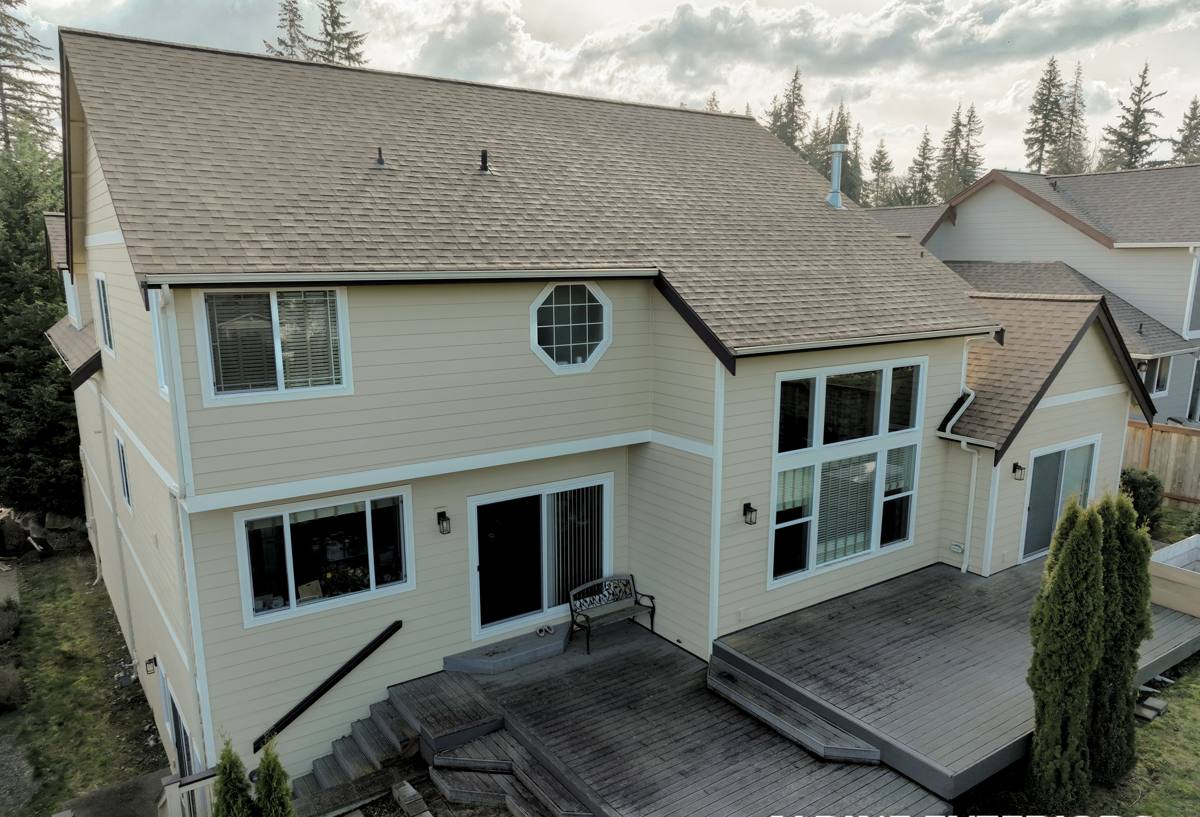
Signs Your Lynden Home Needs New Windows
Most homeowners don't wake up one day and decide to replace windows — they notice a handful of small annoyances that add up. If more than a couple of these sound familiar, it's worth having someone look:
- Noticeable draft near the frame even with the window fully latched
- Fogging or a permanent haze between the panes of a double-pane window (a sign the seal has failed)
- Condensation forming on the inside of the glass regularly during colder months
- Wood trim or sills that feel soft, spongy, or show paint bubbling
- Windows that are painted shut, hard to open, or won't stay up without a prop
- Visible daylight or gaps where the frame meets the siding or trim
- Moss, algae, or dark staining building up on the frame or sill
- A noticeable jump in heating costs compared to similar-sized rooms in the house
What a Correct Window Installation Actually Involves
Swapping an old window for a new one sounds simple, and a lot of poor installs happen precisely because it's treated that way. A window is only as good as the water management and air sealing built around it — the window unit itself is often the easy part.
Water Management Comes First
In a climate that gets sustained, wind-driven rain, the flashing details matter more than almost anything else. That means integrating flashing tape properly with the existing house wrap or weather-resistive barrier, using a sloped sill pan so any water that does get past the glass drains back outside instead of sitting on the sill, and layering materials so water always has a path down and out — never a path inward. Skipping or rushing this step is the single biggest reason windows fail early in this region, and it's usually invisible from the outside until rot shows up years later.
Air Sealing and Insulation
Around the frame, we use low-expansion foam or backer rod and sealant rather than packing gaps with fiberglass insulation alone, which does little to stop air movement. Done correctly, this reduces drafts, cuts down on the condensation that leads to mold and wood damage, and keeps heating bills from creeping up in a house that otherwise looks perfectly sealed.
Choosing Materials and Glass for Whatcom County
There's no single "best" window material — the right choice depends on the home, the budget, and how much upkeep you want to do. Here's how the common options stack up for a climate like ours:
| Material | Moisture Resistance | Maintenance | Typical Lifespan |
|---|---|---|---|
| Vinyl | Very good — won't rot, warp, or corrode | Low — occasional cleaning | 20-30+ years |
| Fiberglass | Excellent — very stable in temperature swings and moisture | Low | 30-40+ years |
| Wood-clad (wood interior, clad exterior) | Good on the exterior; interior wood needs protection from indoor humidity | Moderate — interior finish upkeep | 20-30 years, longer with maintenance |
| Bare wood | Weakest in a wet climate unless finish is maintained diligently | High — regular painting/sealing | Varies widely with upkeep |
For most Lynden homes, we lean toward vinyl or fiberglass on the exterior-facing side of that decision because they hold up to repeated wetting and drying without the ongoing paint and seal maintenance that bare wood demands in this climate. That's a judgment based on long-term moisture behavior and maintenance burden, not a knock on wood as a material — some homeowners want the look and are willing to keep up with it, and that's a reasonable choice too.
Glass Packages That Make Sense Here
Double-pane with a Low-E coating and argon gas fill is the practical baseline for this region — it cuts heat loss and reduces the interior condensation that's common in our damp, cool winters. Triple-pane glass adds more insulation value and can help with sound and comfort near busier roads, but it's heavier and costs more, so it makes the most sense on north-facing rooms, bedrooms, or homes aiming for higher energy performance rather than as an automatic upgrade everywhere.
Our Window Installation Process
- On-site assessment and measurement — we check existing framing, flashing, and any rot or moisture damage before quoting, not after starting
- Order and lead time — windows are typically custom-ordered to the exact opening, which takes some lead time depending on the manufacturer and season
- Site protection — interior floors, landscaping, and siding near the work area are protected before removal begins
- Careful removal — old windows and any damaged trim or sheathing are removed and inspected for hidden rot before the new unit goes in
- Installation with proper flashing and sealing — sill pan, flashing tape, insulation, and sealant applied in the correct order, not just caulk around the outside
- Exterior trim and finish work — trim is reinstalled or replaced and caulked to shed water correctly
- Final walkthrough — we check operation, sealing, and cleanup with you before calling the job done
What Affects the Cost of Window Replacement in Lynden
Every home is different, but the cost of a window project generally comes down to a handful of factors. Broad ranges depend heavily on window count, size, and material, so an accurate number always comes from an in-person look rather than a phone estimate.
| Factor | Why It Matters |
|---|---|
| Number of window openings | More openings mean more material and labor, though per-window cost often drops slightly on larger jobs |
| Material (vinyl, fiberglass, wood-clad) | Fiberglass and wood-clad typically cost more upfront than vinyl |
| Size and configuration | Large picture windows, bays, or custom shapes cost more than standard double-hung sizes |
| Accessibility | Second-story windows, steep rooflines, or windows near outbuildings and farm structures can add labor time |
| Condition behind the old window | Hidden rot or damaged framing found during removal adds repair cost, but it's cheaper to fix now than to seal over |
| Trim and siding work | Matching or repairing exterior trim and siding around the new unit adds to the scope |
Why Local Experience in Lynden Matters
A crew that regularly works Lynden and the surrounding Whatcom County area already understands the practical details that affect a window job here — how the local building department handles permitting, what kind of framing and trim shows up on the area's older farmhouses versus newer builds, and how quickly moisture problems tend to develop given the climate. That familiarity means fewer surprises during removal, a more accurate quote up front, and a crew that isn't learning the region's quirks on your project. It also means faster response if a question comes up after the install, since we're not driving in from out of the area for a callback.
After Installation: Keeping Windows Performing
A correct installation should need very little from you, but a few habits extend the life of the work:
- Clear weep holes (the small drainage openings at the bottom of the frame) if leaves or debris build up
- Check exterior caulk lines once a year, especially after a hard winter, and touch up any cracking
- Gently clean moss or algae off frames and sills before it holds moisture against the material
- Test operation each fall before the wet season sets in, so any issue gets caught early rather than during a storm
If your Lynden home has windows showing any of the signs above, or you're just planning ahead before the next wet season, we're happy to come take a look. The estimate is free, there's no pressure, and you'll get a straight answer about what your windows actually need — you can request one using the form below.