 Bellingham Siding
 Why Puget's Climate Is Hard on a Roof
Puget sits close enough to the water that salt-laden air is a daily fact of life, not an occasional nuisance. Add Whatcom County's long wet season, driving rain that comes in sideways off Bellingham Bay, and a moss season that can run eight or nine months out of the year, and you have a roof environment that punishes shortcuts. A roof that would hold up fine in a dry inland climate can fail early here if it wasn't specified and installed with this exposure in mind.
Metal roofing has become a popular answer for homeowners in this part of Bellingham because, done correctly, it handles moisture better than most alternatives and doesn't give moss the same foothold that shingles do. But "metal roofing" covers a wide range of products and installation quality, and not every metal roof performs the same way once it's been through a few Puget winters.
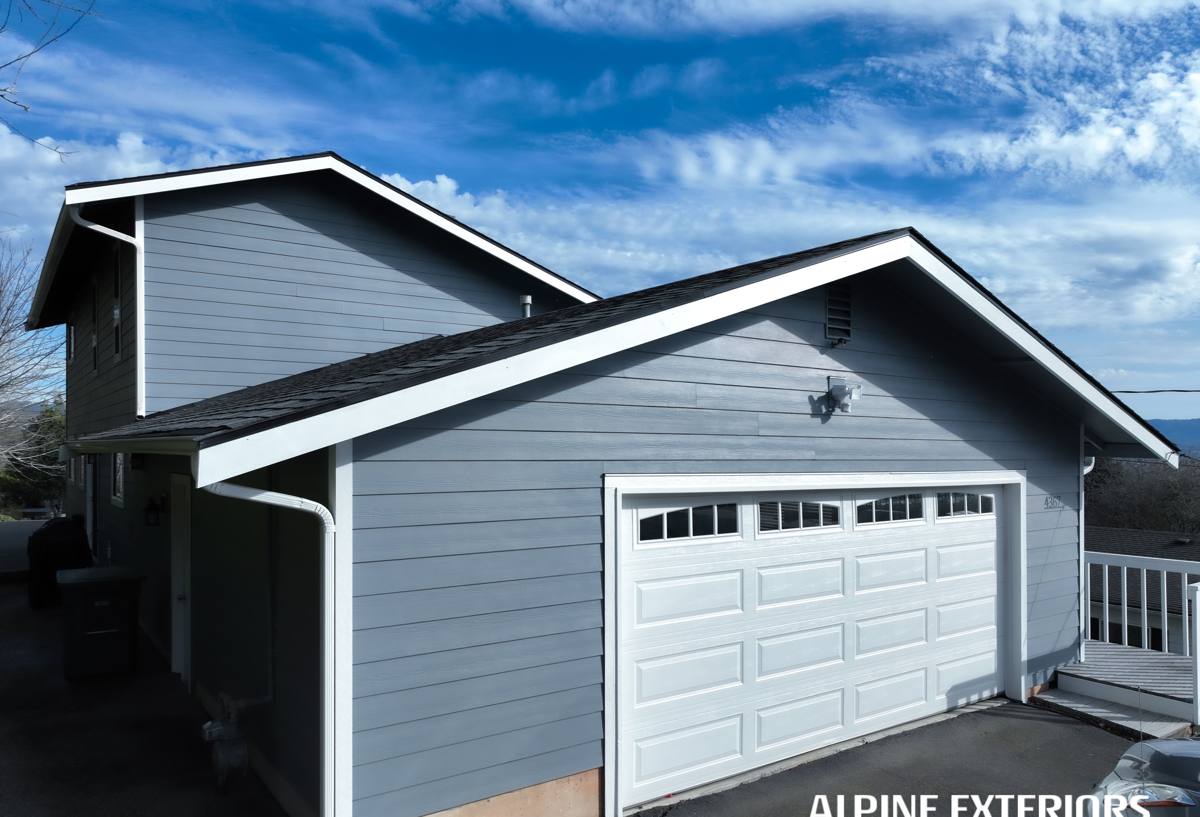
What a Metal Roof Needs to Do Here
Before talking about panel styles or colors, it's worth being clear about what the roof actually has to resist in this location:
- Salt air that accelerates corrosion on unprotected or poorly coated metal, and on any exposed fasteners
- Wind-driven rain that gets pushed uphill under laps and around penetrations if flashing details are weak
- Persistent moisture and shade that grow moss and lichen on roofs that don't shed water and debris cleanly
- Freeze-thaw cycles that are mild by mountain standards but still stress joints and sealants over time
- Long stretches of overcast, damp weather that give any trapped moisture time to do damage before it dries out
A roof system that's engineered around these conditions — the right panel profile, the right fastening method, the right underlayment and flashing detail — will simply last longer here than one that wasn't. This is the standard we hold every Puget metal roofing job to.
Panel Types and Coatings: What We Recommend and Why
There are two broad categories of metal roofing, and the difference matters more near the water than it does further inland.
| Feature | Standing Seam | Exposed Fastener |
|---|---|---|
| Fastener exposure | Concealed clips, no exposed screws through the panel face | Screws penetrate the panel face directly |
| Salt air durability | Higher — fewer failure points for corrosion to start | Lower — exposed fasteners and washers are the first thing to fail |
| Expansion/contraction handling | Floating clip system allows the panel to move | Fixed points create more stress over time |
| Typical cost | Higher material and labor cost | Lower upfront cost |
| Best fit | Long-term ownership, full exposure to weather, higher-visibility roofs | Outbuildings, budget-driven projects, shorter ownership horizon |
For a primary residence in Puget, we typically steer homeowners toward standing seam because the concealed fastener system holds up better against the combination of salt air and driving rain. Exposed fastener panels aren't a bad product — they're used successfully on garages, shops, and accessory buildings all over Whatcom County — but the washers and screw heads are the weak point in a coastal environment, and re-sealing or replacing them becomes a recurring maintenance item rather than a one-time install.
Coatings matter as much as panel style. A quality paint system (Kynar-type PVDF finishes are the industry benchmark) resists fading and chalking far longer than lower-grade polyester coatings, and it also plays a role in corrosion resistance at cut edges and fastener penetrations. We won't install bare or minimally coated panels on a coastal Bellingham home — the maintenance burden and shortened service life aren't worth the small upfront savings.
What a Correct Installation Actually Involves
Deck and Underlayment
Metal roofing is only as good as what's underneath it. We check the roof deck for soft spots or rot before anything goes down, and we use a high-temp synthetic or self-adhered underlayment rated for the long exposure metal panels get before they're fully weathered in. In a climate this wet, skipping or skimping on underlayment is one of the fastest ways to end up with a leak that has nothing to do with the metal itself.
Fastening and Panel Layout
Panel runs need to be laid out to shed water in the direction it actually falls in wind-driven rain, not just straight down. Laps, seams, and panel overlaps get sized and sealed to handle sideways-blown rain, which is a regular occurrence on exposed Puget lots.
Flashing and Penetrations
Valleys, chimneys, vent stacks, and wall transitions are where the majority of metal roof leaks originate — almost never the flat panel field itself. Correct flashing here means custom-formed metal, not universal boots or generic trim stretched to fit, and it means integrating the flashing with the underlayment in the right order, not just caulking gaps after the fact.
Ventilation
A metal roof that traps moisture in the attic will condensate on the underside of the panels, especially through Bellingham's damp winters. Proper intake and exhaust ventilation keeps that moisture moving instead of settling, which protects both the roof deck and the panels from the inside out.
Common Problems We See on Older Metal Roofs in This Area
When we're called out to look at an existing metal roof in the Puget area, a handful of issues come up repeatedly:
- Exposed fastener washers that have hardened, cracked, or backed out after years of temperature swings and salt exposure
- Moss and organic debris built up in valleys and behind chimneys, holding moisture against the panel long after the rest of the roof has dried
- Flashing that was caulked instead of properly formed and integrated, now failing at the seams
- Corrosion starting at cut panel edges that were never sealed or coated after installation
- Undersized or blocked ventilation causing condensation staining on the underside of the roof deck
Most of these trace back to installation shortcuts rather than the metal itself failing. It's a good reminder that the product matters less than the crew putting it on the roof.
Our Process, Start to Finish
We keep the process straightforward and try not to make a homeowner guess what's happening at each stage:
- On-site assessment — we inspect the existing roof, deck condition, ventilation, and any problem areas like valleys or chimney flashing.
- Written estimate — panel style, coating, underlayment, and flashing approach are spelled out, with a straightforward cost breakdown.
- Deck prep and repair — any soft or damaged decking is replaced before underlayment goes down, not covered up.
- Underlayment and flashing install — this is the part of the job that determines whether the roof leaks in year three or lasts decades.
- Panel installation — laid out and fastened to shed wind-driven rain, with attention to expansion and seam alignment.
- Final walkthrough — we go over the finished roof with the homeowner and cover basic maintenance expectations.
What Drives the Cost of a Metal Roof in Puget
| Factor | Why It Matters Here |
|---|---|
| Panel type (standing seam vs. exposed fastener) | Standing seam costs more but holds up longer against salt air and driving rain |
| Roof complexity | Valleys, dormers, and multiple roof planes mean more flashing work, which is where quality and cost both concentrate |
| Coating grade | Higher-grade PVDF coatings cost more upfront but resist fading and corrosion far longer |
| Deck condition | Rot or damage found during tear-off adds repair cost but is far cheaper to fix now than after panels are on |
| Ventilation upgrades | Adding or correcting intake/exhaust venting protects the investment but adds to the scope |
| Access and roof pitch | Steeper or harder-to-access roofs take longer and require more safety setup |
We don't quote a metal roof off a phone call or a satellite photo. Pricing depends on what we find on the deck and how the roof is laid out, and we'd rather give an honest number after a real look than a low estimate that changes once work starts.
Maintenance Checklist for Metal Roofs Near the Water
- Clear debris and moss buildup from valleys and behind chimneys at least once a year
- Check exposed fastener panels periodically for loose, cracked, or corroded washers
- Keep gutters clear so water isn't backing up against panel edges or flashing
- Watch for streaking or discoloration near flashing points, which can signal a developing leak before it shows up inside
- Trim back overhanging branches that keep panels shaded and damp longer than necessary
Why It Matters to Hire a Crew That Already Works This Area
Metal roofing installed by a crew unfamiliar with Puget's specific exposure — the salt air, the direction rain comes in off the water, the length of the moss season — tends to show its weaknesses within a few years, usually at the flashing and fastener points. A crew that regularly works this part of Bellingham already knows which details need extra attention on a given lot, whether that's a more exposed roof plane facing the water or a shaded section prone to holding moisture longer than the rest of the roof.
That familiarity doesn't replace good workmanship, but it does mean fewer surprises and fewer callbacks. We treat every Puget metal roof as a coastal installation, not a standard inland job with a different material on top.
Get a Straightforward Estimate
If you're weighing metal roofing for a home in Puget, we're glad to take a look and walk you through what your specific roof needs — no pressure, no upsell. Fill out the form below for a free estimate.