 Bellingham Siding
 Why New-Construction Windows Need Extra Care in Ferndale
Ferndale sits close enough to Bellingham Bay and the Strait of Georgia that homes here deal with a steady mix of salt-laden air, wind-driven rain off the water, and long stretches of damp, low-sun weather that keep everything green with moss for months at a time. None of that is dramatic on its own, but together it adds up to a lot of moisture pressure against the building envelope, year after year. A window opening is one of the most vulnerable spots in that envelope, and how it's flashed and sealed during framing determines whether that spot stays dry for the next 30 years or becomes a slow, hidden leak behind the drywall.
New-construction window work is different from a replacement job. On a replacement, we're working inside an existing wall that already has siding and trim in place. On new construction, we get to build the water management system from scratch — which is exactly the opportunity Ferndale's climate demands. Get it right at this stage and you avoid a callback five or ten years down the road. Get it wrong and the siding, sheathing, or framing can be soaking up moisture long before anyone notices a stain.
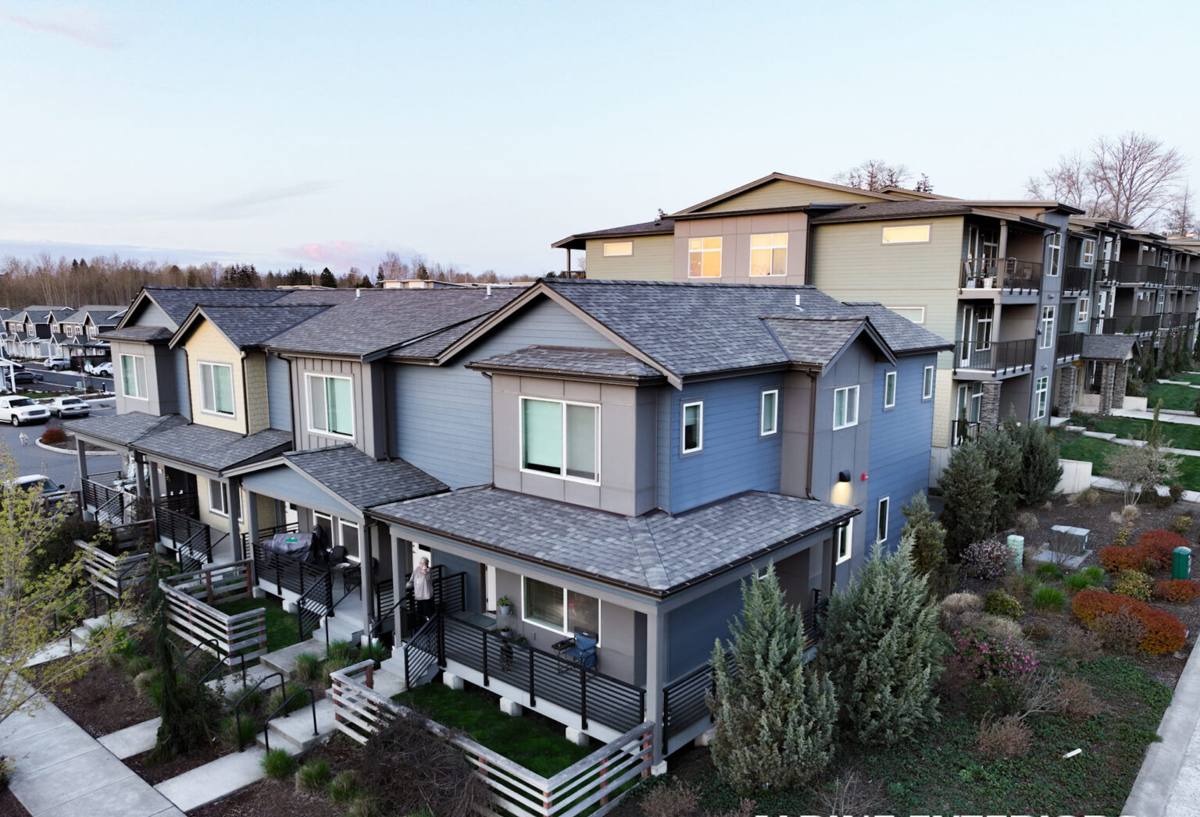
What "New Construction" Actually Means for a Window Install
New-construction windows use a nailing flange (sometimes called a nail fin) around the perimeter of the frame. That flange gets integrated directly into the wall's water-resistive barrier (WRB) and flashing system before siding goes on. This is different from "block frame" or "insert" replacement windows, which get fastened through the existing jamb with no flange to tie into house wrap.
Why the Flange Matters Here
The flange is what lets us shingle-lap the window into the wall's drainage plane — house wrap or building paper overlapping the top flange, side flanges taped or lapped correctly, and a sill pan doing the real work of catching any water that gets past the exterior cladding. In a climate with as much horizontal, wind-driven rain as Whatcom County gets, that sill pan and the sequencing of every layer around it is the single biggest factor in whether a window opening stays dry.
New Build vs. Major Remodel Openings
We do both around Ferndale — full new-construction homes and additions or remodels where a wall gets opened up to code. The flashing principles are identical either way; what changes is coordination with the rest of the trades, since a remodel often means matching the water management into an existing wall system rather than starting clean.
Choosing Windows That Hold Up to Salt Air and Moss Season
Not every window product on the market is a good fit for a site this close to salt water. Salt air accelerates corrosion on hardware, fasteners, and some metal cladding finishes, and constant damp shade — common under trees or on north-facing walls in Ferndale — keeps organic growth (moss, algae, mildew) active on sills and frames longer than it would in a drier inland town.
| Frame Material | How It Handles This Climate | Trade-Offs |
|---|---|---|
| Vinyl | Good moisture resistance, no corrosion risk, low maintenance | Can look less premium; quality varies a lot by manufacturer |
| Fiberglass | Very stable in wet/dry cycling, holds paint and finish well, low expansion/contraction | Higher upfront cost |
| Aluminum-clad wood | Attractive, durable exterior face if the cladding and finish are marine-grade | Wood interior needs the exterior seal to stay perfect — any breach lets moisture in where it's hardest to catch |
| Bare wood | Classic look, repairable | Highest maintenance burden in a wet coastal climate; not something we recommend without a real maintenance commitment |
We're not going to tell a homeowner or builder there's only one "right" answer here — budget, architectural style, and personal maintenance tolerance all factor in. What we will do is walk through how each option actually performs once it's sat through a few Whatcom County winters, not just what the brochure says.
The Installation Sequence That Actually Keeps Water Out
Sill Pan First
Before the window ever goes in the opening, the rough sill gets a sloped, sealed pan — either a manufactured flashing pan or a properly built flexible-membrane pan — so that any water reaching the sill drains back out to the exterior instead of sitting against the framing.
Jambs and Head, in the Right Order
Side flashing goes on next, then the window, then head flashing lapped over the top flange, then the WRB integrated back over all of it in shingle fashion — every layer overlapping the one below so water is always directed outward and down, never trapped behind a lap.
Sealant Is a Backup, Not the Plan
Caulk and sealant have a service life, and in this climate that life gets shortened by UV, temperature swings, and constant damp. We use sealant as a second line of defense at specific joints, not as the primary strategy for keeping a window dry. If the flashing sequence is right, a sealant failure years from now is a minor issue instead of a hidden rot problem.
Common Mistakes We See in New-Construction Window Openings
- No sill pan, or a flat one that doesn't slope water back out
- House wrap taped over the window flange instead of lapped under the head flashing and over the side/sill flashing
- Reused or reworked flashing tape that's lost its adhesion in cold, damp job-site conditions
- Fasteners driven through the flange at the wrong spacing or angle, distorting the frame and breaking the seal at that point
- Windows set out of plumb or square, which stresses the sash and accelerates hardware and weatherstrip wear
- Gaps between the rough opening and window frame left unshimmed or improperly insulated, creating cold spots that condense moisture on the interior
Any one of these can look fine on install day and still cause a problem two or three winters later, once enough driving rain has tested it. That's the nature of envelope work — the mistakes are patient.
How We Work with Builders and Homeowners on Ferndale Jobs
Timing on the Framing Schedule
Window install timing matters. We coordinate directly with the general contractor or framer so windows go in at the right point relative to house wrap and flashing — not before the WRB is ready for us, and not so late that the crew is racing weather. On a wet build season, we'd rather adjust the schedule than install into an opening that isn't properly prepped.
Direct Communication, No Guessing
Whether you're a homeowner managing your own build or a GC bringing us in as a sub, you get a straight answer about what each opening needs and why, before we start — not a surprise change order after the fact.
Documentation
We can document flashing details as they're installed, which is useful for inspections, warranty records, or simply your own peace of mind on a new build.
Energy Performance and Washington Code Requirements
Washington's energy code sets minimum performance standards for window U-factor and, in some cases, solar heat gain coefficient, and those requirements can vary by which compliance path a project is using. New-construction windows give you the chance to hit strong performance numbers from day one rather than upgrading later. In Ferndale's marine climate, a lower U-factor helps with comfort near large window walls in winter, and orientation matters too — south and west exposures see more solar gain than north-facing walls that stay shaded and damp most of the year.
We can talk through what performance level makes sense for your specific project and budget rather than just defaulting to the code minimum.
What Drives Cost on a New-Construction Window Job
| Factor | Why It Moves the Price |
|---|---|
| Number and size of openings | More units and larger glass areas mean more material and labor |
| Frame material | Vinyl, fiberglass, and clad-wood sit at different price points |
| Performance glass package | Higher-performance glazing costs more but can reduce long-term energy bills |
| Site access and building height | Multi-story or hard-to-access openings take more time and equipment |
| Flashing complexity | Unusual wall assemblies or transitions (e.g., window-to-deck, window-to-roof) need more detailing |
| Schedule coordination | Working around a tight framing schedule or weather delays can affect labor cost |
We give straightforward, itemized pricing rather than a single lump number, so you can see what you're actually paying for.
Why Hire a Crew That Already Works in Ferndale
A lot of what makes new-construction window work succeed here isn't the window itself — it's the flashing detail, the sequencing, and the judgment calls about how to handle the specific rain exposure and moss-prone shade patterns of a given lot. That's the kind of knowledge you build by working Whatcom County job sites season after season, not something you get from a manufacturer's install manual alone. When we install windows in Ferndale, we're accounting for what actually happens to a wall assembly here over a Pacific Northwest winter, not just what passes inspection on a dry day.
If you're planning a new build or a remodel that involves new window openings, we're happy to walk the plans with you and give you a clear, no-pressure estimate — just fill out the form below to get started.