 Bellingham Siding
 Why Decks in Puget Wear Out Faster Than People Expect
A deck in Puget doesn't fail the way a deck in a dry inland climate fails. Around Bellingham, the combination of salt-laden air off the water, long stretches of driving rain, and a moss season that can run from early fall well into spring puts a different kind of load on exterior wood structures. Fasteners corrode faster near the water. Horizontal surfaces stay damp for days at a time, which is exactly what moss and algae need to take hold. And ledger boards — the piece that ties the deck to the house — take on wind-driven rain from angles a lot of builders never plan for.
None of that means a deck can't last for decades here. It means the details that get skipped in a fast, cheap rebuild are the same details that determine whether a Puget-area deck is solid at year five or soft and unsafe by year eight.
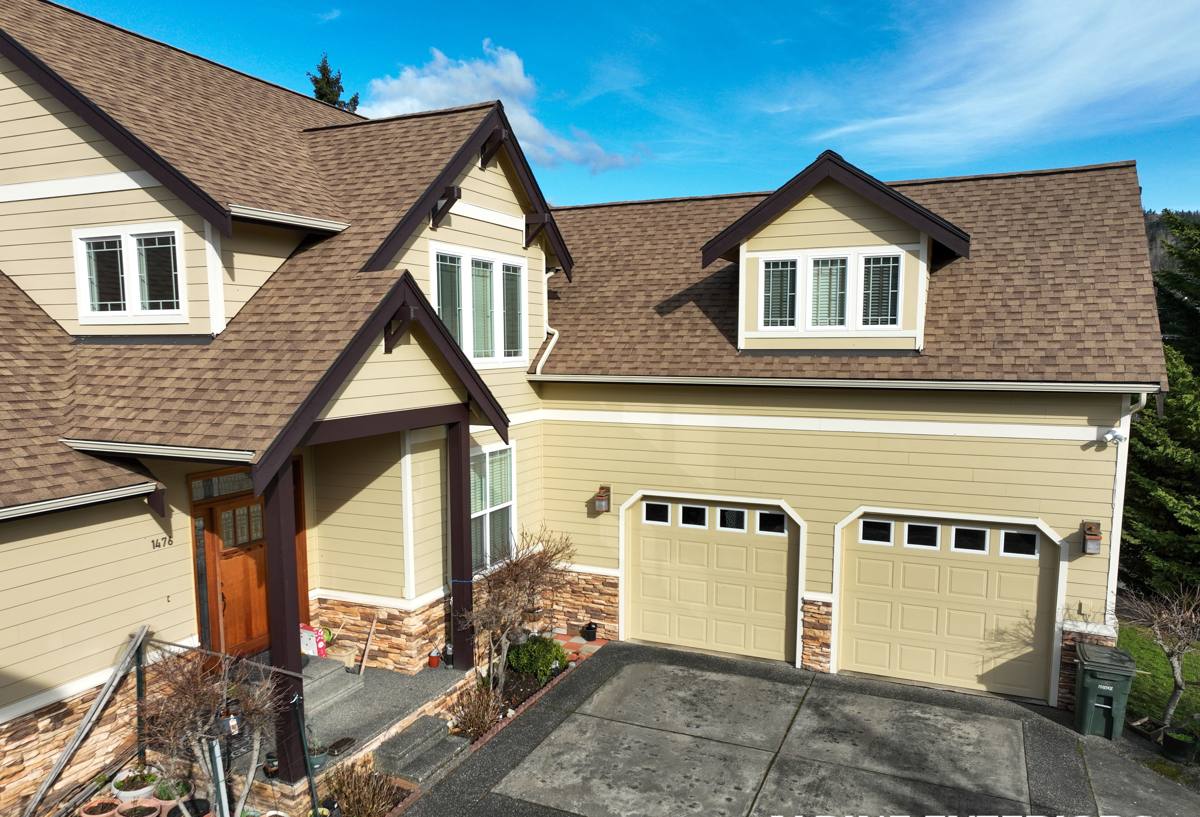
Signs a Deck Needs Replacement, Not Another Patch
Homeowners often call us after a few boards get replaced and the problem comes right back. That's usually a sign the issue isn't the decking itself — it's what's underneath it. Some signs point clearly toward full replacement rather than spot repair:
- Boards that feel spongy or flex underfoot, especially near the house
- Rust streaks bleeding from fastener heads, which usually means the hardware was never rated for this climate
- Soft or discolored wood where the deck ledger meets the siding or rim joist
- Posts that have shifted, sunk, or show rot at the base near grade
- Railings that wiggle at the post connection, not just a loose baluster
- Moss or algae embedded in the wood grain rather than sitting on the surface
If more than one or two of these show up, the framing underneath has usually been compromised long enough that patching the surface just hides the problem for another season.
What a Correct Deck Replacement Involves Here
Ledger Board and Flashing
The ledger-to-house connection is the single most common failure point on decks in wet coastal climates, and it's the detail that's easiest to get wrong under time pressure. Done right, it means flashing that directs water out and away from the rim joist — not just a bead of caulk and a hope. On homes with fiber cement, vinyl, or wood siding, that flashing has to integrate with whatever's already on the wall so wind-driven rain can't work its way behind the ledger and sit against the framing all winter.
Footings and Framing Built for Wet Ground
Footings need to be sized and set to the depth required for this area, on solid, well-drained bearing soil — not just poured into whatever hole was easiest to dig. Framing lumber should be rated for its exposure (ground contact where applicable), and joist tops get a protective tape or membrane before decking goes down. That single step keeps standing water out of the end grain and fastener holes, which is where rot almost always starts first.
Fasteners and Hardware That Won't Rust in Salt Air
This is where a lot of decks quietly fail. Standard coated screws and joist hangers can start showing rust within a couple of years this close to the water. We use stainless steel or hot-dip galvanized hardware rated for coastal exposure, and we match fastener metal to the chemicals in treated lumber to avoid galvanic corrosion between dissimilar metals. It costs a little more up front. It's also the difference between hardware that's still solid at year fifteen and hardware that's staining the deck and weakening its own grip by year five.
Choosing the Right Decking Material for a Puget-Area Deck
There's no single "best" decking material — there's a best fit for how much maintenance a homeowner wants to do and how much moss and moisture exposure the deck will see.
| Material | Moisture / Moss Resistance | Maintenance | Typical Lifespan |
|---|---|---|---|
| Cedar | Naturally rot-resistant but still absorbs moisture; needs sealing | Annual cleaning and re-sealing to hold up in this climate | 15–20 years with upkeep |
| Pressure-treated fir/pine | Good with proper end-cuts and sealing; prone to moss in shaded, damp spots | Periodic cleaning, sealing every few years | 15–20 years with upkeep |
| Composite decking | Doesn't rot; can still grow surface algae if never cleaned | Occasional washing, no sealing or staining | 25–30+ years |
| PVC decking | Fully moisture-resistant, best resistance to staining and moss | Lowest maintenance of the group | 25–30+ years |
We don't push one product over another as a rule of thumb — we walk through how much sun or shade the deck gets, how exposed it is to salt air, and what the homeowner actually wants to spend time maintaining. A shaded, north-facing deck that sits damp for days is a very different decision than a sun-exposed deck on the same street.
Railings, Stairs, and Code Requirements
Deck replacement isn't just decking boards — it's a structural project, and it's treated that way under local building codes. Guard height, baluster spacing, stair rise and run, and handrail graspability all have to meet current code, not whatever was standard when the original deck went in years ago. Most jurisdictions, including here in Whatcom County, require a permit for decks attached to the house or above a certain height, and that permit process typically includes an inspection of the framing before decking goes down and again once the structure is complete. We handle that process as part of the job rather than leaving it on the homeowner's plate.
Living With Moss and Algae: What Long-Term Care Actually Looks Like
Puget's moss season is long, and no decking material is completely maintenance-free once you factor it in. The goal isn't to eliminate moss entirely — it's to build a deck that sheds water and dries out between rain events instead of holding moisture against the surface. That comes down to a few things done right at construction: proper board spacing for airflow, correct slope so water doesn't pool, and enough clearance underneath the deck for air to actually move. After that, an occasional gentle wash (not aggressive pressure washing, which can chew up softer woods and void some composite warranties) keeps moss from getting a foothold in the first place.
Our Deck Replacement Process
- On-site assessment — we check the ledger connection, framing, footings, and posts before quoting anything, since the condition underneath the old decking drives most of the scope.
- Tear-off and disposal — full removal of the old deck surface and any compromised framing.
- Structural repair or rebuild — ledger flashing, footings, posts, beams, and joists brought up to current code and rated for this climate.
- Decking installation — material installed per manufacturer spacing and fastening specs, with attention to drainage and airflow underneath.
- Railings and stairs — built and set to current code, not just matched to the old layout.
- Final walk-through — we go over the finished deck with the homeowner and cover basic care before we consider the job done.
Why Hire a Crew That Already Works in Puget
A deck built to a generic national spec sheet isn't automatically wrong — but it's often missing the specific adjustments that matter this close to the water. Crews that work Puget regularly already know which ledger details tend to fail on homes of a certain age, which fastener grades hold up against salt air instead of just looking fine on install day, and how the local permit process actually runs. That local pattern recognition is what keeps a deck replacement from becoming a five-year repeat job.
Questions Worth Asking Before You Hire
- Will you pull the required permit, and who handles the framing inspection?
- What fastener and hardware grade do you use, and is it rated for coastal exposure?
- How do you flash the ledger board where it meets the house?
- What's your footing depth and spacing based on, and does it match current code?
- Do you carry liability insurance and workers' comp, and can you show proof?
- What's included in the written estimate — tear-off, disposal, and permit fees, or extra?
What Actually Drives the Cost of a Deck Replacement
Every deck is different, and we'd rather walk a homeowner through the real cost drivers than quote a number that doesn't hold up once we're on site.
| Factor | Why It Matters |
|---|---|
| Deck size and layout | Square footage and shape (multiple levels, angles) drive material and labor directly |
| Decking material | Wood, composite, and PVC sit at different price tiers and different maintenance costs over time |
| Framing and footing condition | Hidden rot or undersized footings found during tear-off add scope that's hard to price sight unseen |
| Railing style and stairs | Cable, glass, and custom railing systems cost more than standard baluster rail |
| Permit and inspection scope | Larger or higher decks may require engineering review, adding time and fees |
| Site access | Tight side-yard access or elevated decks can add labor and equipment costs |
We give homeowners a real number after seeing the structure, not a phone-quote guess that changes once tear-off starts.
If your deck is showing rot, loose railings, or the kind of moss buildup that keeps coming back no matter how often you scrub it, we're glad to take a look. Reach out for a free, no-pressure estimate — the form below gets you started.