 Bellingham Siding
 Cordata's Roofs Face a Specific Kind of Wear
Cordata sits on the north side of Bellingham, close enough to Bellingham Bay and the Strait of Georgia that salt-laden air is a constant, quiet factor in how roofing materials age here. Add in the driving rain that comes through Whatcom County during fall and winter storms, plus the tree cover that shades much of the neighborhood for a good part of the year, and you get roofs that wear differently than they would in a drier, sunnier climate. Shingles here don't usually fail from heat and UV breakdown the way they do in the Southwest. They fail from moisture that never fully dries out, from moss and organic buildup that traps water against the roof deck, and from wind-driven rain that finds its way under flashing and shingle edges that would hold up fine in calm weather.
A roof repair done right in this neighborhood accounts for all of that. It's not just patching the spot that's leaking today — it's understanding why that spot failed and whether the same conditions are quietly working on the rest of the roof.
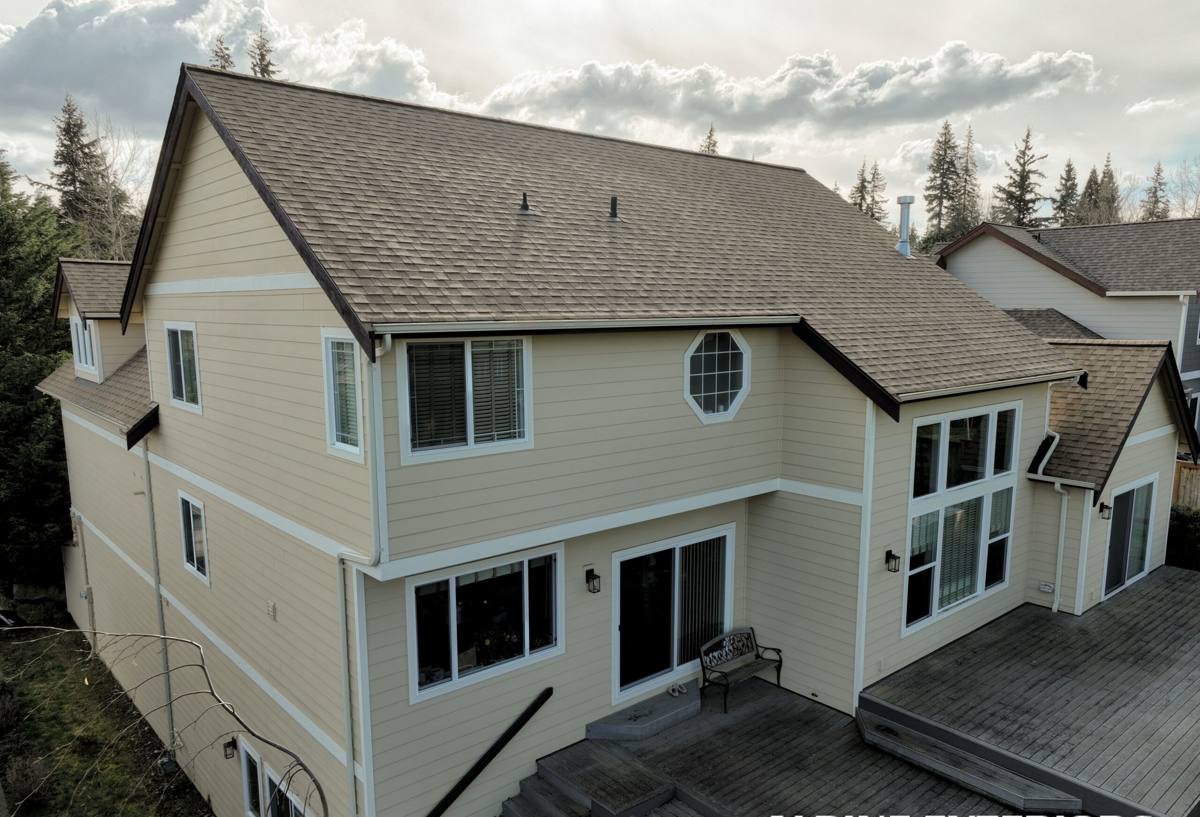
Signs a Cordata Roof Needs Repair Now
Most roof problems don't start as a dramatic leak. They start small and get worse through a wet season or two. Homeowners in this area should watch for:
- Dark streaking or thick moss growth on north-facing slopes or shaded sections of the roof
- Granules collecting in gutters or at the base of downspouts
- Curling, lifting, or cracked shingles, especially along ridges and edges exposed to wind
- Soft spots, sagging, or discoloration on interior ceilings after a heavy rain
- Rust or gaps around flashing at chimneys, skylights, and roof-to-wall connections
- Daylight visible through the attic roof deck, or damp insulation near the eaves
- Water stains that appear only during wind-driven rain, not calm rain — a strong sign of a flashing or edge problem rather than a simple worn shingle
Any one of these on its own might be minor. Several together usually mean the roof has been dealing with moisture longer than it looks like from the ground.
Moss, Debris, and the Long Wet Season
Why moss takes hold here
Bellingham's wet season runs long, and Cordata's mix of mature trees and shaded rooflines means some sections of a roof rarely get a full day of direct sun to dry out. Moss and moss-friendly algae need exactly that: shade, moisture, and time. Once moss establishes itself on a shingle roof, it doesn't just sit on the surface — it holds water against the shingle mat and lifts shingle edges as it grows, which is exactly the kind of small mechanical damage that turns into a leak path over a few seasons.
Removing it without creating new problems
Moss removal has to be done carefully. Pressure washing a shingle roof is one of the fastest ways to strip protective granules and shorten a roof's life, and it's a shortcut we won't take. A correct moss job uses soft-wash methods and manual clearing, followed by treatment to slow regrowth, and — where it makes sense — zinc or copper strips near the ridge that let rain carry a mild anti-moss treatment down the slope over time. Gutter and valley debris gets cleared in the same visit, since clogged valleys are one of the most common causes of the interior leaks we get called out for after a big storm.
The Repairs We See Most Often on Cordata Homes
Flashing and penetrations
Chimneys, skylights, plumbing vents, and roof-to-wall junctions are where most leaks actually originate, even when the visible damage shows up somewhere else on the ceiling. Flashing can look intact from the ground while it's actually rusted through, pulled loose, or was never properly stepped and sealed in the first place. Re-flashing these areas correctly is often a smaller, more affordable repair than a homeowner expects — but it has to be done with the right sequencing, not just a bead of caulk over the old metal.
Valleys and low-slope transitions
Roof valleys concentrate a huge amount of water during a heavy Pacific storm, and any debris, undersized flashing, or worn underlayment in a valley shows up fast as an interior leak. Low-slope sections and porch roof transitions carry similar risk, since they don't shed water as quickly and are more sensitive to wind-driven rain pushing up under the shingle edge.
Shingle wear from wind-driven rain
Standard asphalt shingles are rated for wind, but repeated exposure to storms coming off the water can loosen seal strips and lift tabs over time, especially on older roofs where the adhesive has aged. Once a few shingles are compromised, the ones around them are exposed to more wind and water than they were designed for, which is why a repair limited to just the damaged shingles — done with matching material and correct fastening — usually solves the problem without needing a wider re-roof.
How We Handle a Roof Repair Call
- A full roof inspection, not just a look at the spot you called about — including attic access where possible, since interior moisture signs often point to the real source
- A clear explanation of what's actually failing, in plain terms, with photos where useful
- A written estimate that separates the repair itself from any related work, like gutter clearing or moss treatment, so you know what you're paying for
- The repair, done with materials matched to your existing roof where possible
- A final check confirming the fix holds under water testing, not just a visual sign-off
Repair or Replace? How We Help You Decide
Not every roof problem in Cordata calls for a full replacement, and we don't default to recommending one. The honest answer depends on the roof's age, how widespread the damage is, and how the existing material has held up overall.
| Situation | Usually a Repair | Usually a Replacement |
|---|---|---|
| Roof age | Under 15–18 years, in otherwise good condition | Approaching or past its expected lifespan |
| Damage extent | Isolated to one slope, valley, or penetration | Spread across multiple slopes or the whole roof |
| Moss/algae condition | Surface growth, shingles still intact underneath | Granule loss and shingle curling widespread under the growth |
| Deck condition | Solid, dry roof deck found during inspection | Soft, rotted, or repeatedly wet decking |
| History | First repair call, or an isolated storm-related issue | Third or fourth repair in a few years on the same roof |
We'll tell you plainly which category your roof falls into, and why — including when a repair is the right, more affordable answer, even if a replacement would be an easier sale for us.
Materials and Workmanship We Hold to
When we repair a section of roof, we match shingle type, color, and exposure as closely as the market allows, since a mismatched patch is both a cosmetic and a resale issue. Underlayment and flashing get replaced with materials rated for this climate's moisture exposure, not just whatever's fastest to install. We're selective about lower-cost synthetic flashing and adhesive-only repair products that trade long-term moisture performance for a quicker install — they can look fine on day one and still fail early under the kind of sustained wet weather Whatcom County sees every winter. Our standard is a repair that's built to outlast the next few wet seasons, not just pass a next-day walk-around.
What Roof Repair Costs in Cordata, and Why
Roof repair costs vary a lot based on what's actually wrong, which is why we inspect before quoting rather than pricing over the phone. In general terms, a single flashing repair or small section of shingle replacement tends to be a modest, contained cost, while repairs involving valley reconstruction, deck repair, or multiple problem areas cost more because of the added labor and material.
| Cost Factor | Why It Matters |
|---|---|
| Roof pitch and access | Steeper roofs and limited access points take longer and require more safety setup |
| Extent of deck damage | Rotted decking found under a leak adds material and labor beyond the visible repair |
| Shingle availability/match | Older or discontinued shingle lines can be harder to match, sometimes requiring a wider repair area |
| Number of penetrations | Each chimney, vent, or skylight needing re-flashing adds its own labor step |
| Moss/debris severity | Heavy buildup adds a cleaning and treatment step before the repair itself can be assessed accurately |
Why Local Experience in Cordata Matters
A crew that already works in this neighborhood knows what a Bellingham winter does to a roof before we even climb the ladder — which slopes hold moss longest, which shingle lines were common in homes built during Cordata's main growth periods, and how wind off the water tends to hit certain roof orientations harder than others. That local pattern recognition means fewer surprises during the inspection and a repair scope that's accurate the first time, instead of a callback a few months later for a problem that should have been caught up front. It also means we're not learning Whatcom County's climate on your roof — we're applying what we already know works here.
If you're seeing moss buildup, a slow leak, or storm damage on a Cordata roof, we're happy to take a look and give you a straight answer about what it needs. Fill out the form below for a free, no-pressure estimate.